-

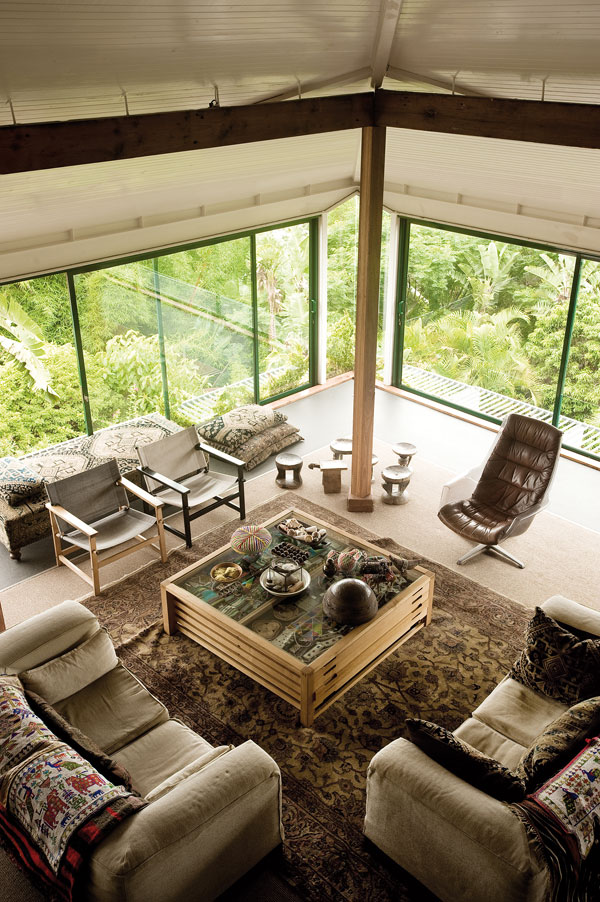
Raising the roof : Looking down from the mezzanine level at Russel Walford's table, which displays a collection of beads. -
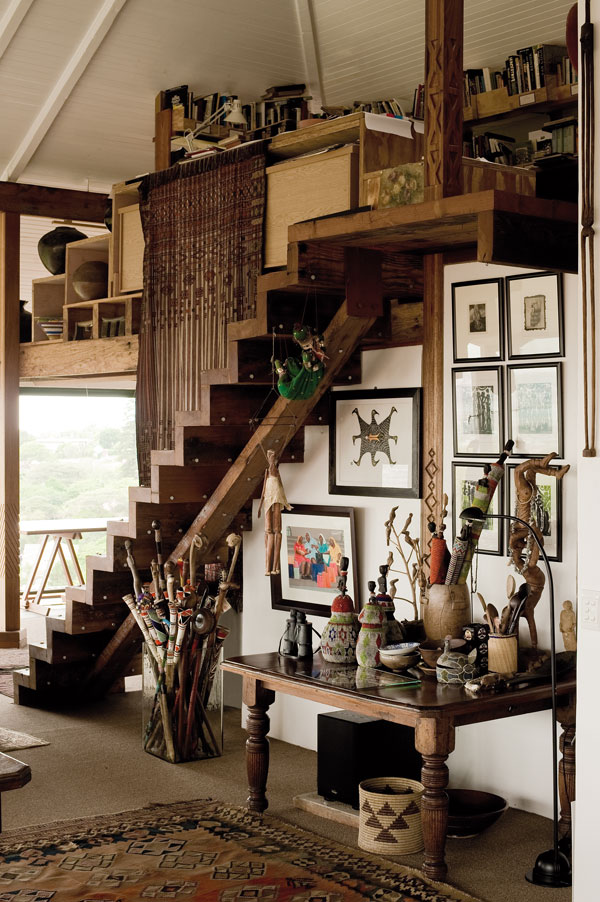
Raising the roof : A display space at the bottom of the staircase that leads to the studio includes a collection of Tsonga medicine gourds, a painting by Joseph Manana and Inuit woodcut. -
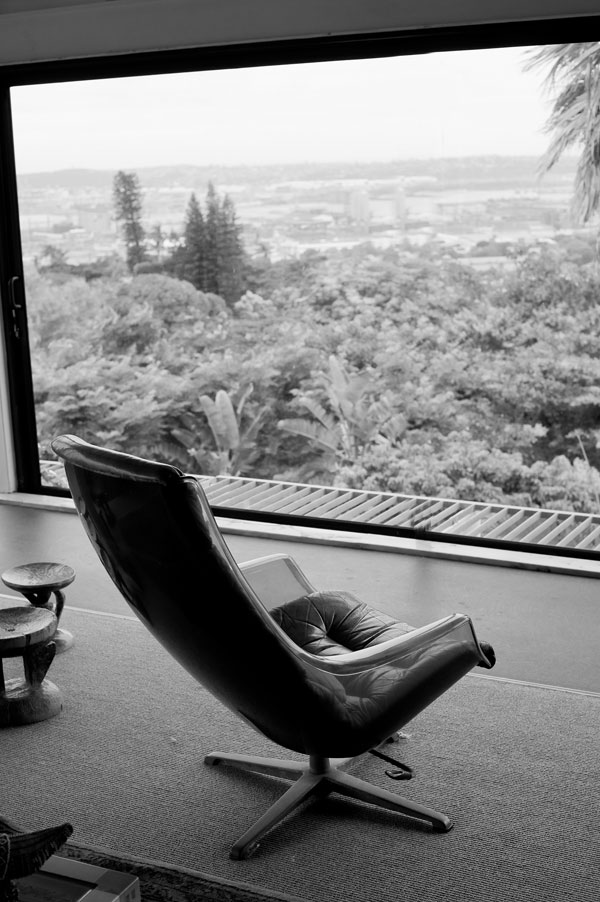
Raising the roof : The glass walls offers a bird's-eye view of the surrounding environment. -
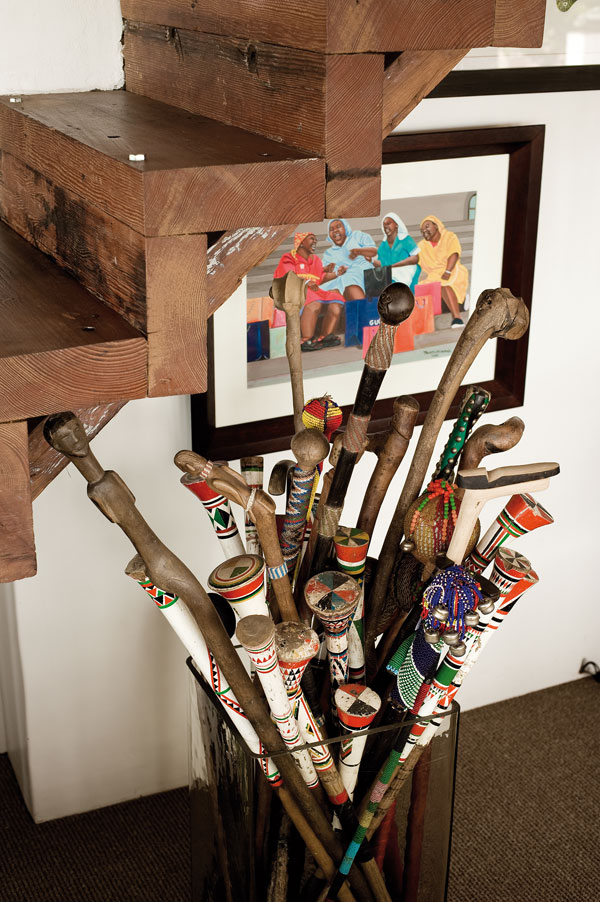
Raising the roof : A collection of walking, dancing, coming-of-age and wedding sticks from KwaZulu-Natal -
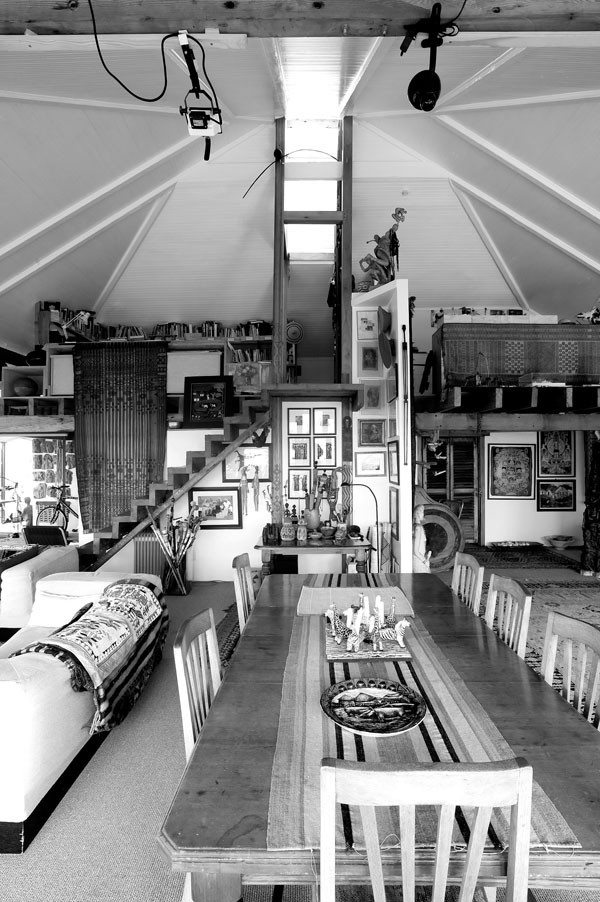
Raising the roof : The dining table displays a ceramic plate by Lalelani Mbhele and candlestick holders by Bonnie Ntjalintjali on a table runner from Turkey. -
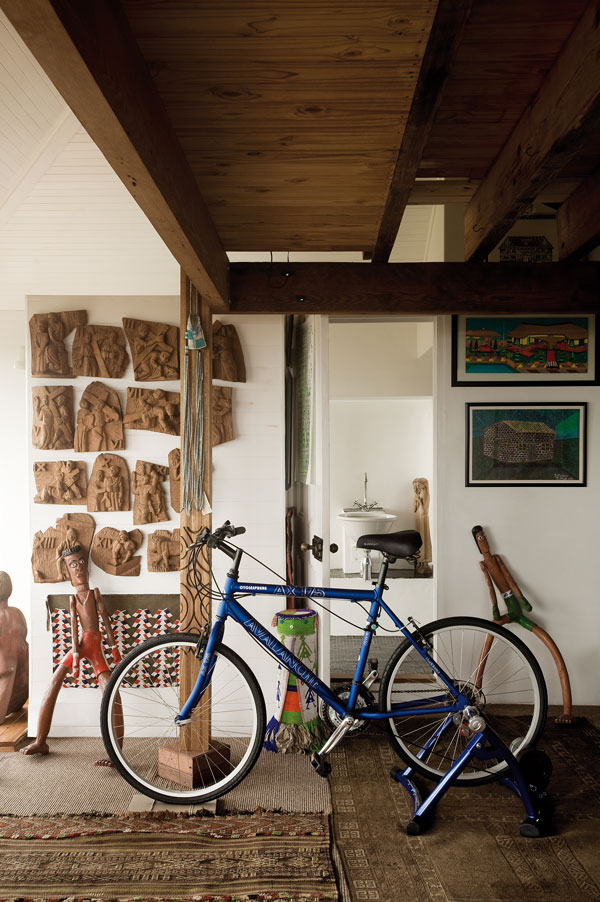
Raising the roof : The sleeping area, with "kleinhuisie" beyond, also stores the bicycle, which Paul uses to find design inspiration. The sculptures are by Dr Phutuma Seoka and the stations of the cross displayed on the wall are by Zamokwakhe Gumede. -
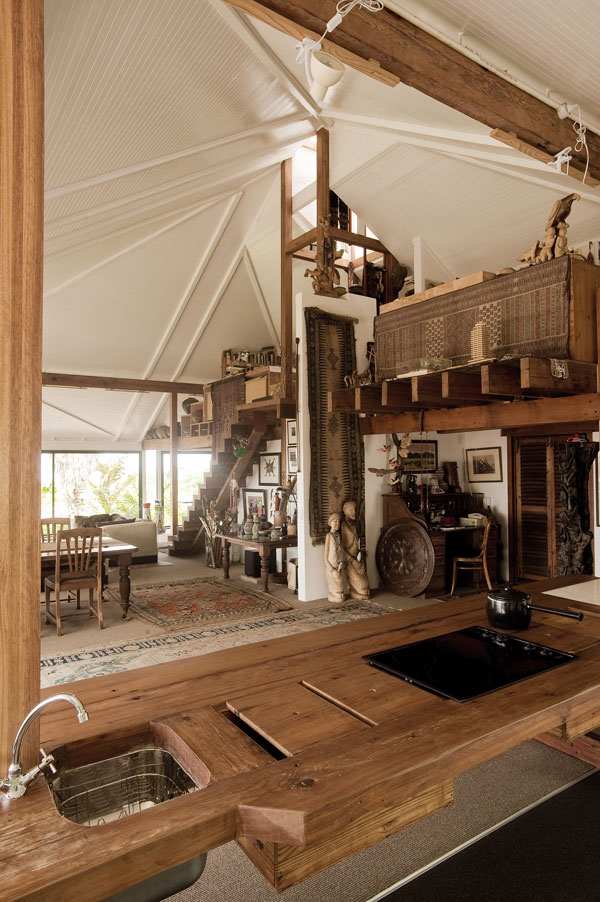
Raising the roof : The living area viewed from the kitchen island. -
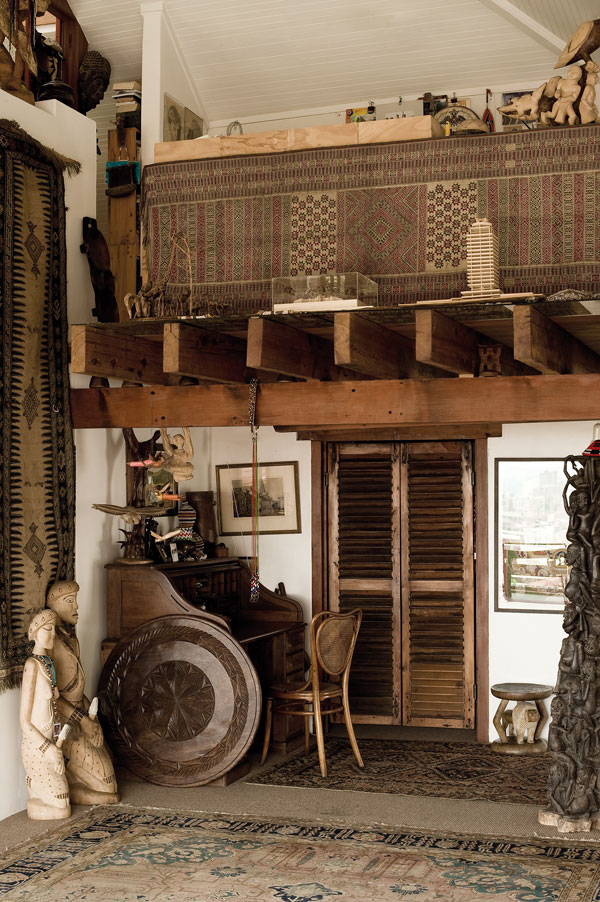
Raising the roof : Looking towards the entrance, with the studio and architectural models above. The wall-hanging blanket is from Buthan. The sculptures are by Johannes Maswanganyi and the angels are by Sibusiso Maphumulo.
PHOTOS: Dook | PRODUCTION: Annemarie Meintjes | WORDS: Lee Thorn
Architect Paul Mikula, an avid collector of indigenous artifacts, has lifted a traditional red-tiled Glenwood pyramid roof to build a glass eyrie for himself under the eaves.
It was while building a new three-storey maisonette for a friend next door that Durban architect Paul Mikula was spurred on to create a “Grandpa flat” in the cottage he originally renovated 34 years ago.
“I was rattling around here on my own, so it made sense for my son Max, a musician in Joburg, and his wife Nikki to take over the cottage and cellar as a bed and breakfast, while I fancied having a self-contained new space of my own. There was only one way to go – up!”
Unified roofs
One of the features Paul admires most about Glenwood living is the unity of the houses’ red-tiled pyramid roofs, most built from the 1920s to the 1940s. “I wanted to maintain the roof at all costs,” he says.
The solution was simple: “I just raised it another floor.” Paul slid in beams under the old roof where the ceiling had been and created a floor with shutter-board, as “concrete would have been far too heavy”. He put in prop beams and literally lifted the roof, removing it, slipping in sliding glass walls, then replacing the beams and tiles.
“I kept the glass walls low, so it’s like looking out of a slit into the sky. I enjoy the feeling – it’s like living under a large protective hat. The sun can’t reach my things to bleach them and I have a degree of privacy by living and working more towards the centre.”
A central tower, providing light and ventilation, picks up most of the roof load and transfers it to the level below. Around it Paul has fashioned a mezzanine “island” from shutter-board and Oregon floorboards from an old warehouse, which he bought in the Point. Open-sided Oregon steps – “I love the original bolt holes” – take him up to two work stations where he runs his many projects, and also provide the structure to house his extensive library and personal art collection.
Paul, an architect best known for the many inventive buildings that reflect his wide social and cultural interests, now practices with Tony Wilson, and they operate mainly in Mauritius and South Africa when they can find clients with similar concerns. Paul also draws, paints watercolours, writes, and is a curator and collector of artifacts.
Taking after dad
Max and Nikki, along with Paul’s daughter Ilse and her family in London, represent the younger generation who continue the family tradition of involvement in the arts with projects such as the BAT Centre on Durban Bay, the Bartel Arts Trust, the Community Murals project, the Tsunami music project, and several publishing ventures.
Their current project, also managed by Max, is the Phansi Museum, which houses a large and varied collection of South African indigenous artifacts as well as ceramics by Paul’s late wife Maggie, a well-known potter and artist.
From his eyrie overhead, Paul is able to keep a casual eye on proceedings and the world while staying serenely apart. “All I need now, as I move into my dotage, is one room with place for my books and work.”
With 14 x 12m of space at his disposal, he has even been able to create a small guest room off one side of the mezzanine structure, “For my nurse when I get older,” he quips, “and for the wonderful Mavis Mbanjwa, who keeps house for me on occasion.”
This room and the northern part of the space open onto a balcony. The loft’s remaining 330 degrees are all glass, giving spectacular city and harbour views from even the shower and loo. Structural features are happily exposed, from rafters to the wooden pillars and braces.
“The pillars mark a point where I initially thought I’d have a balcony but that would have stolen space from the interior,” says Paul. “Still, I like their subtle demarcation of space.” He has emphasised it by laying bus flooring around this balcony area – “useful if a bit of rain gets in” – where the “cheap but foot-friendly” carpeting stops.
Furniture is minimal and functional, mostly adapted from recycled pieces. “I dislike spending money or effort where it could be so much better spent elsewhere, so I don’t ever throw anything away,” Paul explains.
“This is not a museum and you won’t find much in the way of valuable things,” he adds emphatically. “Everything is here because I love it and it has personal meaning for me – that’s what pulls any place together. Architecture and design aren’t about buildings but rather about the people, plants, cats, the sky, trees, bricks, music and everything else that goes with them.”
• Phezulu B&B, 45 Loudon Road, Glenwood, 031 201 7493
• Phansi Museum, 500 Esther Roberts Road, Glenwood, 031 206 2889 (visits by appointment)
• Mikula Wilson Architects: 031 206 0118