-

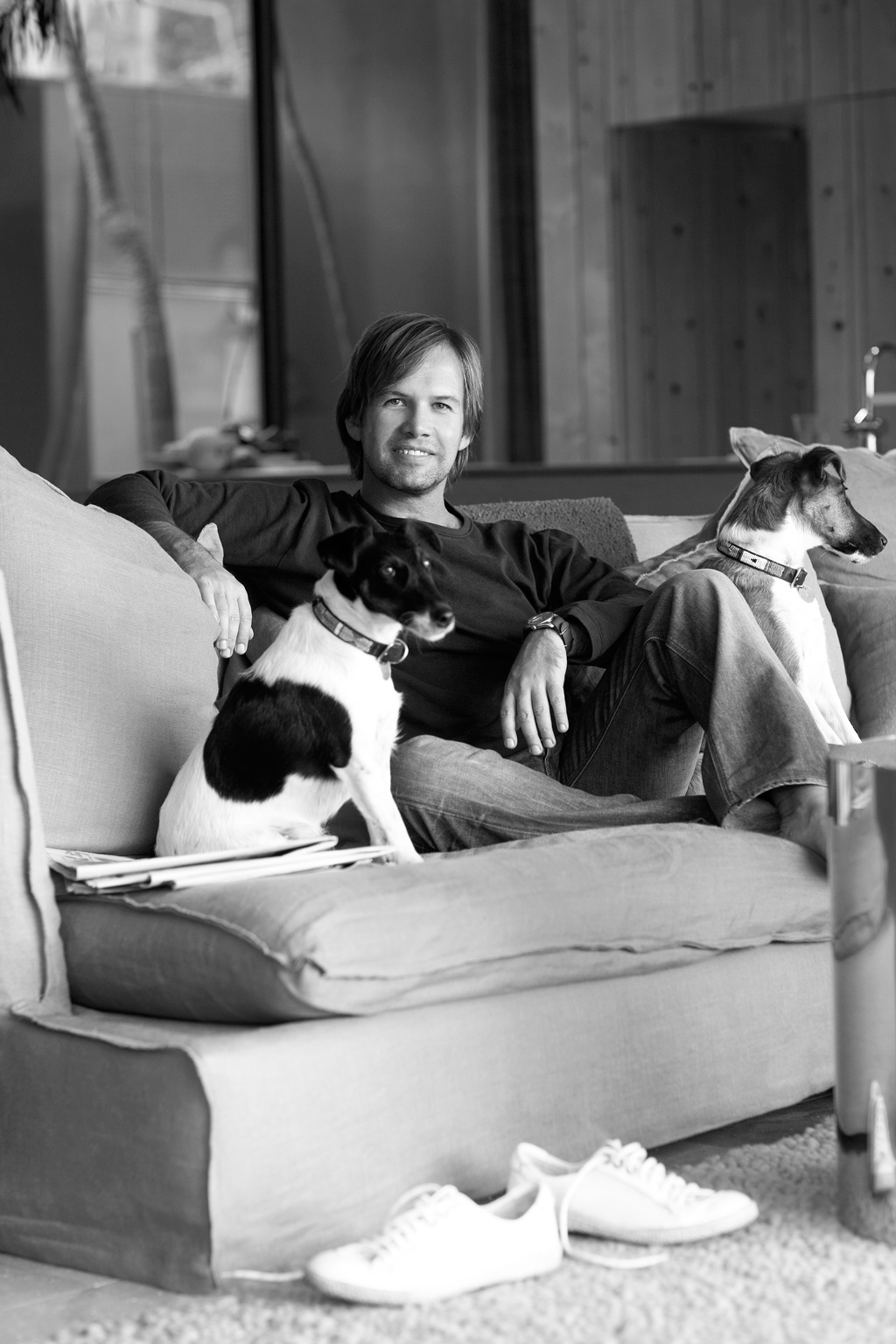
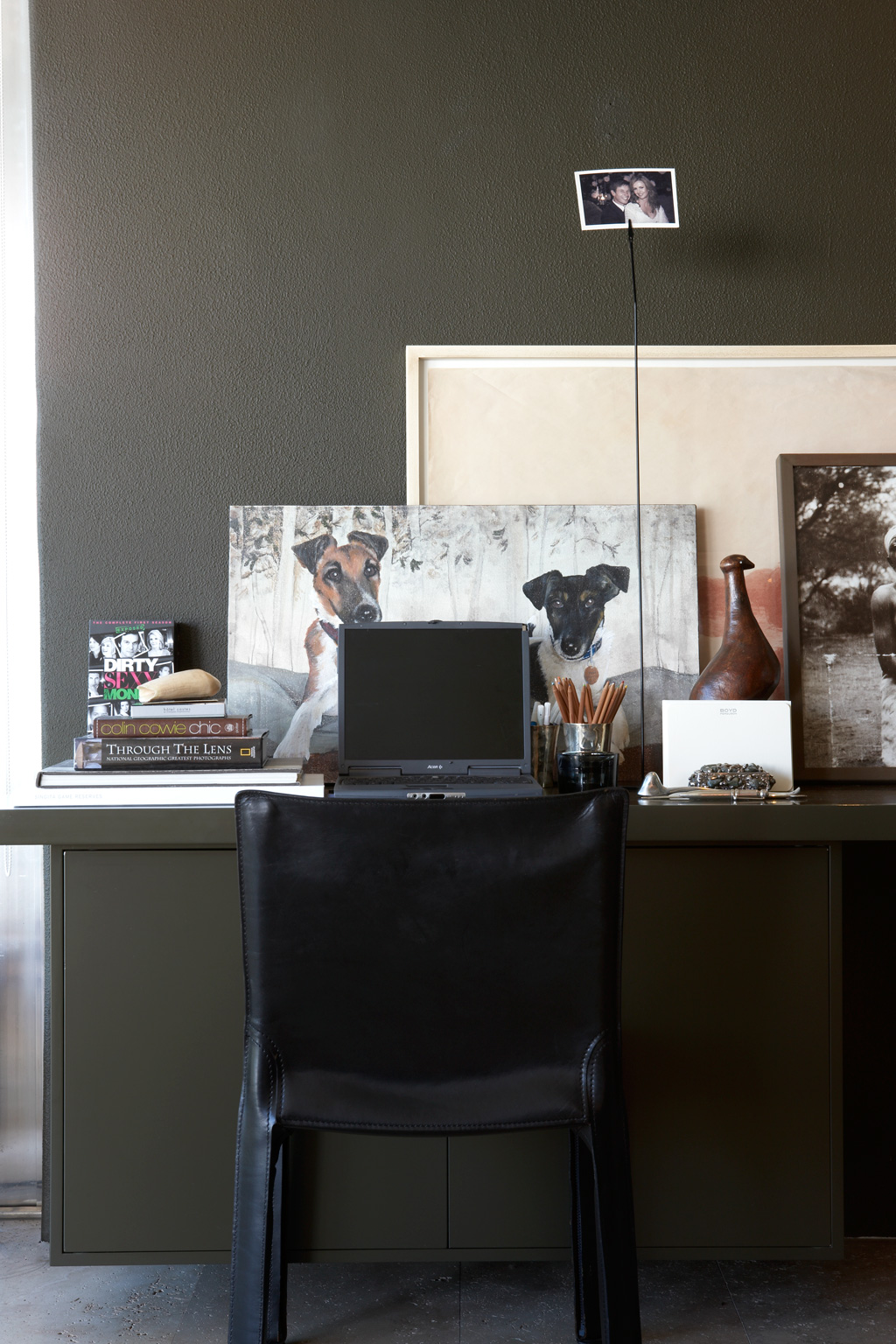
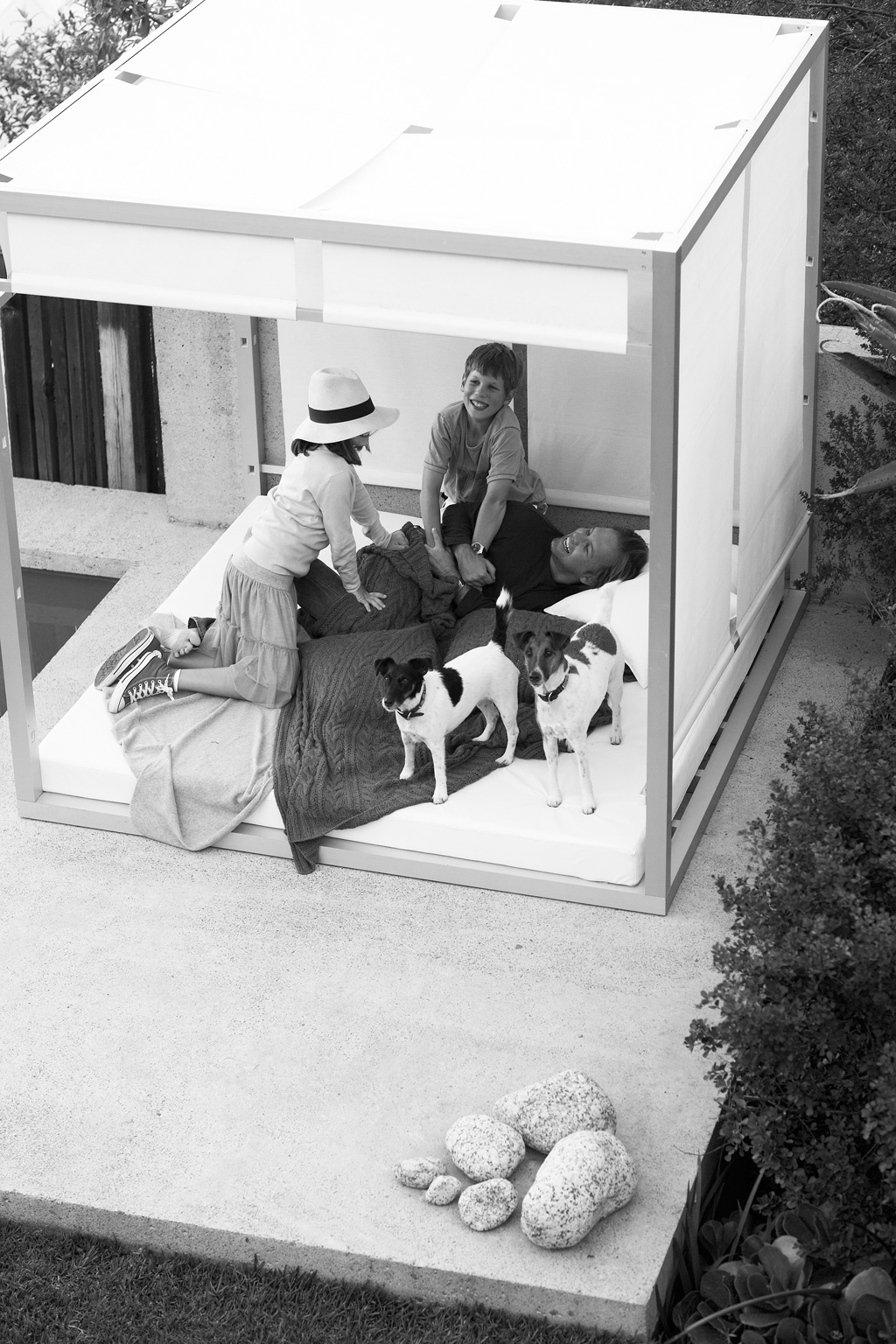
Boyd with his beloved English fox terriers, Tula and Todd -
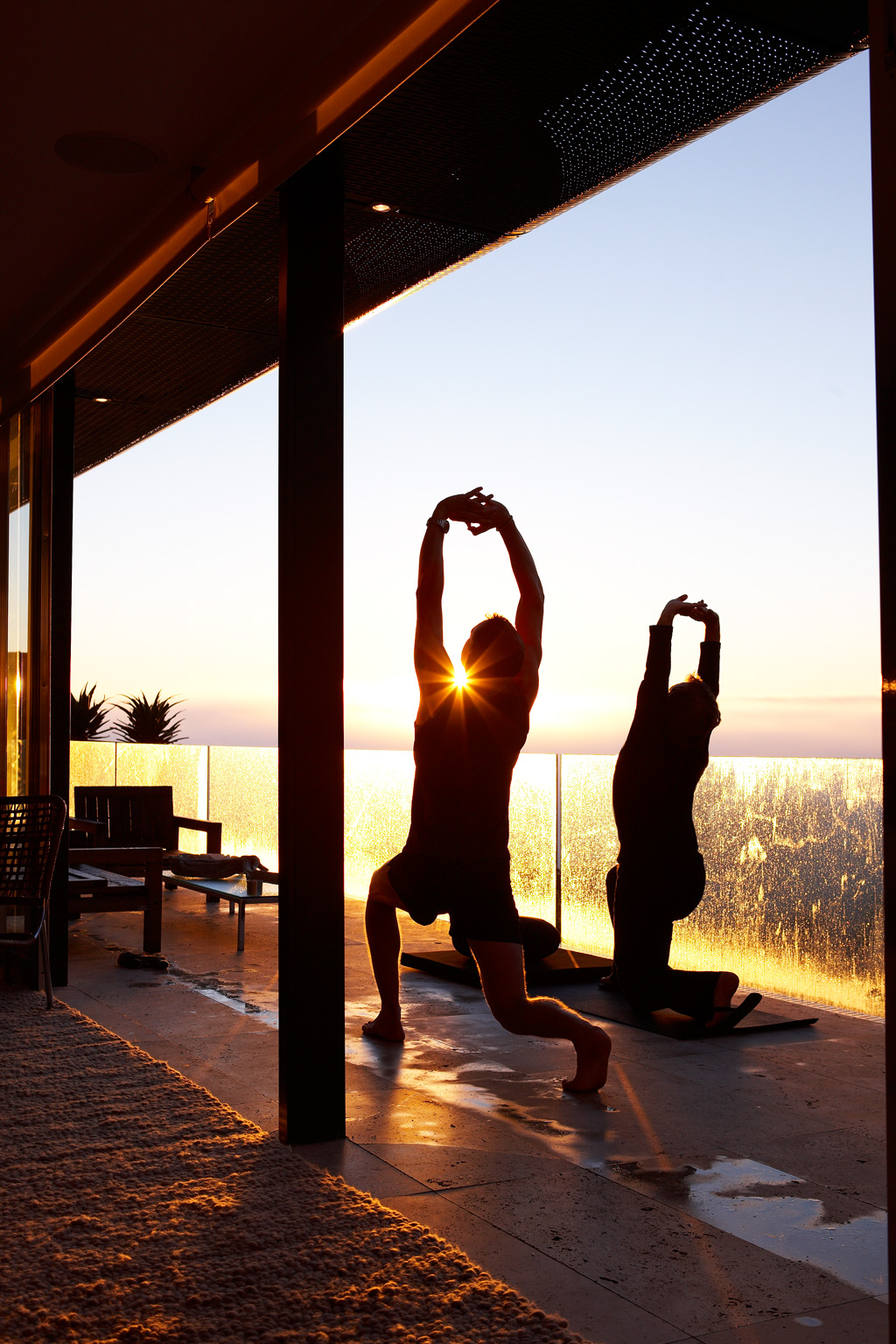
Early morning yoga : Pre-dawn yoga on the deck with personal trainer Paul Underwood. -
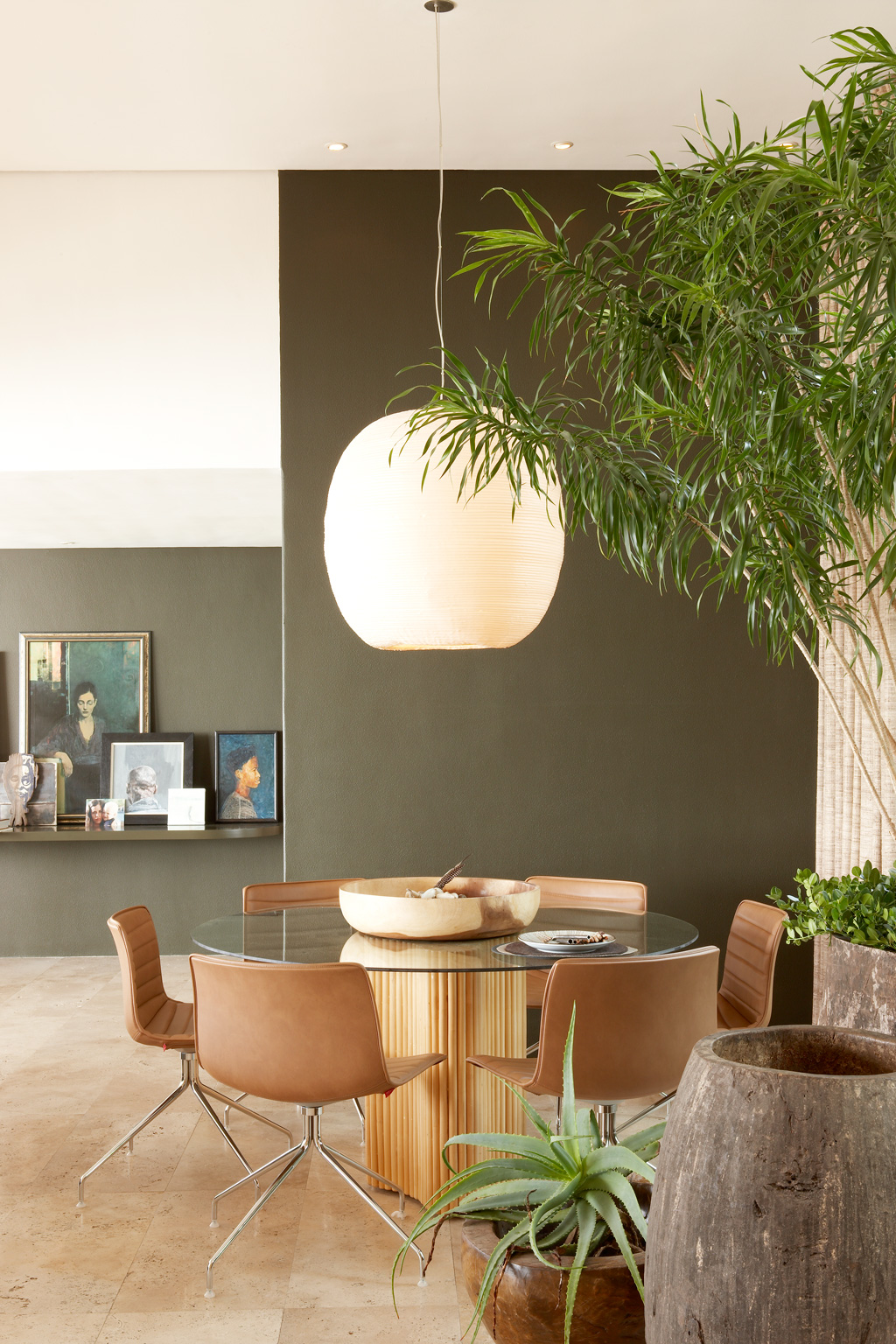
The dining room : The natural hues and textures of the informal dining area are thrown into sharp relief by an inky green backdrop — all the feature walls are painted this colour, emulating the palette of the surrounding mountains and forest. -
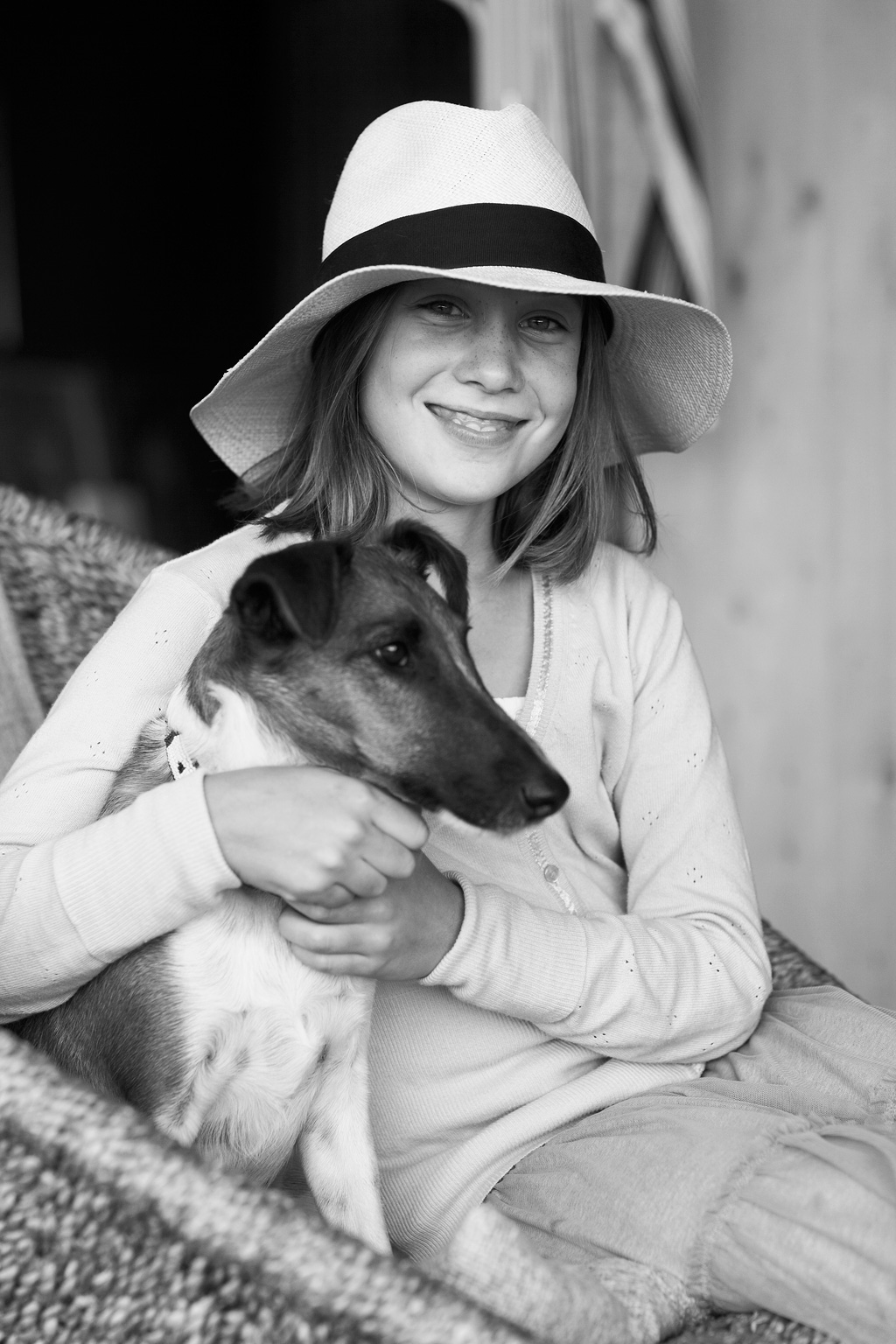
Ula with a contented Todd -
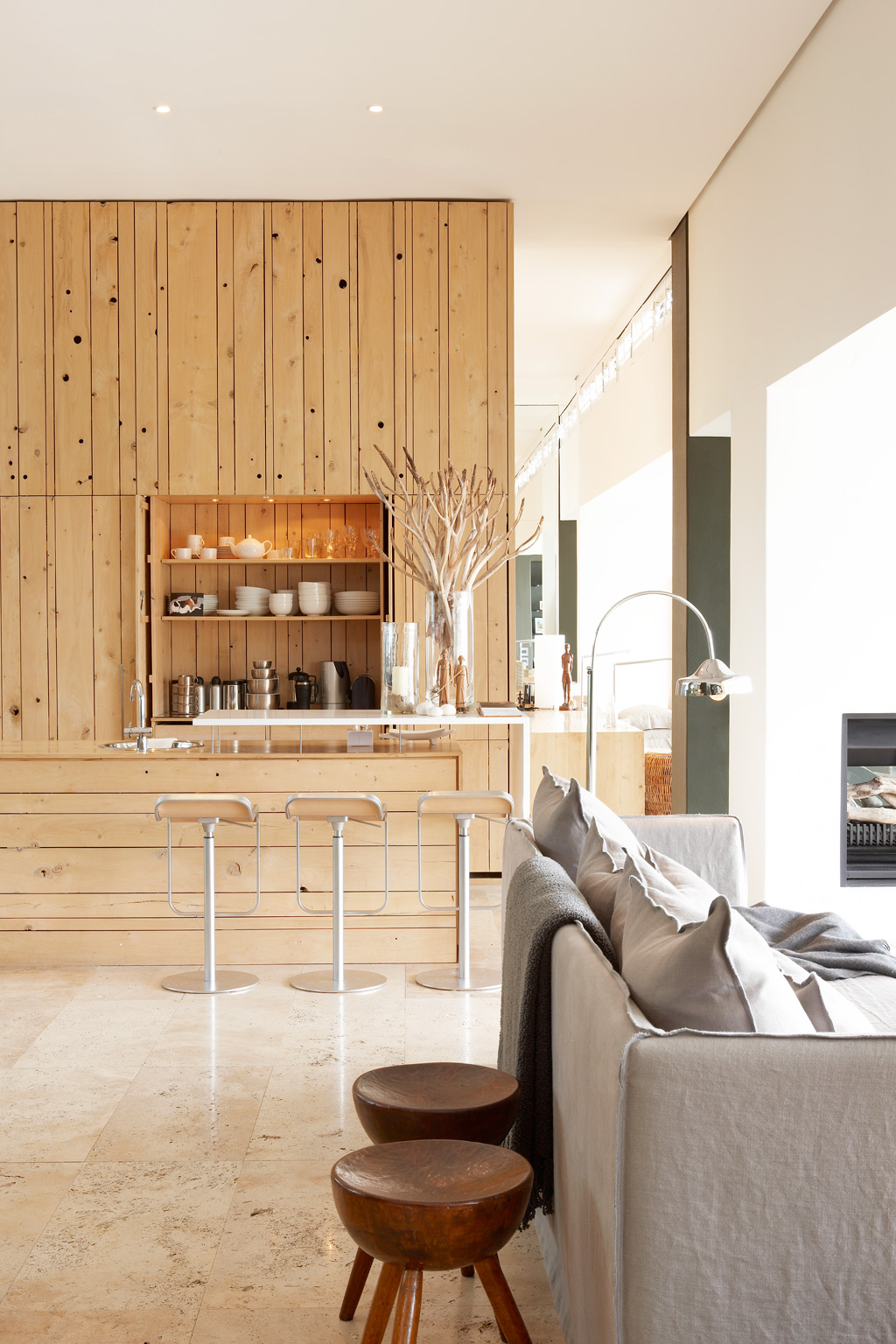
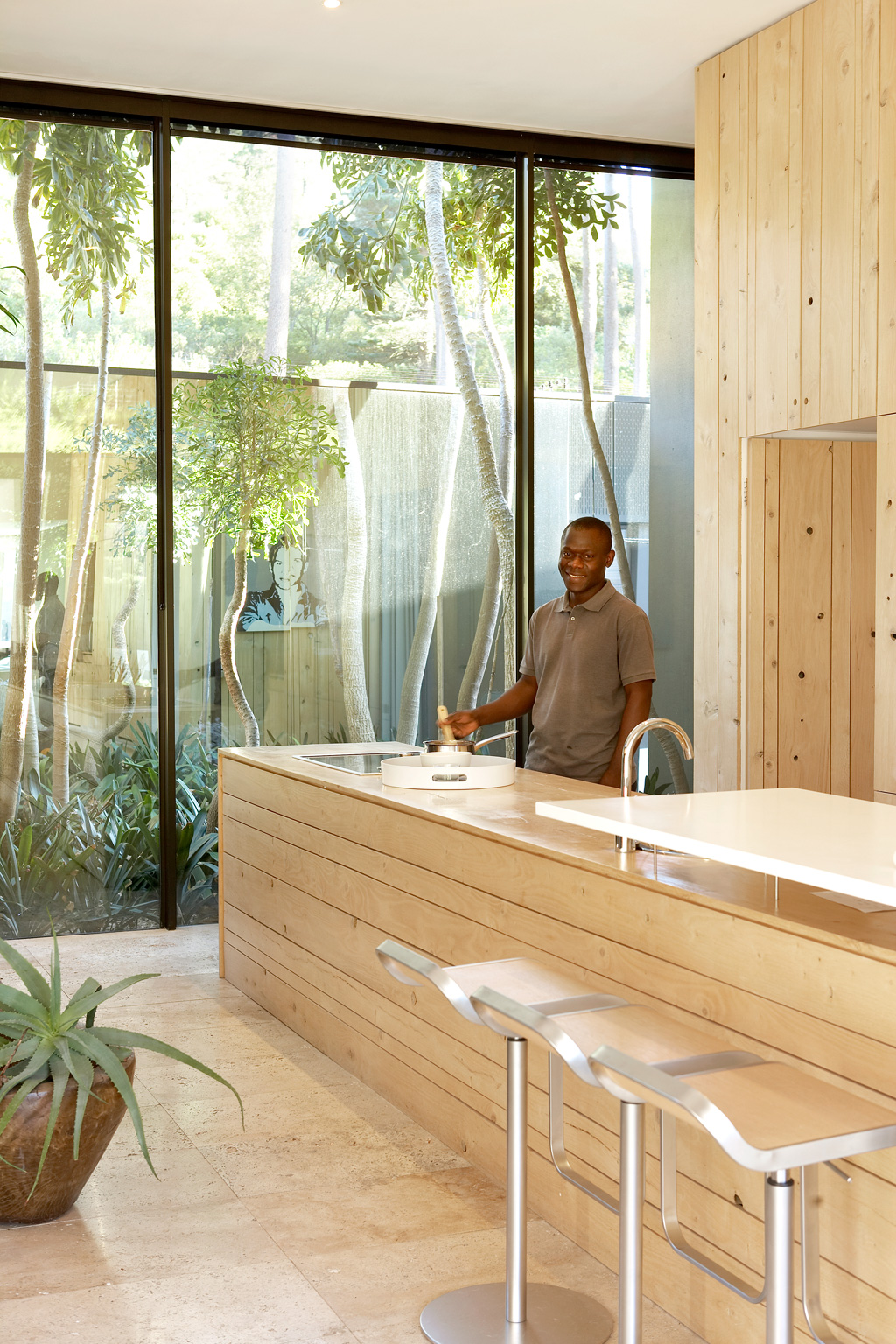
The kitchen : Floor-to-ceiling panels of bleached oak open to reveal the kitchen. The floor, meanwhile, is pale, salvaged unfilled travertine. -
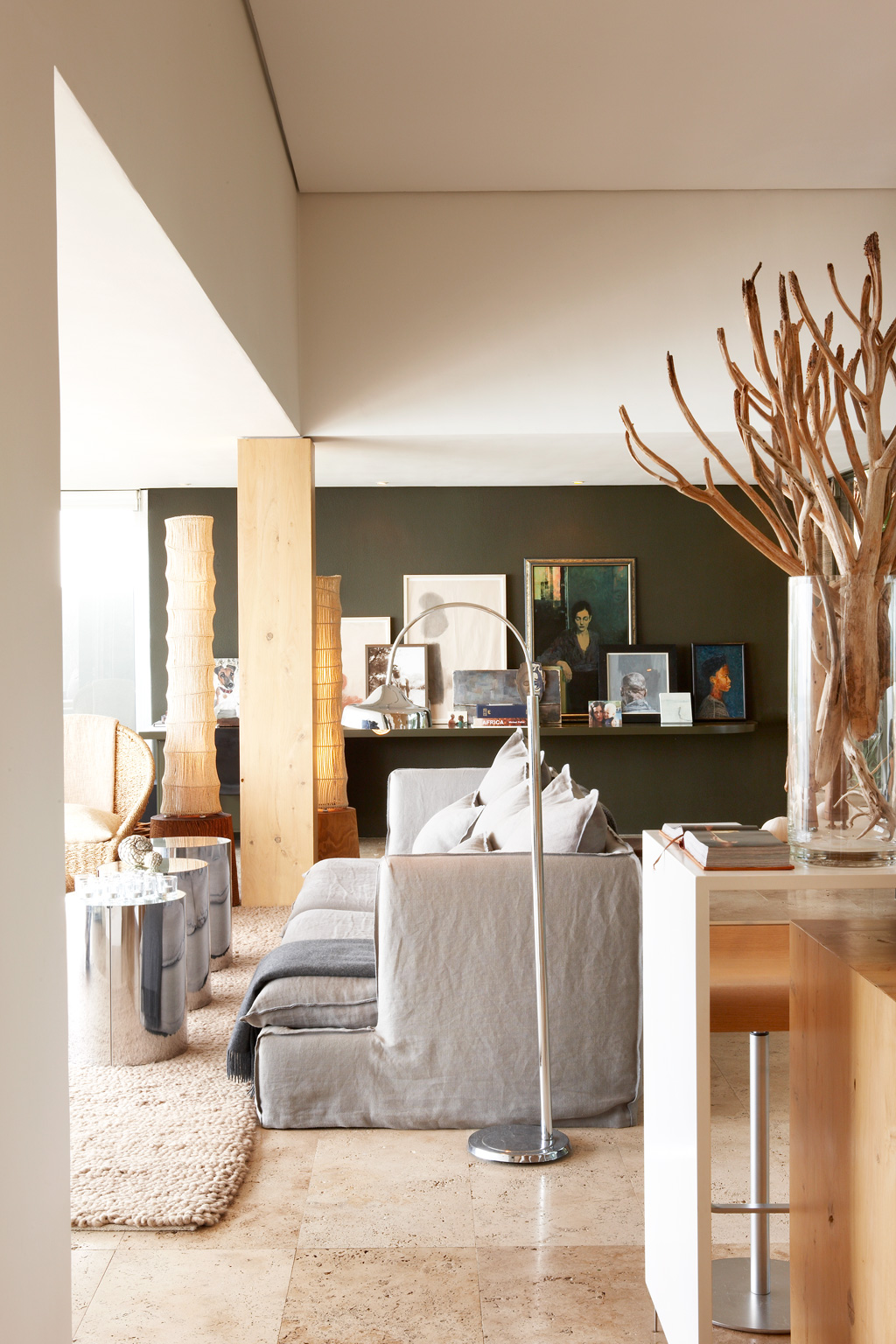
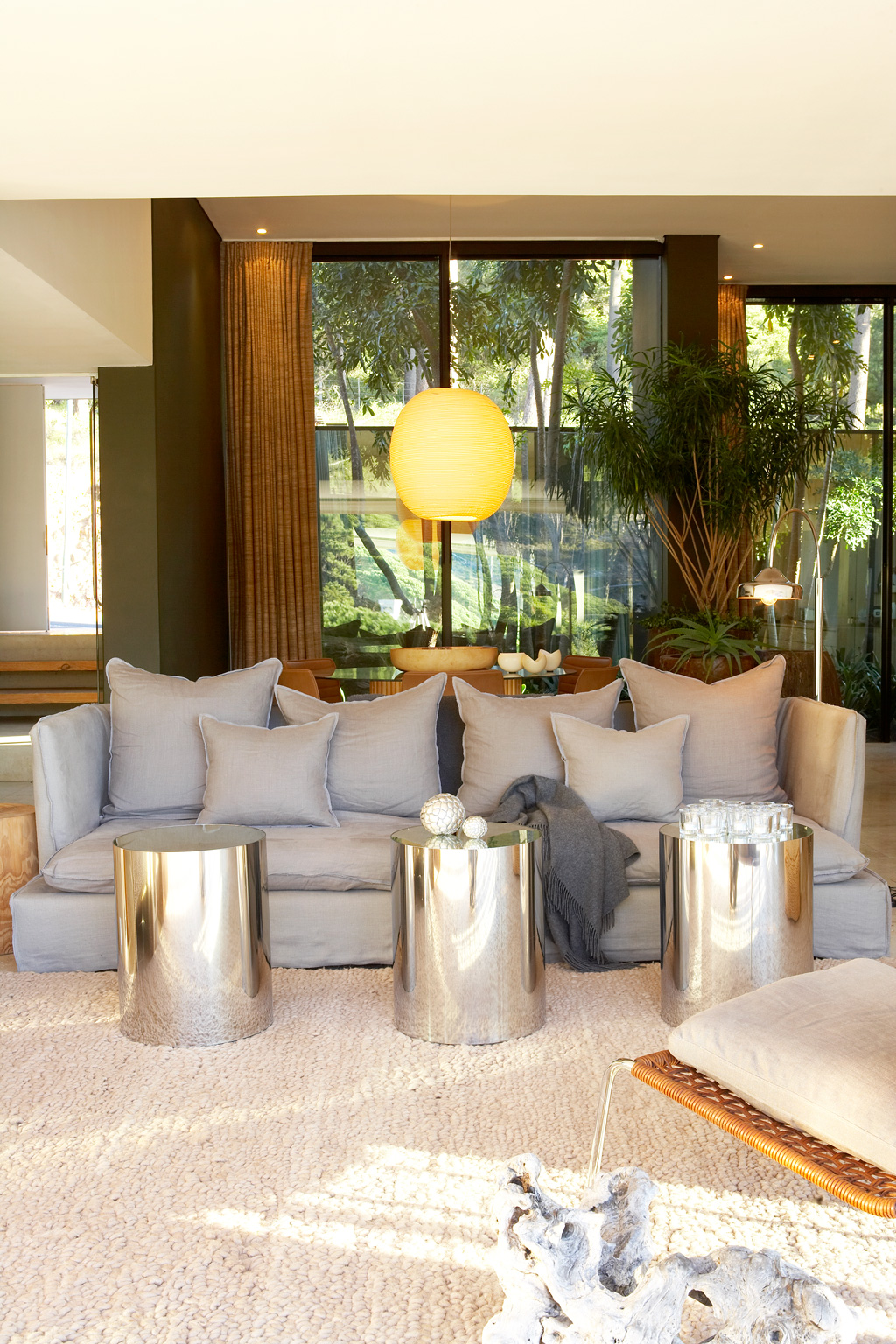
The living room : Decoration is pared down and functional. For instance the custom-designed grey linen sofa, in its loose cover, becomes something of a ‘non-shape’ — ‘relaxed, organic and honest,’ says Boyd. -
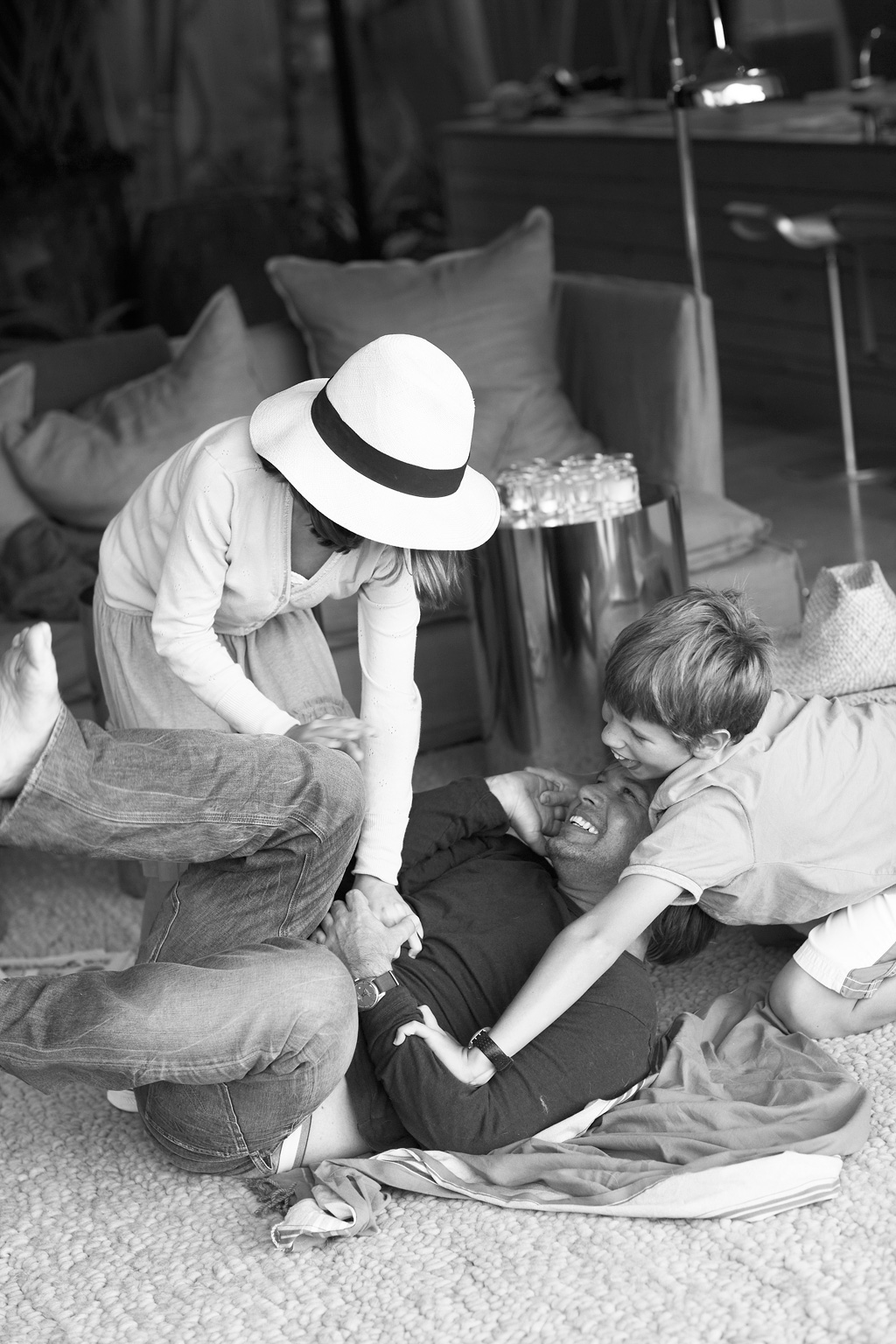
Family affair : Boyd Ferguson plays with his niece and nephew, Ula and Noa. ‘This place is a bit like a railway station — there’s a non-stop flow of people and activities,’ he laughs. -
Paintings and photographs : Paintings and photographs are arbitrarily stacked and rearranged on impulse: ‘There’s something transient about not permanently fixing them to the wall,’ says Boyd. -
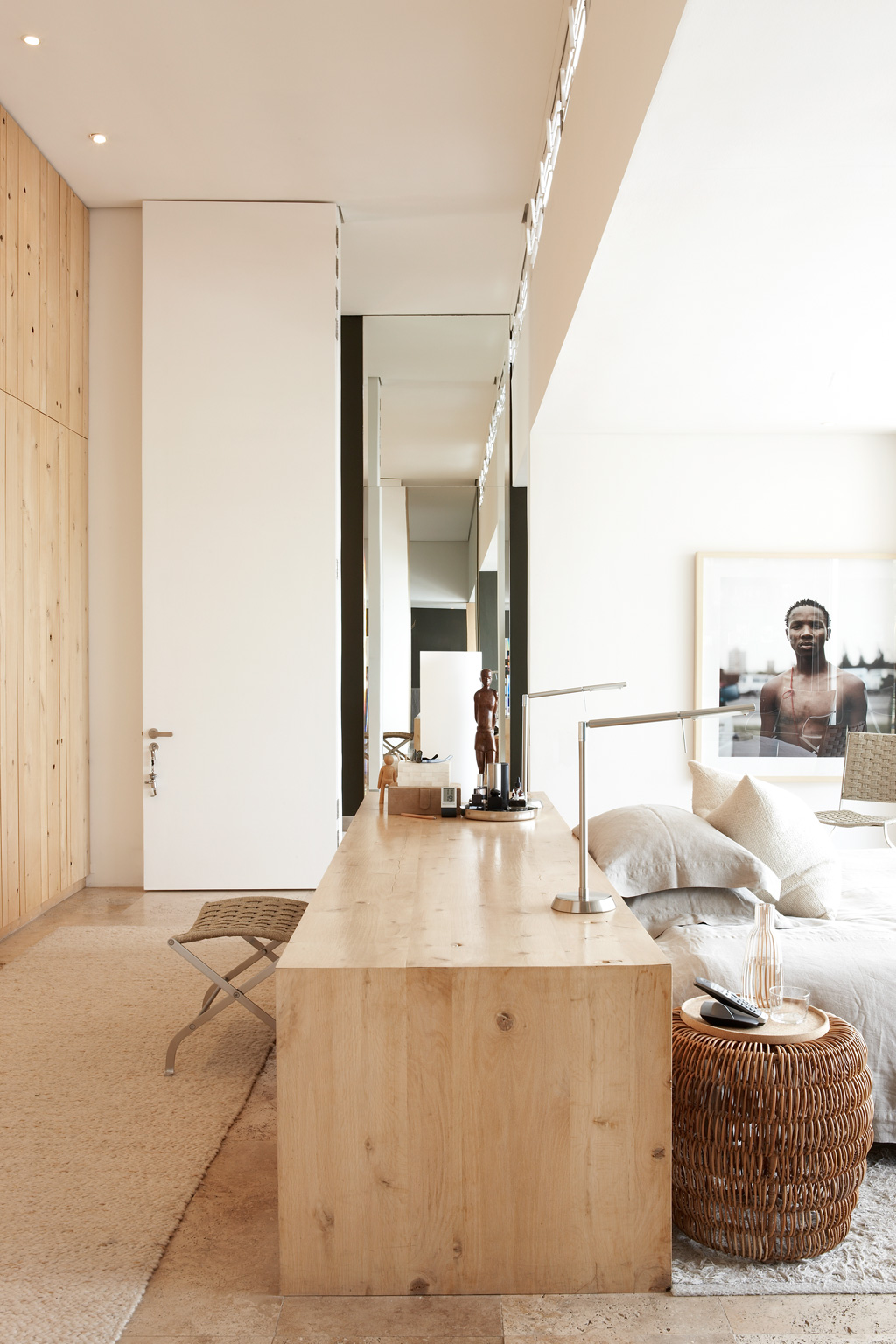
The bedroom : A multipurpose wooden headboard-cum-traveller’s-packing-table anchors the bed in the master bedroom upstairs. The large Pieter Hugo photograph was acquired through the Michael Stevenson Gallery in Cape Town. -
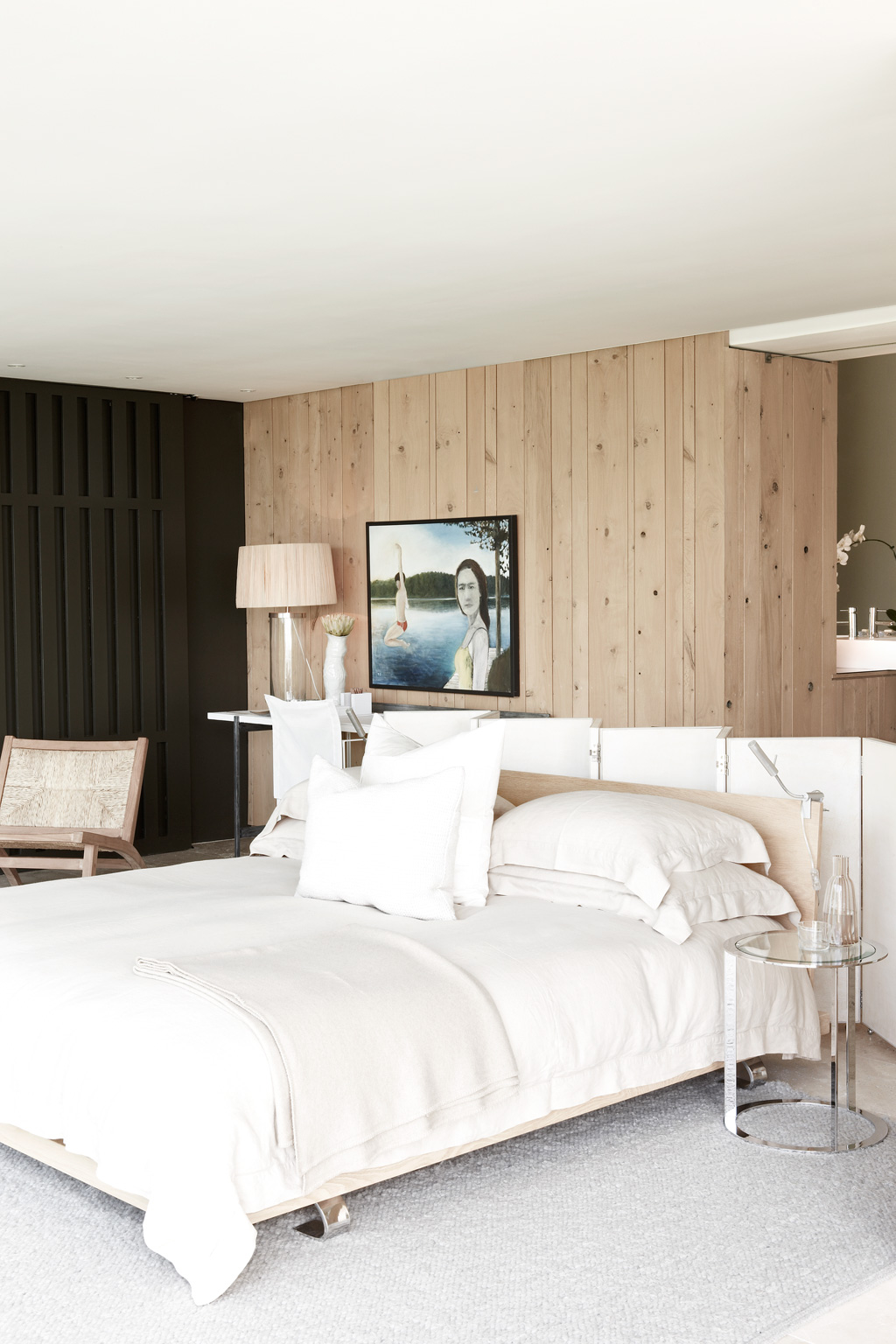
More on the bedroom : Heavily textured raw linens and natural wool dress the guest bedroom, which is a reflective space with a clean-lined Scandinavian sensibility, a product of the many years Boyd spent travelling to Sweden -
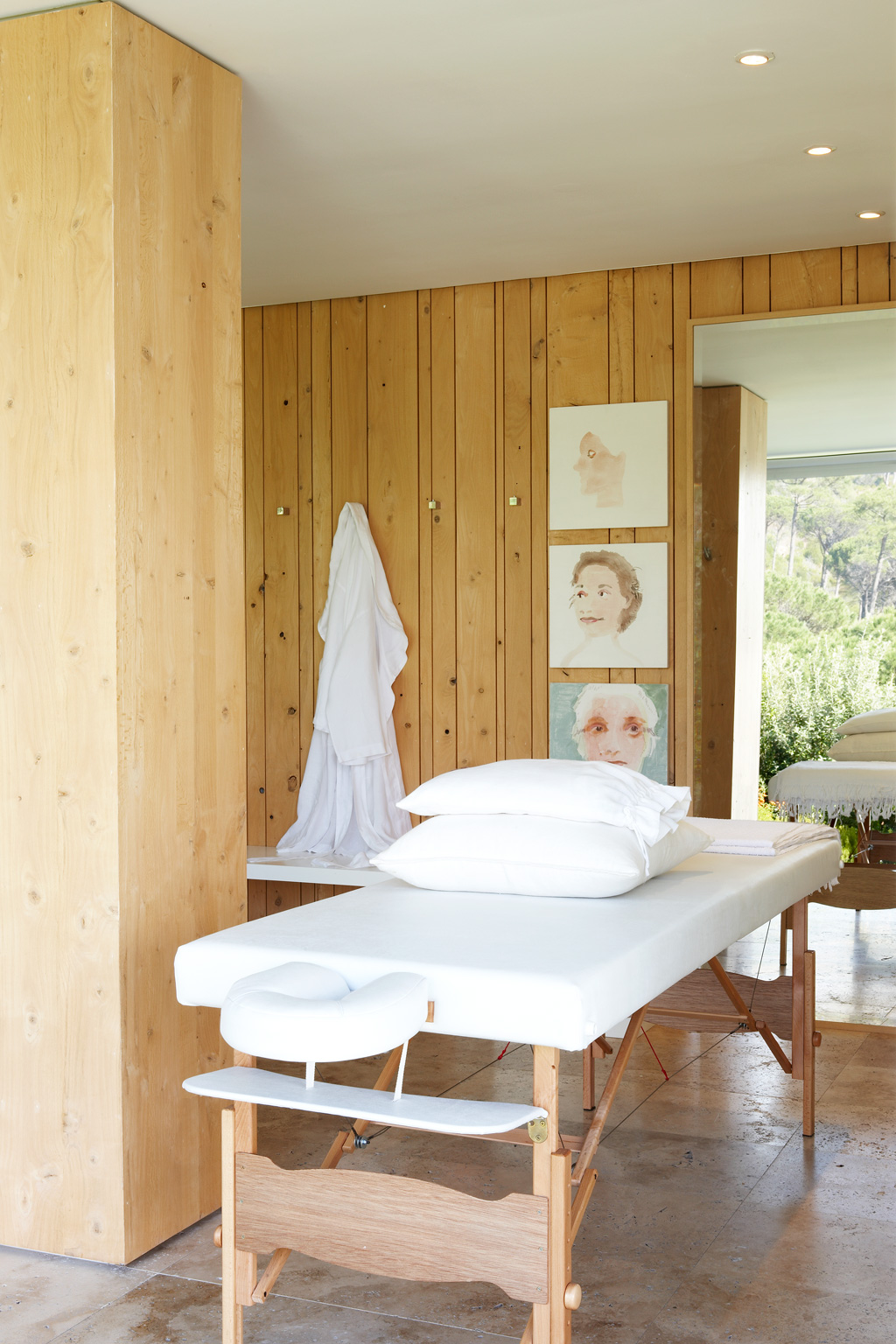
The spa : A wooden massage table dominates Boyd’s ‘spa’. The portraits are by Gabrielle Raaff. -
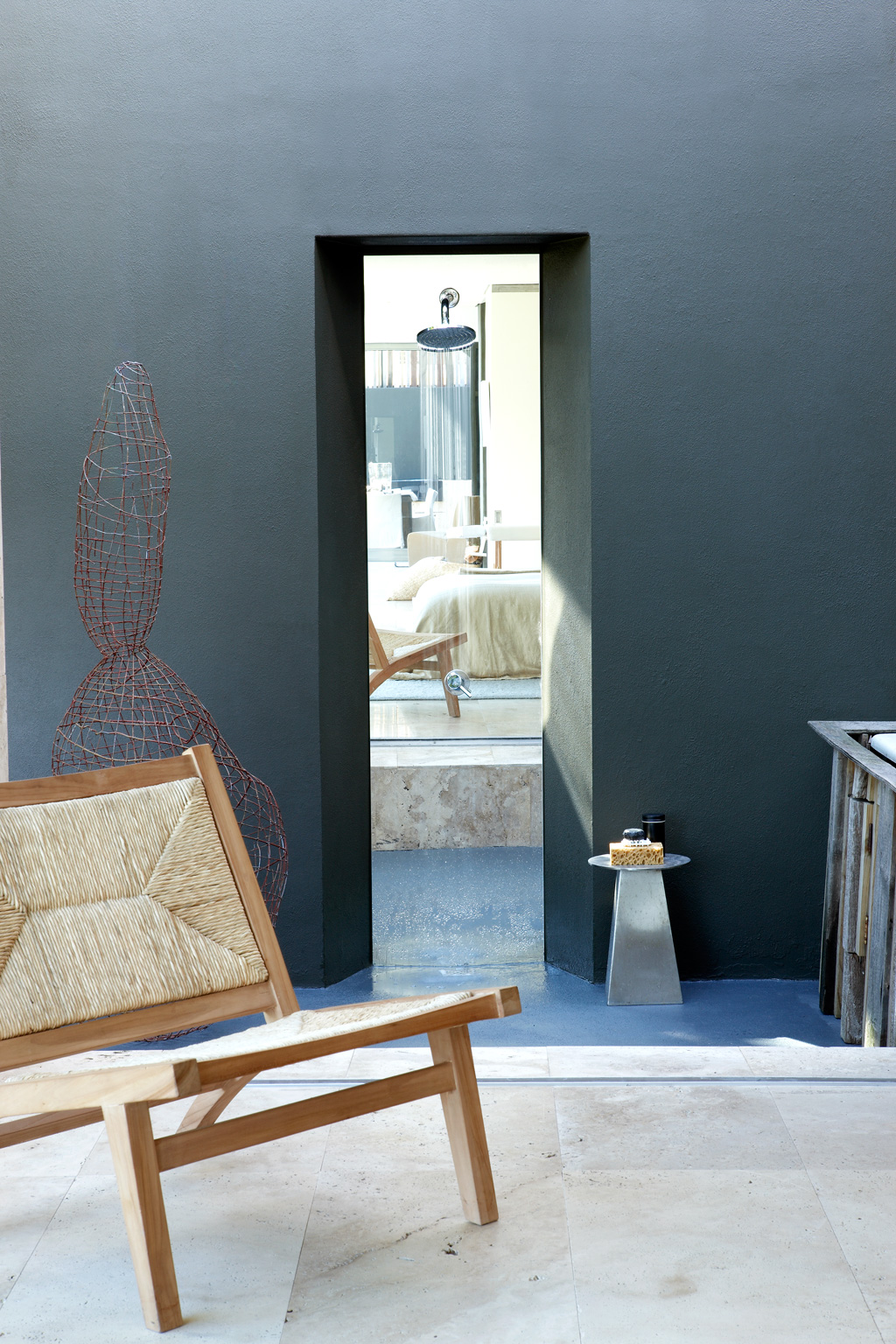
Outdoor shower : Framed by the doorway, the outdoor shower underscores the beach house feel — ‘I grew up at the sea and have a strong affinity with it,’ says Boyd. -
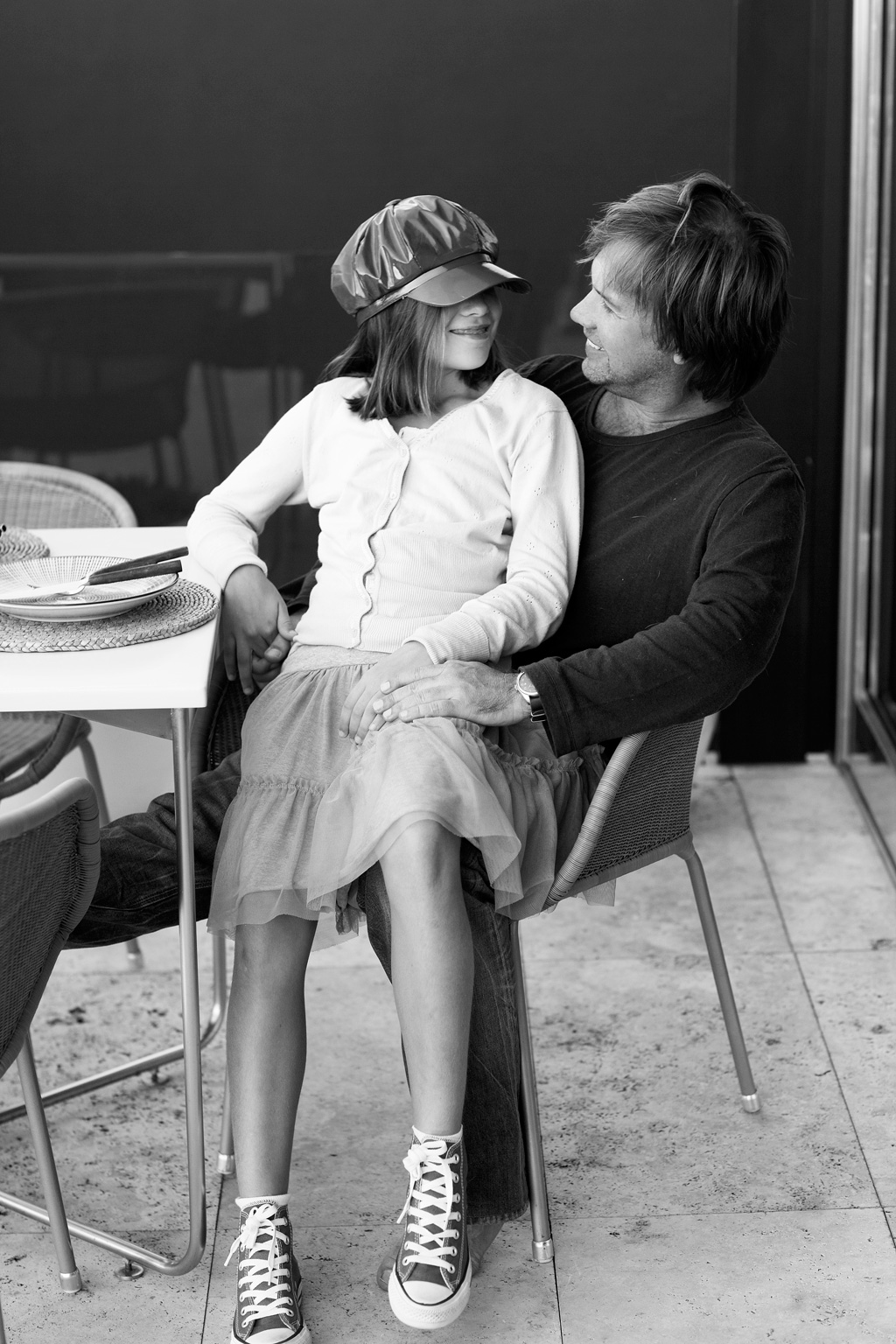
Ula and Boyd -
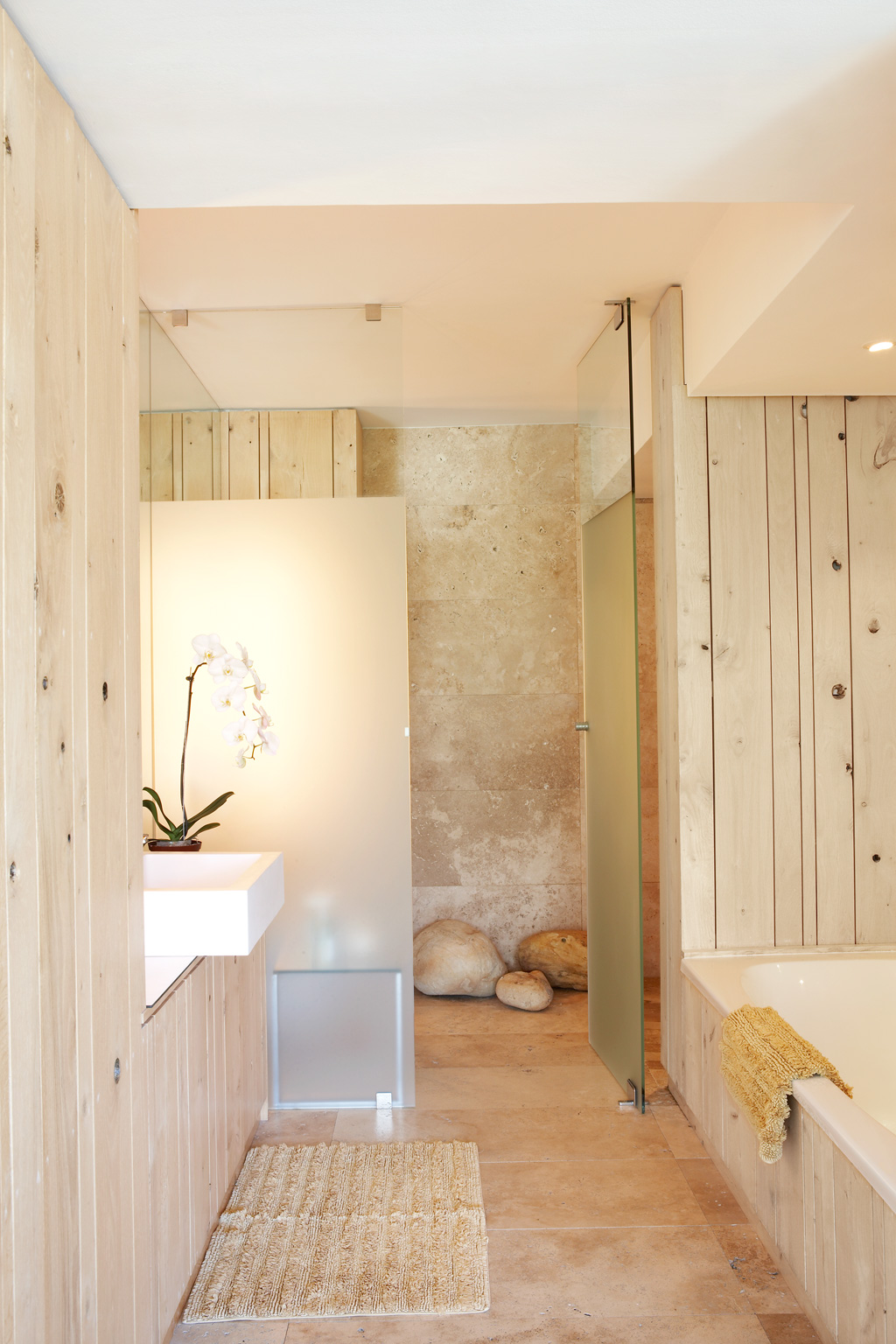
The bathroom : Natural wood, travertine, glass and basket-weave co-exist in the bathroom. -
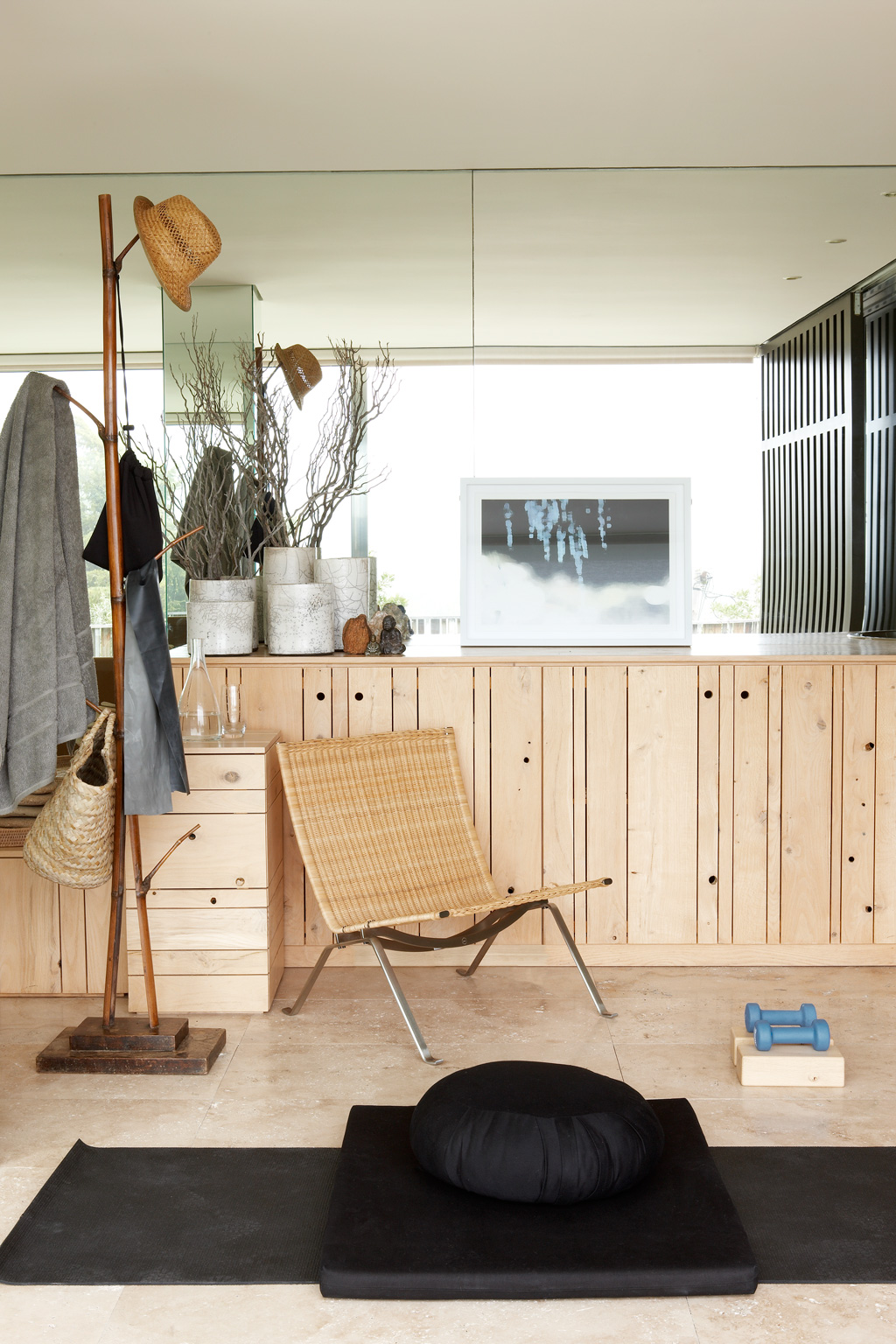
Meditation space : Mirror-clad walls coax light into Boyd’s downstairs ‘meditation space’, which is outfitted in the same oak panelling that is used in abundance throughout the house. -
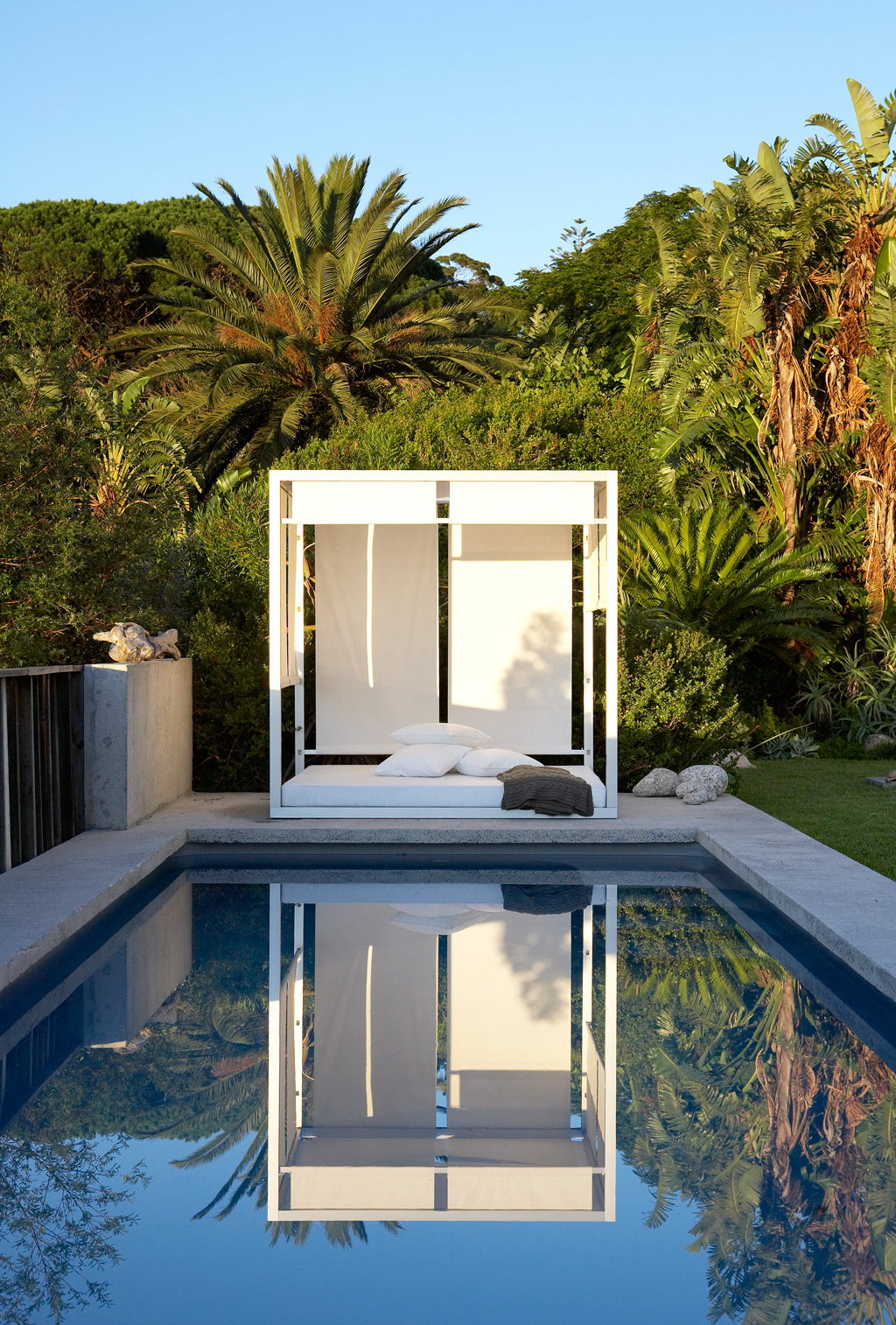
Absolut VISI Designer of the Year : Boyd, Ula, Noa and the dogs cavort on the Gandia Blasco day bed from Twiice International, which Boyd was awarded for being chosen as the Absolut VISI Designer of the Year. -
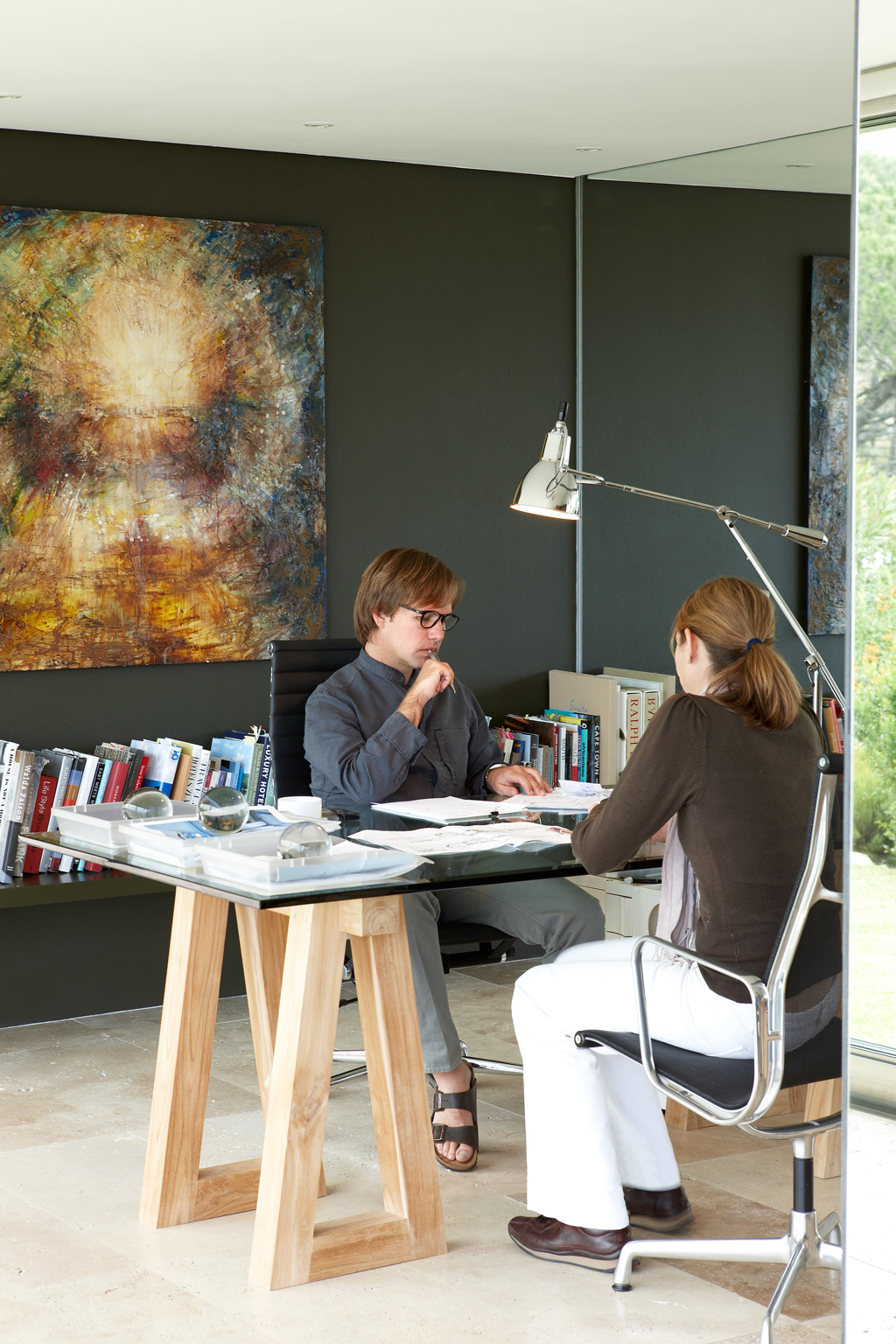
The workspace : Boyd works half day from home and the other half at the studio in De Waterkant. He is seen here in discussion with personal assistant Deborah Goudvis. -

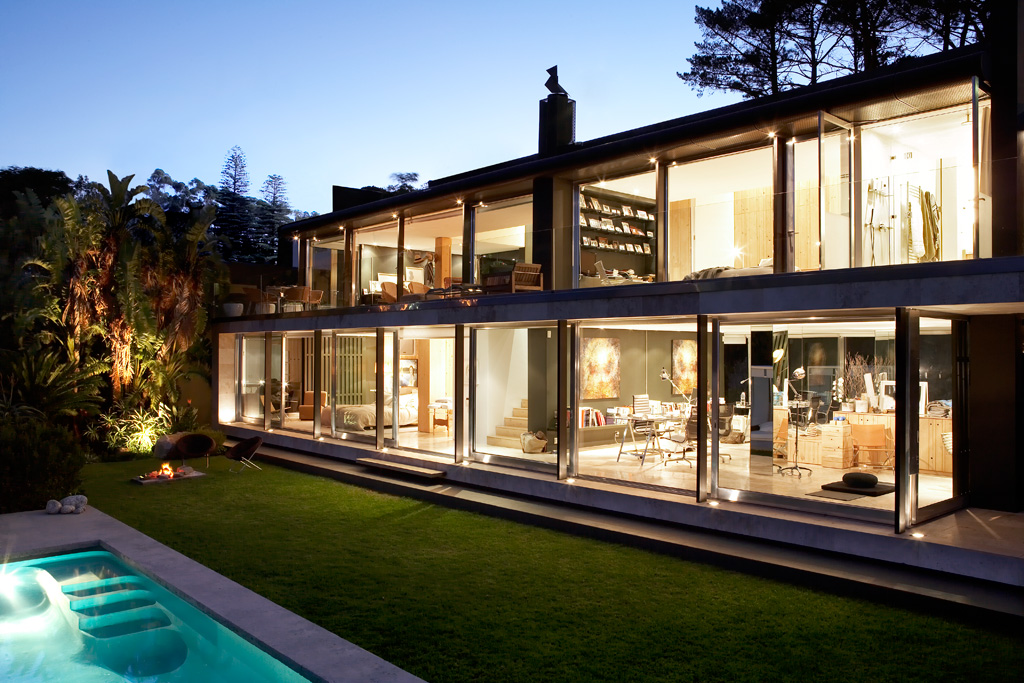
The exterior : A seamless double-volume glass facade opens the house to its surroundings. -

The outdoors : The pool is overlooked by the Gandia Blasco day bed. Behind it, a verdant indigenous garden blends with the surrounding alpine flora and Cape fynbos -
More on the living room : In the living room a trio of stainless-steel cocktail barrels in front of the sofa effectively ‘borrow’ outside light and reflect it through the interior. -
Resident housekeeper, butler, cook, dog trainer and hotel manager Edward Chirwa : Edward Chirwa runs the house ‘like a boutique hotel’. His own suite is designed in keeping with the house.
WORDS Jocelyn Warrington PHOTOS Micky Hoyle PRODUCTION Sumien Brink
Cécile & Boyd’s Boyd Ferguson, who is responsible for some of the most iconic hotel designs in the world, is at the pinnacle of his profession. We paid an exclusive visit to his Cape Town home.
Boyd was his ever gracious, ever eloquent self, albeit preoccupied with finding just the right home for a shock of pink proteas arranged in a spiny calabash. I traced his flip-flopped feet over the heavily polished floors of the old manor house, frantically taking it all in. Every object, every furnishing, every mural, every ensemble was the product of careful scrutiny, infinite thought. Opulent, yes, but nothing simply for the sake of it. Everything to tell the new story.
So I’m on mental high alert when I arrive at his home, high on busy Kloof Nek road, on a heaving rain-sodden Cape Town morning. The doors are unprepossessing, so much so that I’m momentarily uncertain of the point of entry. I hesitate before ringing the bell for fear that the noise of the street will obscure my introduction over the intercom. But he is there, inviting me in, away from the chaos. I’m greeted by Tula and Todd, Boyd’s much-loved short-haired English fox terriers. Edward Chirwa – resident “housekeeper, butler, cook, dog trainer and hotel manager” – comes in from the rain to offer me coffee or tea. I decline, preoccupied instead with running my hands over the random lines of bleached oak panelling, which, I later learn, conceals an entire kitchen.
“It’s reclaimed wood from Cecilia Forest,” Boyd explains, opening doors by leveraging his fingers through what seem like strategically placed knot holes in the wood to reveal work and storage space, fridge and freezer. “I couldn’t settle on handles and, in the interim, was using the wood’s natural knot holes to pull the doors open. It just stuck. So I drilled through a few more of the knots and had myself a ‘less is more’ solution to the problem of finding handles.”
Boyd’s space has an easy calm but, apart from a few stems of dry aloe and a trio of oversized beach pebbles, is almost entirely devoid of ornamentation. “My work is so much about celebrating the lush of luxe that I need a neutral, restorative space to retreat to. My home is my refuge. It’s also my laboratory. This is where I exercise my mind, body and soul, and also where I find quiet.”
Indeed, the deafening noise from the road is gone and the house floats like a silent ship above a blanket of mist that obscures the view – a mind-blowing foreshortened Table Mountain in front and the formidable rise of Devil’s Peak behind, with the business of the city conducting itself in the basin below. Backdropped by alpine forest, the surrounding vegetation is Western Cape fynbos – sprightly shrubbery latent with exuberant display. Boyd’s garden, indigenous save for a lone Natalian strelitzia – a concession to his roots in the Zulu Kingdom – is at one with this place saddled between two mountains.
“It’s taken me two years to rebuild the house,” he admits, describing how, with the help of dear friends and architects Joy Brasler and Don Albert, the front and rear of the former Victorian farmhouse were blasted open and floor-to-ceiling windows of double-volume glass installed along the lengths of the facades. However, the property’s original footprint and some walls, as well as the existing ceiling heights, were retained.
“It’s interesting to accept compromise in design, to discover the unexpected beauty of it,” he says.
Remnants of the old have been cleverly negotiated into the new. Outside, recycled ceiling trusses and door frames, some painted some not, are haphazardly strung together to screen both the pool and road. Inside, mirror panels render invisible pre-existing architectural indiscretions and these, together with an abundance of polished aluminium, chrome and glass, borrow light from outdoors, reflecting its energy into the interior spaces. “The design is a mirror for the environment, and, as such, a non-element in itself,” Boyd tells me. “The intangibles are what’s key – it’s the atmosphere, not the stuff, that becomes the commodity in the exchange.”
As he describes the evolution of his design ethos, which is, he says, moving from head to heart, Tula and Todd work inquisitively at my boots with their snouts. “My dogs remind me daily of being in the moment because they live so much in the present,” Boyd muses. “This is the same energy that defines South Africans – life is such a clash of extremes in this country that there’s an immediacy to everything we do, a necessary celebration of today.”
Living in the now also means responding to the country’s troubles, such as crime, with presence of mind. “Security is a big issue,” says Boyd, describing how he built his home from edge to property edge, sealing off any perimeter flow, and eliminated windows in favour of huge sheets of toughened glass, securing weak points with vertical-louvre timber shutters. “It’s become another inspiration,” he goes on, “for us as architects and designers to step up to the challenge of incorporating good security into good design.”
Functional beauty appears to be a recurring theme for Boyd. In fact, there’s an almost Nordic restraint to the economy of clean lines and simple forms that co-exist in his home. And, without the distraction of superfluous adornment – or “cultural clutter”, as Boyd calls it – the present is indeed brought sharply into focus: the dripping garden, the shadowy bulk of the mountain emerging overhead and the smudge of the cityscape beneath, the easy exchange between people and animals and planet. “Living here has changed my definition of what is beautiful, meaningful even,” he says. “While so much of my work has been about editing and reconstructing old styles, searching for new ways in which to move people, this house has forced me to see my surroundings as they are without trying to interpret or redefine them.
“It represents the culmination of a journey,” Boyd continues. “I was in my early twenties when I joined forces with Cécile Tilley and last year the company celebrated its twentieth birthday. In addition to our work as hotel designers, we’ve now opened a trade showroom in Cape Town and still have our retail store in Durban, and we have a firmly established niche for delivering good design to the African experience. This kind of high-end work has given me the freedom to be creative, experimental, innovative. Sure, I’m still turning everything upside down looking for a new idiom with which to explain us as we are right now. But in this place I’ve found an authenticity and a sense of being grounded. These mountains, this city, is what’s real, now, fully present, entirely conscious.”
Back out on the street and I’m jolted once again into real time. Suddenly, I’m all too aware of the transience of the moment gone by. The irony doesn’t escape me – and neither, I’m sure, would it Boyd, who, nonetheless, seems, with this home, to have found the still point in a turning world.
Cécile & Boyd’s Interior Design 021 425 5110, 031 303 1005 (retail shop, Durban), cecileandboyds.com