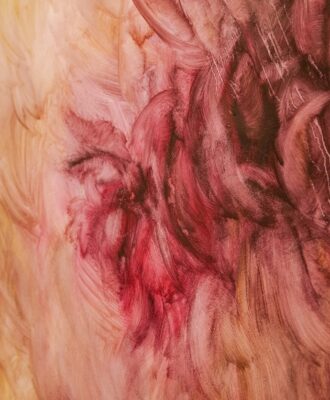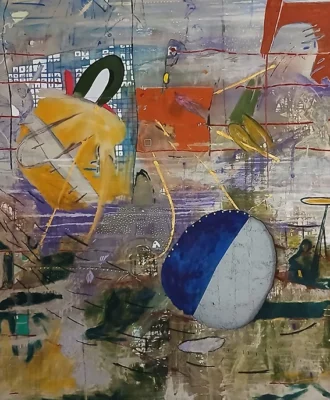
If you’re an artist these days, the brave choice is not so much about the subject matter as it is about the medium. We profile five young local artists who are not painters.
WORDS Sean O’Toole PHOTOS Dillon Marsh, Courtesy Blank Projects, Goodman Gallery, Matt Slater, Charl Dettmer/Art Forme
It’s no secret that the commercial art world has been experiencing topsy-turvy times. The cycle of boom-and-bust of the past few years has seen art collectors cycle through rages for photography and installation, figurative painting and NFT art, textile and clay artists, and most recently safe-bet Modernists – preferably female Surrealists.
In such unstable weather, it is tough for makers and consumers of art to find their bearings. One reference is the secondary market, but it offers a glum diagnosis of things. Painting – be it figurative or abstract – is still is still top of the pops at auction. But, joyfully, there is a counterargument. It is being formulated in the studios of young artists in Cape Town and Johannesburg. Painting? Nah! Profiled here are five emerging artists whose practices typify some of the bold ideas being explored by young artists born aft er 1990. In summary, anything goes… just not painting.
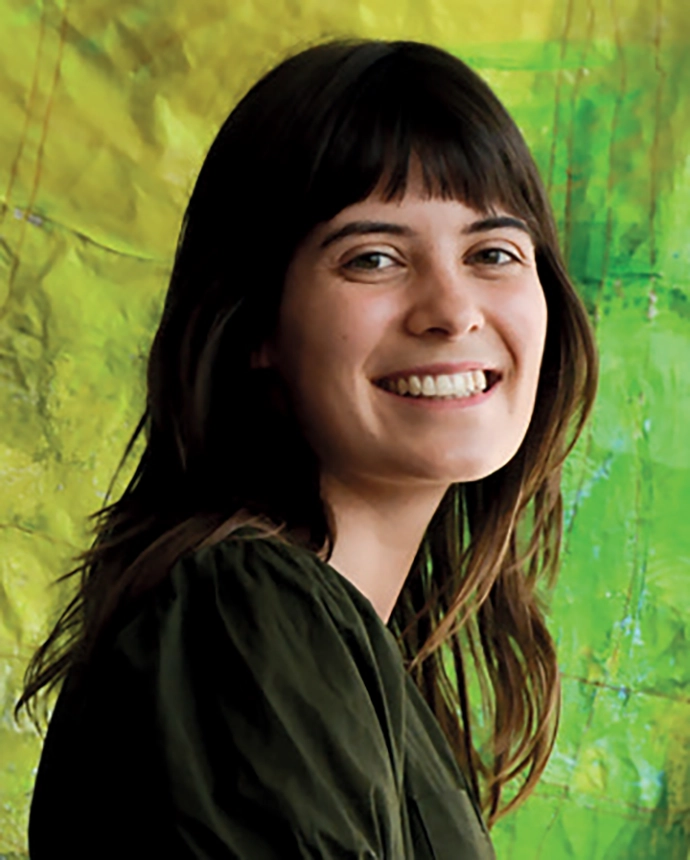
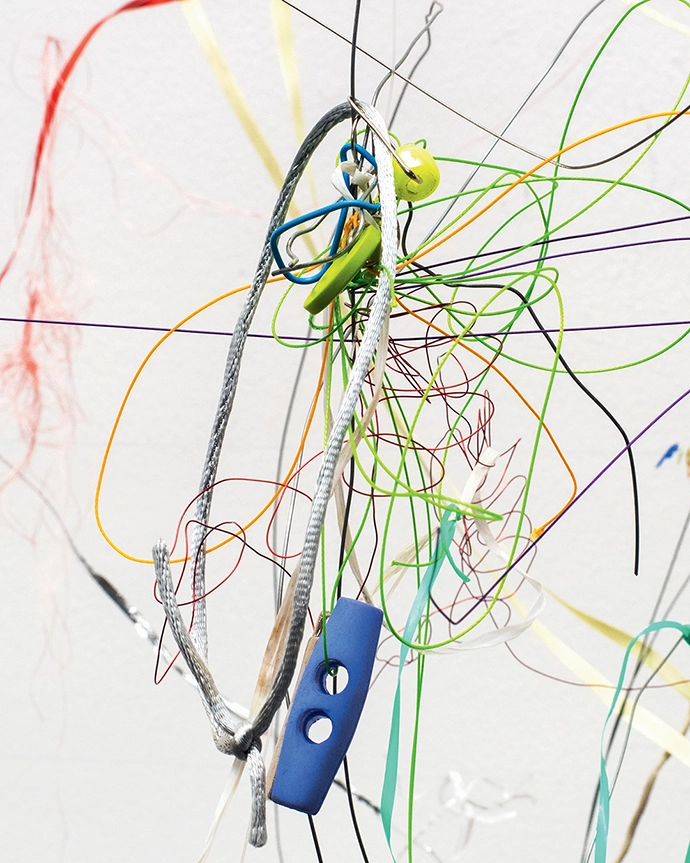
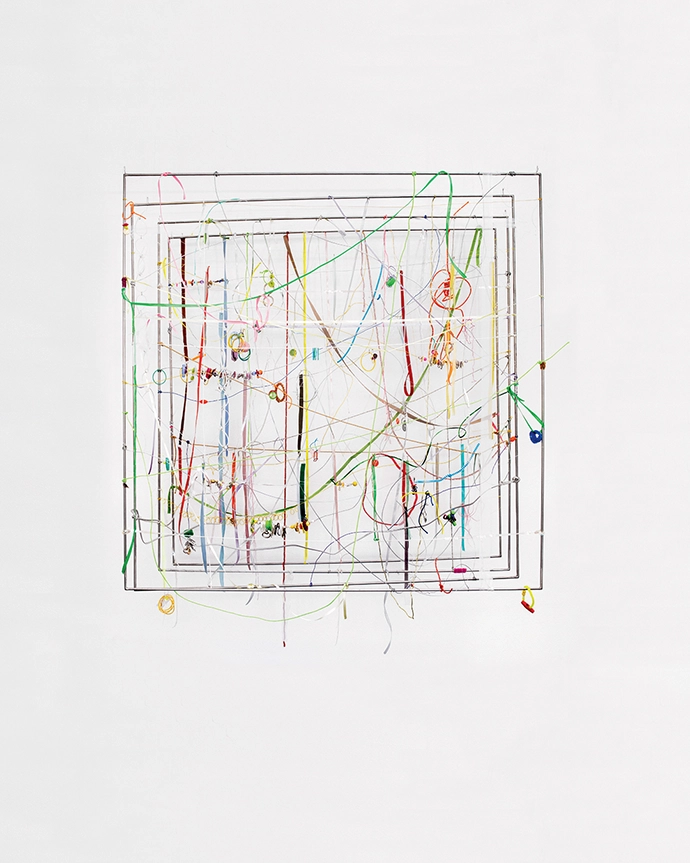
Last year, PIA TRUSCOTT enrolled in a mentorship programme run by artist Dominique Edwards, prompting a radical shift in her practice – to working in three dimensions. The sculptural turn heralded by her recent “wire arrangements” goes back to a series of collages she made from discarded maps. “I began experimenting with wire,” she says. The material reminded her of drawing – “moving a line through space”.
But there was more to it than that. “ While it can be controlled and manipulated, wire also has the ability to bounce back and hold a life of its own.” Earlier this year, Pia presented a resolved body of these works at Cape Town’s AVA Gallery. Redolent of the work of Igshaan Adams and Bronwyn Katz, these porous and fragile pieces are the product of scavenging. The process is central to her practice – her earliest works were made from found plastic bags, which she arranged with a painterly aptitude for colour.
The individual elements (bits of rope, broken zips, left over 3D printing fi lament) in her “wire arrangements” are foraged on walks through Paarden Eiland, and from fabric stores in Woodstock. She says the suspended objects represent “an alphabet or language around daily life, and the places that I visit and the things that I pick up”. | @piatruscott
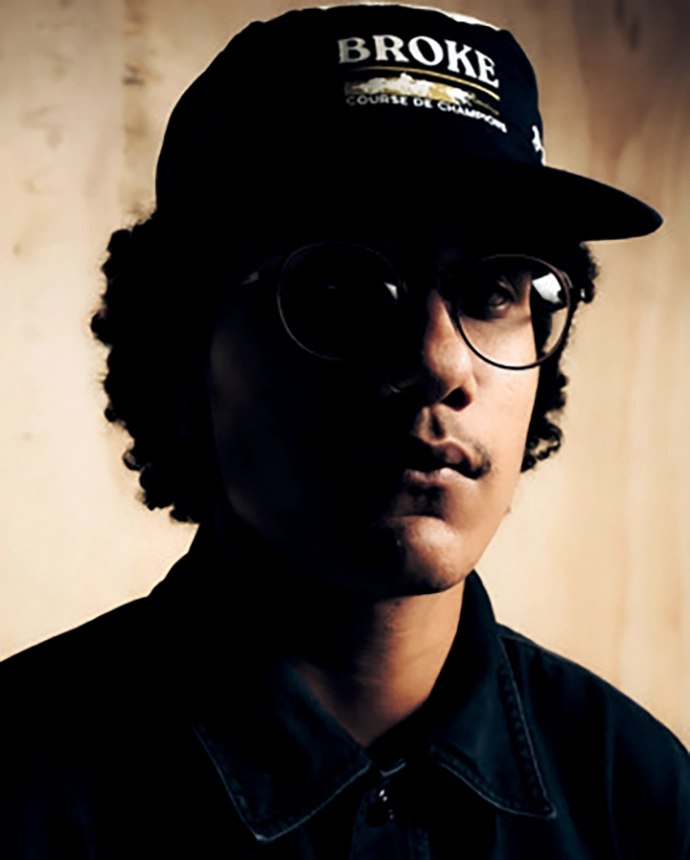
AARON PHILANDER started an experimental gallery with some friends in 2024, while still an art student at UCT – and he attributes his current visibility as an artist to the lessons he learnt co-managing Demo Projects. “It taught me how to network and talk to industry professionals,” he says. It also gave him a curatorial eye for displaying work. Most importantly, it taught him self-reliance – a quality that informed his graduate work.
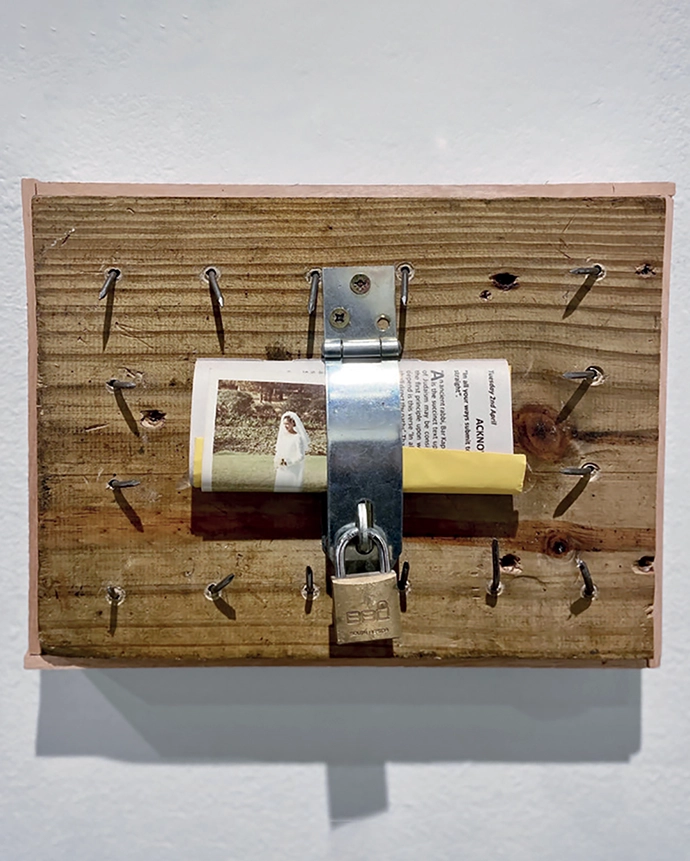
Interested in sculpturally exploring what it means, historically, to be coloured (mixed race), Aaron’s student work comprised recycled tools and implements salvaged from the family shed. He’s consistently returned to his family for inspiration. In 2025, for his debut solo with AVA Gallery, he showed crude, wall- hung assemblages incorporating kitchen implements and photos linked to his deceased grandmother.
The “journey of self-discovery and healing” this work initiated continues. Earlier this year, Aaron presented a solo with Lemkus Gallery. His work included carved wooden reliefs, a kinetic sculpture and text works. Beneath the restraint of his work was a genuine ache. Many of the pieces referenced (and honoured) his hard-working grandfather, a retired artisan with dementia. “My practice has become a thing of learning – or relearning – what is forgotten.” | @aaron philander_
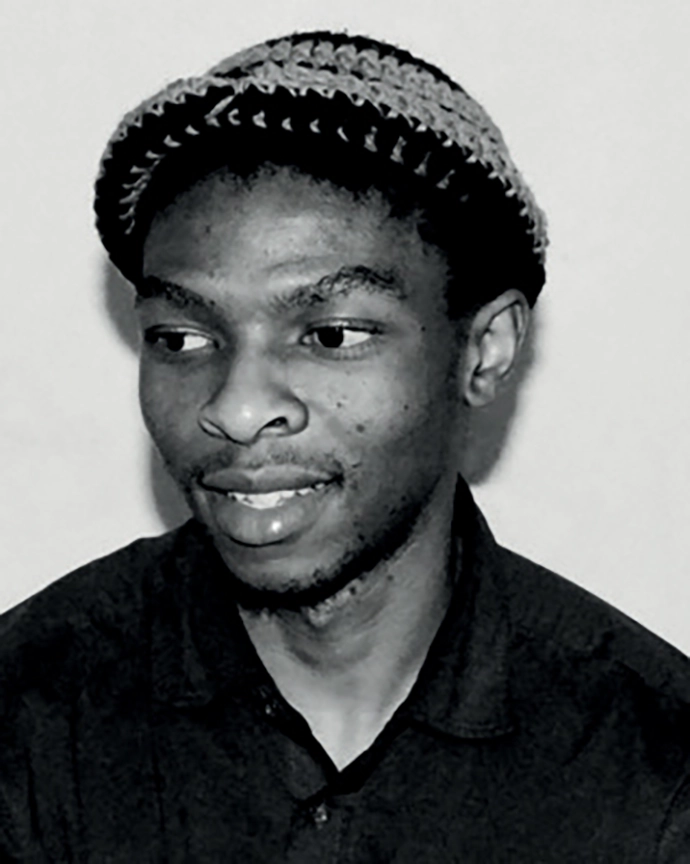
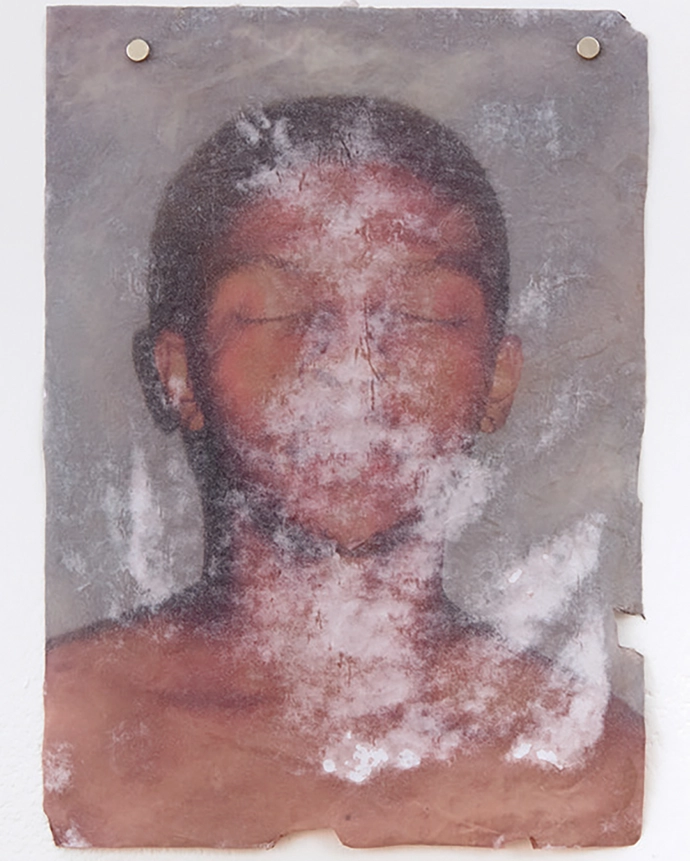
THEMBINKOSI HLATSHWAYO was three when his father opened Ray’s Inn in Lawley, southwest of Joburg. Locals nicknamed the violent drinking den “slaghuis” (butchery). Years later, while studying at the Market Photo Workshop, he drew on his youthful feelings of guilt and shame to produce “Slaghuis I” (2018) – a body of work that comprised various self-portraits of Thembinkosi in distressed poses, their worn-out surfaces a hallmark of his experimental photography. To achieve the texture, he photographed himself, made cheap photocopies, pinned them up in his father’s tavern, and re-photographed the results. His ingenuity was rewarded with the Swiss-based CAP Prize for Contemporary African Photography in 2019. Other awards followed.
But then, in 2021, his father died, and Thembinkosi had to take over the family business. “There was a self-destructive phase,” he says. His breakthrough photographic project about vestiges and residues saved him. He realised his work is about more than literal traces – it’s also about the things we inherit from our parents.
Thembinkosi’s recent solo with Blank Projects included new self-portraits and an installation made from blackened photocopy paper. “There’s something physical about seeing,” he says. “It touches you. It’s definitely how I treat the photo as well.” | @thembinkosih15
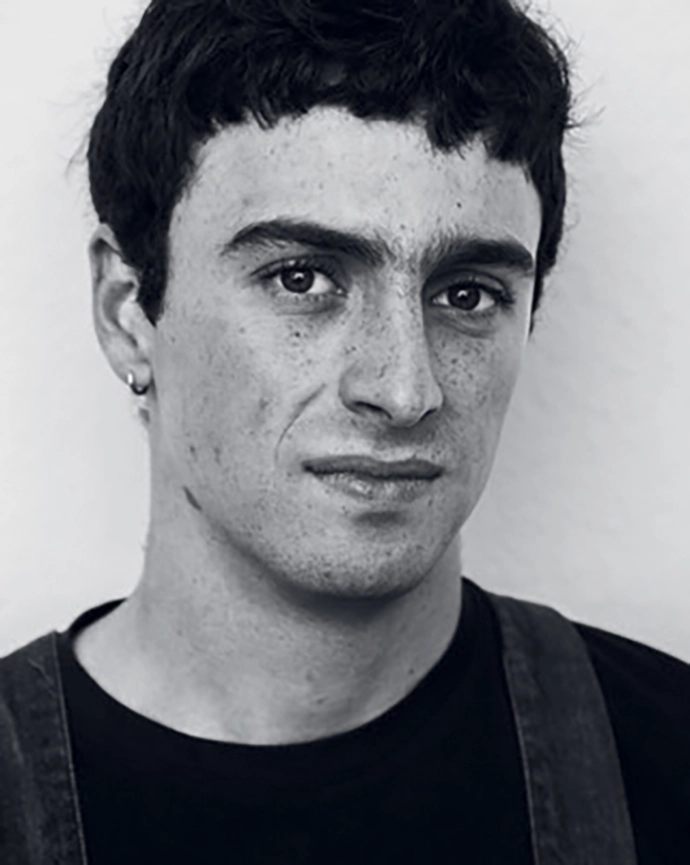
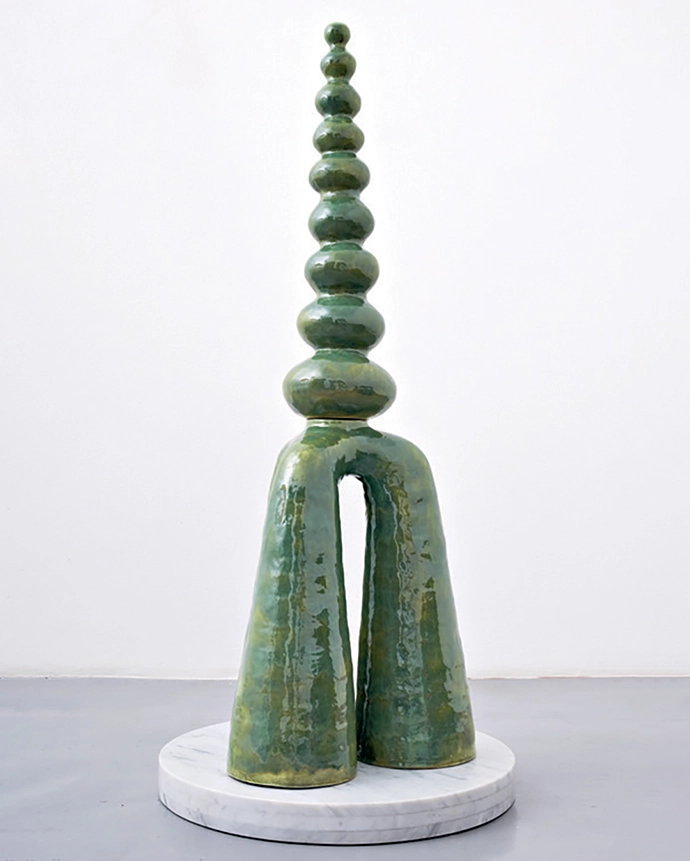
BEN ORKIN recently launched a physical therapy practice. “Unlock tension”, the Cape Town artist’s business card reads. But he hasn’t forsaken his great passion: clay. “Since starting to work with the body in 2025 and learning more about the anatomy of it, my relationship with clay has developed in exciting ways,” he says. The body, he explains, stores memories physically – just like clay.
Outwardly, Ben’s recent sculptural forms retain a formal likeness to the earlier glazed pieces informed by his gay identity, presented in his debut solo with Cape Town’s Whatiftheworld Gallery in 2021. All of Ben’s works are fabricated from rolled coils of wet clay that he stacks on top of each other, over and over, before smoothing them together. Their squat form and occasional multi-part assembly is linked to the small kilns he currently shares with his mother, ceramicist Gemma Orkin.
Ben constantly has to figure out clever ways to work at scale, as well as to protect the fragile protrusions. These logistical challenges speak to something essential about the medium. “You begin with such a malleable, soft , wet material, which then dries and becomes so fragile that you can barely touch it.” | @benorkin
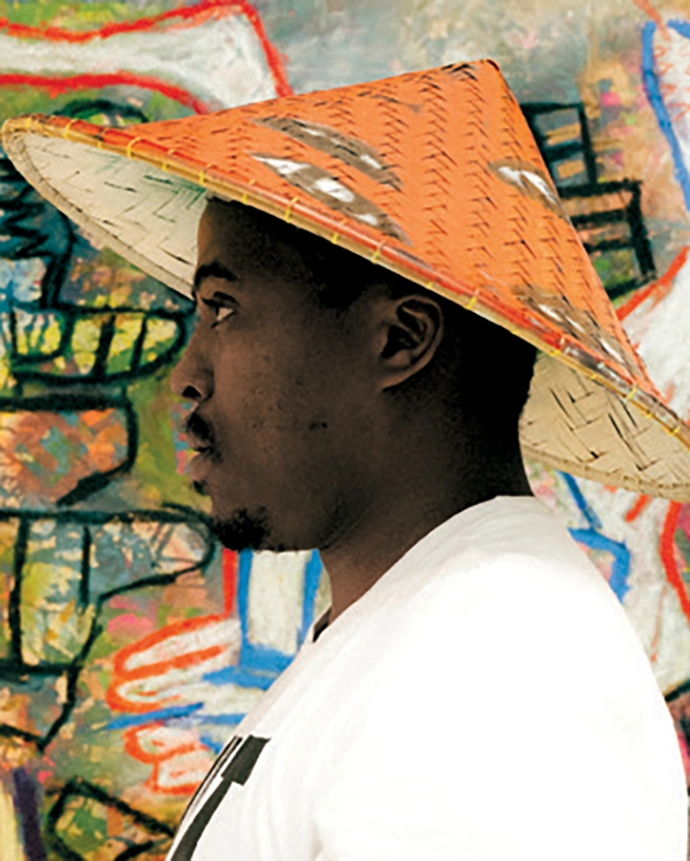
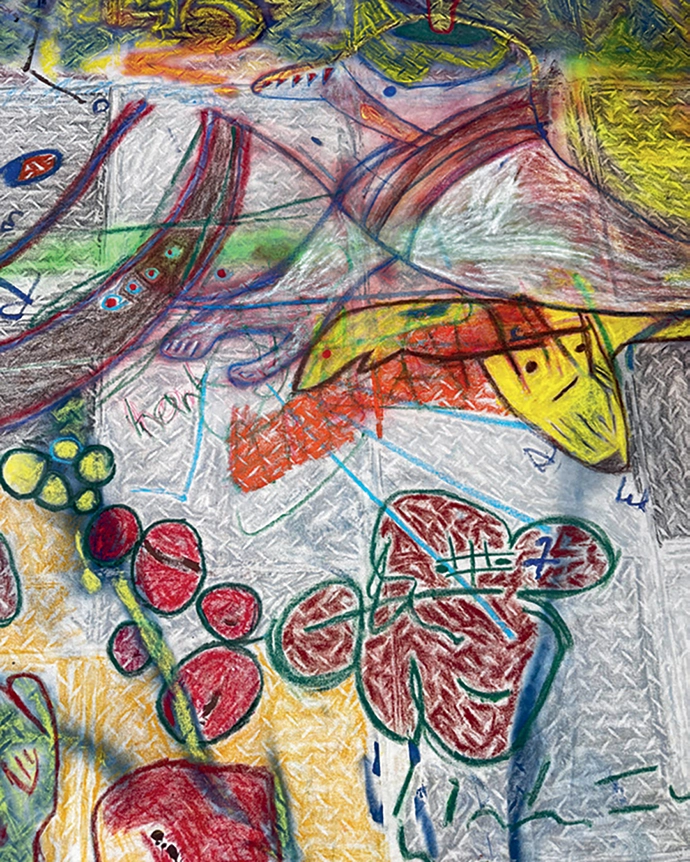
OUPA SIBEKO formulated his liberated art practice by jumping between international residencies. “I’m more comfortable making works in residencies than for a gallery.” A 2025 solo at Lemkus Gallery summarised the various coordinates of his freethinking work. It included gonzo rubbings – oil and pastel frottage works, made on Cape Town’s streets, that have become his calling card. Everard Read will be showing a new series. The Lemkus show also included large-scale etchings made in 2023 in Germany using ice-skates as an engraving tool. If that sounds absurd, try fishing in a waterlogged Joburg pothole – which he did for a 2019 performance linked to a postgrad pivot to art. He says growing up in Roodepoort, among sinkholes and mining operations, made him partial to potholes. But it was caring for his stroke-affected grandmother as an adolescent that was consequential. Shortly before her passing, she instructed him to play. He obliged by studying theatre at Wits.
Performance, Oupa says, taught him about the importance of the body, of presence, of risk, of not knowing what’s going to happen. These qualities inform his rubbings, many made in District Six. The process of their making invites human encounter. People strike up conversations, ask questions. “That’s what I love about the streets. There’s no secrecy.” | @oupa.sibeko
Don’t forget to sign up to our weekly newsletter for the latest architecture and design news.