-

Pine Green, the understated stripes of Bromley pair beautifully with Caledonian’s check design. -
An armchair upholstered in Eden in Ganache. -

The Fern colourway includes Bakerloo, Eden and Northern designs. -
The collection’s styling nods to a more refi ned period of commute. -
Armchairs upholstered in Piccadilly in Theatre. -
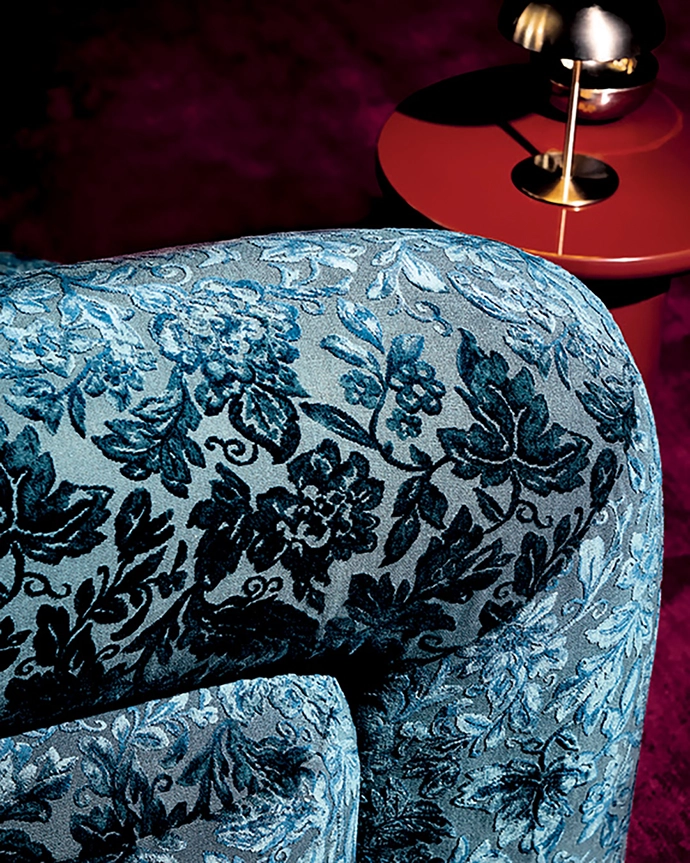
Chalfont (pictured in Petrol) is Underground Vol III’s only floral. Inspired by upholstery first used in steam locomotives’ first-class compartments, the design was hand-drawn. -
Chalfont (pictured in Petrol) is Underground Vol III’s only floral. Inspired by upholstery first used in steam locomotives’ first-class compartments, the design was hand-drawn.
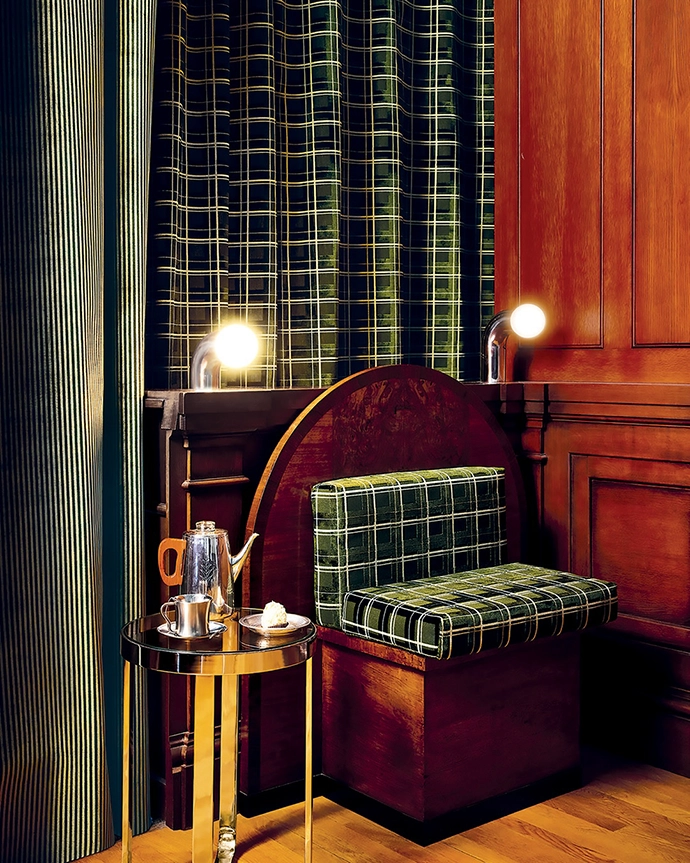
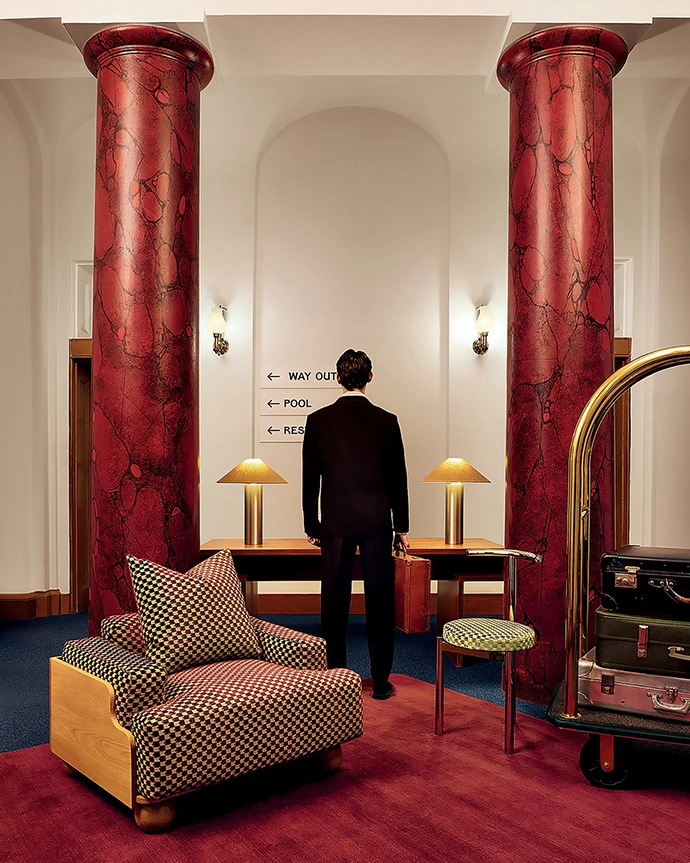
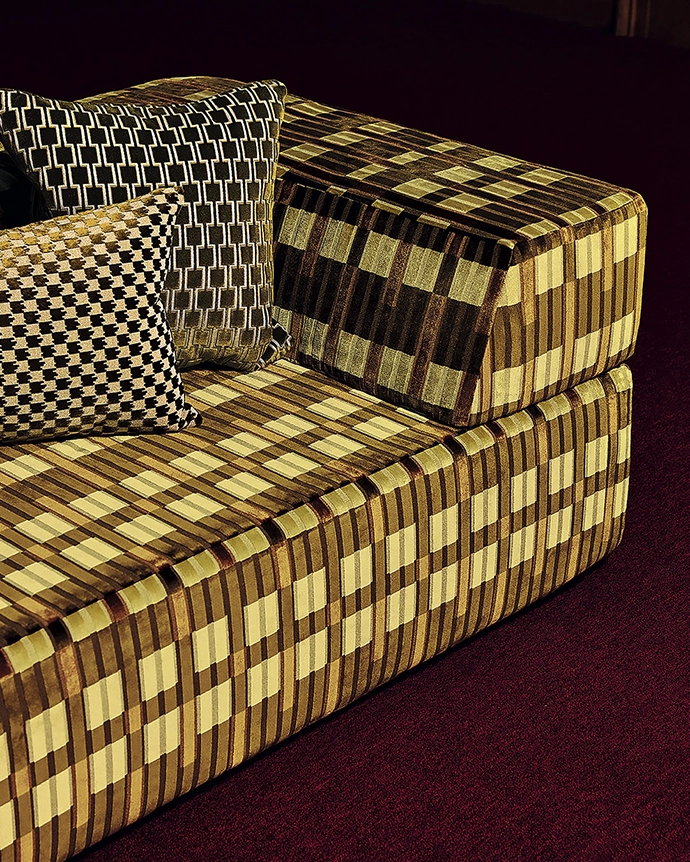
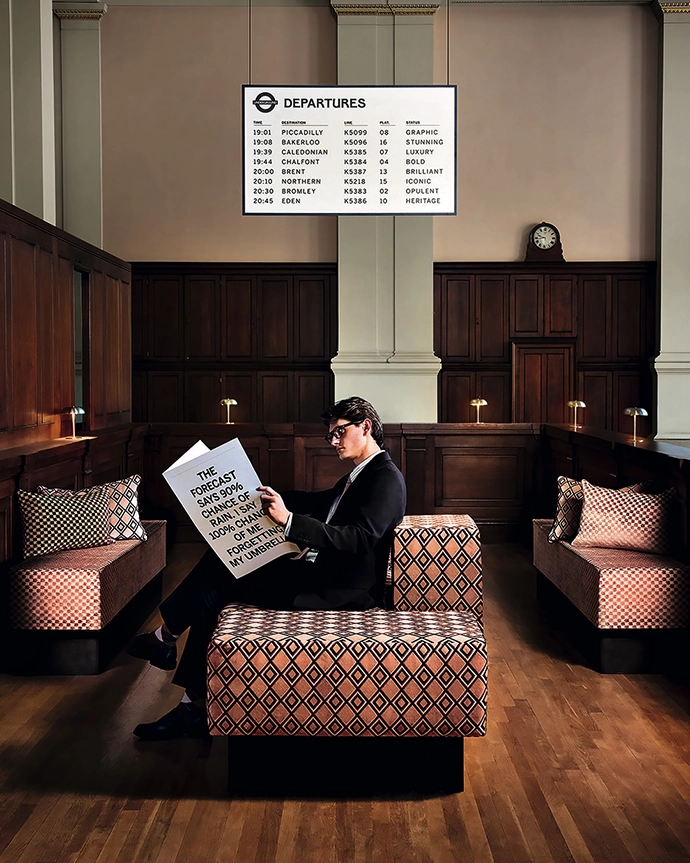
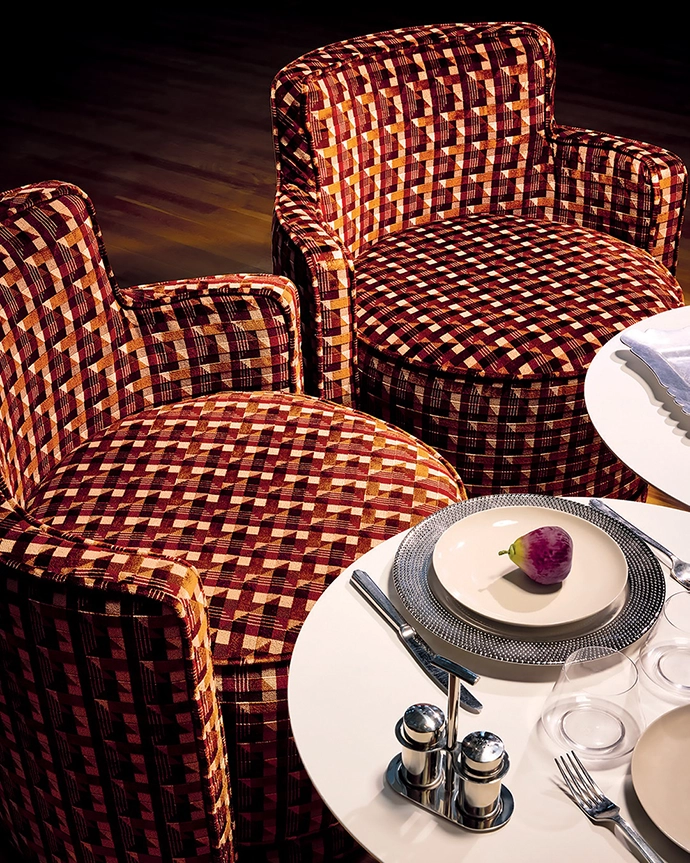
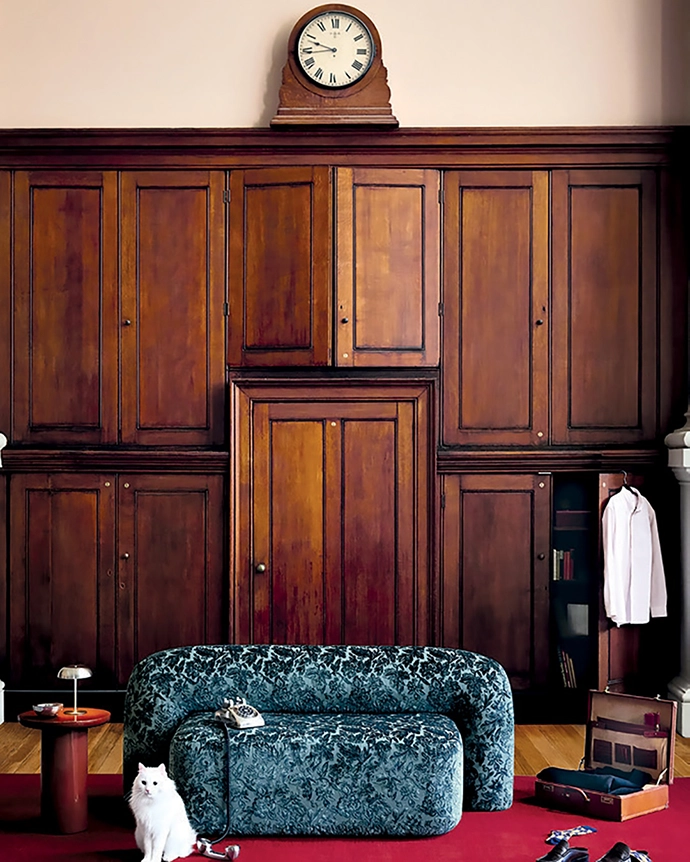
London’s most sat-upon seats are reimagined as a luxe collection of jewel-toned, patterned velvets. We head underground, mind the gap, and step back.
WORDS Martin Jacobs PHOTOS Courtesy of Kirkby Design
Few textiles can suffer the daily indignities – dirty hands, coffee spills, damp coats and grimy backpacks – of London’s public transport upholstery while still retaining their swagger. Across more than 30-million daily journeys on the capital’s buses, Tubes and trains, disappointingly few commuters pause to consider the geometric patterns beneath them. Yet these textiles, commissioned and preserved by Transport for London (TfL), form one of the city’s most influential design archives.
In 2013, to mark the Underground’s 150th anniversary, Britain’s Kirkby Design translated that legacy into Underground, a collaborative textile collection inspired by TfL’s historic moquettes – densely woven, highly durable woollen textiles engineered to disguise dirt and wear. A second collection launched in 2019, and Underground Vol III, the third instalment in the collaboration between the transport authority and Kirkby Design, debuted recently.
Through a contemporary reinterpretation of colour and scale, the latest collection of eight upholstery velvets revisits historic designs that were commissioned in the 1930s by Christian Barman, London Transport’s publicity officer. Barman enlisted designers and artists including Enid Marx, Paul Nash and Marion Dorn to create distinctive patterns for use on specific lines. Rendered in rich jewel tones – mustards, maroons, forest greens and ocean blues – the collection’s most graphic designs include Brent, Piccadilly and Northern. Originally conceived by Enid Marx in 1936, Brent’s oversized diamond motif upholstered District line seats throughout that decade. Piccadilly and Northern have later origins, appearing widely in the 1970s, with Piccadilly reappearing on its namesake track in 1994. Designed by textile designer Marianne Straub in 1965, Northern brought bold interlocking colour blocks to the city’s double-decker buses, and the Bakerloo and Northern lines, throughout the 1970s and ’80s.
While nodding to the capital’s layered design history, the checks, stripes and graphic motifs that define Underground Vol III feel contemporary. Even Chalfont – the collection’s only floral, hand-drawn from a moquette once used in the first-class compartments of the Metropolitan Railway’s steam locomotives – has a modern aesthetic. As a collection, the designs tap into our renewed appetite for Art Deco-related interiors, and prove that London’s transport design legacy remains as relevant as ever.
Kirkby Design textiles are stocked and distributed exclusively by Romo. | kirkbydesign.com
Women on Wheels
Meet three pioneering textile designers who left their mark on London’s Underground.
Marion Dorn (1899–1964) was born in San Francisco, and moved to England in 1923. She became one of the era’s most sought-aft er textile designers, renowned for her abstract carpets and fabrics for interiors such as Claridge’s and The Savoy. Between 1936 and 1942, she designed four moquettes for London Transport – Chesham, Colindale, Canonbury and Caledonian, whose tight geometric patterns contrasted with the sweeping Modernism of her wider oeuvre.
Enid Marx (1902–1998), a distant relative of Karl Marx, was a textile designer, printmaker and illustrator. The London native brought a graphic sensibility to London Transport through designs that included Bushey, Belsize, Chevron and Shield. Celebrated for her hand-blocked textiles, Marx initially believed muted, earth-toned palettes best concealed dirt and wear, before recognising that strong contrasting colours and detailed patterns proved far more effective on the Underground.
Marianne Straub (1909–1994) was born in Switzerland and studied at Zurich’s Kunstgewerbeschule before relocating to the UK in 1932 to learn power-loom weaving. Aft er working with lauded weaver Ethel Mairet and later as head designer at Helios, she became known for mass-produced textiles with handwoven character. Her design for a moquette for London Transport details an intercrossing block motif, and was used across Underground carriages and London buses throughout the 1970s.
Don’t forget to sign up to our weekly newsletter for the latest architecture and design news.