-

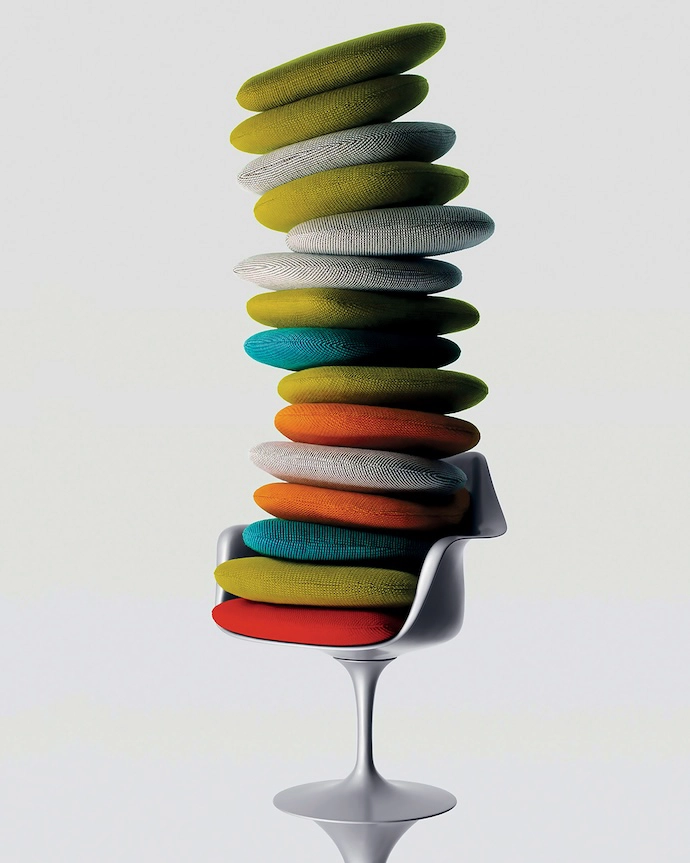
Tulip chair by Eero Saarinen. -

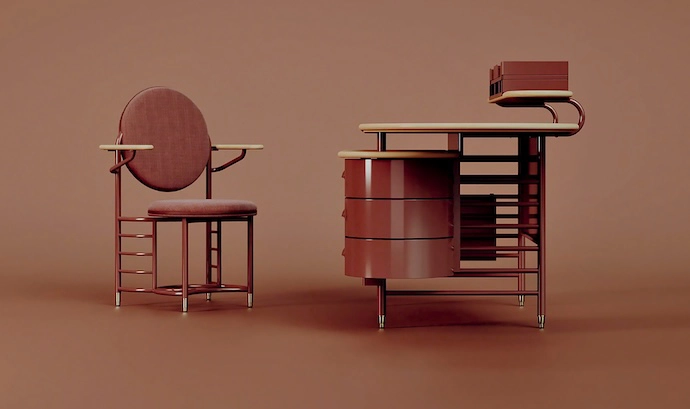
Frank Lloyd Wright’s Racine Collection by Steelcase is a modern reinterpretation of the original furniture designs created in 1939. -

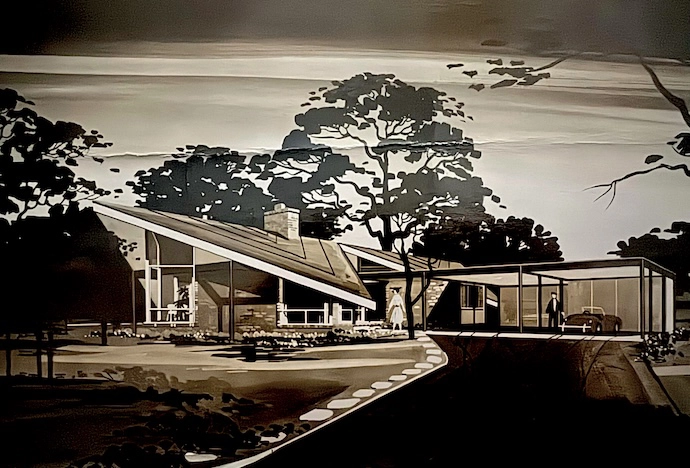
Rendering of the Origami House by John Barthel (1959). -
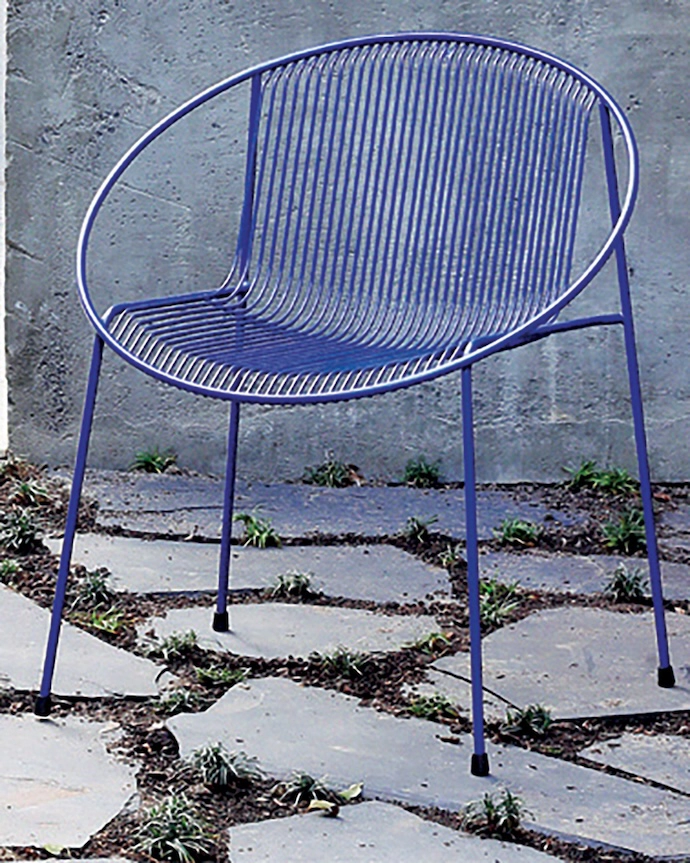
Haldane’s Hula chair is a contemporary take on the Salterini hoop chairs. -
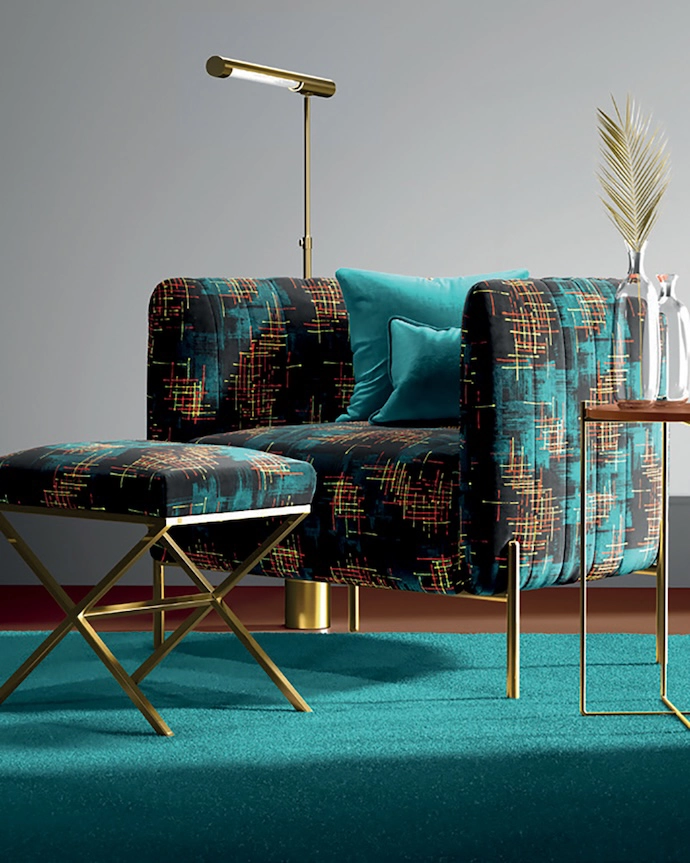
20th Century Cloth creates Mid-century Modern fabrics – including this design, Twilight, which features an atomic pattern of orange and yellow accents on a dark teal and black background. -

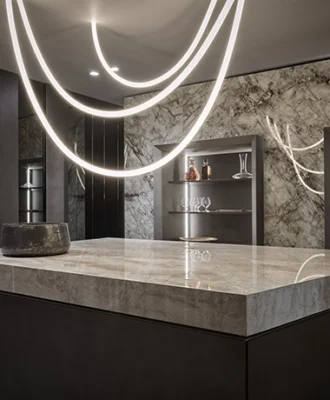
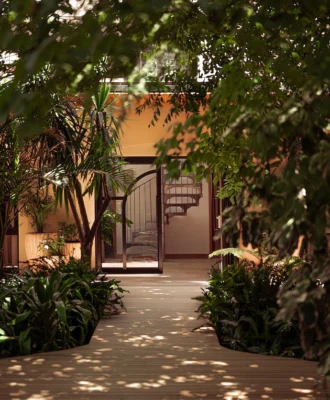
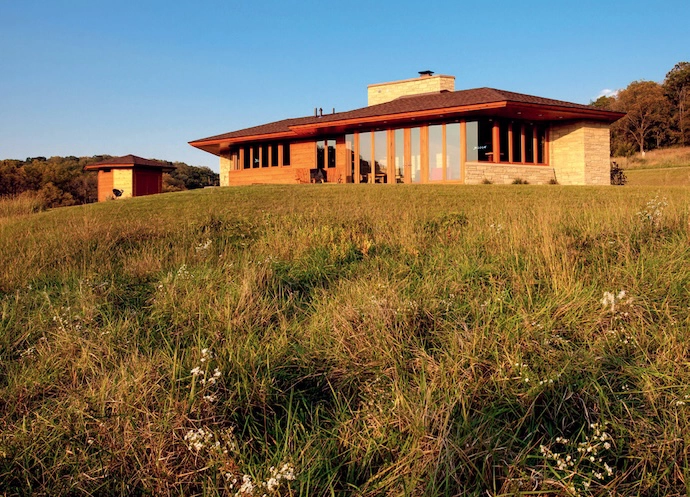
Exterior view of the Galena house by Kenneth Dahlin of Genesis Architecture. -

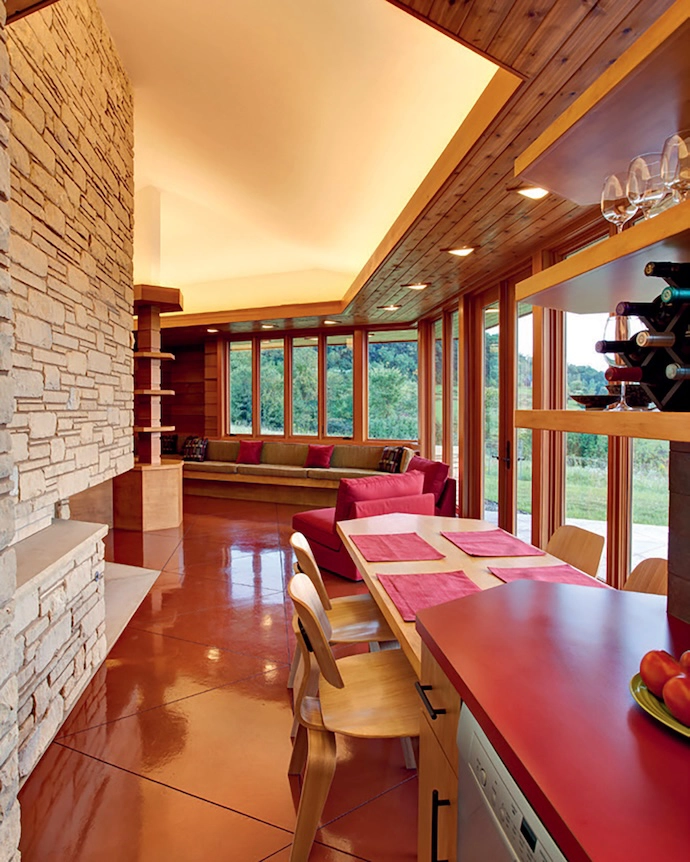
Interior view of the Galena house by Kenneth Dahlin of Genesis Architecture.
It may be over 60 years old, but looking at contemporary furniture and interior design, mid-century modern clearly remains a significant influence. We look at its icons and their legacy.
WORDS Jo Buidendach PHOTOS Ilan Rubi/Courtesy of Knoll, Courtesy of Mitchell.E.Clar, Kenneth Dahli, Supplied
Some styles come and go – but Mid-century Modern never really got the memo. A regular on VISI’s pages and the team’s perennial favourite, it’s the kind of design that just works. Think the Eames chair, the Tulip table, the sculptural Noguchi coffee table – pieces you’ve seen countless times, and still want. Decades on, Mid-century Modern’s appeal feels less like nostalgia and more like common sense.
The Aesthetics
Broadly spanning mid-1940s to the late 1960s, Mid-century Modern is defined by clean lines, functional thinking and a quiet sense of optimism. Emerging in the post-war years, it marked a shift towards design that was both practical and accessible, with a belief that good design should shape everyday life. Designers stripped things back to what was important, using honest materials, considered forms and function-led thinking, while also embracing new industrial techniques. The result is furniture that feels as good as it looks: purposeful, accessible and enduring.
It isn’t a single look, but a set of distinct strands shaped by place, from American Modern’s focus on affordable, mass-produced design for everyday homes, to Scandinavian design’s soft er, more human approach, and the richer, more expressive languages of Brazilian and Italian Modernism. Less a style than a global design language, it still influences how we live today.
The Icons
The husband-and-wife team of Charles and Ray Eames reshaped 20th-century design – everything from furniture to architecture and film – from their Los Angeles-based Eames Office. They helped to popularise moulded plywood, plastics and wire mesh in modern furniture, most famously in the Eames lounge chair and their moulded plywood designs. Their work set a lasting benchmark for design that is both beautiful and practical, with accessibility at its core.
Raised in Michigan, Florence Knoll brought a rigorous architectural approach to furniture and interiors. After moving to New York in 1941, she partnered with Hans Knoll to build Knoll into a global modernist force. Through the Planning Unit, she defined the look of the post-war office. Modest about her own work, she called it the “meat and potatoes” of modern design – a quiet foundation that still shapes how we work and live. Her most iconic design, the 1954 lounge seating collection, pairs clean lines with tailored upholstery in a lounge chair, a sofa and benches.
Known for his functional, minimalist approach and “total design” philosophy, Arne Jacobsen was a key figure in Danish Modernism. He designed everything from buildings to furniture and lighting – including the Egg chair, the Swan chair and the Series 7 chairs. His AJ lamp, created in 1957 for the SAS Royal Hotel in Copenhagen, reflects his thinking with its clean, geometric form, and an angled shade designed to direct light precisely.
George Nelson, director of design at Herman Miller from 1947 to 1972, was a central figure in American Modernism. Alongside creating his own designs, including the Marshmallow sofa and Bubble lamps, he helped to shape the movement by championing emerging talent such as Charles Eames. Nelson’s Turbine clock (1957) captures the spirit of the era by turning a functional object into a playful, sculptural piece with a radiating starburst form.
Eero Saarinen was a Finnish-American architect and designer known for his work in architecture and furniture. His buildings, including the TWA Flight Center at JFK International Airport, are defi ned by sweeping sculptural forms. In collaboration with Knoll, he brought this same approach to furniture, moving away from traditional four-legged designs. His best-known pieces include the Womb chair (1948), designed for comfort with its low, enveloping form; and the Tulip chair (1956), which features a single pedestal base intended to simplify the visual clutter of conventional furniture.
Japanese-American Isamu Noguchi moved between sculpture, furniture and landscape design, bringing organic forms into Mid-century Modernism. Together with companies such as Herman Miller and Knoll, his work helped to bridge art and functional design. His most iconic piece, the Noguchi coffee table (1947), features a sculptural wooden base topped with glass.
The Legacy
Whether closely followed or loosely referenced, Mid-century Modern’s influence continues to run through architecture, interiors and product design – and below are just some of the names keeping that spirit alive.
Porto-based Essential Home takes its cues directly from Mid-century Modern design, drawing on the cinematic glamour of the 1940s, ’50s and ’60s, as well as the architecture of Palm Springs and the era’s most recognisable furniture. Rather than replicating the past, the brand leans into reinterpretation, pairing familiar forms with a more contemporary sensibility. Standout pieces include the Monocles sideboard, with its circular detailing and metal doors referencing the James Bond gun barrel motif; and the Hudson armchair – a confident, clean-lined take on a Mid-century classic. essentialhome.eu
Local design duo Katy Taplin and Adriaan Hugo of Dokter and Misses point to Mid-century Modern as a clear influence in their work, seen in pieces like the LALA cabinet and Loop lounger. As they put it, “Mid-century Modernism gave us our rock stars – Eames, Alvaro gave us our rock stars – Eames, Alvaro Aalto, Noguchi; designers who proved that precision and joy aren’t opposites. Mid-century is the foundation. What we build on top of it is about identity, place and what it means to make things here, now.” dokterandmisses.com
The Mid-century period was a particularly rich moment for textiles and wallpaper design, with atomic motifs, starbursts and geometric forms defining the look. English textile designer Helen Snell of 20th Century Cloth continues this legacy with hand-designed, UK- manufactured fabrics for interiors. “I don’t think there has been another period in history where design has been so strong across so many areas, from cars and architecture to fashion and interiors,” she says. “It all felt so new, and completely unlike anything that had gone before. I also love that so many of the influential textile designers of the time were women!” 20thcenturycloth.com
Cape Town-based Haldane, founded by Haldane Martin, is known for bold outdoor furniture that nods to modernist principles of clean lines, honest materials and functional clarity. And with its vibrant colour and distinctive geometric form, the Hula chair is both playful and nostalgic – a contemporary take on the Salterini hoop chairs of the 1950s that are still a familiar feature in South African gardens. haldane.co.za
While Frank Lloyd Wright was a foundational influence on Mid-century Modern design rather than a Mid-century figure himself, his work remains central to the aesthetic’s development. The Frank Lloyd Wright Racine Collection by Steelcase revisits the furniture he created for the SC Johnson Administration Building in Racine, Wisconsin in 1939. Rooted in his philosophy of organic architecture, the pieces merge form and function, with subtle updates in scale and materials for modern use bringing Wright’s vision into contemporary interiors. steelcase.com
American architect Kenneth Dahlin of Genesis Architecture, a firm specialising in Wrightian and organic architecture, points to the warmer, more organic side of Mid-century Modernism as a lasting influence on his work. “What continues to inspire me is the period’s sense of clarity, restraint and optimism, but also the way its best designers created work that felt closely tied to nature, human life and the character of materials,” he says. That thinking is evident in projects such as the Galena modern house, where strong geometric order, natural materials, and a close relationship between interior and exterior spaces reflect a contemporary continuation of the Mid-century ideal. Rather than a nostalgic reproduction, the work draws on the movement’s core belief that good design can elevate daily life. genesisarchitecture.com
Don’t forget to sign up to our weekly newsletter for the latest architecture and design news.