-

Treasures Swept in by The Tide -
Treasures Swept in by The Tide -
Treasures Swept in by The Tide -
Treasures Swept in by The Tide -
Treasures Swept in by The Tide
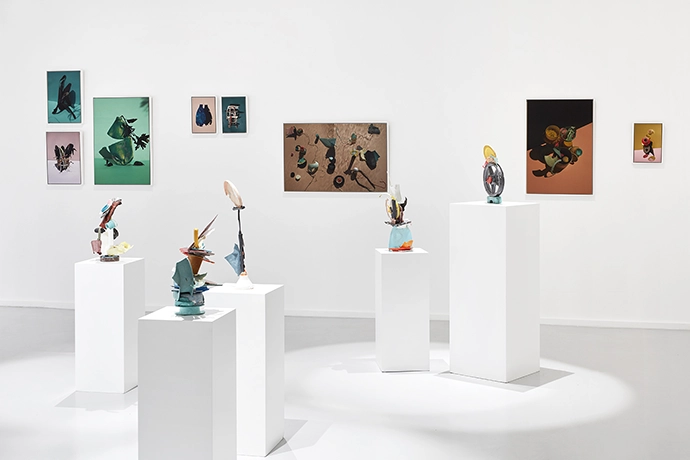
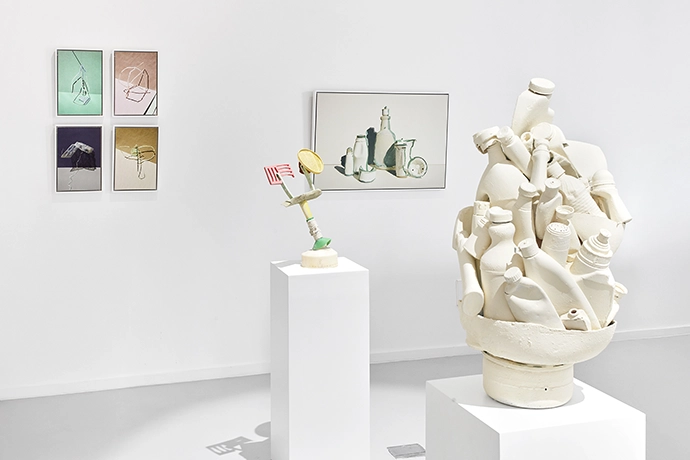
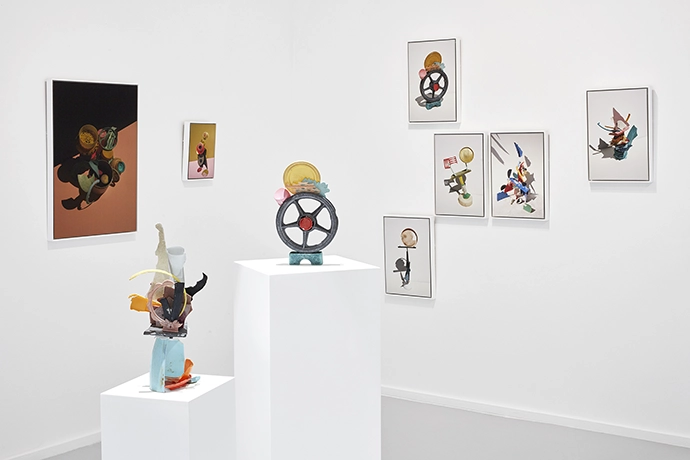
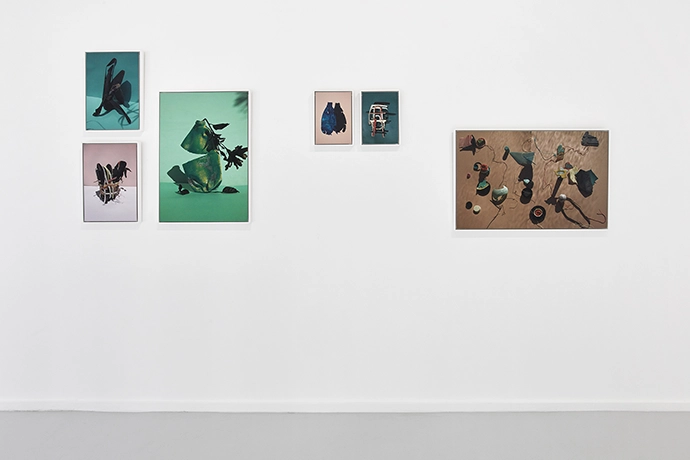
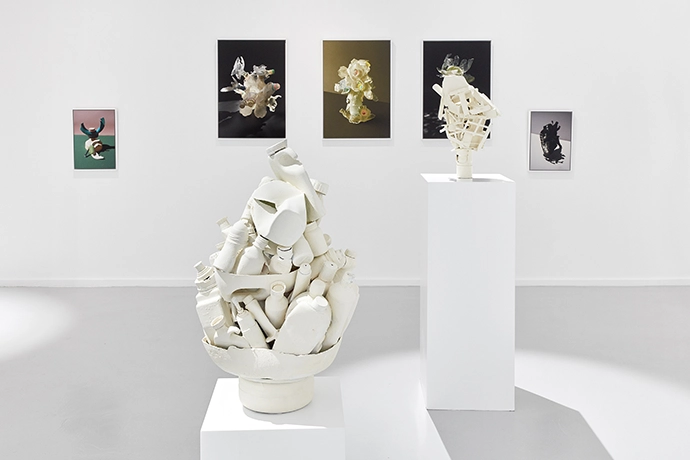
Accomplished Dutch sculptor and photographer Thirza Schaap presents After the Tide, a solo exhibition of sculptures made from plastic collected from coastlines and photographed against a white background; they question consumption, idolatry, and what it is we value in our lives today.
INTERVIEW BY Palesa Mohola PHOTOS Courtesy of Berman Contemporay
While many walk along the shore to collect shells and cute pebbles, Thirza collects plastic waste that has washed ashore, which she takes to her studio to make bright and colourful sculptures that are later photographed and disposed of – because her sculptures are not made for permanence, but rather to raise awareness around pollution and to try to prevent, or at least reduce, the use of plastic.
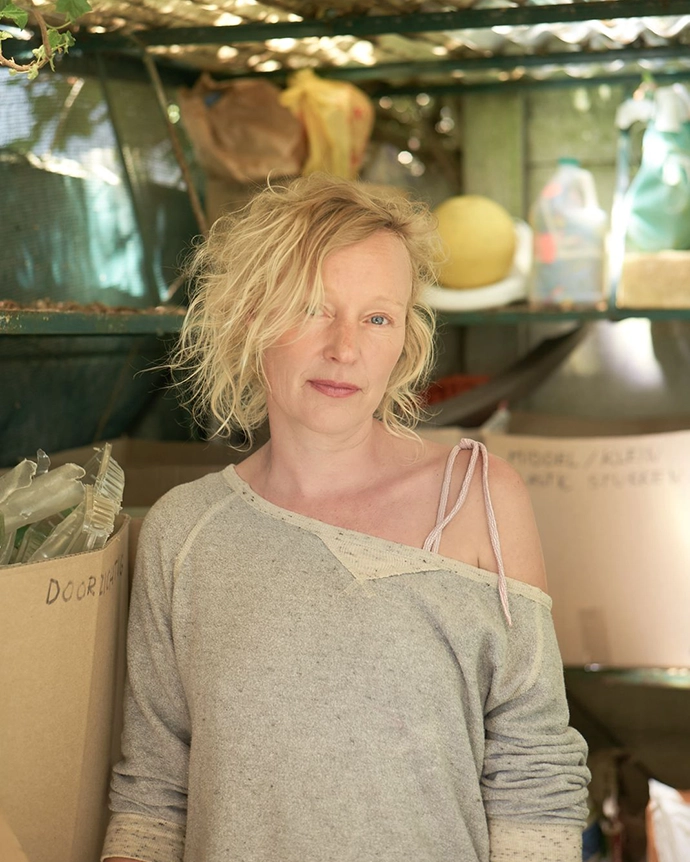
Here, Thirza tells us about her plastic-reuse practices and current body of work.
What first inspired you to create After the Tide, and what story are you hoping this exhibition tells?
“After the Tide is an exhibition curated by Candice Berman (Berman Contemporary), showing a selection of previously unseen works from the Plastic Ocean series, as well as new works specially made for this exhibition. The new works are a series of sculptures photographed against a white background in the bright African sunlight. These playful 3D collages (sculptures) receive full attention in the harsh sunlight against the plain background.
“The exhibition is intended to provoke questions about consumption, idolatry, and what it is we value in our lives today. It also examines our changing relationship with plastics and the increasing and overwhelming presence they have in our lives.”
Your work transforms discarded plastic into still-life photographs. What draws you to finding beauty in materials that most people would overlook?
“I see the beauty in the pieces of plastic washed ashore, aged by the currents, salt, and time. The faded colours made me keep the items I picked up instead of disposing of them. They felt like small treasures that I had found and wanted to keep.”
Can you walk us through your creative process, from collecting plastic on the coastline to producing the final sculpture to photograph?
“At the start of the project, I picked up daily waste from the beaches, created a work each day, and posted it on Instagram. Later, I went on trips to desolate beaches to find even more interesting treasures.
“I built small, one-minute sculptures, which often collapsed while I was photographing them. The unstable structures needed only a breeze of wind to fall into pieces. At one point, I was tempted to make the impermanent structures permanent and started to fix them together.”
Your photographs evoke the style of traditional still-life paintings. Why was it important for you to reference that art-historical tradition in this body of work?
“The Plastic Ocean series provides a kind of Vanitas for the 21st century. Traditional icons of mortality, ephemerality, and wealth have been traded out for bottles, baskets, and bowls: single-use items which are used and discarded, now only existing as empty vessels of destruction.”
Has there been a particular object you’ve found on a beach that stayed with you emotionally or changed the way you think about plastic pollution?
“One of my first finds was a bottle which could still stand on its own, but half of the bottle was gone, as if a shark had taken a bite out of it. What changed the way I think about plastic pollution is the enormous and endless amount of it that I find.”
Your work is at the intersection of art and environmental awareness. Do you see yourself primarily as an artist, an environmental advocate, or both?
“I am primarily an artist with great emotional depth; that is what drives me to make art.
“But honestly, I cannot say one or the other. I would say they are inseparable. The ecological grief I experience is the motor behind my work in Plastic Ocean, the Fatal Flowers painting series, and the personal grief in my figurative paintings.”
Many viewers may initially be captivated by the beauty of your images before realising they’re made from waste. How do you hope that moment of realisation affects them?
“The images show a clash between worlds, offering minimal and aesthetically pleasing compositions which, on closer inspection, instil a sense of ecological grief. Plastic Ocean questions consumption, idolatry, and what it is we value in our lives today. The effect is a quirky, playful, and Pop Art paradox.
“At first glance, the debris do not disgust us. On the contrary, their dainty appearance almost seems to gloss over the ugliness of all the plastic pollution on our beaches. But only for an instant. Our initial attraction soon fades.”
What conversations do you hope After the Tide will spark among audiences here in Cape Town, a city with such a strong connection to the ocean?
“The visibility of the problem is important, and we need to pass our concern on to the younger generation. It should be part of education in schools.”
After spending years documenting plastic pollution through your work, has your own relationship with consumption and sustainability changed? If so, how?
“I learned that we are well-trained consumers, and that is something that should change. We don’t need a new this and that most of the time. ‘Use what you have and buy what you need’ is a slogan that helps me every time I am tempted to buy something.
“I can still be tempted sometimes. What is a great help as well is to sleep on a decision to buy something. You will see that most of the time the urge passes, and you forget about it.” plastic-ocean.net | @thirzaschaap
After the Tide runs until 28 November at Berman Contemporary in the Silo District at the Victoria & Alfred Waterfront. | bermancontemporary.com
Don’t forget to sign up to our weekly newsletter for the latest architecture and design news.