-

Shaped by the Swartland -
Shaped by the Swartland -
Shaped by the Swartland -
Shaped by the Swartland -

Shaped by the Swartland -
Shaped by the Swartland
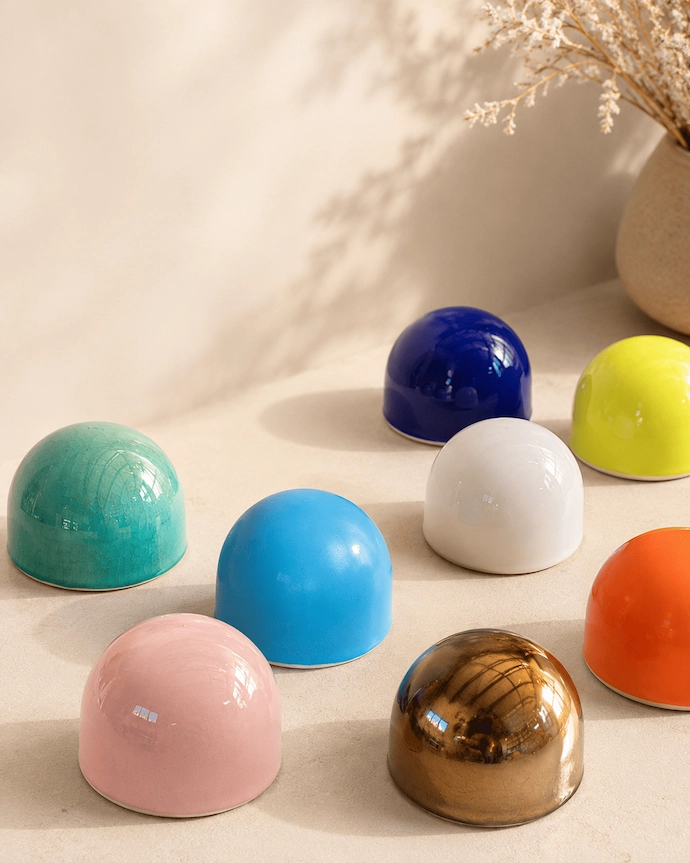
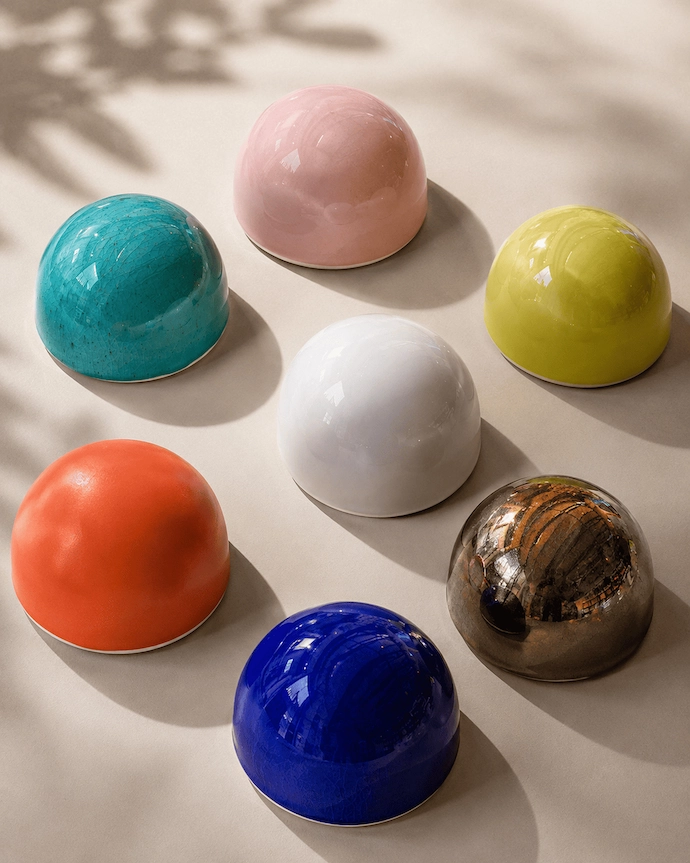
For Moors Ceramics – a Malmesbury-based ceramics studio – the beauty and slow rhythms of the Swartland are intrinsically woven into everything they make.
INTERVIEW BY Gina Dionisio PHOTOS Supplied
For Ruaan Dreyer and Marco Moors, the duo behind Moors Ceramics, location is indeed everything. Set among the flowers of the Lowensvlei Flower Farm, their ceramics studio is known for its small-batch, handcrafted pieces inspired by the shapes and seasonal colours of their surroundings. We spoke to the pair about life on a flower farm and how it has informed their approach to ceramics.
How did Moors Ceramics come to be – what led you to establish a ceramics studio on a flower farm in the Swartland?
“Moors Ceramics really began long before we ever owned a flower farm.
“I’ve always loved ceramics and handmade objects. Before moving to the Swartland, I owned a gift shop in Bloemfontein, so I spent years surrounded by beautiful homeware, decor and ceramics. I’ve always been drawn to pieces that feel like they have a story rather than simply serving a purpose.
“The name Moors Ceramics comes from my surname, which makes the studio incredibly personal. It’s not just a business; it’s something that carries my own identity.
“Four years ago, Ruaan and I took a leap of faith and bought Lowensvlei Flower Farm. It was a complete lifestyle change. Ruaan came from a corporate property background and naturally brought structure, planning and operational thinking to the farm, while I brought the creative side. Somehow those two worlds just clicked.
“Living on a flower farm has a way of slowing you down and making you appreciate the beauty in everyday things. Flowers, seasons, soil, colour and craftsmanship all became part of our daily lives, and starting Moors Ceramics felt like the most natural next step. It never felt like a separate business – it simply grew alongside the farm.”
Organic form, repetition and texture are central to your practice. How much of the landscape finds its way into the pieces?
“Probably far more than we realise.
“When you spend every day on a working flower farm, you begin to notice patterns everywhere. Long rows of flowers, trays of seedlings, fields planted in perfect repetition, and the way the landscape changes with the seasons all quietly influence the way you think about design.
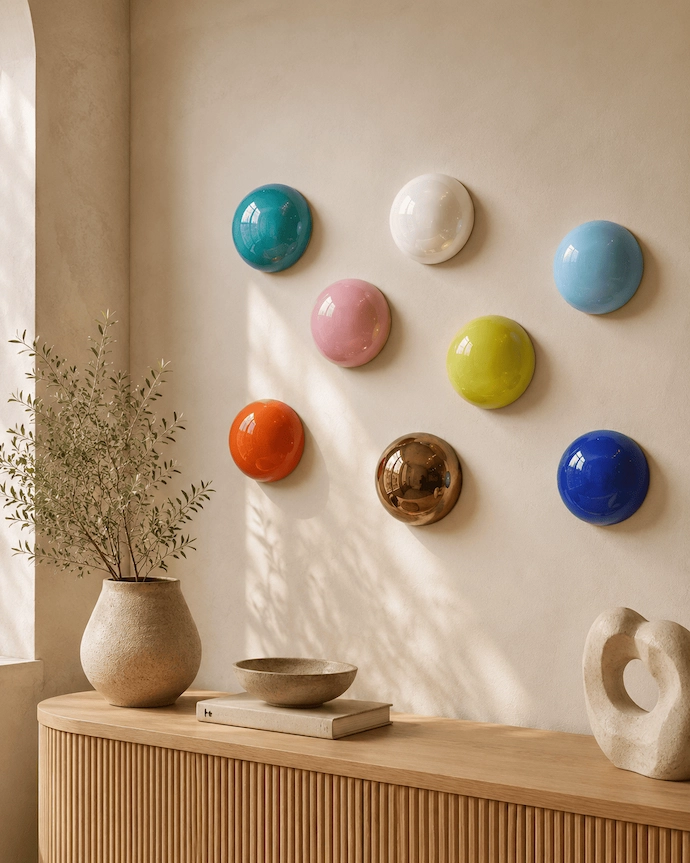
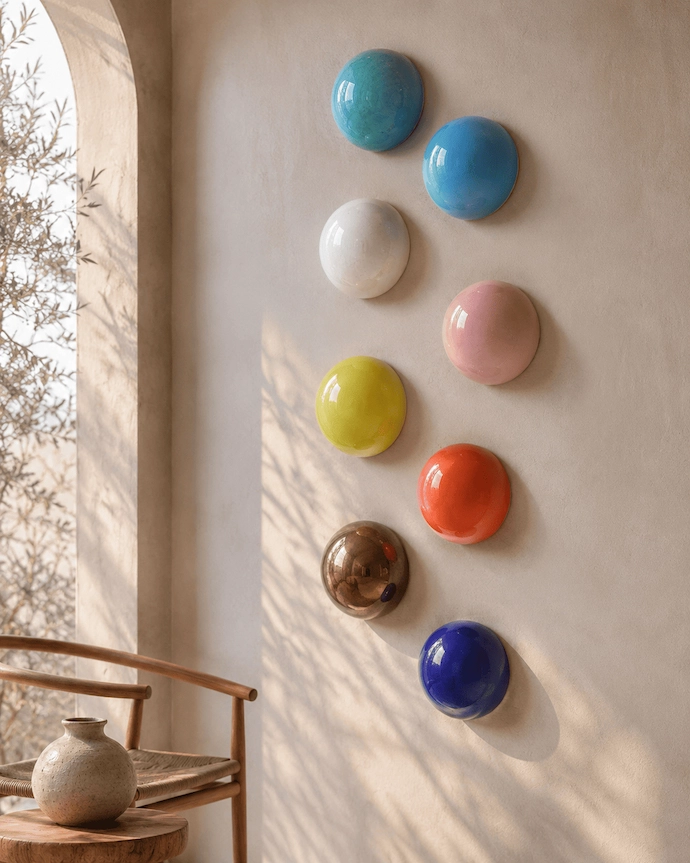
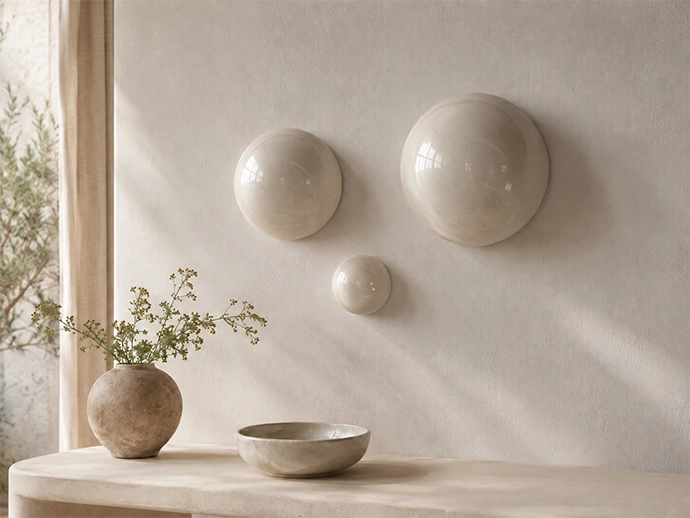
“Our wall domes are a good example of that. Individually, they’re simple, but when they’re installed together, they create rhythm and movement, much like walking through rows of flowers stretching across the farm.
“The Swartland itself also leaves its mark on everything we make. It’s not a loud landscape; it’s subtle. The dry earth, soft neutral tones, changing skies and beautiful natural light all inspire the colours and finishes we work with.
“One of the things we love most about ceramics is that, just like farming, you can never control everything. You prepare as carefully as you can, but once the kiln is fired, the glaze develops its own personality. That unpredictability reminds us a lot of growing flowers. Nature always has the final say.”
The sculptural domes are quite striking. Can you tell us more about this collection and its making process?
“The domes actually started with a very simple question: how could we create something that brings warmth, texture and colour to a wall without overwhelming a space?
“We wanted something sculptural, but also timeless. Each dome is cast, finished and glazed by hand, so although they share the same form, no two are ever identical. The kiln gives every piece its own character. Sometimes the glaze develops incredible depth, sometimes it breaks softly over the curves, and sometimes it surprises us completely. Those little differences are exactly what we love.
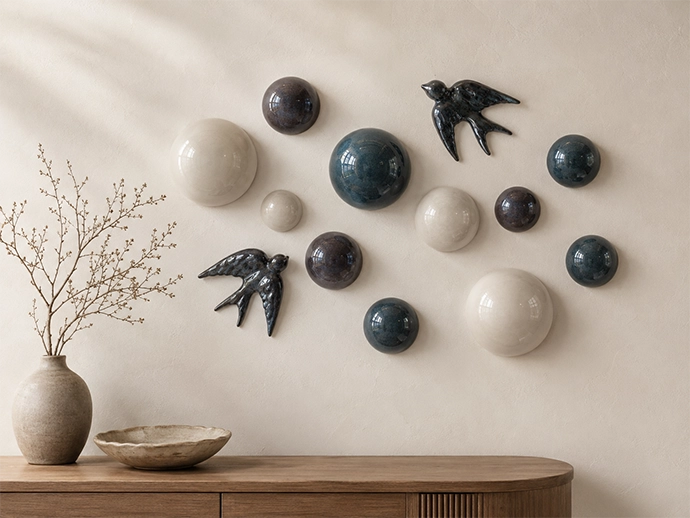
“The collection has grown to include three sizes that can be displayed individually or combined into larger installations. We especially enjoy mixing them with our ceramic swallows, because together they create a feeling of movement across a wall. The domes bring calmness and balance, while the birds introduce a sense of life and playfulness.
“For us, it’s less about decorating a wall and more about creating something that feels collected over time rather than bought.”
How do you position Moors Ceramics within the broader South African design landscape, and how important is the sense of place to the identity of the studio?
“We’re incredibly proud to make everything here on our flower farm in the Swartland.
“There’s something special about creating pieces in the same place where we’re growing flowers every day. The farm isn’t just where the studio happens to be – it’s part of its identity.
“We’re not chasing perfect uniformity or mass production. We actually embrace the little differences that happen when something is made by hand. Slight variations in glaze, texture or colour are what make each piece unique.
“I think our different backgrounds also shape the business in an important way. I naturally lean towards creativity, while Ruaan brings structure, planning and a practical way of thinking. That balance has become the foundation of both the farm and Moors Ceramics.
“South African design has such a strong appreciation for authenticity and local craftsmanship, and we’re honoured to be part of that conversation. We want to create beautiful objects that people can live with for years, while knowing exactly where they came from and who made them.”
What does a typical day at Lowensvlei look like, and how do the rhythms of the farm influence the pace and direction of Moors Ceramics?
“No two days are ever the same, and that’s probably what we enjoy most.
“The mornings usually begin in the flower fields or tunnels. There are flowers to harvest, crops to check, staff to coordinate and orders to get out the door. Farming has its own rhythm, and it doesn’t wait for anyone.
“Somewhere between all of that, the ceramics studio comes to life. Some days we’re pouring moulds, trimming pieces or glazing new collections. Other days we’re unloading a kiln with the excitement – and sometimes the nervousness – of seeing what happened overnight.
“The biggest lesson we’ve learnt from both farming and ceramics is patience. Flowers bloom when they’re ready, and clay dries when it’s ready. Neither can be rushed without compromising the end result.
“Looking back, it’s difficult to separate Moors Ceramics from Lowensvlei because they’ve grown together. The farm gives us constant inspiration, keeps us grounded, and reminds us every day that the most rewarding things are often the ones that take the longest to create.” moors.co.za | @m_o_o_r_s
Don’t forget to sign up to our weekly newsletter for the latest architecture and design news.