-

The setting was a muti-sensory experience that brought the natural world indoors by using real organic materials. -
Models moved through set designer Jeremy Hindle’s futuristic ecosystem of abstract prisms and pyramids. -

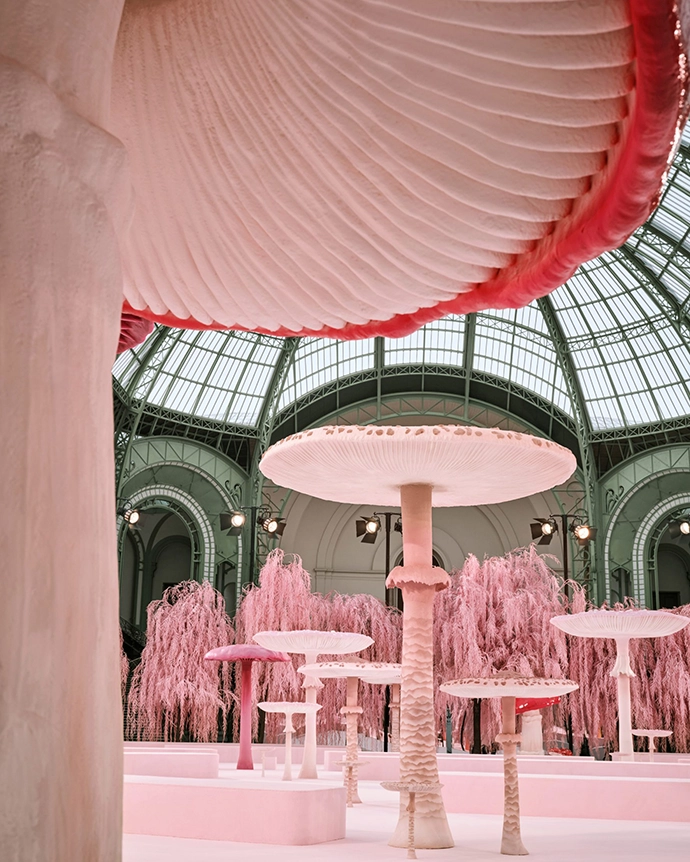
After the show, the willow trees – which had been coloured pink – were cleaned, pruned, and replanted at a Parisian nursery. -
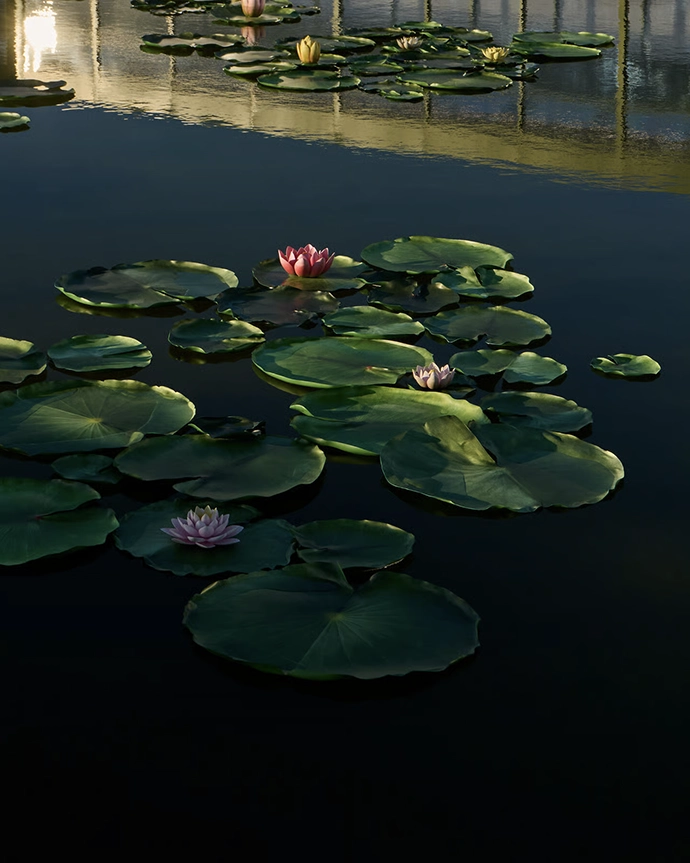
Artificial water lilies placed on the surface of the pond, creating a dreamlike landscape. -
The shifting illumination caused fabrics and colors to transform as models moved through the space.
Across the 2026 runways, designers turned sets into living landscapes, collapsing the boundary between interior and exterior.
WORDS Gina Dionisio PHOTOS Courtesy of Louis Vuitton, Courtesy of Miu Miu, Courtesy of Chanel, Courtesy of Dior, Courtesy of Hermès
Continuing our exploration of how nature softens the edges of contemporary design, we turn to the nature-inspired scenography that brought the outside in, transforming fashion‑week runways into immersive, living landscapes.
Miu Miu
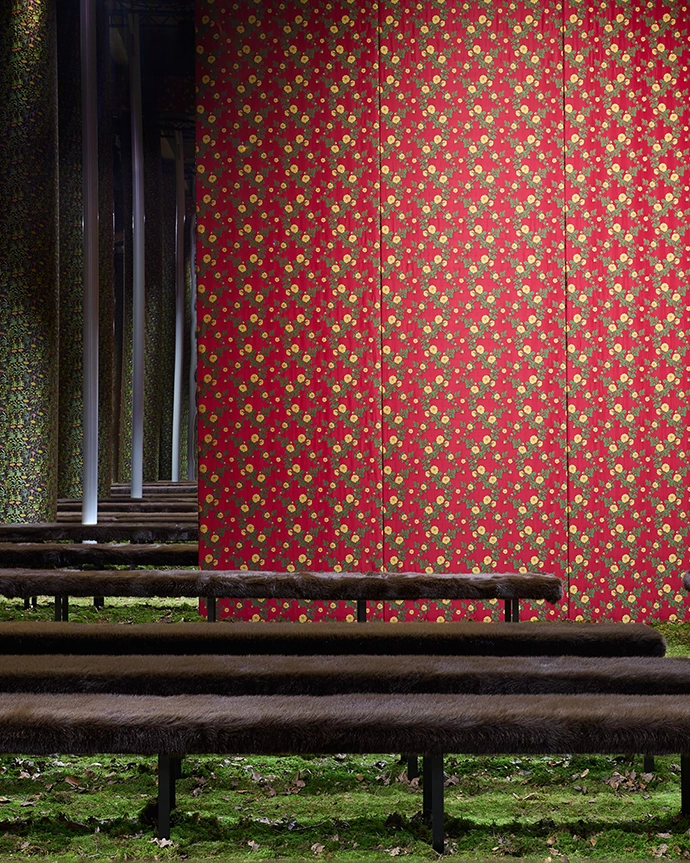
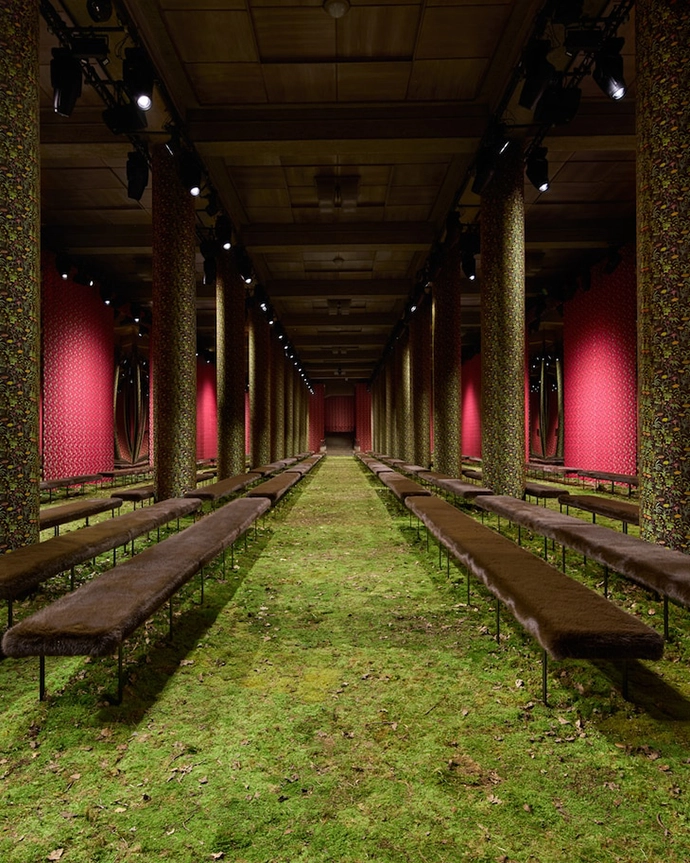
Conceptualised by Miuccia Prada, the hypostyle architecture of Paris’s Palais d’Iéna was reimagined as a fairy-tale-like winter forest for the Miu Miu Women’s Autumn/Winter show.
The clothes in the Collection explored themes around the smallness of human bodies in the vastness of the world – a concept directly reflected in the forest scenography. Crafted by AMO/OMA, the set emphasised this tension by treating the runway as an enchanted forest floor covered in real moss, leaves and pine cones, blurring the lines between interior and landscape.
To further enhance the juxtaposition between the models and the grandeur of the space, each column was wrapped in dark floral brocade, creating the impression of an endless forest of trunks. Mirror panels inserted into the enclosure multiplied the forest and the audience, extending the scene indefinitely. The perimeter of the hall was wrapped in deep red brocade, creating rich visual contrast. Lighting was designed to simulate daylight filtering through a forest, strengthening the natural atmosphere of the scenography. | miumiu.com
Louis Vuitton
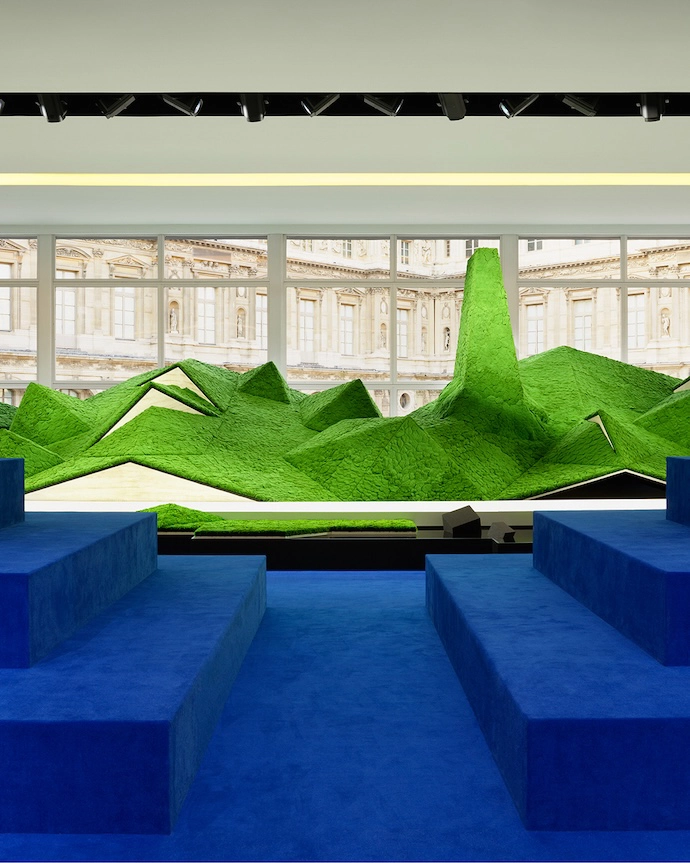
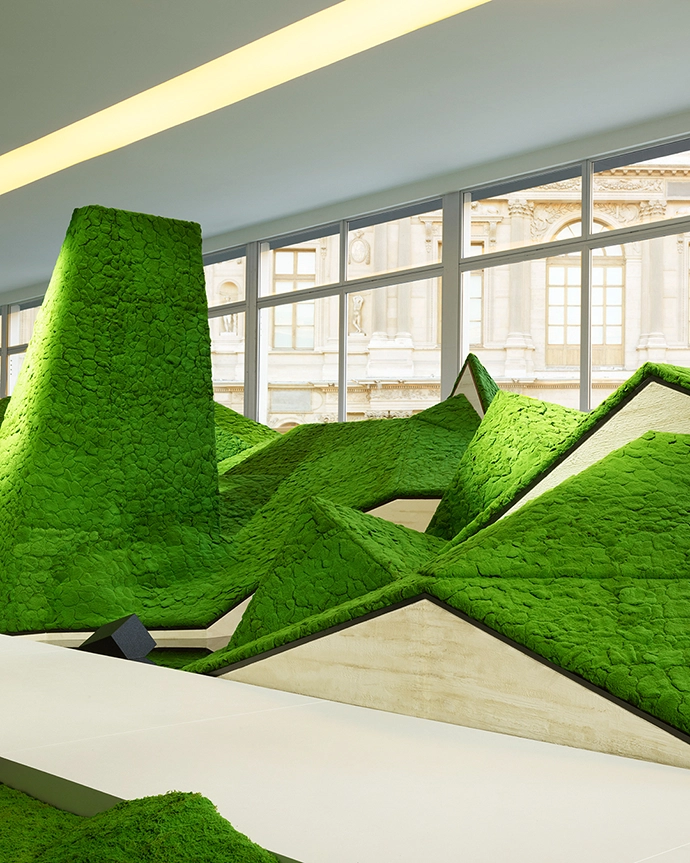
Mountains, forests and plains inspired Nicolas Ghesquière’s Women’s Autumn/Winter Collection for Louis Vuitton, a meditation on nature refracted through a futuristic lens.
For the show, the Cour Carrée of the Musée du Louvre was transformed into a neo-landscape evoking an imagined natural world. The space dissolved boundaries between interior and exterior, setting the stage for a journey suspended between reality and speculation.
Devised by production designer Jeremy Hindle – known for his work on Severance – the scenography for the Collection presented nature as an abstraction, seen through the prism of tomorrow. Models moved through a fluctuating pastoral environment, a living painting infused with a subtle sci-fi sensibility. | eu.louisvuitton.com
Chanel
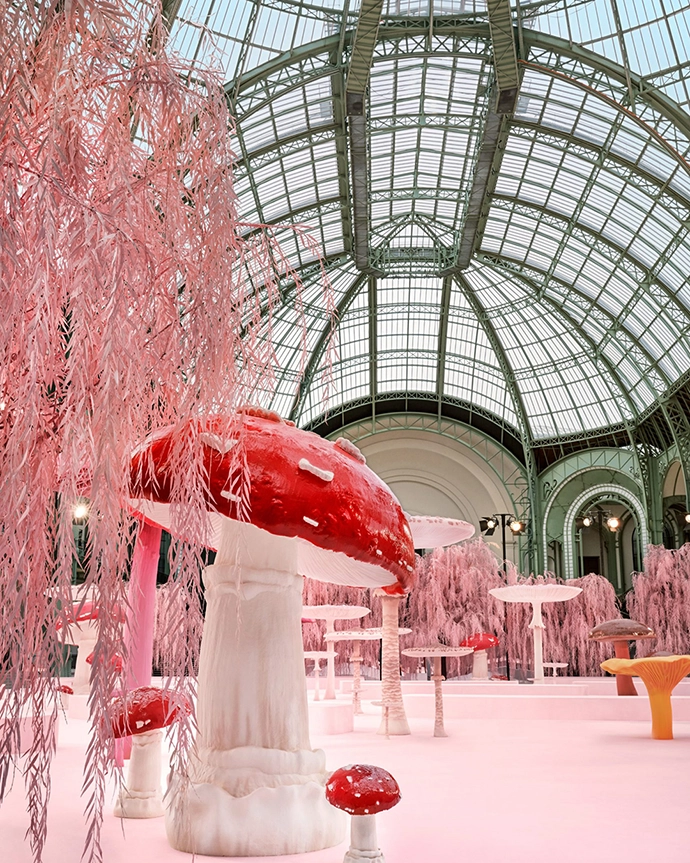
For Matthieu Blazy’s debut Spring/Summer Haute Couture Collection, the Grand Palais des Champs-Élysées was transformed into a pink paradise, with scenography evoking the whimsy of Alice in Wonderland.
Inspired by a short, anonymous Japanese haiku about a bird perching on a mushroom before flying away, the set featured a powder-pink carpet, an array of magical mushrooms and giant (real) weeping willows. The towering mushrooms were arranged in a spiralled, concentric formation to create an enchanted runway, while trees were positioned around the perimeter of the circular space to act as a boundary, further softening the architecture of the Grand Palais. Birdsong played throughout, adding an aural layer to the immersive environment. | chanel.com
Dior
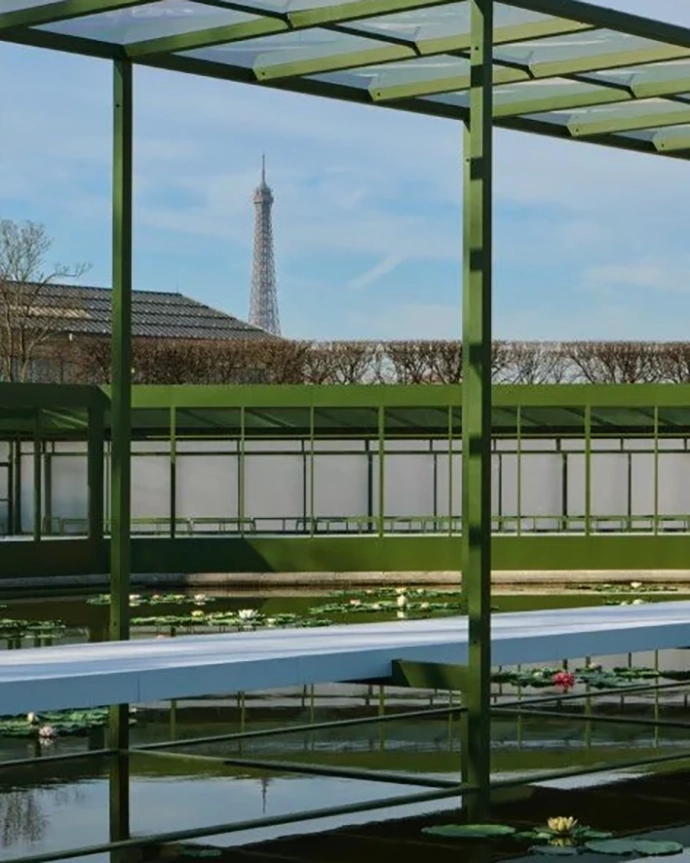
Described as “an imitation of a park, within a park”, the scenography for Jonathan Anderson’s first Women’s Autumn/Winter Collection as the creative director of Dior was designed to blur the boundaries between the real and the artificial.
The setting – the iconic Jardin des Tuileries – was transformed by architect Carlos Moubarak and design studio Bureau Betak into a dreamlike landscape inspired by Impressionist art, particularly Claude Monet’s Water Lilies.
A massive glasshouse, surrounding the historic Bassin de l’Octogone, was constructed to house the audience. The fern-green, powder-coated steel structure and seating referenced the famous Sénat chairs dotted around Parisian parks, further enhancing the feeling of a public promenade.
The runway, constructed over and around the perimeter of the Bassin de l’Octogone, allowed models to float over the pond, which featured artificial water lilies, adding to the theatrical quality of the show. | dior.com
Hermès
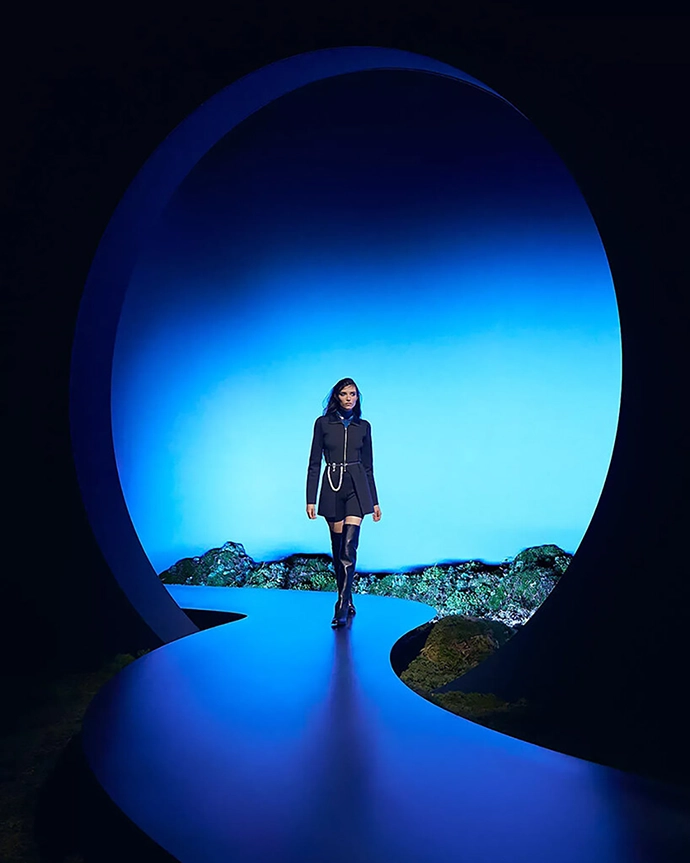
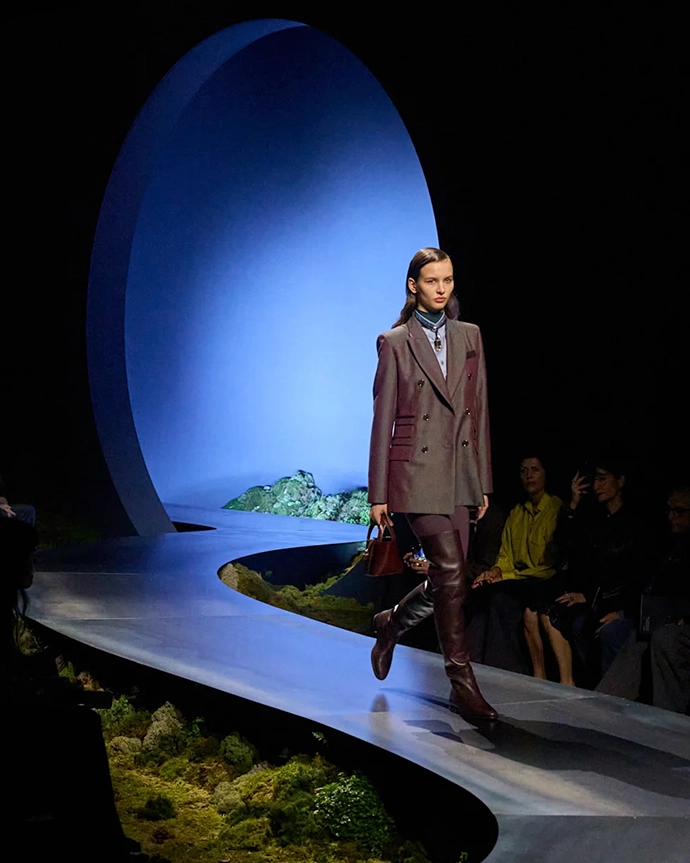
The set at the Hermès Women’s Autumn/Winter showcase, held at the Garde Républicaine barracks in Paris, reinforced the concept outlined in the collection’s notes: a ‘liminal’ moment between light and darkness, when perception sharpens and familiar shapes take on new dimensions.
With the collection drawing on variations of chiaroscuro (an art technique that uses strong contrasts between light and dark) and directly referencing A.M. Cassandre’s 1951 ‘Perspective’ square scarf design for Hermès, the scenography – designed by creative agency MAYBE – conjured an immersive, twilight-like atmosphere.
As a central element of the show, the lighting subtly shifted into cool blue moonlight hues, mimicking the transition from dusk to night. This play of light created dynamic shadows throughout the set, revealing and concealing textures on the garments, and making them appear different under changing light. Further emphasising the transformative nature of light, giant moon-like portals served as theatrical entry and exit points for the models.
As at the Miu Miu show, the runway was lined with moss and other low vegetation. Adding to the nocturnal setting, the ribbon-like runway hovered over the undulating terrain, snaking through the show space. | hermes.com
Don’t forget to sign up to our weekly newsletter for the latest architecture and design news.