-

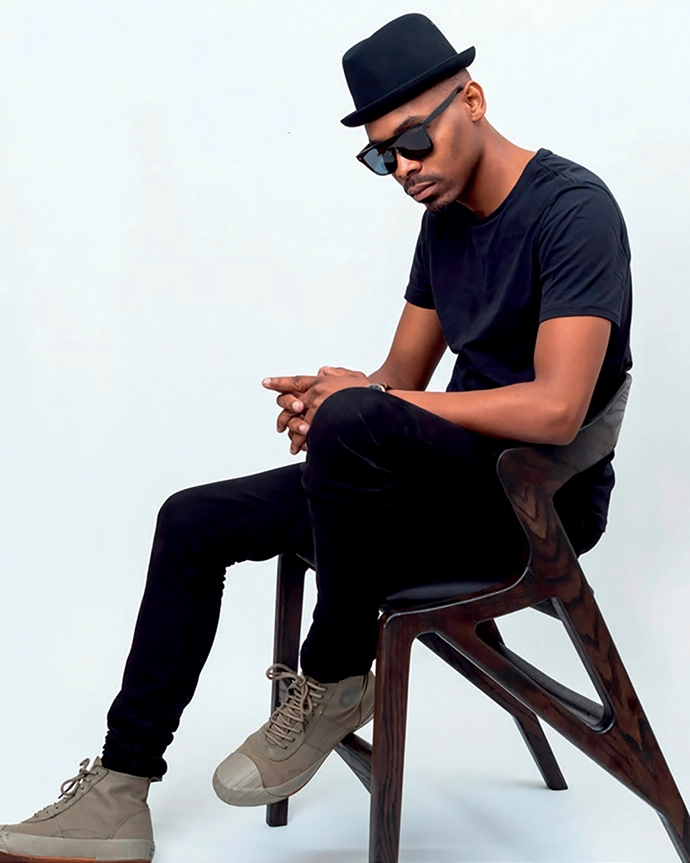
Khwebula Arts founder Sipho Khwebula Twala in the Gama occasional chair. -

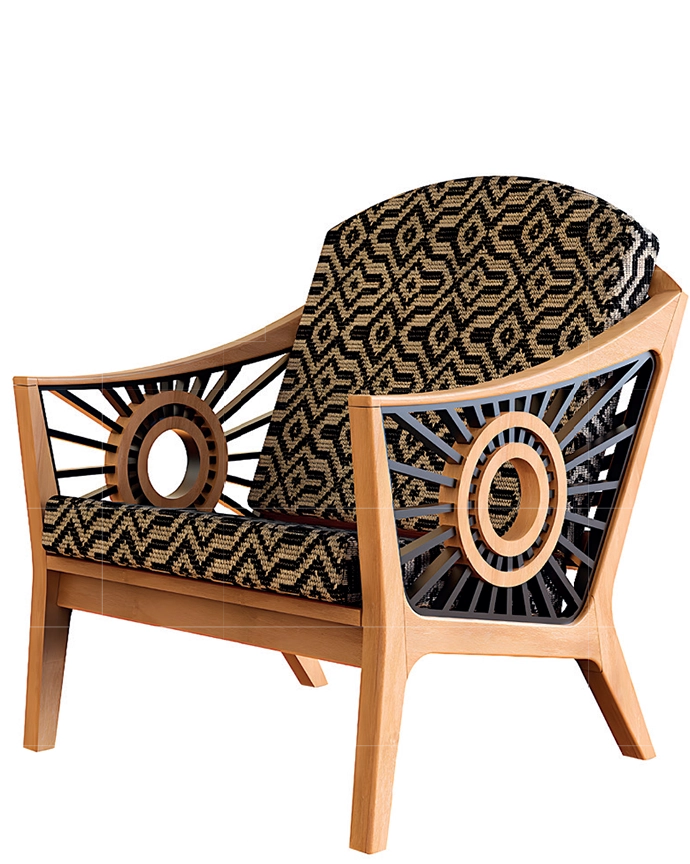
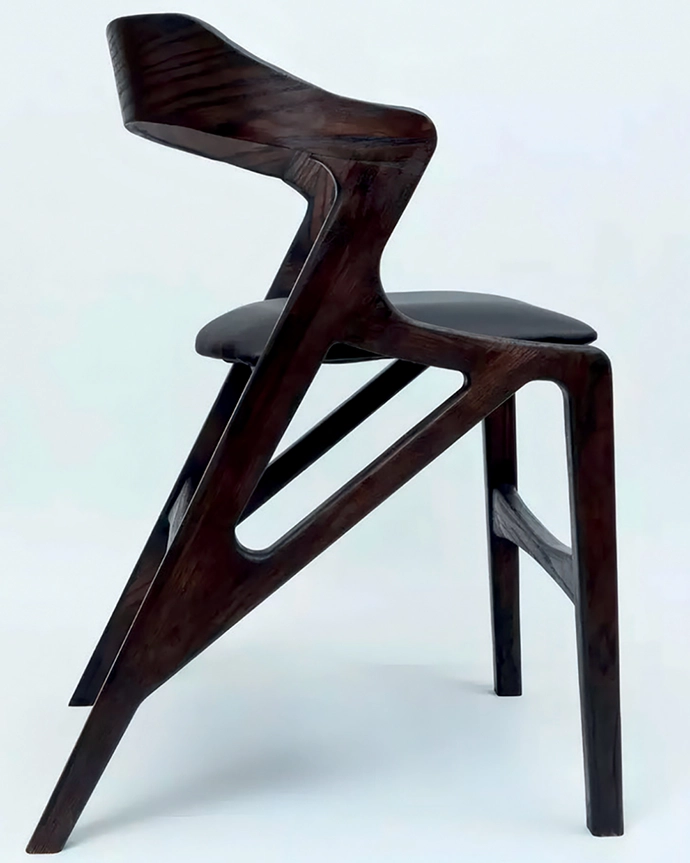
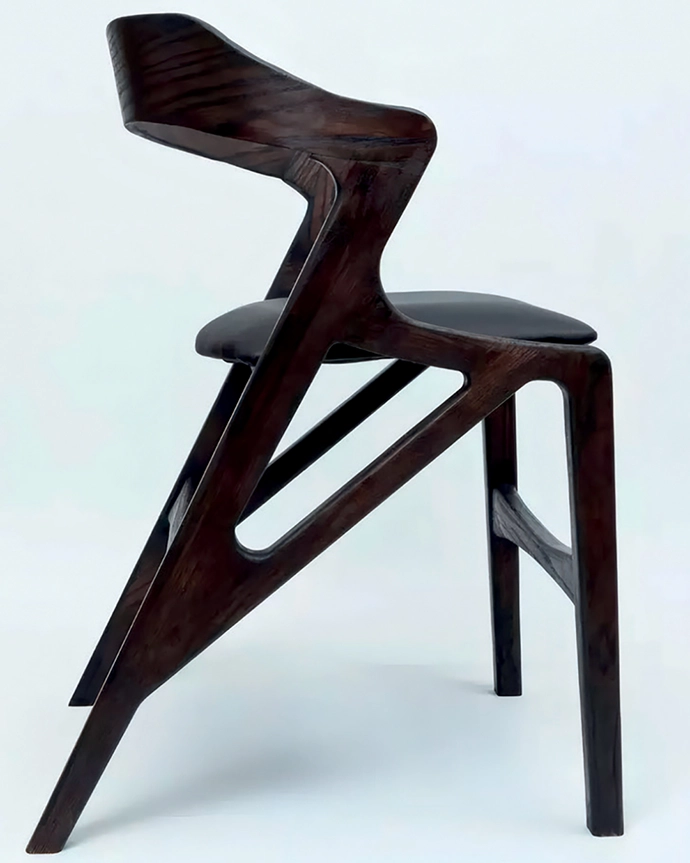
Gama occasional chair. -
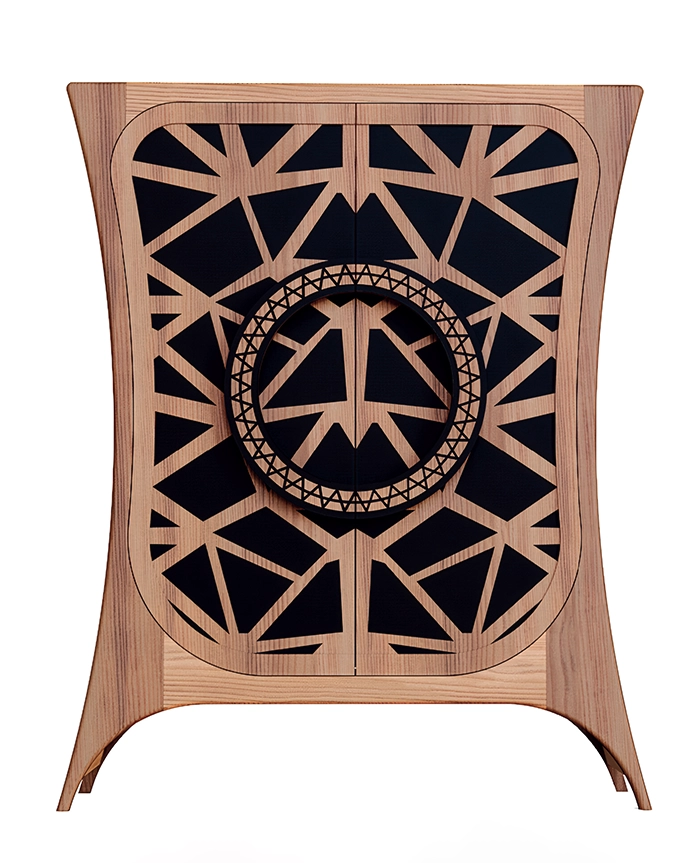
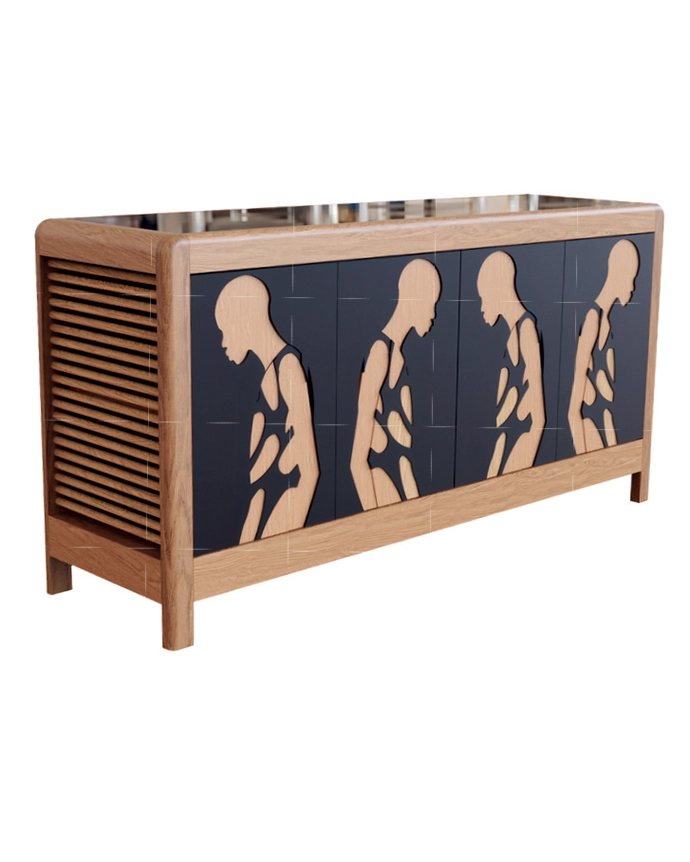
Maolady cabinet -

Kusile occasional chairs (kusile is the Zulu word for “morning”, so the side pattern represents the rising sun). -
The Gimba-Khwebz piece is inspired by the form of a smartphone’s SIM-card ejector. -
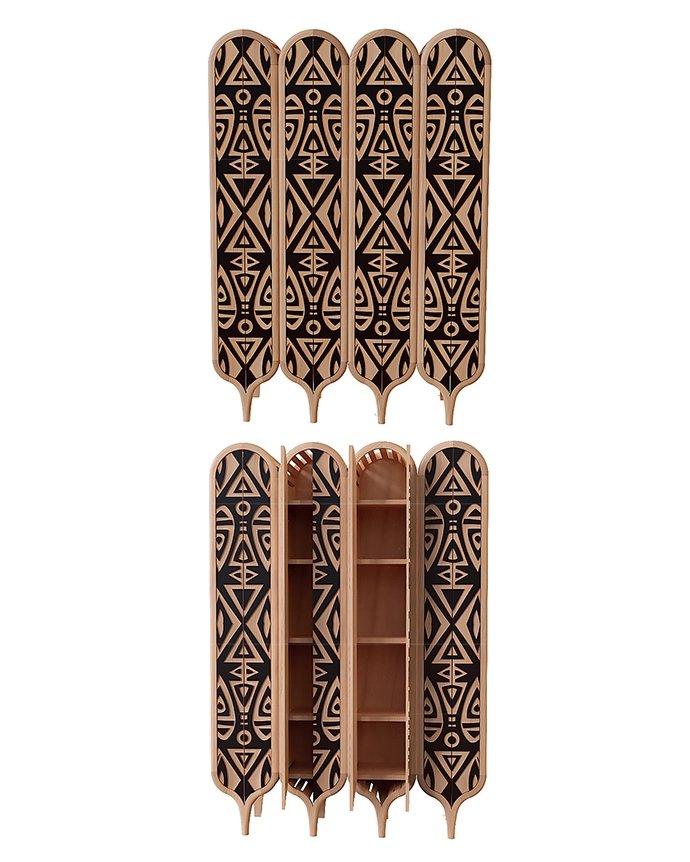
The Xitsong-inspired Gimba cabinet. -
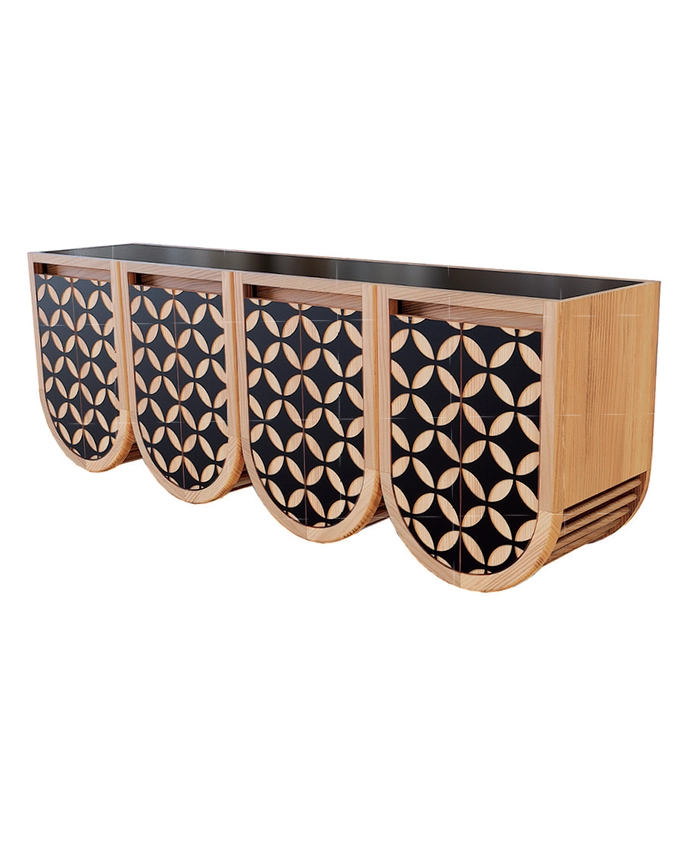
The Lost Boy cabinet. -

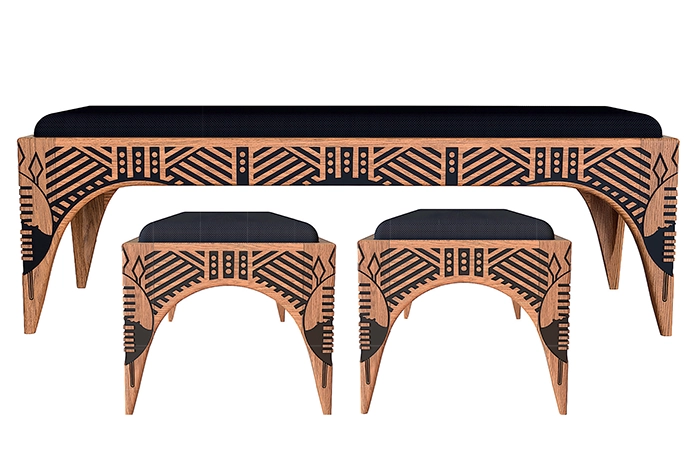
Swati 3-seater bench – the side view reveals the detailing. -
The K1 dining chair is named after Sipho’s childhood hometown, Katlehong. -
Khwebula Arts founder Sipho Khwebula Twala on the K1 dining chair.
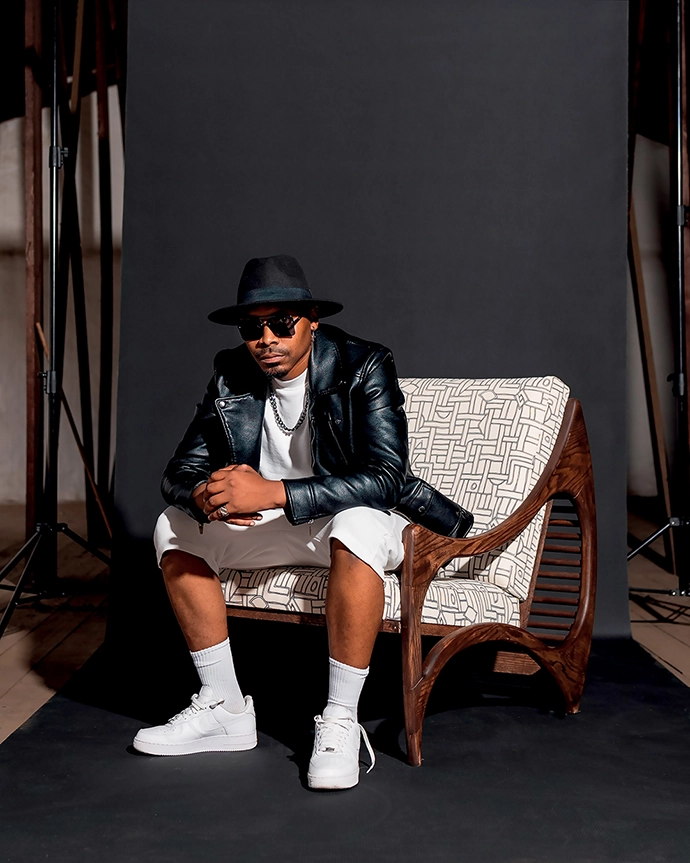
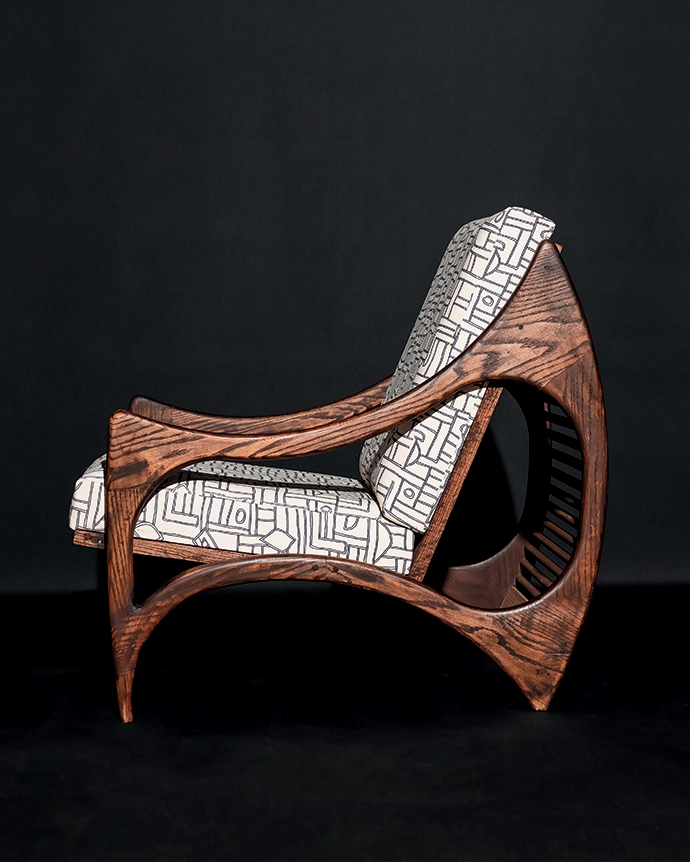
Sipho Khwebula Twala of Khwebula Arts talks about design, craftsmanship and his journey as a furniture maker.
WORDS Jo Buitendach PHOTOS Supplied
Khwebula Arts is a design studio where furniture meets art, and African where furniture meets art, and African culture takes centre stage. Founded by Sipho Khwebula Twala in 2019, the studio quickly gained recognition, with Sipho named Design Indaba’s Emerging Creative in 2020, and a top 10 finalist in the Nando’s Hot Young Designer competition. An Ekurhuleni native, Sipho learnt his craft through a combination of formal training and self-taught experimentation. From his first foray into product design to becoming a skilled furniture maker, he’s continuously pushed the boundaries of his work while valuing the guidance of mentors who shaped his journey. We spoke to Sipho to find out more.
“I usually introduce myself as a furniture designer, but I feel I’m gradually morphing into an artist. I want to make sure I leave no stone unturned during my time on this earth. Life is an adventure – and I am a fervent adventurer.”
“I grew up in the Ncala section of Katlehong, and as a child I never imagined I would one day become passionate about building things. My grandmother Zenzile, who raised me, was a tailor, and my uncle Alfred was a cabinet maker. They both shaped who I became – but my creative awakening happened elsewhere. I fell in love with design on the streets, and when I was first introduced to David Krynauw, the furniture designer and maker. I still remember walking through his factory doors for the first time, amazed that someone could bend wood with such elegance. At that point, I felt like an empty can, eager to be filled with knowledge; fortunately, he was just as eager for me to join his team.
“I worked with him for five years. We were like scientists, experimenting, developing new machining techniques, inventing bold joinery, and exploring unconventional shapes. We designed, built, and constantly pushed ourselves, transforming into confident creators in the process. When I eventually left, I was a completely different person – and truly a designer. I will always be grateful for the opportunity he gave me and for everything I learnt during that time.”
“The first object I ever designed and made was a shoe. Phillip Hollander, founder of Houtlander, helped me build it. I remember us wrestling to clamp the sole into place, although I’m not sure he remembers that moment. At the time, his studio was still finding its footing; it was part of the Furntech Incubation Programme while I was a student there.”
“My design training blends formal, informal and self-taught learning. I was first introduced to woodworking at Furntech, a formal institution offering wood machining levels 2, 3 and 4. I studied up to level 3 before catching the eye of David Krynauw, who brought me into his team – a mix of architects, interior designers, industrial designers and a welder. The only piece missing was a CNC (computer numerical control) operator and programmer, which became my role. CNC programmers bridge the gap between design and manufacturing – and this gave me an advantage, because I learnt from both carpenters and designers.
“David even left me with the keys to the workshop, which gave me access to the computer whenever I wanted. I spent countless nights teaching myself AutoCAD and Inventor for 3D modelling through YouTube tutorials. By the time I was done, I’d become a bit of a hybrid – a carpenter, CNC programmer and draughtsman capable of creating 3D models and photorealistic renderings.”
“My approach to furniture making has shifted over the past two years, thanks to mentorship from other designer-makers. Phillip Hollander has guided me on navigating the industry and building a profitable brand without gatekeeping. Rejoy Khumalo of Joy Boy Designs helped me move from treating design as just a hobby to treating it as a business, giving me focus and purpose when I needed it. Hamza and Ahmed Pandor of Pandors Designs reminded me to balance business sense with passion for craft, showing me that success requires both. These mentors have shaped not just my work, but also my growth as a designer and as a person.”
“I enjoy working with oak, ash and kiaat. They’re reliable materials, easy to cut, bend and sand, with beautiful grain and durability. I love exploring patterns and complex shapes; every piece I build sharpens my design and manufacturing skills. New pieces are the most satisfying because they always spark fresh ideas.”
“Khwebula was the name of my great-great-grandfather, an iconic figure whose name became part of our izithakazelo or clan praises. I named the business after him to honour my bloodline and culture. My work is an artistic representation of African culture, celebrating its patterns, traditions and fashion. Culture and heritage are the foundation of our identity – which is why I place African heritage at the heart of everything I create.”
“A typical day at our Khwebula Arts studio and factory involves designing, sanding, programming, running to the CNC when the suction fails, celebrating confirmed orders, and dealing with missed deals. There’s shouting, laughing, pacing, occasionally crying. Disappointed clients can tear you apart over late deliveries; happy clients applaud your efficiency. Every day is unpredictable – like watching Game of Thrones for the first time. You never know what’s coming next, and that chaos is exactly what makes it so much fun.” | @khwebula
Don’t forget to sign up to our weekly newsletter for the latest architecture and design news.