-

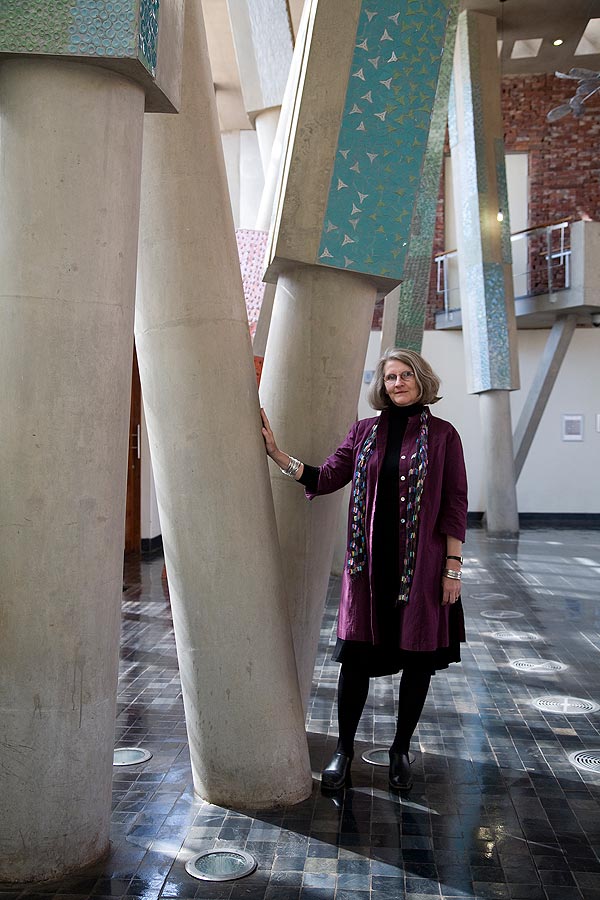
24 hours in Johannesburg : Professor Lone Poulsen is Director of the Architecture Programme at the University of the Witwatersrand. -
24 hours in Johannesburg : Bara Taxi Rank -
24 hours in Johannesburg : Old Women's Jail -
24 hours in Johannesburg : Bara Taxi Rank -
24 hours in Johannesburg : Constitution Hill -
24 hours in Johannesburg : Metro Mall -
24 hours in Johannesburg : Apartheid Museum -
24 hours in Johannesburg : Apartheid Museum -
24 hours in Johannesburg : Hector Pieterson Memorial Museum
PHOTOS: David Ross | PRODUCTION: Klara van Wyngaarden | WORDS: Alma Viviers
Johannesburg is one of the few South African cities where the effects of societal segregation are visible in the urban landscape. These post-apartheid public buildings, chosen by Professor Lone Poulsen, explore issues of identity and memory.
Bara Taxi Rank – 2008
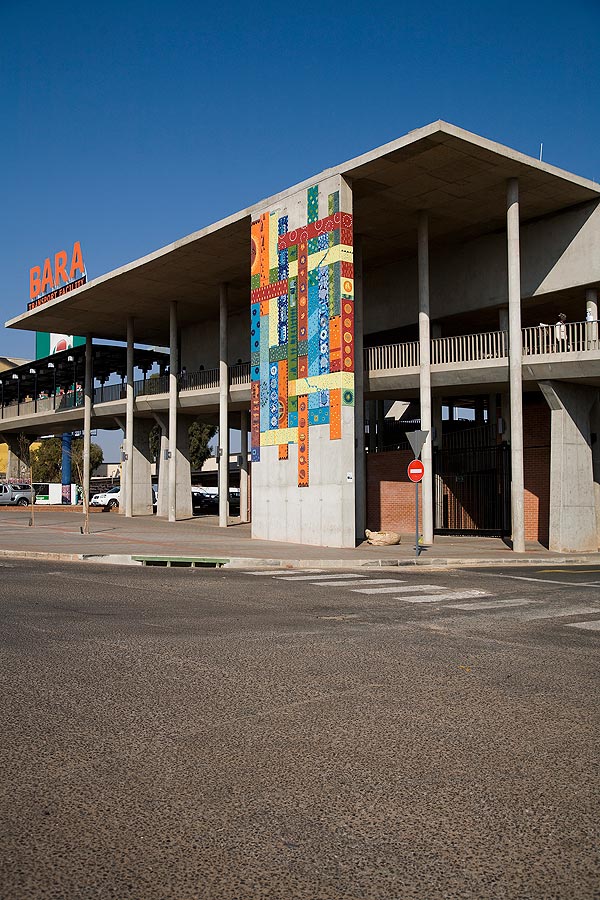
Located on one of the main arterial routes from Soweto to Johannesburg and across from the largest hospital in South Africa, this is a crucial interchange for almost 70% of Soweto’s commuters. An appropriate response to both site and user needs was called for in order to accommodate commuters, buses, taxis and informal traders at this bustling interchange.
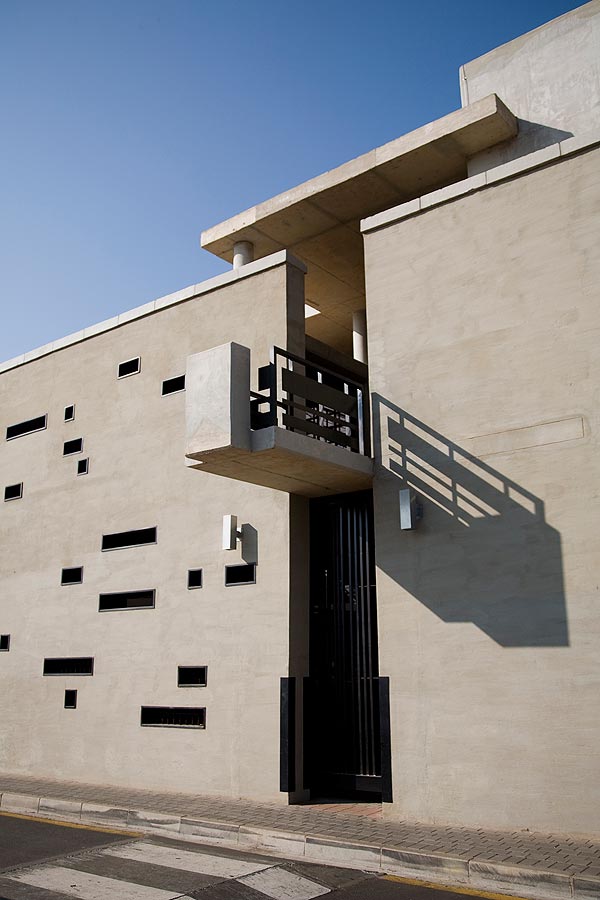
Urban Solutions designed a linear structure that spans 1,3 km and is approximately 500 m wide, which suggests movement through the rank. The concrete structure presents a solid edge to one side, punctured by openings. On the other side, the structure opens up and is punctuated by colourful towers, which are decorated with mosaics by local artists.
• Old Potchefstroom Road
Apartheid Museum – 2002
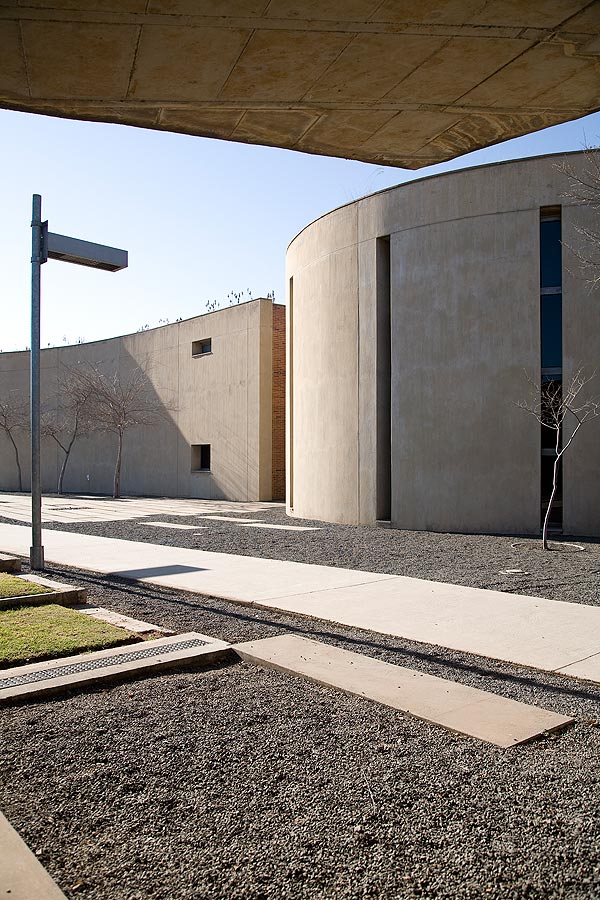
A narrative journey plots the origin, development, implementation and final triumph over apartheid. Visitors journey through spaces where they are bombarded with images, video footage, audio interviews and artifacts, which give them a glimpse into the past. Stark lines in concrete, rusted steel and stone capture the harsh reality that was apartheid. A minimalist interior of display halls and two windowless prison cells provides a canvas for the exhibition.
Externally, one walks over the building and confronts the skyline and landscape of Johannesburg. Through the collaboration between the curatorial team, the design team and the construction team, exhibition and architecture merge to achieve a haunting building that resonates with memory.
• Northern Parkway and Gold Reef Road, Ormonde
Hector Pieterson Memorial Museum – 2002
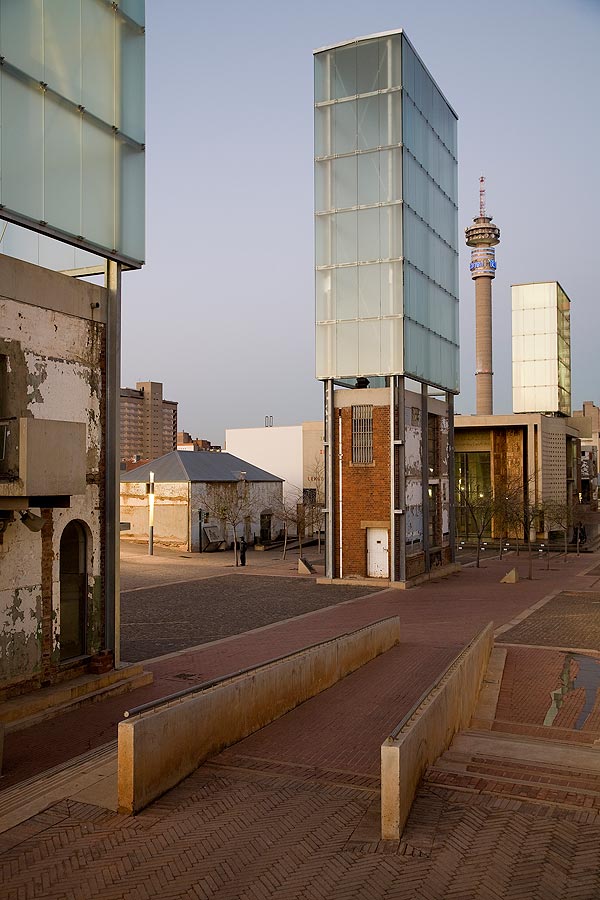
Hector Pieterson Memorial Museum captures the memory of the tragic deaths of hundreds of students who were killed during the 1976 Soweto uprisings against Bantu Education, of which Hector was the first victim.
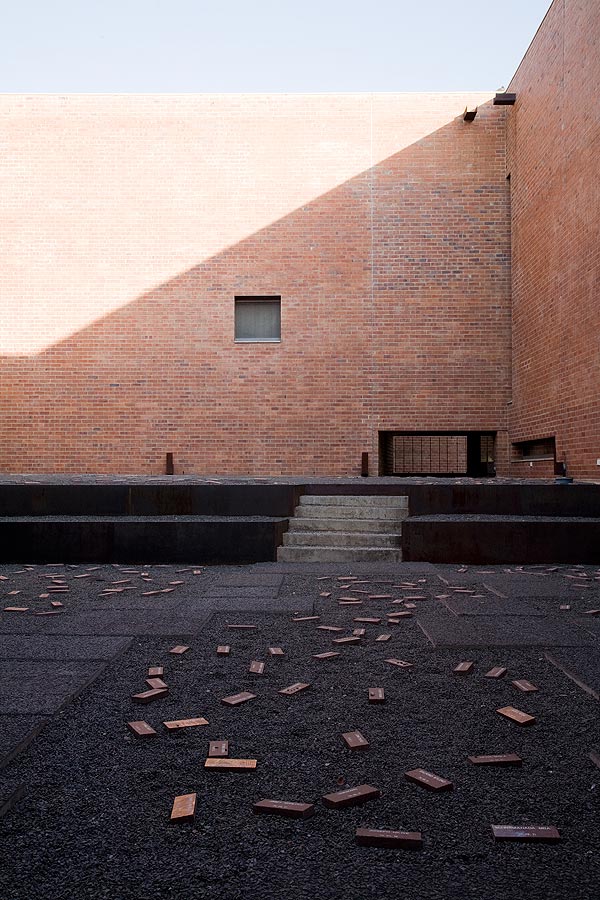
A narrative journey unfolds the events of 16 June 1976, as visitors progress through the ramped building. Architects, Mashabane Rose Associates, intertwine memory and place as the building reflects both inward and connects outward. Inwardly, it is built around a solemn courtyard where the names of the victims are engraved on granite slabs.
Outwardly, the building is linked to the events of the physical environment through devices such as framed views of significant sites including the police station, the shooting site and the Orlando Stadium, which are further illuminated by text on the glass pane. The landscaped external spaces serve to continue the theme of referencing significant places within the context.
• 8 288 Maseko Street, Orlando West, Soweto
Constitution Hill
1. Constitutional Court – 2004
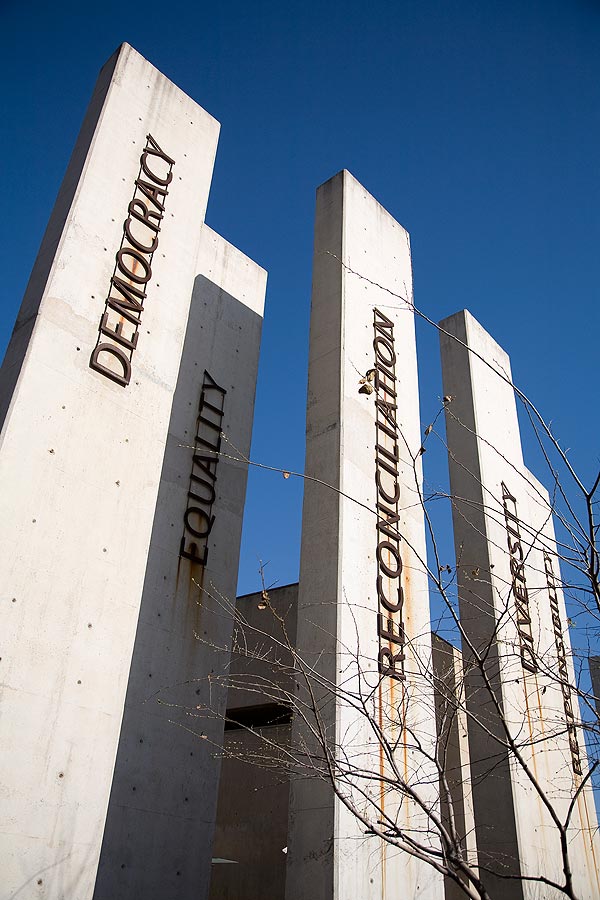
A court for the people by the people, the Constitutional Court was designed by OMM Design Workshop and Urban Solutions. It subverts the traditional perception of court buildings as imposing sites of judgment, rather opting for a space that makes place for everyone – a truly inclusive building.
The double-volume foyer of the main court building, with its angled mosaic columns representing tree trunks and the holes in the concrete roof slab simulating light falling through branches and leaves, sets the tone for a user-friendly building that incorporates artworks by various artists and craftspeople. It is filled with symbolism and the past is revealed through devices such as the use of red brick from the demolished awaiting-trail building in the interior of the court room, thus creating a site of living memory.
2. Old Women’s Jail – 2005/06
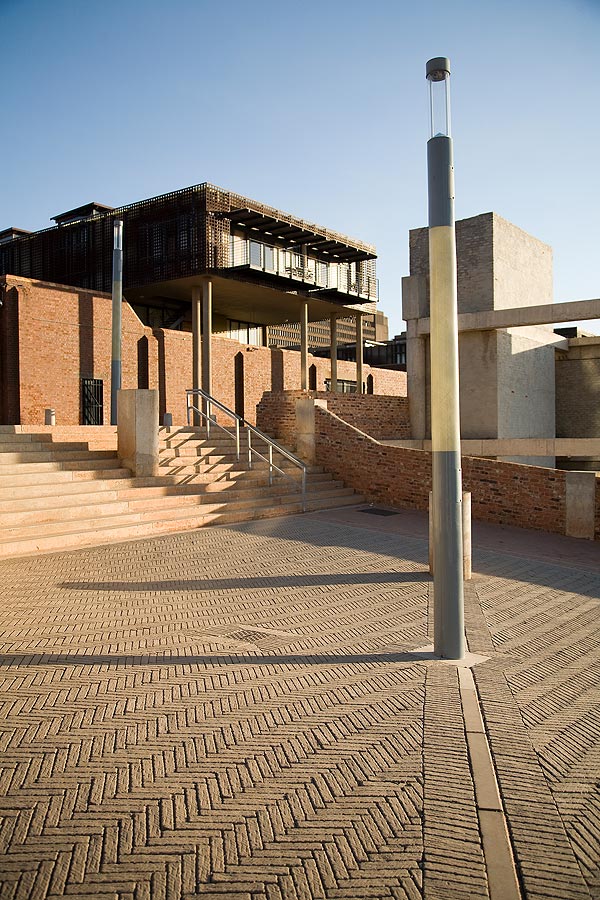
The renovation and extension of the Old Women’s Jail on Constitution Hill was designed by Kate Otten Architects and now houses the offices of the Commission of Gender Equality. First built in the early 20th century in the Victorian style, the jail has a central atrium for maximum surveillance of prisoners.
The building conserves the memory of the people who were imprisoned here through art and exhibitions. It also conserves the memory of place, and care was taken to ensure that old and new parts are clearly defined. The building defies its original use, not only in its new function as protector of human rights, but also physically, as seen in interventions such as the second-floor office that sails over the prison’s perimeter wall.
• Sam Hancock Street, www.constitutionhill.org.za
Metro Mall – 2002
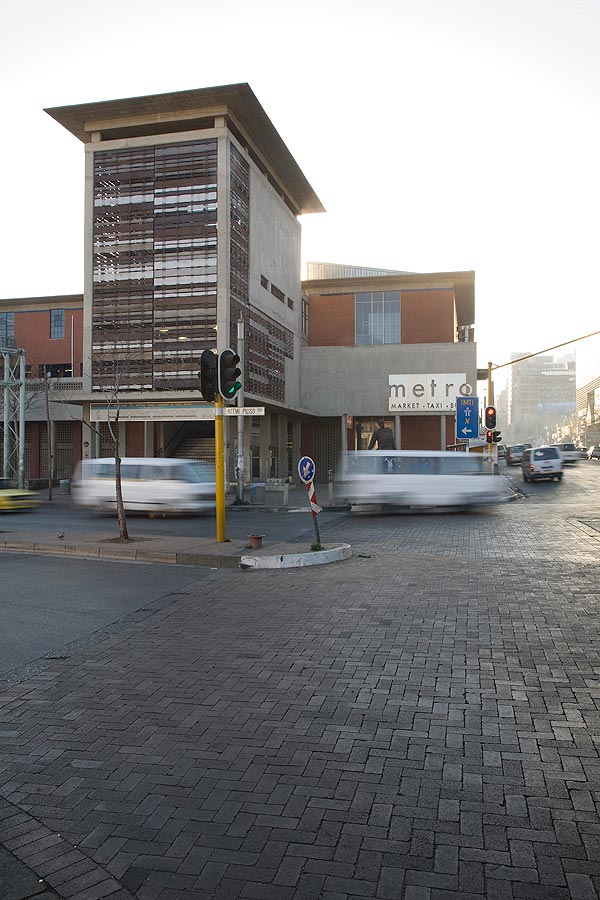
The Metro Mall by Urban Solutions encompasses a whole city block, and responds to the inner-city context through its scale and the way in which it creates a continuous street edge. It has also contributed to the regeneration of a part of Johannesburg and serves as both a transport and trader terminal.
Despite its mass and the use of robust materials such as concrete and red face brick, the Metro Mall is made accessible through careful architectural articulation. Commuters are welcomed through the entrance towers, which give the building presence and create a transition zone of dappled light through the beautifully designed metal screens. This significant building creates a dignified place of public interaction.
• Situated between Simmonds, Sauer, West and Pimm streets