-

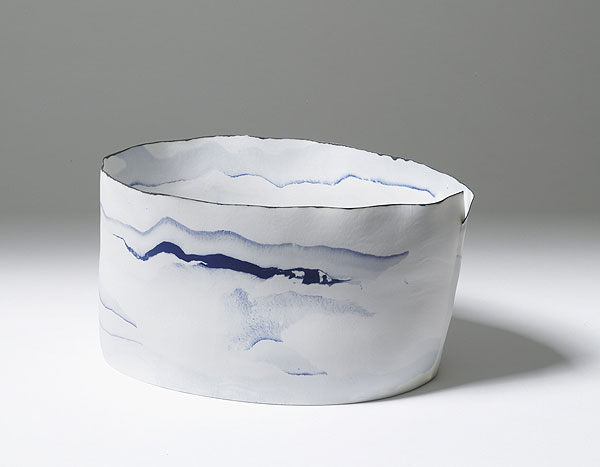
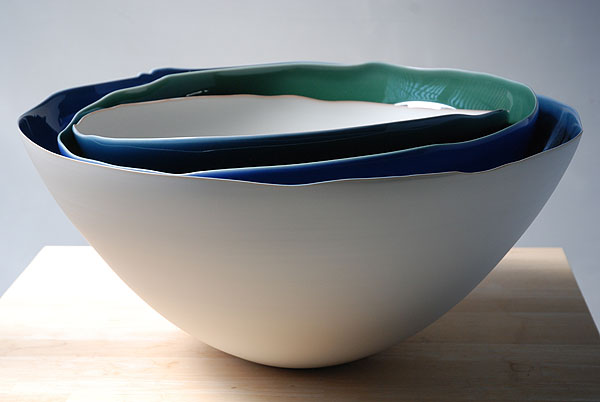
The Flow Gallery goes Blue : The pursuit of perfection is the reason Henk Wolvers continues to work only with porcelain. Built paper-thin and decorated with white and blue slip these vessels evoke a sense of movement and fluidity, fragility and strength. -

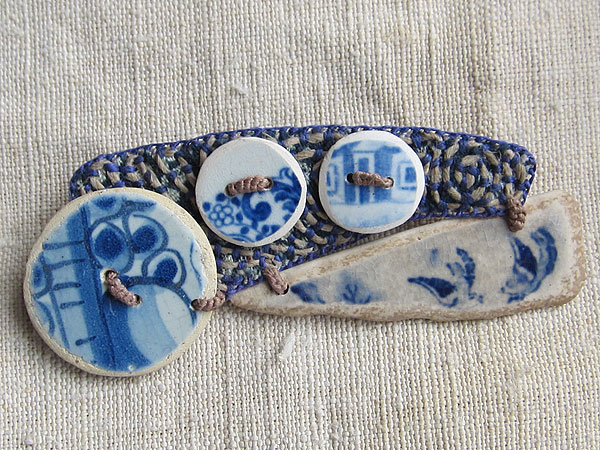
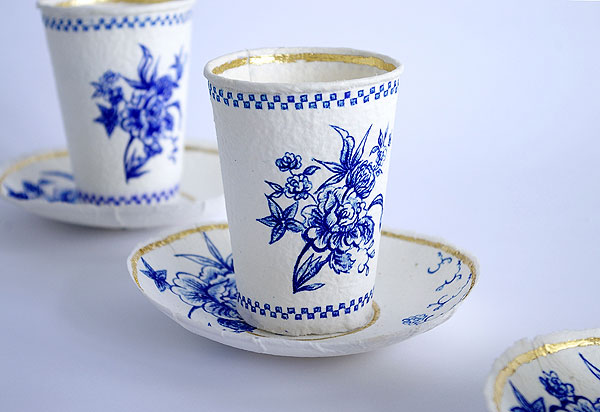
The Flow Gallery goes Blue : Amanda Caines jewellery explores archaeology, collecting and recycling. She allows the landscape in which she collects these materials to inform each new piece. For this show she has focused on her collection of traditional blue-and-white Delftware. -

The Flow Gallery goes Blue : Caroline Slotte reworks existing objects. She manipulates found ceramics, so that they take on new meanings. They are tangible reminders of that which has been; our own life's history, family's past and our cultural and historical backgrounds. -

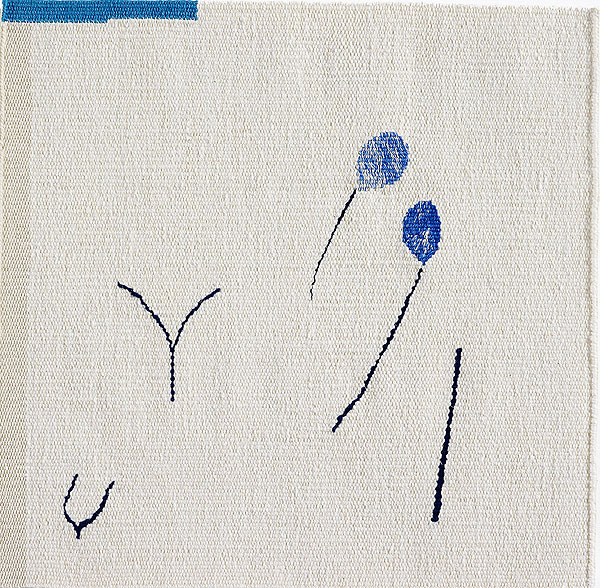
The Flow Gallery goes Blue : Fiona Rutherford's work has been hugely influenced by Japan since her first visit in 2001. The faded and stitched indigo remnants of Japanese Boro textiles have provided a rich source of inspiration. -

The Flow Gallery goes Blue : Fuku Fukumoto`s expression arises from a concern with the material, technique, and process. Discovery through the directness of the throwing process and improvisation are her two major concerns. -

The Flow Gallery goes Blue : Mia E Göransson's work explores nature, the changing seasons, beauty and its perishing through her medium of ceramics. She is particularly interested in casting liquid clay into installations reflecting the first signs of spring. -

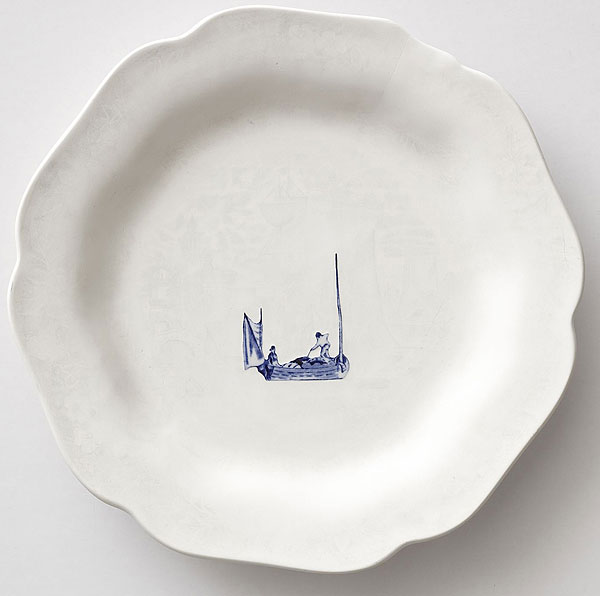
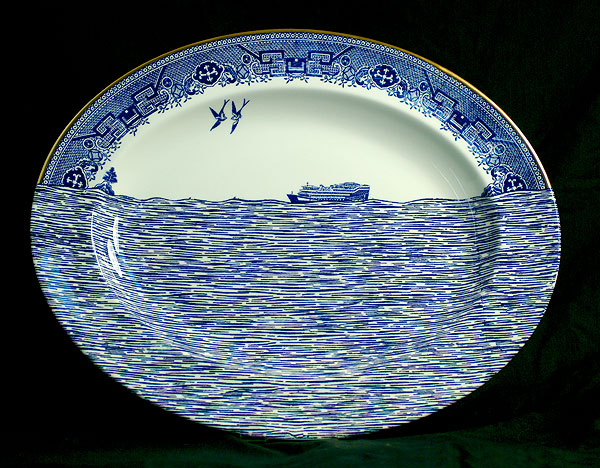
The Flow Gallery goes Blue : At first glance, Paul Scott's work shows us traditional, comforting blue-and-white ceramic ware. On closer inspection what once appeared to show the rural idyll of his native Cumbria reveals troubling images of a countryside that has been exploited. -

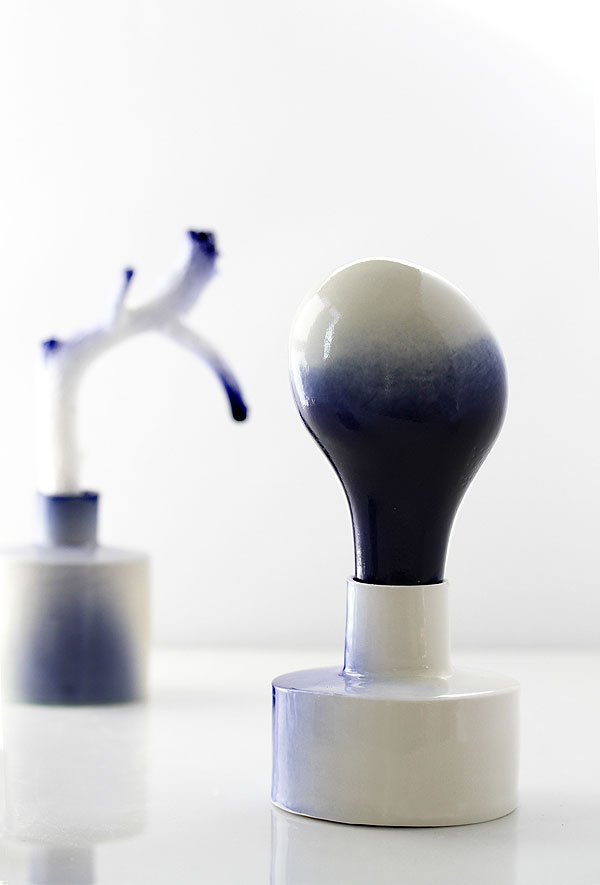
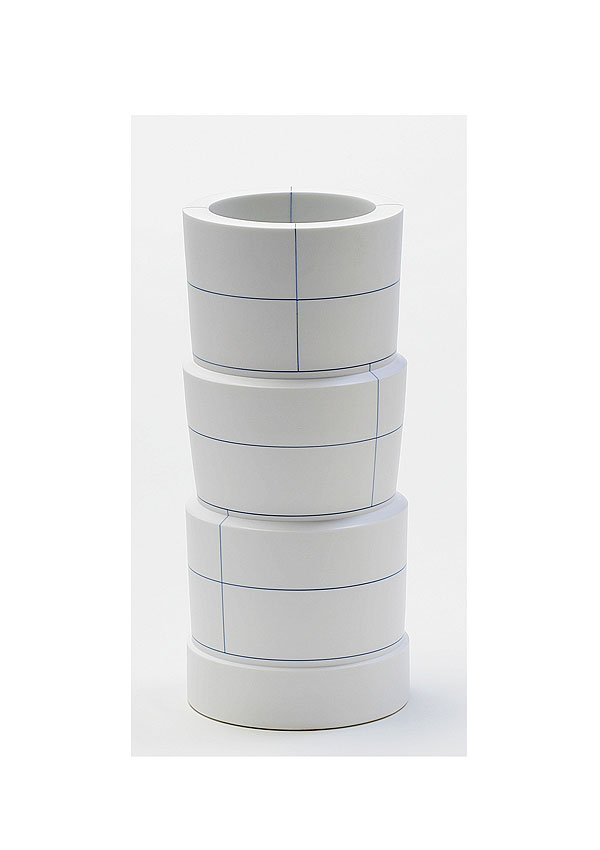
The Flow Gallery goes Blue : Kap-sun Hwang is inspired by the heritage of Korean Joseon ceramics. Hwang creates white cylindrical vessels, emphasizing each segment of white porcelain with a subtle blue line. Reminiscent of architecture, each structure is made with extreme precision. -

The Flow Gallery goes Blue : Rebecca Wilson references the growth of the throwaway culture. Our habits of consumption have changed and convenience and fashion take precedence. Consumption is increasingly more about having, using, and discarding than about acquiring and cherishing. -

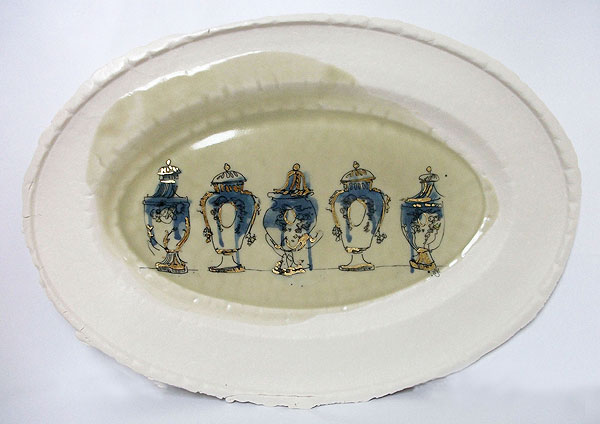
The Flow Gallery goes Blue : Amy Jane Hughes's work bridges the gap between past and present. Her work references the prestigious porcelain of Sevres in the late 17th and 18th centuries — hinting at the decadent and the extraordinary, but giving them a new lease on life.
VISI’s not the only one to go “blue” this month. The Flow Gallery in London has also embraced the colour and their current exhibition explores the different ways contemporary artists use the hue.
The use of traditional blue and white gives the artworks a particular point of reference, as these colours are commonly associated with European and Far Eastern heritage. And although Delft patterns might be the first to spring to mind, the history of the blue-and-white aesthetic has a much longer history.
Reino Liefkes, the Head of Ceramics and Glass at the V&A Museum and Senior Ceramics and Glass Tutor Felicity Aylieff, shares the following facts:
– The 8th-century potters of Basra, Iraq were probably the first to decorate white-glazed pots with blue designs.
– From the late-16th century, Europeans developed an insatiable appetite for fine china or blue-and-white porcelain.
– No matter how weak the cobalt oxide solution, once fired an ink blue line will appear. The darkness will depend on the potency of the solution.
– Tone depth is created by layering different concentrations of cobalt.
Take a virtual tour of the Blue Show at The Flow Gallery with our online gallery. If you’re travelling to London and manage to see this exhibition in person, be sure to let us know all about it.
More information: www.flowgallery.co.uk, info@flowgallery.co.uk
Don’t miss out on VISI 56, our “Into the Blue” issue, on sale now.