-

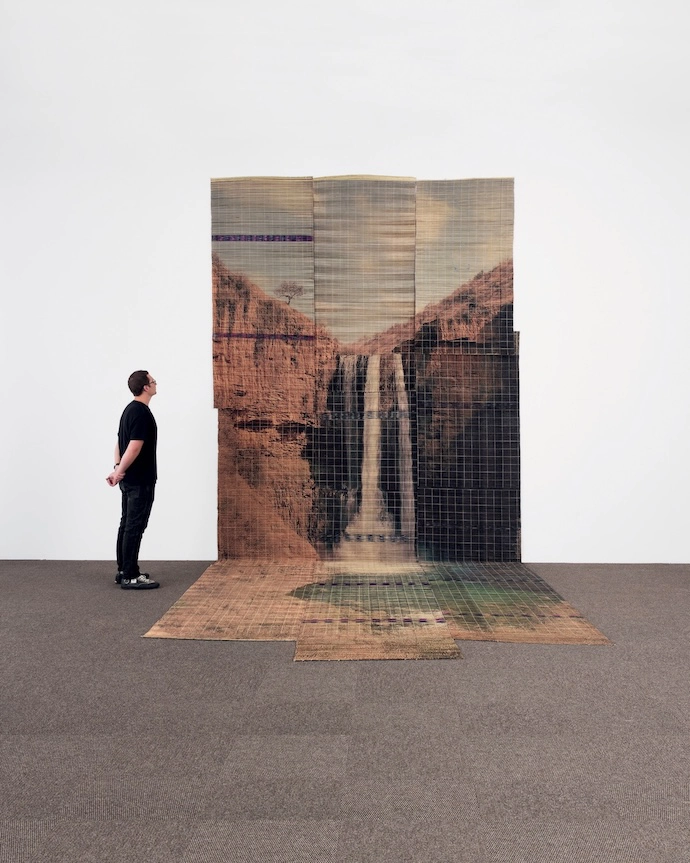
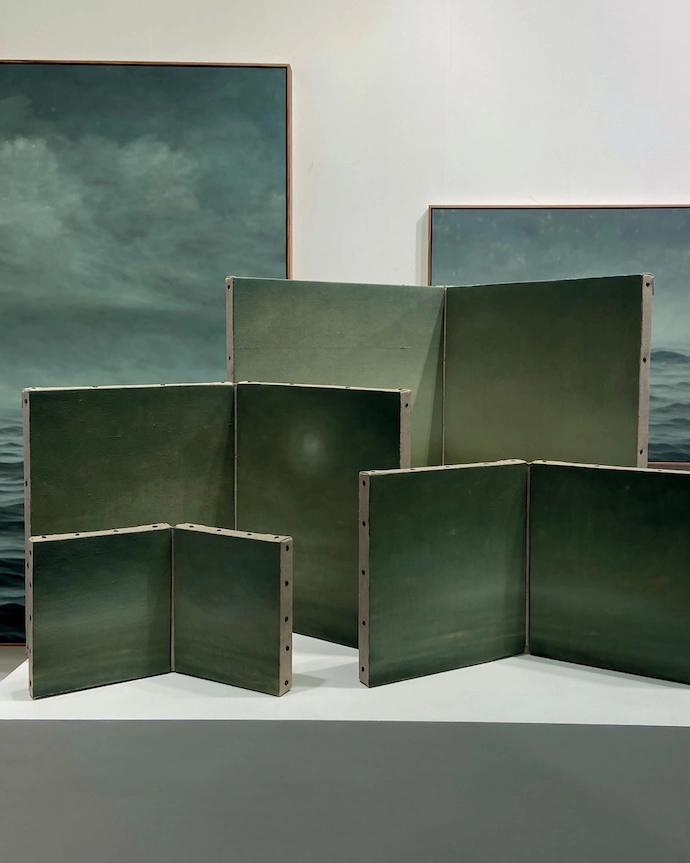
Reservoir artists Ben Stanwix and Xhanti Zwelendaba’s collaborative installation BAWA (2025). -
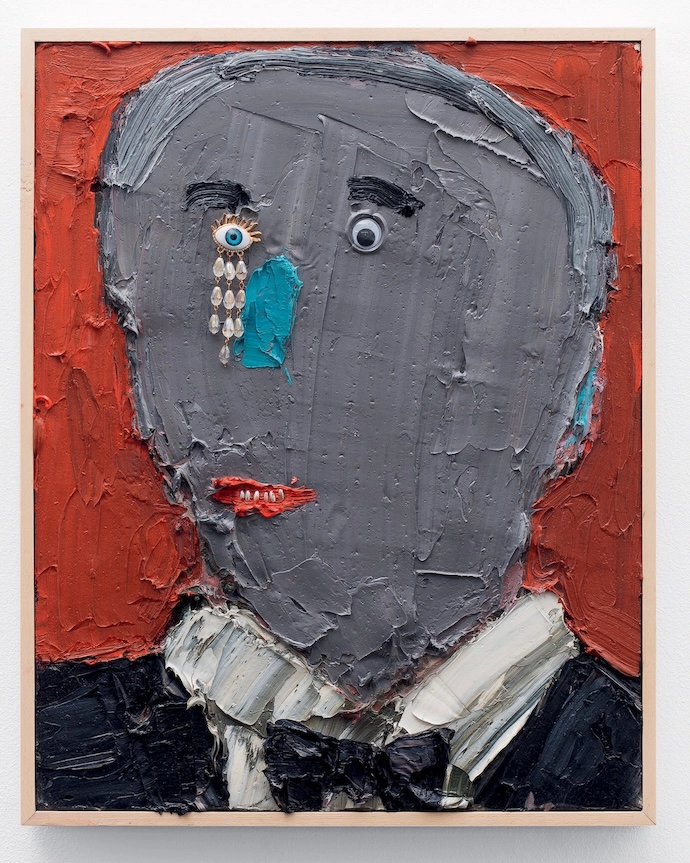
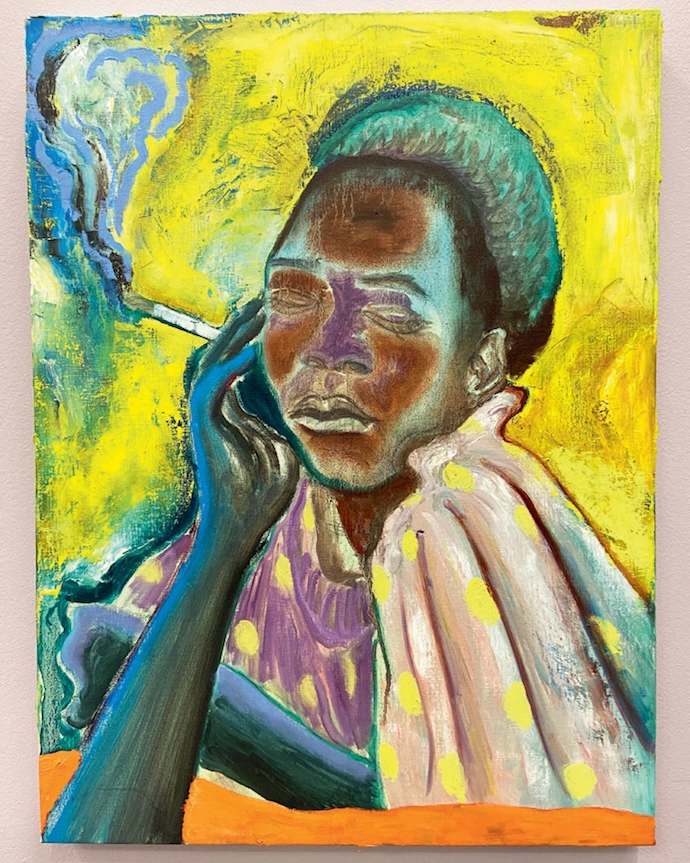
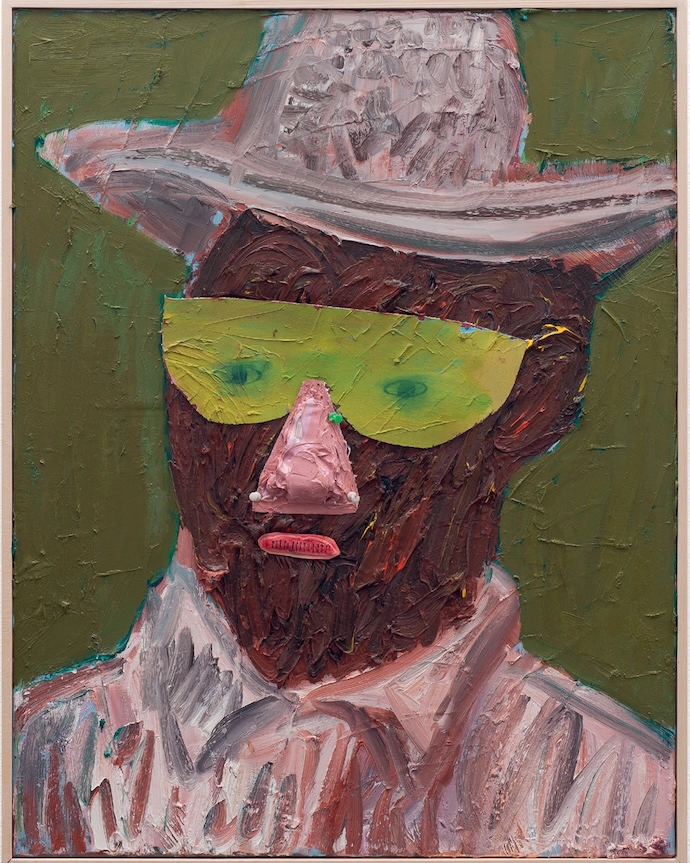
Stevenson artist Georgina Gratrix’s Emotional Man (2017). -

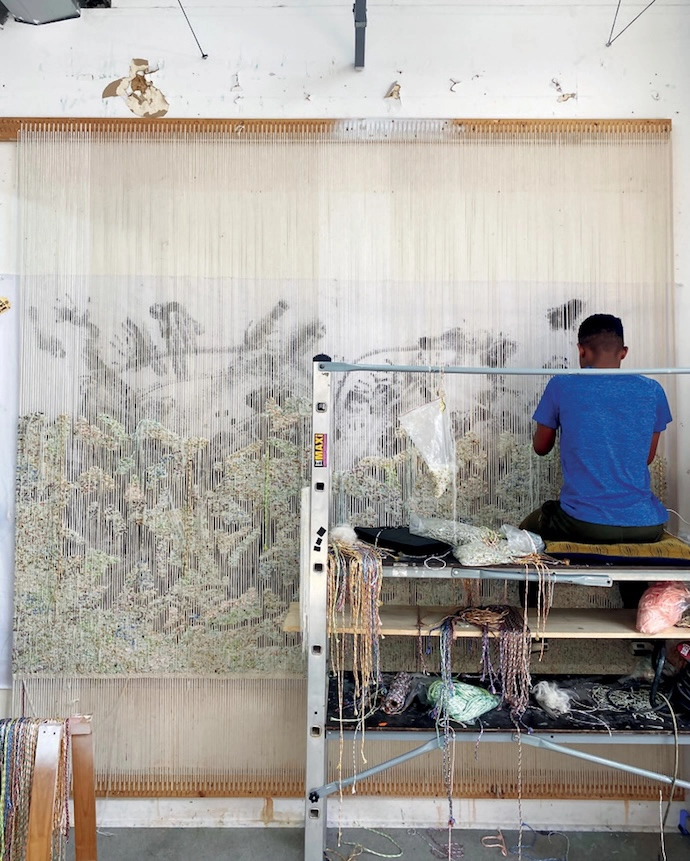
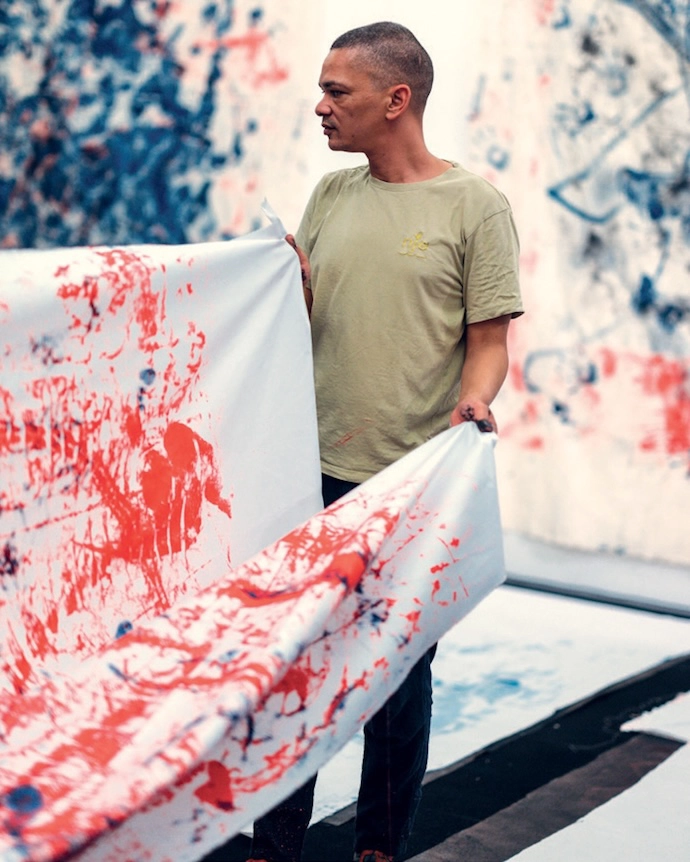
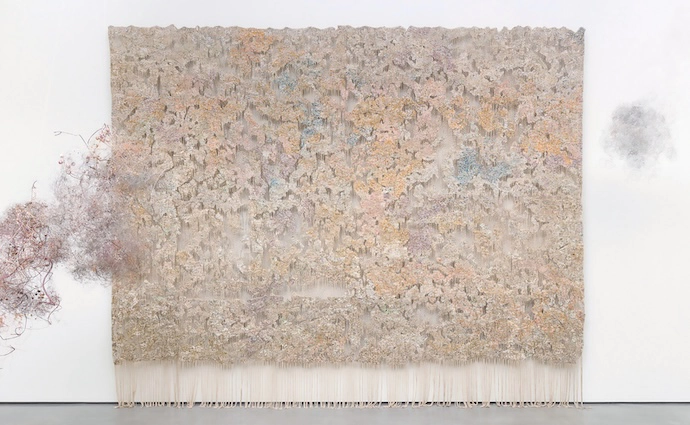
Blank Projects artist Igshaan Adams maintains a busy studio in Woodstock. -
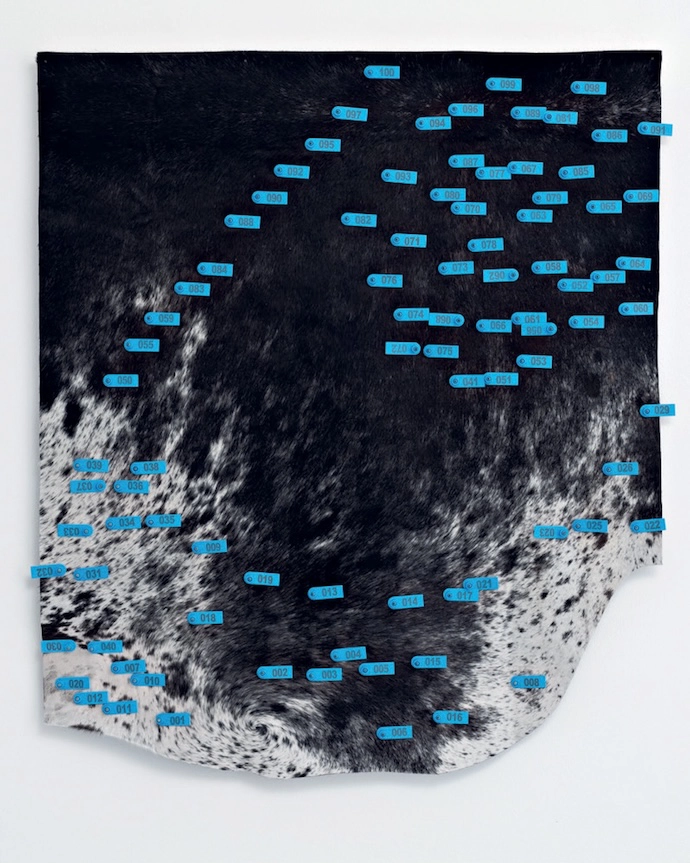
Map made of Nguni hide and ear tags by Ben Stanwix and Xhanti Zwelendaba. -
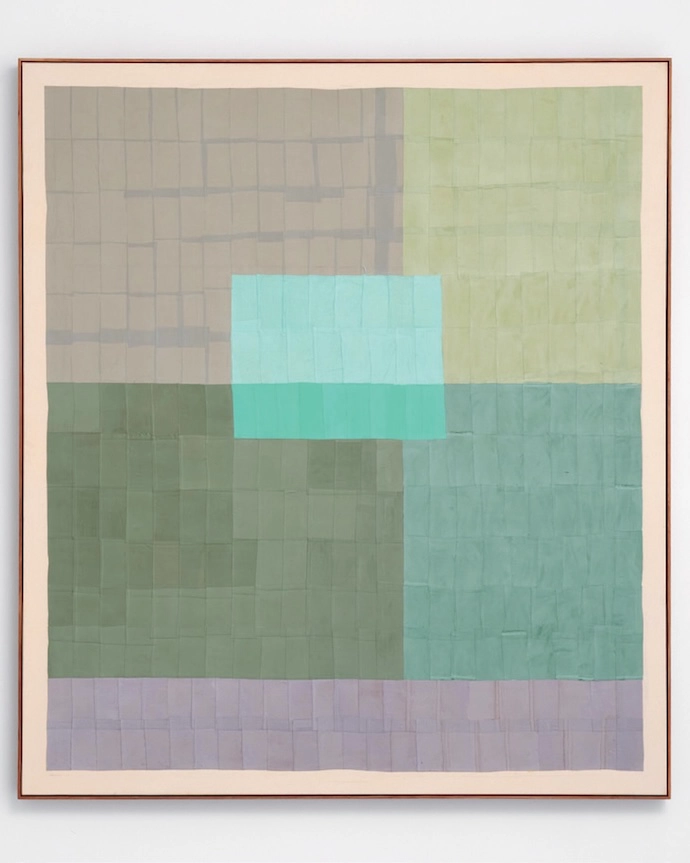
Ship (2025) by Ben and Xhanti. -

Igshaan working with Garage Dance Ensemble at Zeitz MOCAA. -
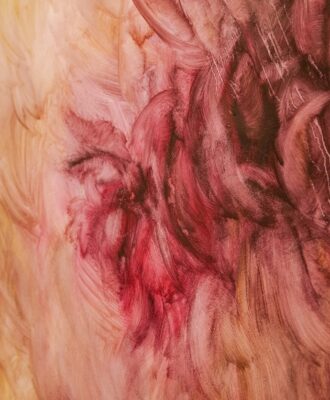
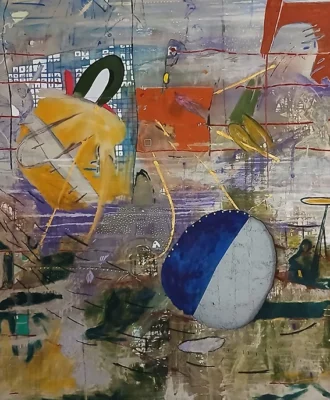
Stevenson artist Simphiwe Ndzube’s Ma Brrr (2022). -
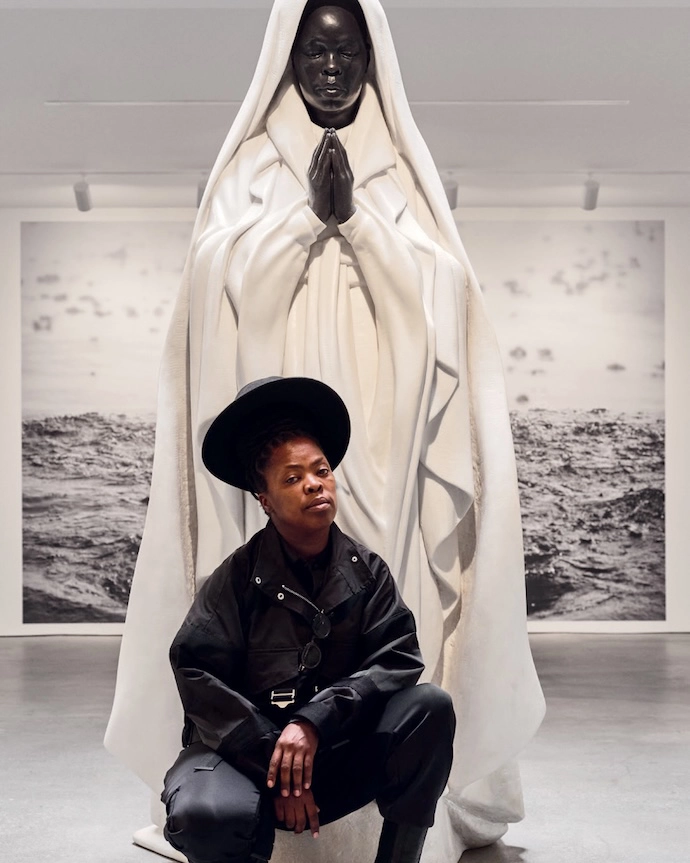
Zanele Muholi (Southern Guild) with their sculpture Umkhuseli (The Protector, 2023). -
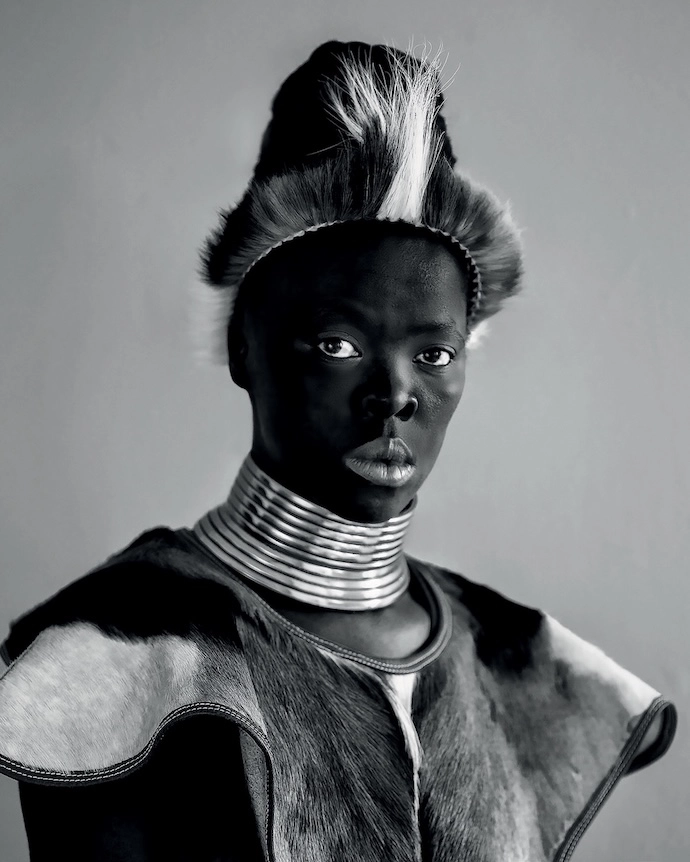
Another example of Zanele’s work, Somnyama in Lafayette, New York (2016). -
Work by Suburbia Contemporary artist Jake Aikman. -
Georgina Gratrix’s Man with a Plan (2017).
Art critic, writer and curator Sean O’Toole on how to navigate the unpredictable waters of buying, collecting and investing in South African art.
WORDS Sean O’Toole PHOTOS Mario Todeschini, Monique du Plessis, Mark Blower, Courtesy of Simpiwe Ndzube/Stevenson, Lindsey Appolis, Elizabeth Carababus/Southern Guild, Supplied
Not long ago, a Lisa Brice painting could be bought for the price of a sensible used car with low mileage. Today, her bold canvases exploring feminist themes in dominant tones of red and blue sell at auction for prices that could cover a fleet of German cars. In March 2025, the Cape Town-born and raised painter’s 2018 work After Embah – a lurid bar scene that references Édouard Manet’s painting Plum Brandy (1877) and Nicki Minaj’s 2014 song Anaconda – sold at a London auction for £5.4-million (R121-million). In 2021, Brice’s auction record sat at R364 160.
It’s not just Brice whose star has risen dramatically over the past few years. Igshaan Adams, Jake Aikman, Georgina Gratrix, Simphiwe Ndzube and Zizipho Poswa have all – in different ways, and markets – found success. Cinga Samson, another high-flying painter, has blazed a similar trajectory, his richly symbolic portraits commanding sums that are many multiples of what his former dealer, Jonathan Garnham of Blank Projects, charged in the late 2010s when his prices nudged R150 000. In 2021, a Johannesburg artist who owned Samson’s portrait Lift Off (2017) sold it at a London auction for £321 300 (R7.15-million).
Not even tech stocks deliver these kinds of returns, which lends these stories of astonishing profit an almost mythical quality. Foresight is matched by fortune. Collectors, backing the right horse, do little but sit patiently while a version of compound interest does the rest. But the art market is fickle, and has a long memory – and an even longer list of reversals. Samson’s market has cooled noticeably since 2023. Brice, a star of the 1990s Cape Town art scene, worked in near-anonymity in London for two decades before her glorious, hard-won second act.
And for every Brice, there is a Cecil Higgs, Pieter Wenning or Hugo Naudé: once revered, canonised figures whose works now trade at prices that would alarm their early champions. Wenning, who died young and was once spoken of in the same breath as the still-coveted landscape painter JH Pierneef, has seen his auction values drift steadily downwards over decades. Higgs, an abstract painter inspired by the sea, has seen her value plummet. Naudé, a pillar of early South African Modernism, has fared little better. Their work has not changed – but taste, fashion and market appetite have.
This is where the trouble begins, because art collecting is routinely conflated with art investing, as though the two were natural bedfellows rather than awkward acquaintances forced to share a dinner table. Collecting, at its best, is about passion, curiosity and pleasure. It’s about living with objects that complicate your thinking and rearrange your emotional furniture, as legendary dealer Linda Givon once told me. Investing can also make you uncomfortable, but not for the same reason. Investing is about risk mitigation, liquidity and timing. It’s about exit strategies, even if no-one likes to say so too loudly – including those “anonymous” sellers of Samson.
Want to be a collector or investor?
Understanding the distinction between collecting and investing matters greatly – not least because the art world itself is ambivalent about money, even as it can’t survive without it. Money moves the art market, and how people are spending their money motivates other collectors. In a 2025 survey of global art collectors, art economist Clare McAndrew found that financial investment ranked the highest among six key drivers of collecting, ahead of passion, self-esteem and networking.
For as long as I’ve been writing about art, privileged insiders have been arguing the opposite: art is not an investment. Stephan Welz, the late doyen of auctioneering in South Africa, was adamant in an interview: “It doesn’t pay a dividend,” he told me in 2008. “It doesn’t bring you rent; in fact, it costs you money to keep it. It is not easily transactable; it is not sold easily; it requires someone else to dispose of it, which takes time. I prefer to call it a form of wealth, and forget about the investment aspect completely.”
Robert Mnuchin, an investment banker-turned-patrician art dealer, shared this sentiment. “The reason to buy art is because you love it, you love it, you love it,” he told The New York Times in 2013, repeating himself for emphasis as if to ward off a dangerous thought. Orlando Whitfield, the Xanax-popping friend and junior business partner of disgraced dealer Inigo Philbrick (the criminal mastermind behind the largest art fraud in American history), put it bluntly in his 2024 memoir of the affair: “I’d never recommend anyone to invest in art; I think it’s an incredibly poor idea.” Of course, a few years earlier, Whitfield was telling clients the opposite.
Is it possible to balance passion and profit? Can beauty, however you define it, yield a return when that definition is negotiable, and yesterday’s beauty just has to go? The answer, to quote a young Björk, is possibly maybe. Possibly, because art is a deeply personal pleasure. Subjectivity is risk. And maybe, because – like collectable design, wine, cars, even fashion – art is a transactional object. Understanding how the market works, where value is created, and why it evaporates is not a betrayal of the love Mnuchin spoke of. It is simply part of the grown-up conversation.
Know who sells what, and why it matters
At the most basic level, the art market is divided into two overlapping but distinct spheres: the primary market and the secondary market. The primary market is where art is introduced and sold for the first time, usually directly from the artist via a gallery. Dealers, not auctioneers, first sold the high-value paintings by Brice and Samson. The secondary market is where art is resold, most visibly through auction houses – but also via private dealers and secondary-market galleries.
In South Africa, first-class primary- market galleries such as Goodman Gallery, Stevenson and Blank Projects play a critical role in shaping artists’ careers. They invest heavily in production, scholarship, international exposure and institutional relationships. A solo exhibition at one of these big three is not simply a retail exercise; it is a reputational event, supported by access to international art fairs, collectors, curators and – fingers crossed – museum connections. Careers are, in effect, stewarded.
Auction houses such as Strauss & Co and Aspire Art operate differently. They do not represent artists. They represent objects and, by extension, the sellers who consign them. Auctions belong firmly to the secondary market, where prices are established publicly, sometimes brutally so. (This is a cause of perennial tension between primary-market dealers and auctioneers.) When a work performs well, it reinforces an artist’s market standing – like with Aspire’s run of excellent results for Gratrix’s flower still lifes, or Strauss & Co’s strong sales of Aikman’s ghostly seascapes. However, when a sale flops, and this happened uncomfortably often during the market downturn of 2023–2025, the result is recorded permanently, searchable online, and noted by dealers and collectors. A high-value work that fails to sell gets branded “burnt” by the trade.
Neither system is inherently superior. They simply serve different functions. Galleries create markets; auctions test them. And art fairs complicate things. A product of the robust primary market, art fairs emerged in the late 1960s as a collegial forum for galleries to promote new work to collectors. For South African galleries, fairs such as Art Basel and Frieze, rival conglomerates with extravagant events in major cities like Chicago, Hong Kong and London, are the big hope. They are markers of arrival, offering access to blue-chip collectors. Participation comes at a hefty price. Sales are not guaranteed. There is also a hierarchy – Paris Basel is better than Frieze London.
The late critic Robert Hughes, in his 1984 essay “Art and Money”, observed that “the twin figures of the art impresario and the art star, performing for an audience, have been with us since the 18th century”. What has changed is the scale and speed of the performance. Instagram – long recognised as a “site of discovery” and a marketplace – has compressed time. Auctions now livestream the spectacle of buying and selling. And art fairs turn connoisseurship into a contact sport. This is true even of regional fairs like FNB Art Joburg, RMB Latitudes Art Fair, and the biggie in this threesome – the Investec Cape Town Art Fair.
For smaller galleries, be it Reservoir or Vela Projects – two post-pandemic newcomers in Cape Town with ambitious programmes worth following – the Investec Cape Town Art Fair is a crucial shop window. It allows their artists to be seen alongside peers from established galleries, for example Everard Read and Southern Guild. For buyers, understanding where you are shopping is essential. Buying from a gallery, be it from their business address or at a fair, often means paying a premium for certainty, context and long- term support. Buying at auction can yield bargains, but only if you are the only one bidding and not catching a falling knife (finance speak for buying a stock or asset that is experiencing a rapid price decline). Both markets can be thrilling.
Safe bests and sensible risks
Collectors, like gamblers, only brag about their winnings, and advisors, of which there are surprisingly many, will use terms like “next big thing” and “safe bet”. Who is the next big thing in South African art? Which artist constitutes a safe bet? The second question is easier to answer.
Irma Stern remains the market’s lodestar, buoyed by renewed institutional validation and international exhibitions in the past two years. There is also a finite supply of her Zanzibar works from 1939 and 1945. Despite the emergence of kitsch meister Vladimir Tretchikoff as an auction darling – Strauss & Co sold his iconic 1955 portrait Lady from the Orient for R31.1- million in 2025 – Stern remained the auction house’s top-ranking artist. Like Stern, Pierneef’s reputation has weathered many boom-bust cycles typical of the art market, including a discrete fire sale of high-value landscapes owned by Markus Jooste that temporarily torpedoed Pierneef’s market in the early 2020s.
But Pierneef, Stern and Tretchikoff are only affordable for plutocrats. And they were around when your grandmother was young. Who are the living blue-chip artists? Sculptor Dylan Lewis (Everard Read) is highly coveted, especially his earlier cat works. William Kentridge (Goodman Gallery), with his global career, museum presence and cross-disciplinary practice, has managed the rare feat of being both canonical and contemporary. Zanele Muholi (Southern Guild), in particular their photographic self-portraits of the past decade, is another market darling. What makes these artists “safe” is not just demand, but depth. Their appeal is broad, with collectors in multiple markets.
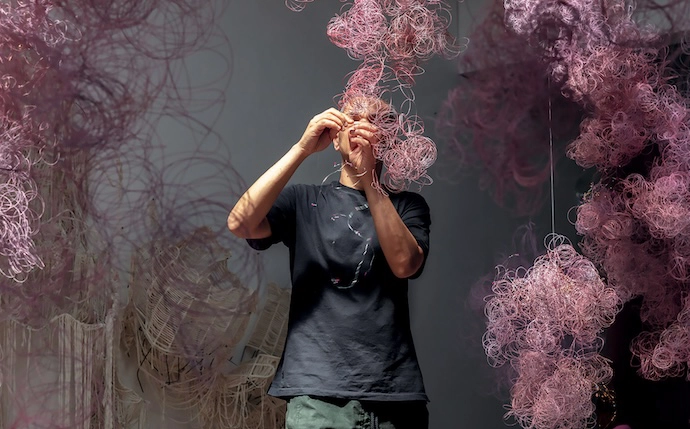
This is also true of Capetonian Igshaan Adams, whose woven installations, sold by Blank Projects, explore themes of faith, labour and movement. Since his breakout in 2022, when he showed an enormous woven textile at the Venice Biennale, he has enjoyed a surge of international recognition. Museums and galleries – from the Art Institute of Chicago to Hepworth Wakefield in West Yorkshire – have certified his career. Galleries in London and New York now represent him. And this success means he has become unaffordable for most South Africans.
The next big thing is not whoever you say it is
Predicting the next big thing – the next Brice or Gratrix, the next Adams or Poswa – is as pointless as it is alluring. Punditry is everything here, and the following list is necessarily incomplete and subjective. Goodman Gallery represents Lindokuhle Sobekwa and Pamela Phatsimo Sunstrum. Southern Guild, a growing force, shows Kamyar Bineshtarigh, Mmangaliso Nzuza and Manyaku Mashilo. Reservoir, which has a nimble business model, promotes the collaborating duo of Ben Stanwix and Xhanti Zwelendaba. Everard Read, known for its strong foundation in painting, represents Brett Charles Seiler and Boytchie (aka Phillip Richard Jannecke-Newman). And Blank Projects, which for a time has been the pre-eminent tastemaker, is doing interesting things with Asemahle Ntlonti and Gregory Olympio.
Some of these names are already big. Some still need to mature. Some of them may stall, and some may do a Brice – as in, disappear from view, only to return. The point is not to predict outcomes, but to develop the habit of attention, and to cultivate devotion. Buy with your eyes, not your spreadsheet. This being said, if investment is high among your drivers of collecting, keep a spreadsheet. Investment rules apply here. Follow the market. Subscribe to Larry’s List. Read fair reports. Listen to what collectors like Alain Servais, Louis Kotze and Stefan Simchowitz have to say. And, crucially, make friends with artists, not just dealers. Cultivate an opinion of your own. Defend your passion, irrespective of the data feeds and market results. And always – always – protect your curiosity.
Don’t forget to sign up to our weekly newsletter for the latest architecture and design news.