-

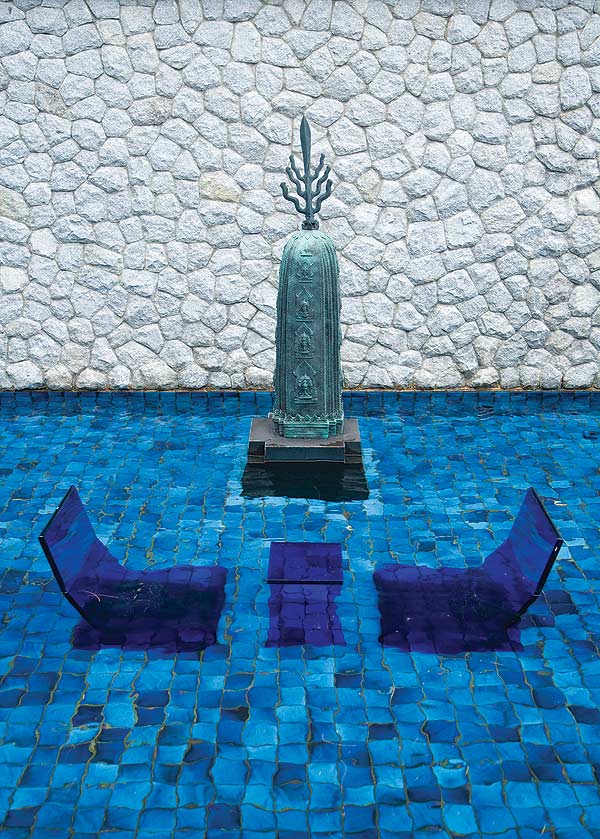
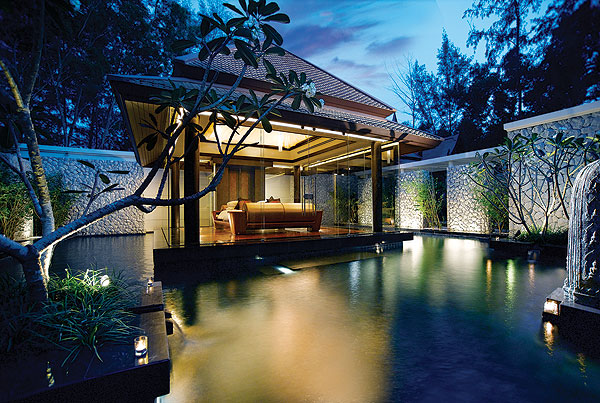
Spa..aaaah! : Each main bedroom of the luxurious DoublPool Villas at the Banyan Tree Hotel in Phuket is surrounded by a wading pool containing submerged chairs and a table - just the place to escape the tropical heat with a drink in hand. -

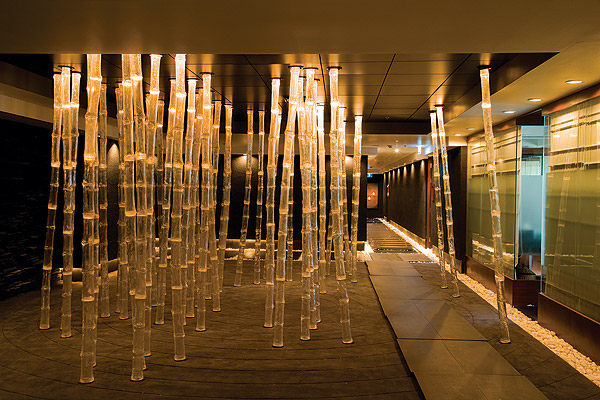
Spa..aaaah! : Visitors to the Banyan Tree Spa in the capital can relax in the Bamboo Aisle, a calm 'meditation garden' with 'bamboo' poles made from crystal resin, which reflects light. -

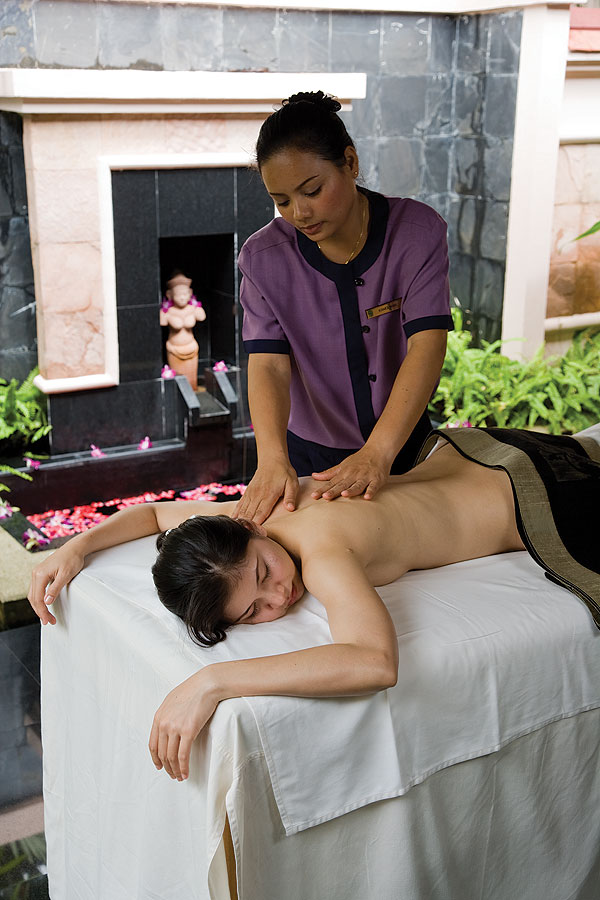
Spa..aaaah! : Therapist Kamolwan Boonyoung spoils Supatra Duangden with one of the many massage treatments available at the Banyan Tree Spa in Phuket. -
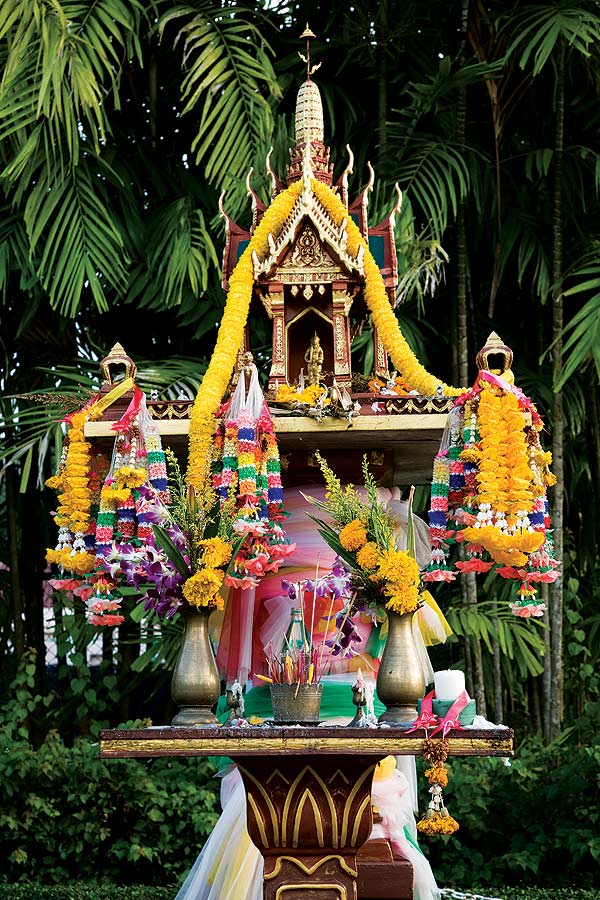
Spa..aaaah! : Daily offerings of flowers and fruit are placed in traditional spirit houses to keep the spirits happy. -
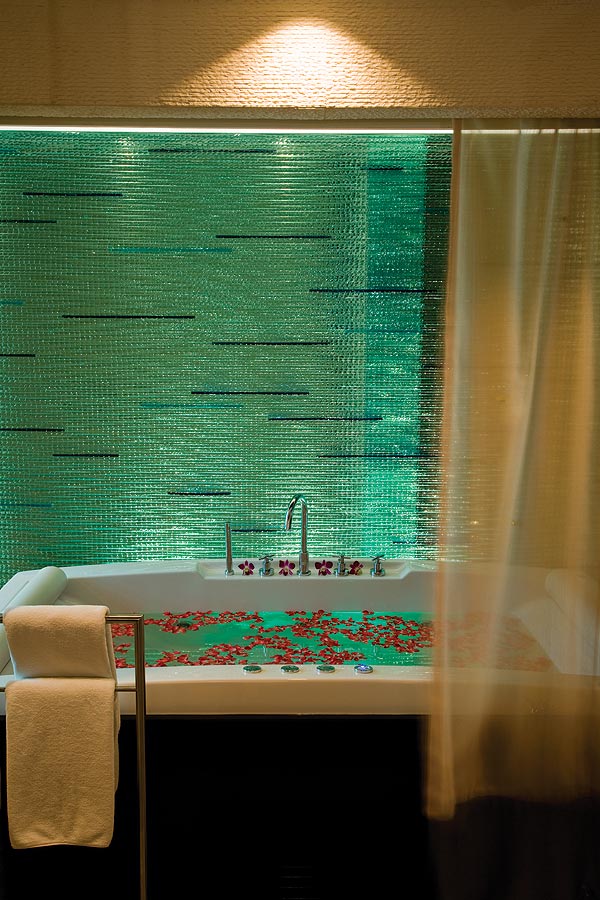
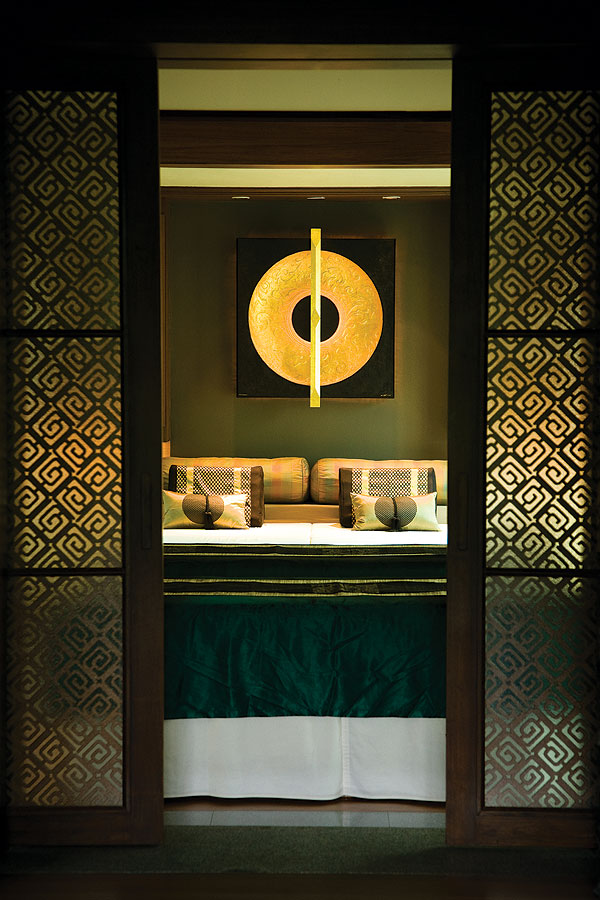
Spa..aaaah! : A Jacuzzi scattered with flowers in one of the double therapy rooms in Bangkok nestles beside a glass panel specially designed by Architrave Design & Planning, which is also used elsewhere in the hotel. -
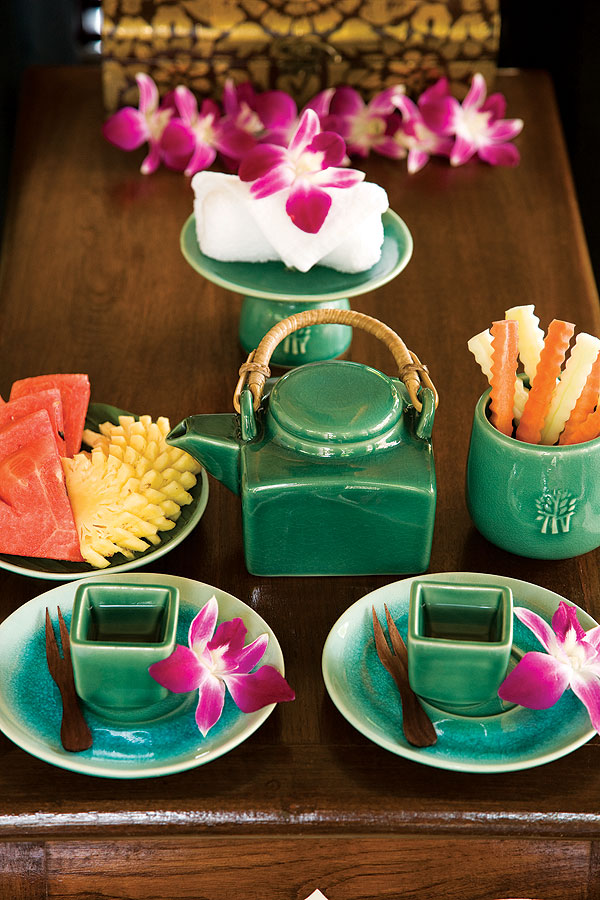
Spa..aaaah! : Fruit, vegetables and tea are served after spa treatment. -
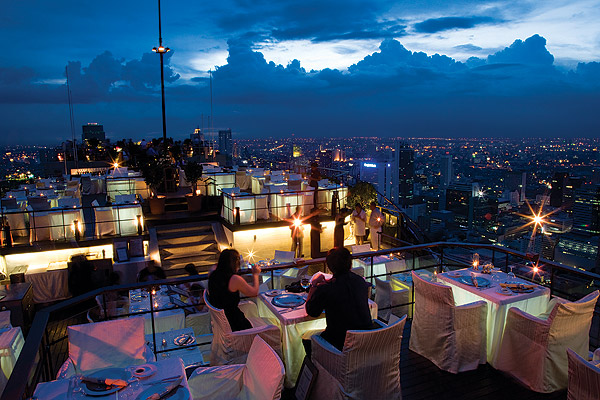
Spa..aaaah! : The Vertigo Restaurant and Moon Bar on the roof of the Banyan Tree Hotel offers a 360 view of the capital, making it popular for drinks. -
Spa..aaaah! : The Ryokan Retreat in Phuket is a luxurious overnight room where guests can enjoy various treatments, dinner and even yoga. -
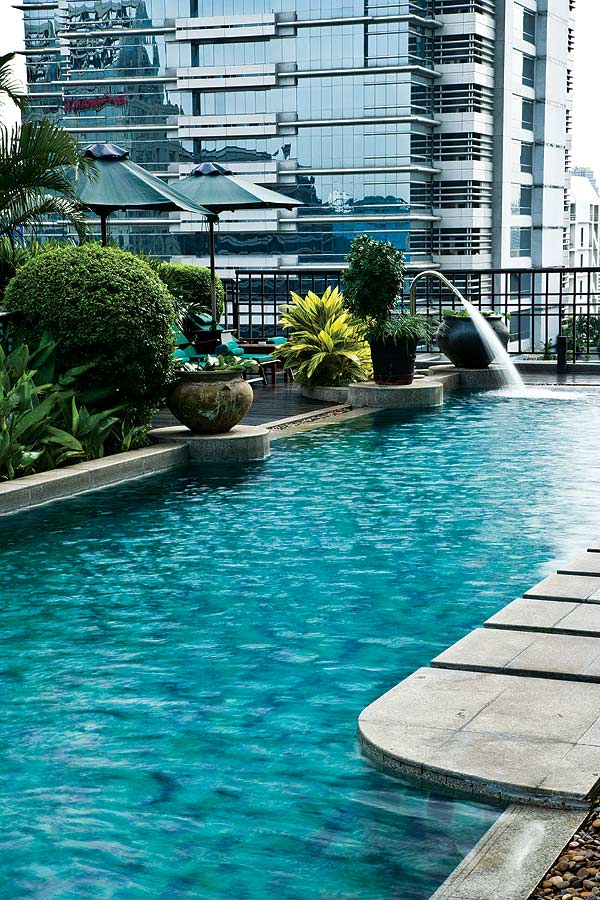
Spa..aaaah! : The swimming pool on the 20th floor of the spa in Bangkok. -
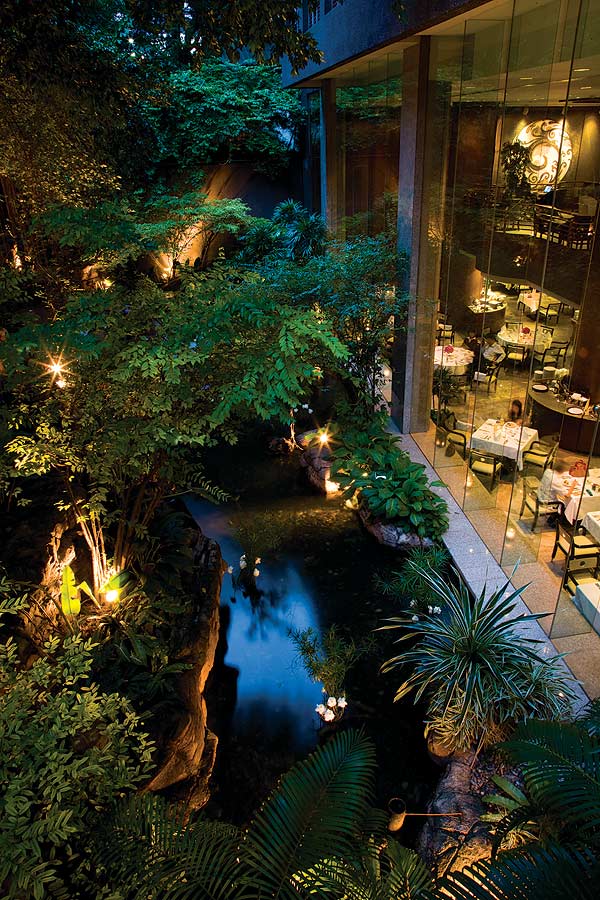
Spa..aaaah! : In the Rom Sai restaurant in Bangkok you can enjoy a meal while admiring the view of the tropical garden and Koi pond. -

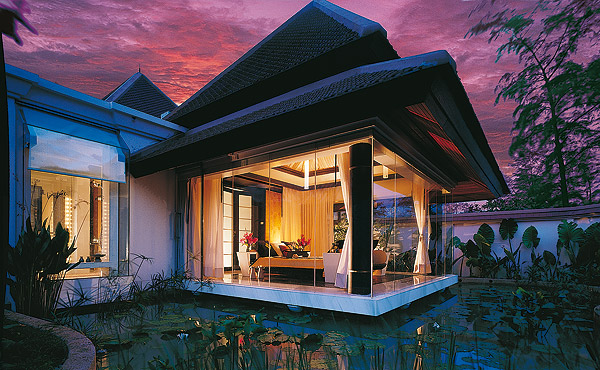
Spa..aaaah! : The newest addition to the Banyan Tree Resort in Phuket, the DoublePool Villa, redefines indulgence. Soak tired feet in the wading pool surrounding the idyllic 'floating' bedroom, or relax on the submerged chairs. -

Spa..aaaah! : The Spa Pool Villas in Phuket feature a 'floating' bedroom pavilion set amidst a tranquil lily pond.
PHOTOS: Dawie Verwey | PRODUCTION: Sumien Brink | WORDS: Johan van Zyl
For centuries spas have enticed those wishing to purify or heal themselves. But it is in tropical Thailand that the spa phenomenon has gained new meaning as a sanctuary for the senses.
Thailand is a feverish dream from which you don’t want to be woken: skyscrapers, blocks of flats with billowing washing, makeshift shacks that serve as shops and homes, crazy markets where fake merchandise is affordable even to South Africans.
Breathtaking gold-plated palaces, temples and Buddhas; tropical forests filled with orchids and lotus flowers; and, in the vast capital city divided by the Chao Praya River, a web of toll roads with millions of vehicles, and more than 7-million people living peacefully together in chaos.
Bangkok may be a technologically advanced metropolis, but it is essentially an exercise in patience and good manners – there is a distinct lack of hooters and a marvellous absence of gesturing fingers (bad-temperedness is seen as temporary insanity); the people are always courteous, friendly, compassionate and, above all, happy.
But, to be able to live here, you definitely need a spa…
Fluffy marketing speak, such as ‘revitalisation’, ‘indulgence’, ‘rejuvenation’, ‘pampering’ and the crown jewel, ‘holistic’, usually makes me suspicious, especially when accompanied by a solemn lighting of incense and a display of crystals.
But here, in the luxurious Banyan Tree Spa right in the middle of the business heart of Bangkok, a Thai woman is working on my back with her elbows. It is as if she wants to eradicate every seed of doubt I have along with the knots in my muscles.
‘In Thai massage therapy I give energy to you, Sir, yes?’ she singsongs and presses so hard that a single tear escapes my left eye. It drops into the bowl filled with lotus flowers and orchids that is placed under the opening in the bed where my head rests.
‘Are you okay, Sir, yes?’
How things have changed. Back in the day, spas were simply hot-water springs touted to cure any ache, malady and love handle. The recent flourishing of the industry indicates a yearning for the same relaxation methods of times gone by, but in a more comfortable and, pardon the word, ‘holistic’ manner.
Celebrate all the senses
Spa visits have become a mainstream activity, not merely a luxury that only the wealthy can afford. And the focus is no longer on treating a single ailment or problem either. Most people view a visit to the spa as a way to bring body, mind and soul into balance. It is a relaxing environment, yes, but also a place that helps you to reach a goal: to stop smoking, to detox, to get rid of stress, to recover after trauma, to grow spiritually and to improve general health and fitness.
Those in the know tell us that, because we live longer than previous generations did, quality of life, good eating habits and an active lifestyle have all become increasingly important.
Trend forecaster Li Edelkoort believes we have a desire to treat ourselves better, and we want to share these experiences with loved ones. According to her, a healthy life centres on a well-cared-for body – one that is ‘serviced’ by spas. ‘The spa experience in particular will help us to meet our future spiritual needs by providing more time for us to reach a higher spirituality and positive mindset,’ she says.
In his book Spa: The Sensuous Experience, Robert D Henry calls modern spas ‘the proactive remedy to our current cultural needs’. He says, ‘The element of touch is primal and powerful, and digital workplace and technology distance us from personal contact. Ironically, the more we are connected with technology, the more out of touch we are with our senses. Human contact and the spa experience encourage us to celebrate all the senses again.’
Easy to do in Thailand, as the pace of living here is slower than in the rest of Asia. This is especially true on the biggest and wealthiest island, Phuket, where the scars left by the devastating tsunami are almost completely gone.
At the Banyan Tree Hotel on the island, smiles abound. As do lingering Lomi Lomi massages. And superb festive meals. In fact, the skinny Thais snack from sunrise to sunset on ‘spa cuisine’, or rather fresh produce and seafood that is cooked quickly, without oil.
Two humming Tibetan bells bring me back to reality. I exchange the silk gown for my own clothes and am shown to a bench where I sip a mug of refreshing herbal tea and snack on fruit. The dream has come to an end, for now.
• Banyan Tree Hotels & Resorts is represented in South Africa by Lesley Simpson Communications.
For special package details or a personalised brochure, call 011 463 8195 or e-mail banyan-tree@lesleysimpson.co.za.
• Visit www.banyantree.com for more information.