-

Ruan Hoffmann: ceramicist -
Ruan Hoffmann: ceramicist -
Ruan Hoffmann: ceramicist -
Ruan Hoffmann: ceramicist -

Ruan Hoffmann: ceramicist -
Ruan Hoffmann: ceramicist -
Ruan Hoffmann: ceramicist
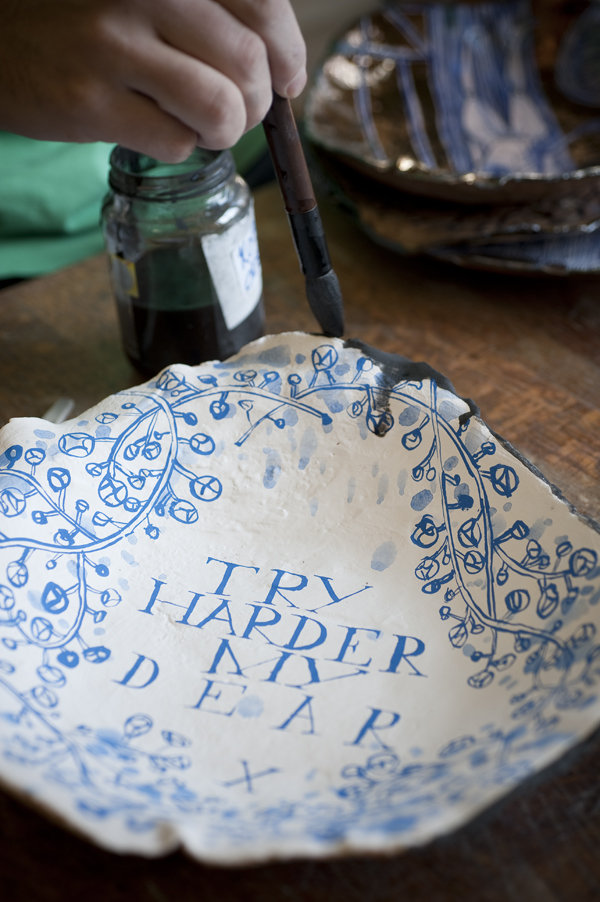


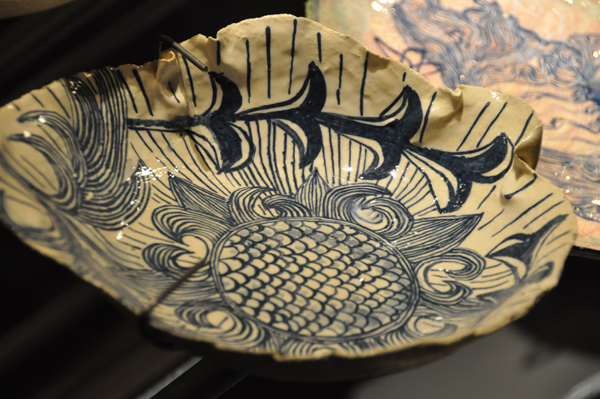
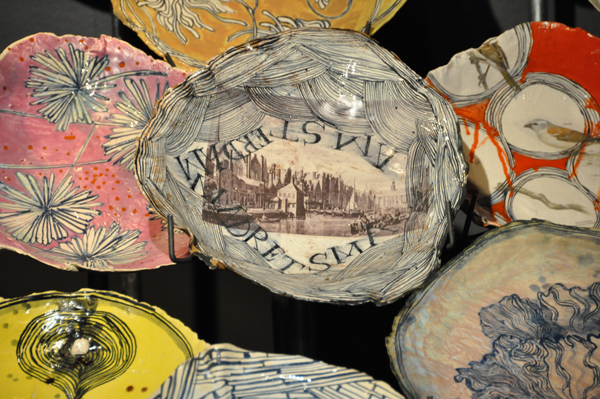
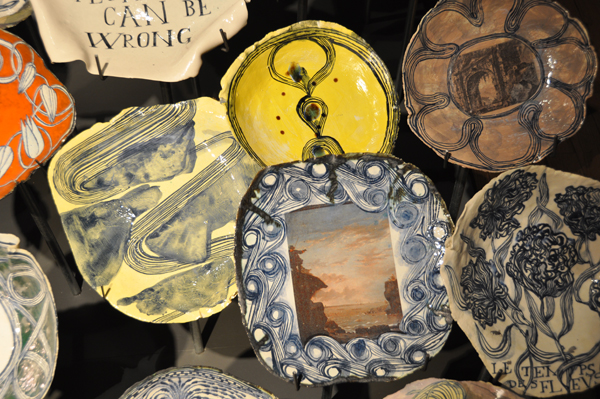
This Pretoria-based ceramic artist is best known for the intimate musings, amusing visuals and sometimes outrageous commentary that he paints onto roughly-made clay plates.
THE IDEA
The ideas for my plates come from all over the place: from newspapers, pictures, politics, friends – what I see around me. It’s a soup of influence.
THE PROCESS
My plates are made using paper clay. Paper clay is any clay body to which processed cellulose fibre (paper being the most common) has been added and in my case I use earthenware clay as the base.
It’s a very tough clay, which is good because I’m not very delicate and I throw the clay around and work very fast.
Firing temperatures for paper clay are exactly the same as those for the clay body from which the paper clay was made, though some recommend using slightly higher firing temperatures.
Because the paper clay is porous and strong when dry, single glaze firing is possible, which saves on firing and time.
The small fibres are the only physical difference between a soft clay and the same clay as a soft paper clay. Building techniques with soft paper clay are similar to conventional clay, but dry paper clay is stronger than the same clay without the fibre, enabling thinner, more delicate work.
The inclusion of processed cellulose fibre in the clay enables new ceramic techniques. Joining dry-to-dry paper clay and dry-to-soft paper clay are the most radical recent techniques. A new aesthetic has also emerged from combining paper and clay art traditions.
In firing, the paper burns away, leaving a light, porous object to painton. My plates are more of a canvas than a vessel; you can’t use themfor domestic purposes. I wanted to make something relatively flat that I could paint on.
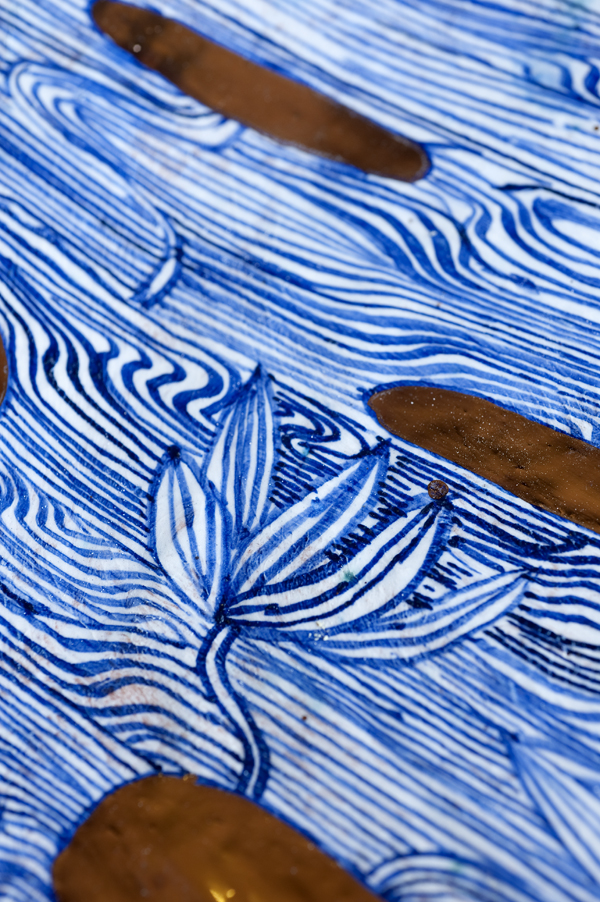
I make about ten plates in a day. Once I’ve made the plate, I fire it to a bisque. Then I paint it with glaze, fire it again, and often, after that, I will paint with metallic lustres or add a decal.
When I use a picture on a plate, it has been sent from my cellphone to someone in Holland who makes a decal and then sends that back to me. I will stick the decal onto the glazed plate and fire it again, creating a permanent piece of work. With a red or orange glaze, which cannot withstand high heat, I will add the glaze at the end and fire the plateone last time, on a lower heat.
It’s all a layered process. I stop when the plate feels finished.
AND THEN?
At any one time, there are about 100 plates “in the works” at the studio – some being glazed, some being fired. I usually work towards an exhibition and all my work is either sold on exhibition or through the iArt Gallery on Loop Street in Cape Town.
NOW
Ruan has also recently started producing limited edition lithograph tiles exclusively for a new international gallery called Clé. Based in California, the online gallery showcases hand crafted artisan tiles, carefully selected from around the world.
More info: www.ruanhoffmann.com