-

Making Space for Memory -

Inciniba -
Childhood -

Childwood Memories
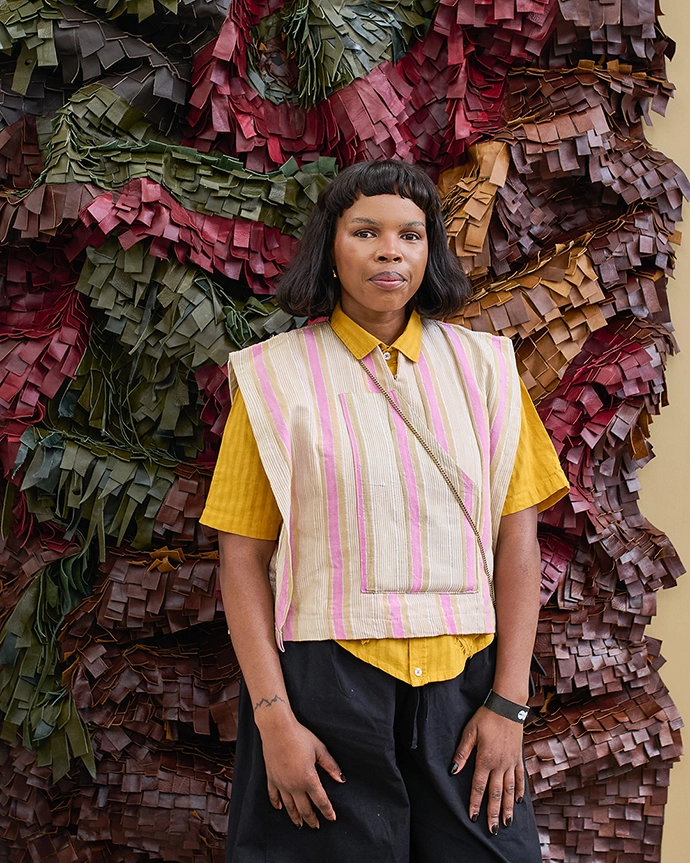
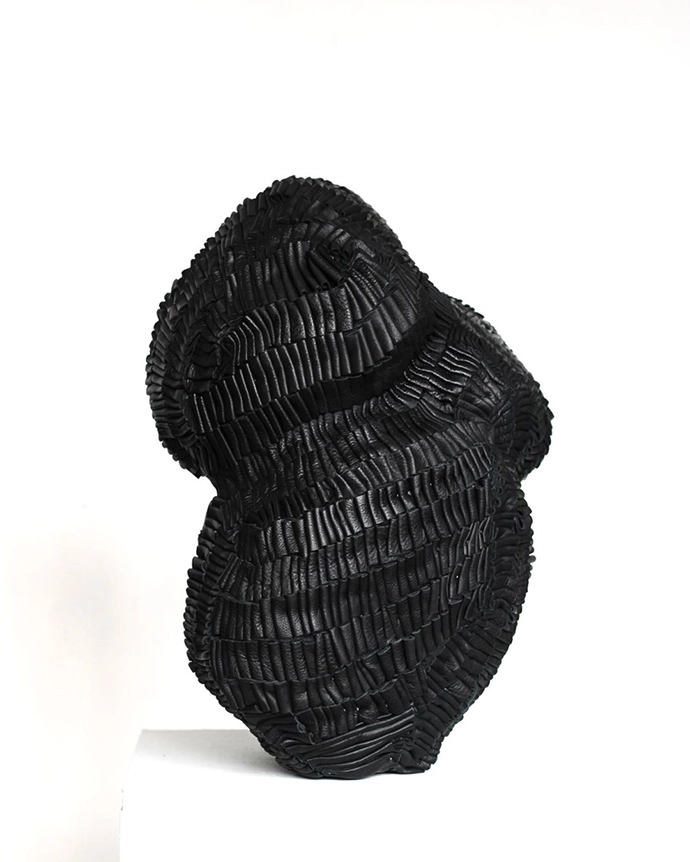
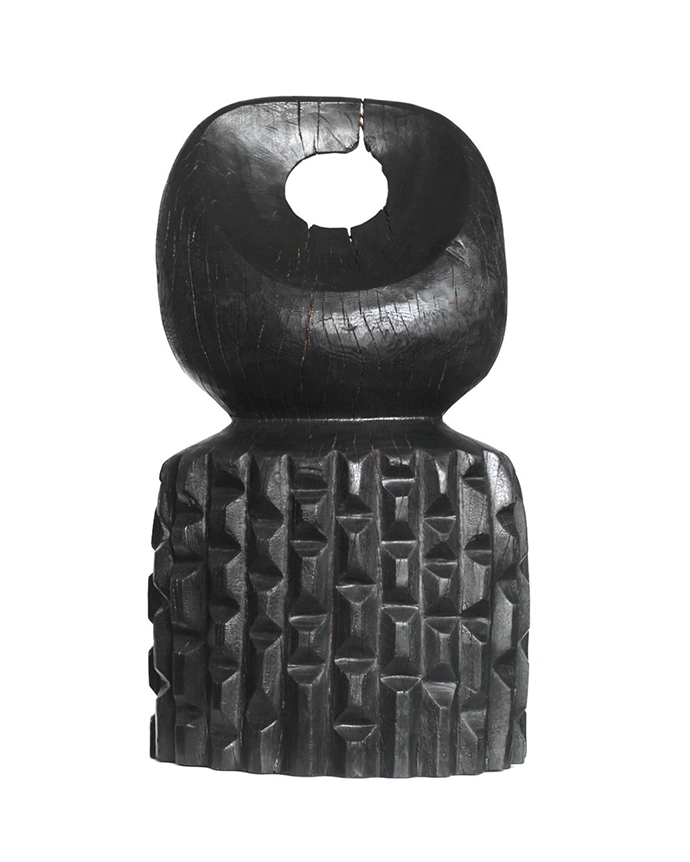
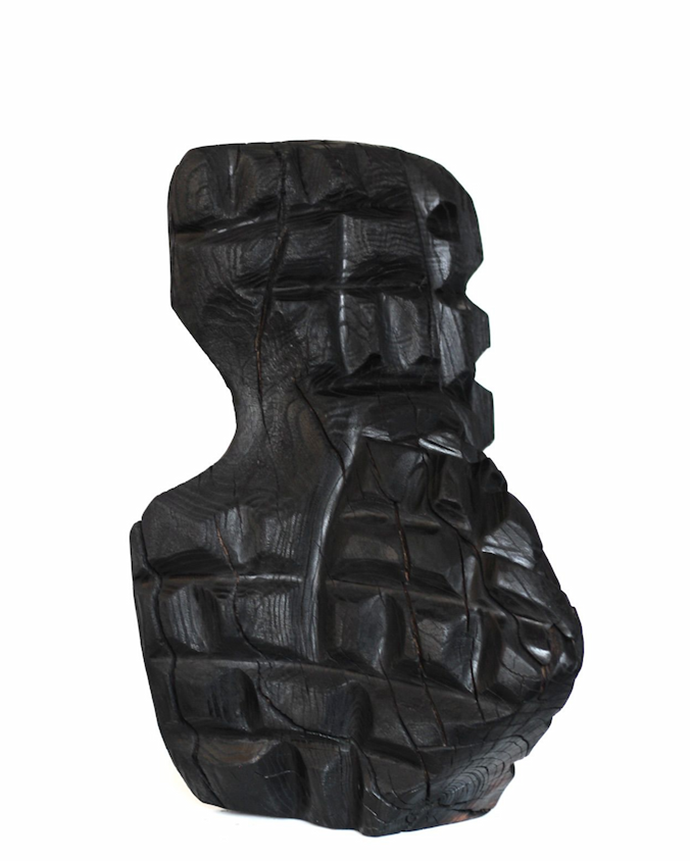
South African sculptor and inaugural DLO Energy Resources Group Artist Prize winner Nwabisa Ntlokwana on Motherwood, memory and material transformation.
WORDS Neyani Mphephu PHOTOS Supplied
For Nwabisa Ntlokwana, sculpture has always been about what cannot be photographed. Growing up with a mother who captured memory through a lens, she gravitated towards something slower and more physical – materials that hold weight, carry history and demand presence. That instinct has since evolved into Motherwood, her most significant body of work to date, which uses leather, wood and found materials to explore the relationship between motherhood, memory and legacy. The recipient of the inaugural DLO Energy Resources Group Artist Prize at RMB Latitudes, Ntlokwana is among South Africa’s most compelling emerging sculptors. Here, she reflects on her process, her materials and the stories she still feels compelled to tell.
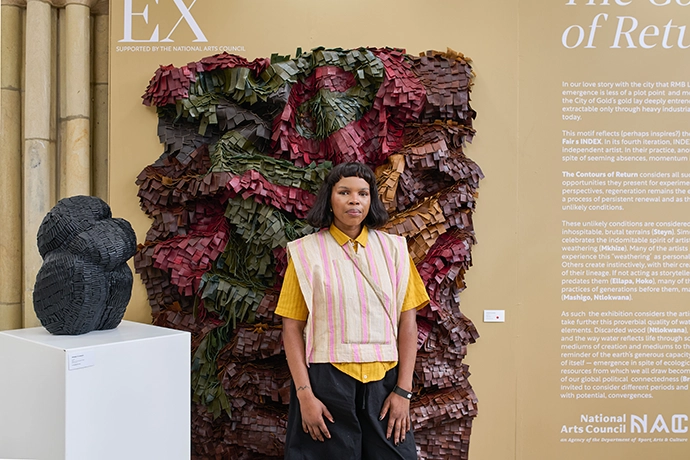
Your practice is deeply rooted in personal experience, particularly your journey through motherhood and the legacy of your late mother. How did these dual influences first shape your decision to work with sculptural materials, and how do they continue to guide the stories you tell through your work?
“I grew up watching my mother capture memory in an instant, a single frame and fixed forever. That shaped me more than I realised at the time, but when I started working with sculpture I realised I was reaching for the opposite of what my mother did. Sculpture for me is about holding weight and presence, it’s not something that you can glance at and move past. I think I wanted to give her a way of seeing the body.
“Then motherhood came and closed a loop. I became a daughter who continues to carry a memory of her mother as well as a mother who is now creating memories of her own and the legacy I’d want to leave for my child.”
Your current body of work, Motherwood, explores the relationship between wood and leather as materials that mirror the life cycles of motherhood. Could you walk us through how you chose these specific materials and what they represent for you?
“I wouldn’t say I choose the materials that show up in my work – it’s really the other way around. My approach to materials is very childlike: with an open mind, curious, unafraid to ask questions I don’t know the answers to yet. That’s what gives me the freedom to experiment without worrying about getting it right. In that process of poking and playing and figuring things out, I end up learning something about myself and the materials become a kind of mirror for how I see who I am.”
You work primarily with leather, wood and found materials, many of which are unconventional or discarded. What draws you to materials that have had a previous life, and how does the idea of transformation play into your creative process?
“This is honestly the best part of my process. It’s quite a journey. Growing up, I had always been drawn to old things. They carry so much memory and endurance, and that’s something I relate to deeply, both as a mother and as an individual. I don’t think I would be the person I am today without my personal experiences. They have shaped how I see and touch everything I create. And nothing beats the joy of watching these objects come back to life, taking on a new form while still holding onto all the memory they carry within them.”
Receiving the inaugural DLO Energy Resources Group Artist Prize at RMB Latitudes is a significant milestone. How do you think this recognition will shape the trajectory of your career, and what does it mean for you as an emerging artist in South Africa?
“This achievement is an investment in what comes next, giving me space to breathe with the opportunities it’s created. The exposure fuelled by the DLO Energy Resources Group Artist Prize has already given me a freedom to create without fear rather than chasing opportunities simply to stay afloat. It’s also a reminder that our stories and our labour hold value – not just aesthetically but also economically. As creatives, we are often told to separate art from the business but this prize does the opposite. It’s empowering me as an artist and as a business which is something that you need to have a sustainable practice.”
What does the reality of being an emerging artist in South Africa look like day to day, and what are the biggest challenges you face in building a sustainable career?
“It’s a day to day balancing act. The romanticised idea of a full time studio practice is not a reality for many emerging artists. You are building a practice around everything that keeps you afloat. The biggest challenge is the cost of existing as an artist before you have made a cent, then there’s materials, studio space, transportation of the work to galleries. None of this is cheap, you are spending money before making any and nothing is guaranteed.
“Visibility is also a factor. In South Africa, there is a pool of artists who make exceptionally great art but there is a small collector base relative to the number of artists. This means we are all competing for the same opportunities, fairs, open calls, residences and gallery space. Getting in front of the right people often matters as much as the quality of the work.”
Your work speaks to how women carry memory across generations and continually reinvent themselves. How do you see your role as both an artist and a mother influencing the way you think about legacy and what you pass on, both creatively and personally?
“Becoming a ‘mother’ has completely changed how I view legacy. How I create is truly how I raise my child. Both are about what gets carried forward and what gets left behind. I think about the woman who came before us, like my mother. What they carried that was never written down or documented – but it lived on through the stories they shared with us, how they cooked, cared and held themselves through hard seasons. My work is partly an attempt to hold on to those memories and pass them on to the next generation. As a mother, I also feel a huge responsibility about what gets passed on – so I have to tread carefully.”
You’ve mentioned your ambition to create monumental sculptural works. Where do you see your practice heading next, and what stories do you still feel compelled to tell?
“Scale is the next step – these stories deserve to take up space. So it will bring on new challenges to my practice and my journey. As for stories, motherhood is a fraction of my identity and I don’t have a solid blueprint of life yet, so I will let the journey continue and let the work speak when it’s ready.” | @nwabisantl0kwana
Don’t forget to sign up to our weekly newsletter for the latest architecture and design news.