-

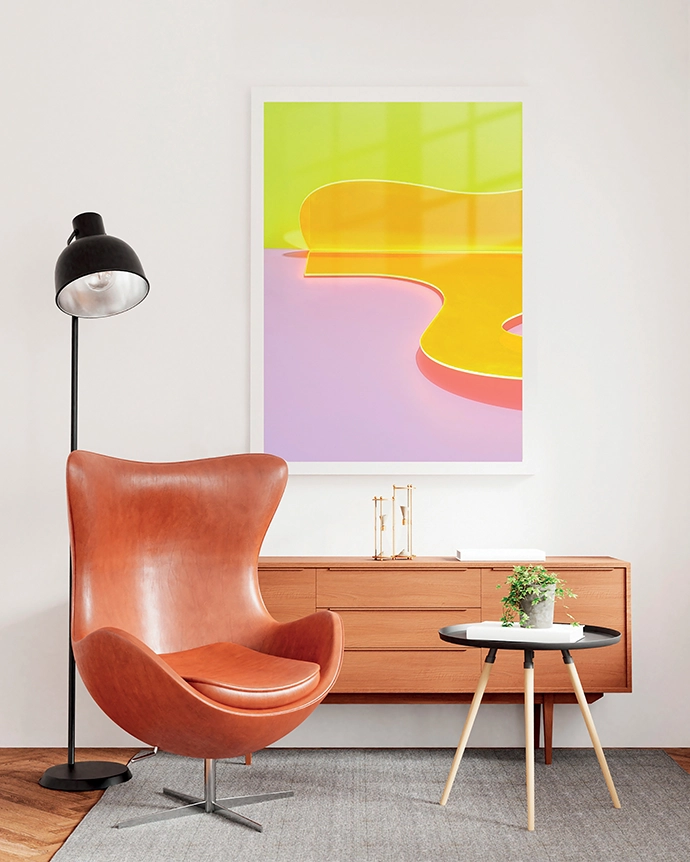
Yellow Swirl by Leah Rolando. -

Leah Rolando produces each photograph in editions of five to 10 prints; they sell for R3 800 to R18 000, depending on the size. -

Leah Rolando produces each photograph in editions of five to 10 prints; they sell for R3 800 to R18 000, depending on the size. -
Leah Rolando produces each photograph in editions of five to 10 prints; they sell for R3 800 to R18 000, depending on the size. -
Leah Rolando produces each photograph in editions of five to 10 prints; they sell for R3 800 to R18 000, depending on the size. -

Leah Rolando produces each photograph in editions of five to 10 prints; they sell for R3 800 to R18 000, depending on the size. -
Leah Rolando produces each photograph in editions of five to 10 prints; they sell for R3 800 to R18 000, depending on the size. -
Leah Rolando produces each photograph in editions of five to 10 prints; they sell for R3 800 to R18 000, depending on the size. -
Leah Rolando produces each photograph in editions of five to 10 prints; they sell for R3 800 to R18 000, depending on the size. -
Leah Rolando produces each photograph in editions of five to 10 prints; they sell for R3 800 to R18 000, depending on the size. -
Leah Rolando produces each photograph in editions of five to 10 prints; they sell for R3 800 to R18 000, depending on the size. -

Leah Rolando produces each photograph in editions of five to 10 prints; they sell for R3 800 to R18 000, depending on the size. -
“I’m getting better at colour, and realising that certain colours work well together,” says Leah. “The more you do it, the easier it is.” -
Leah Rolando produces each photograph in editions of five to 10 prints; they sell for R3 800 to R18 000, depending on the size. -
Leah Rolando produces each photograph in editions of five to 10 prints; they sell for R3 800 to R18 000, depending on the size.
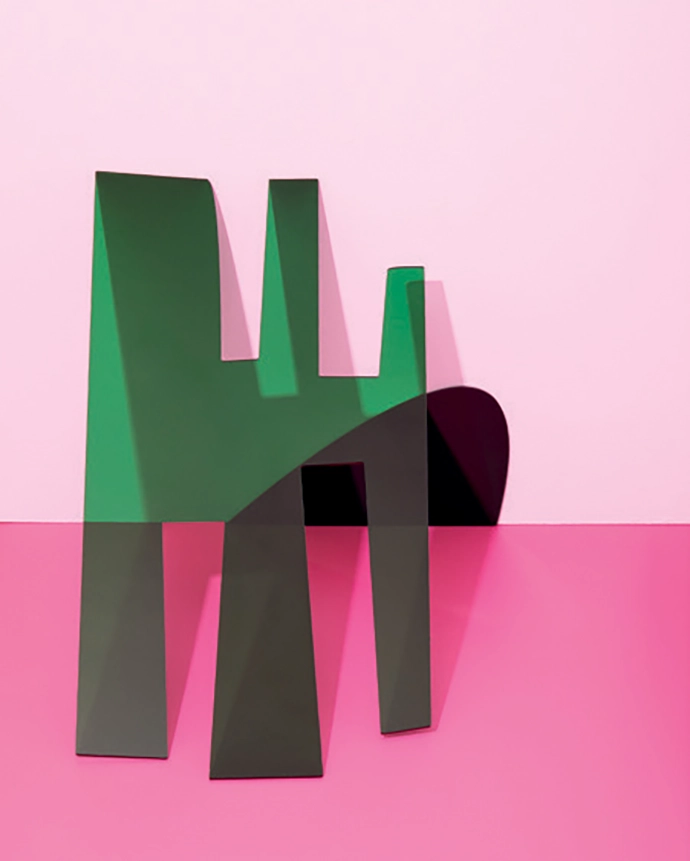
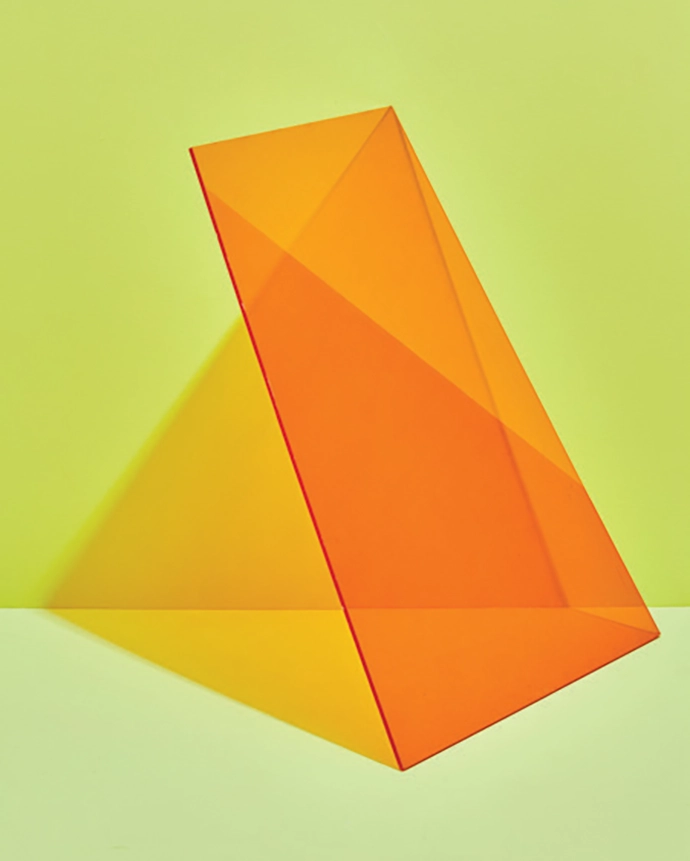
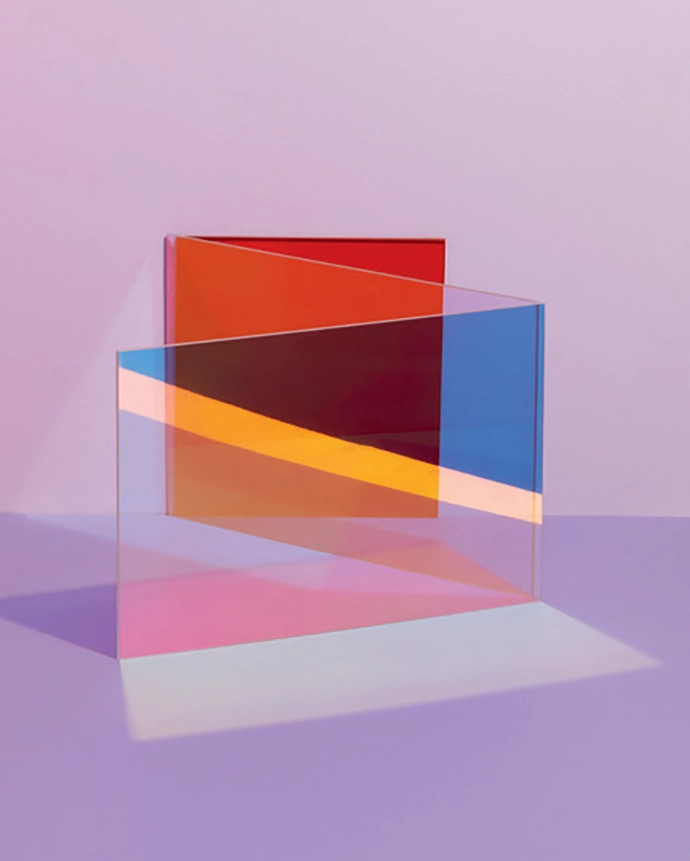
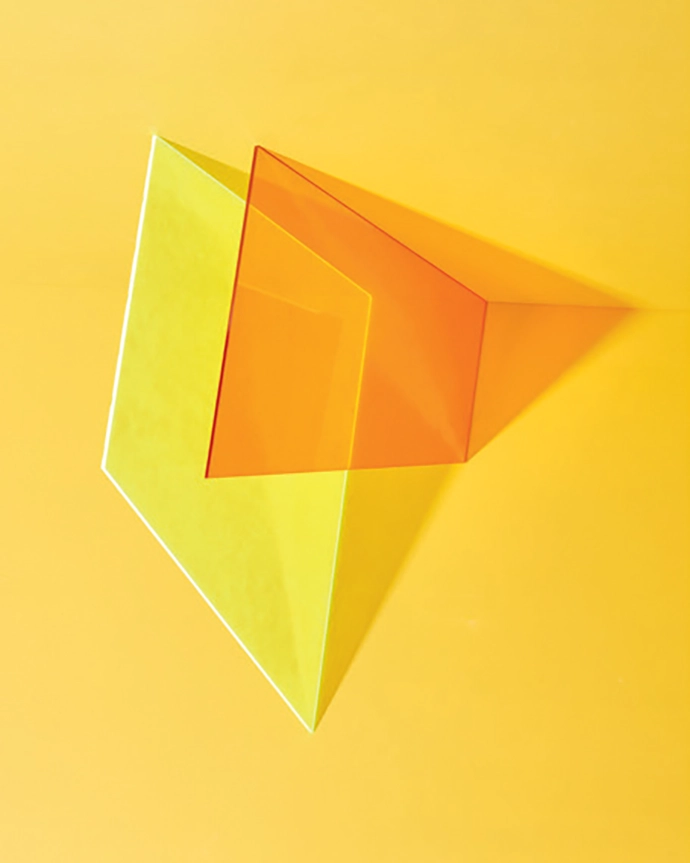
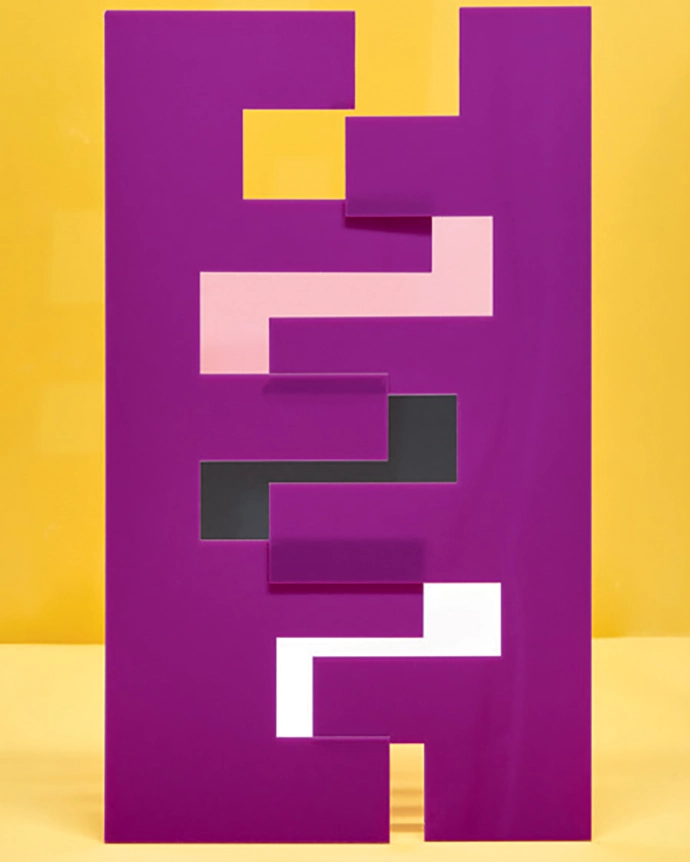
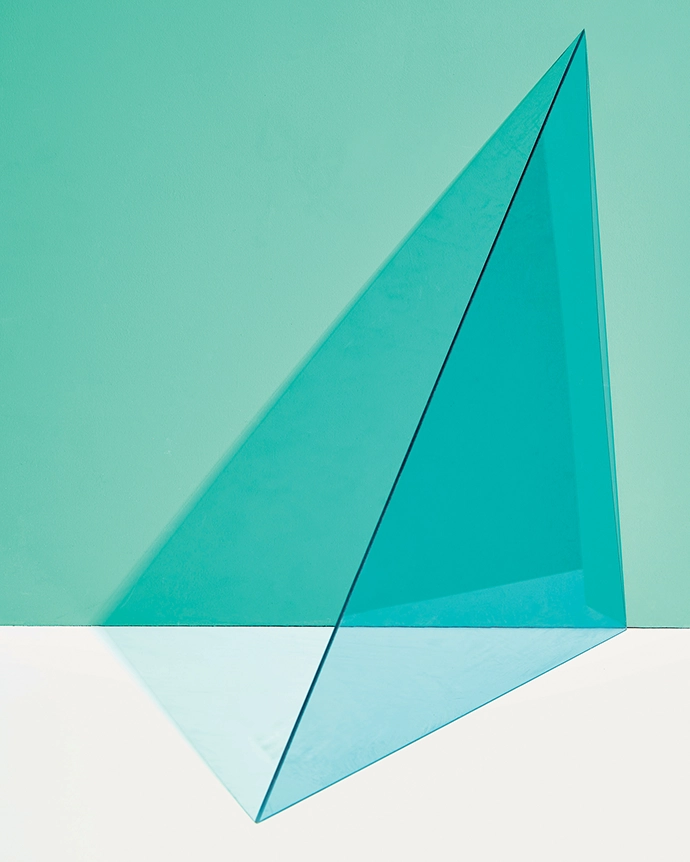
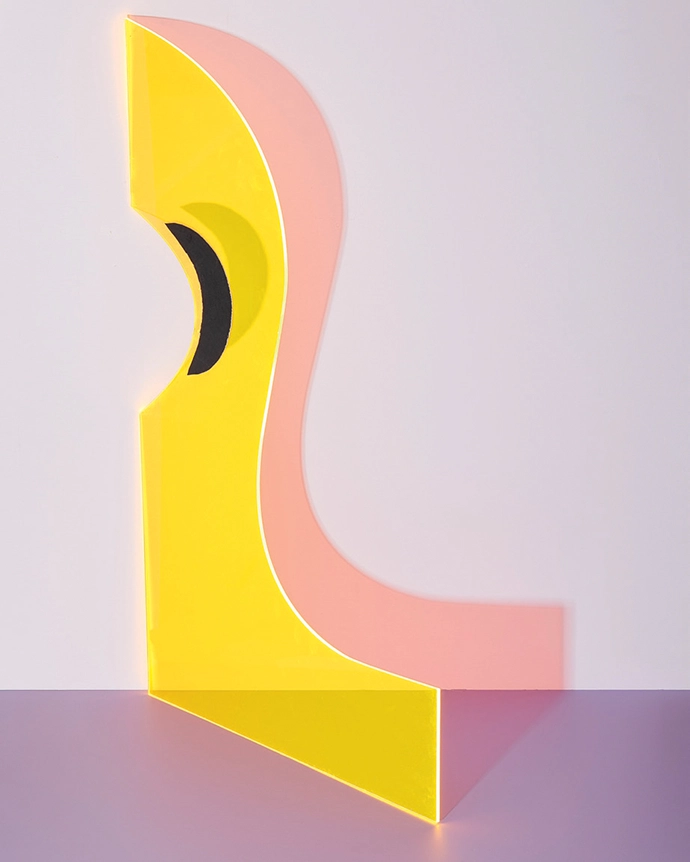
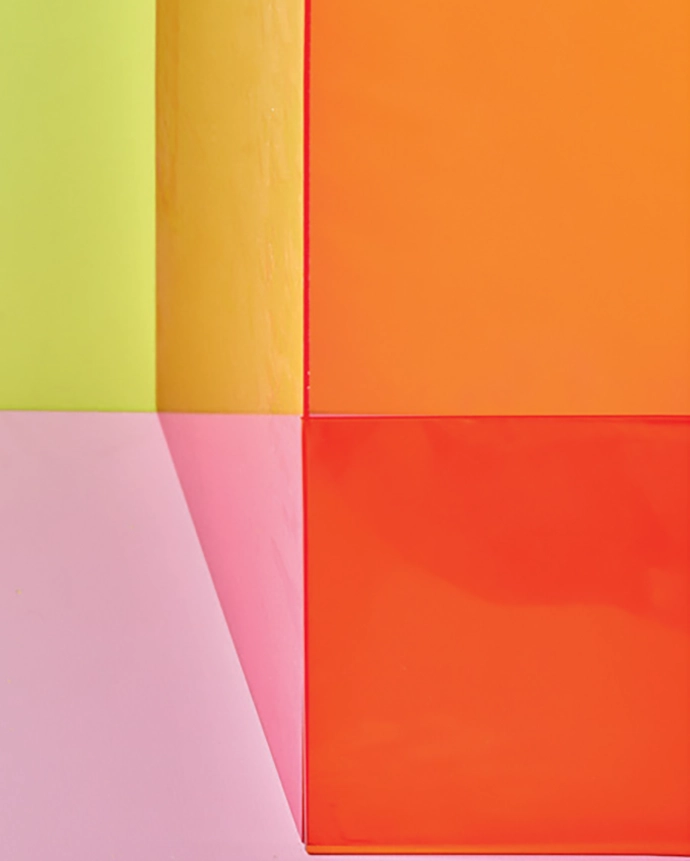
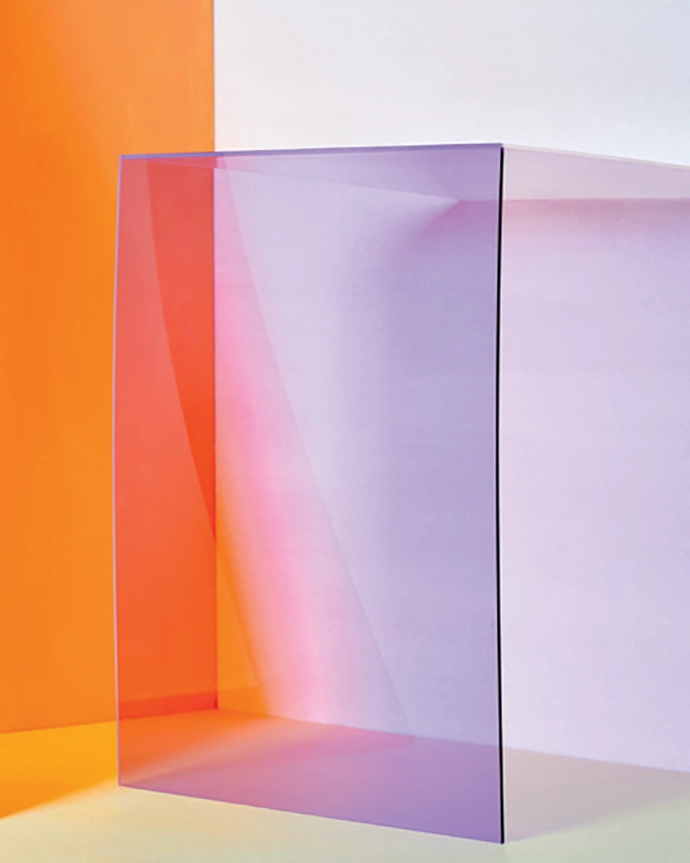
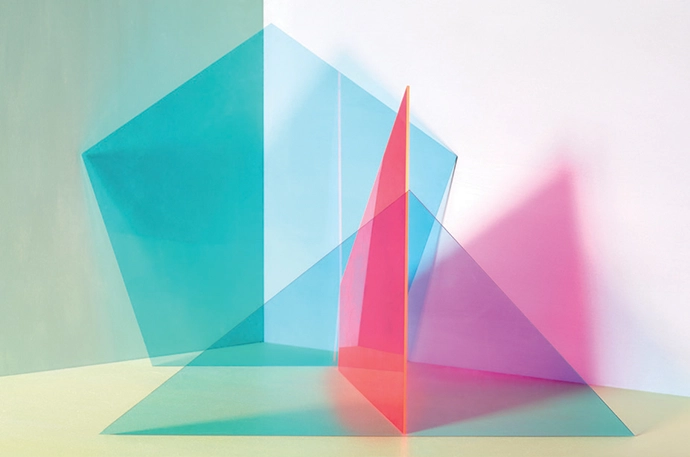
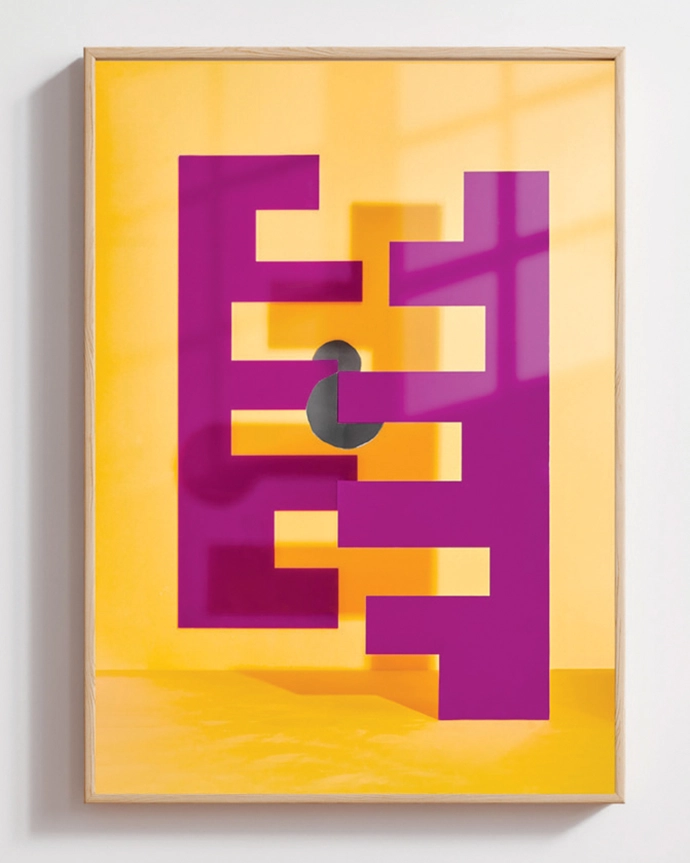
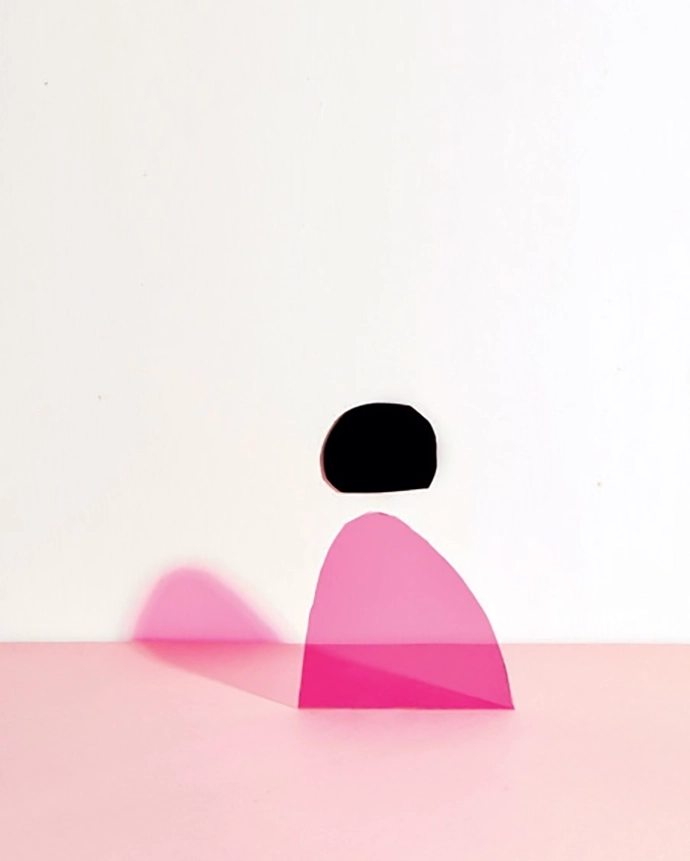
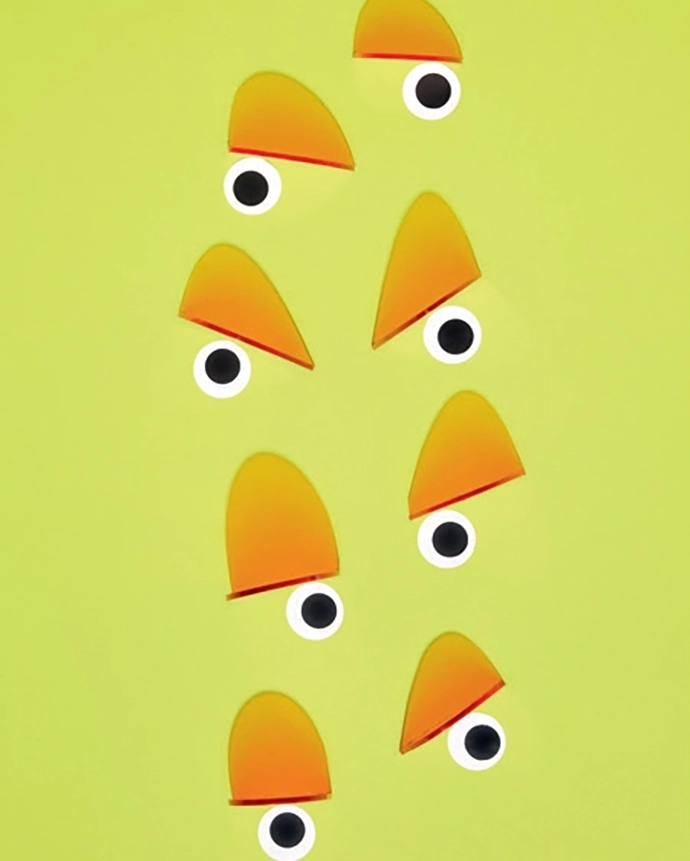
From her studio in Kommetjie, Leah Rolando creates captivating translucent art that builds on the tradition of abstract expressionism. She talks to us about her process and inspiration.
WORDS Steve Smith PHOTOS Supplied
Leah Rolando has you fooled – methodologically speaking. Although it may appear so, she hasn’t painted or drawn these works, and there’s no illustration software involved, either. In fact, beyond Photoshopping out the occasional piece of Prestik, there’s virtually no digital manipulation at all.
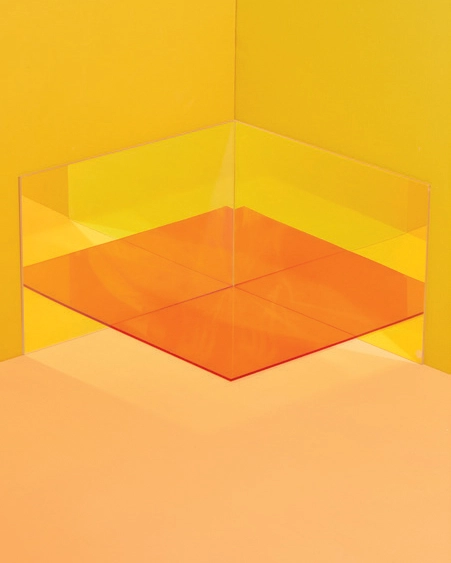
The Prestik is there because what you are looking at are photographs of three-dimensional sets that Leah has constructed from board, coloured Perspex and – sometimes – vinyl stickers. She creates abstract still-life vignettes, carefully lights them, and photographs them from various angles, depending on the shapes and colours she’s looking to conjure up from the interaction of the opaque Perspex with the shadows it throws. The actual image Leah shoots gets printed onto Perspex – again not, as you’d expect, onto paper protected by glass. Then there’s the framing, which is an integral part of the artwork. The kiaat wood for each print is hand-picked, and each has a small, inlaid spline of polished Perspex, taken from the colour used in the work. “I’m also experimenting with other techniques using Perspex instead of wood,” says Leah.
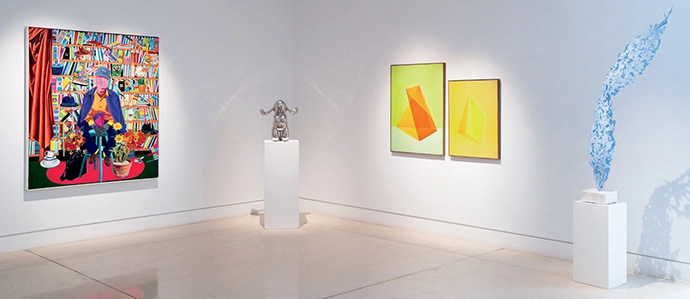
What Leah hasn’t fooled is gallerists, or savvy early adopter art buyers. A passing glance may register simple graphic shapes, but there’s a sophistication here that nods to US expressionist Helen Frankenthaler’s groundbreaking soak-stain paintings, Dan Flavin’s fluorescent light installations, and Henri Matisse’s cut-outs. Her work has been picked up by Everard Read gallery, and she’s had successful group and solo exhibitions at Open Studios Kommetjie and Art Under the Bed.
Her origin story
Leah’s path to art photography has had a few gentle curves in it. After studying fi lm and working in the film industry, she did a stint as a multimedia producer for a big media house, before packing that in for an extended holiday in Asia. During her travels, armed with a bottom-of-the-range professional camera, she took up street photography, which provided her with a more hands-on creative experience.
Once back in South Africa, she carved out a career as a product photographer – something that really kicked off during the Covid lockdowns as brands needed their products photographed for online shopping. “It became a bit of a niche for me, which is basically what my art is – it’s product photography with a very small, very controlled set.
“Shooting with Perspex started when I did a test shoot with a stylist friend of mine. I wanted to do some work for my portfolio that was dark and moody, so we did this still life… She brought along a hexagon-shaped panel of Perspex that we hung on some fishing line, and I had my diffuse light bouncing off a board onto the set. And as the Perspex spun around, we were getting different reactions out of the panel. It looked really beautiful – and I immediately saw that there was something there. And that’s where the idea originated.”
Now, balancing being a mom to a toddler with her own studio in Kommetjie, Leah has fully committed to this pivot into art photography. In her own words, here’s how she does it.
Her proccess
“Sometimes it starts with the materials. I’ll go to Maizey Plastics in Paarden Eiland – one of the biggest importers of plastics – and I’ll choose colours from their colour wheel, come home, and work backwards from there. ‘So, I’ve got an amazing piece of green neon; let’s see what I can do with that.’ Or I’ll come up with an idea, then source the Perspex colour. It really depends on where the idea comes from.
“I can also never plan exactly what a piece is going to look like. Light is not precise. You can never re-create the exact same moment twice, with the angle of the light, the shadow, how your lens picks it up… It all comes together in one instant that will never be the same again. I’ll have an idea of how the light is going to work, but it always surprises me on the day. I’ll take a number of images of the setup – but once I have the shot, I just know it.”
Her intention
“I’m being mentored by a few artists in Kommetjie, including Gill Alderman. She always says, ‘Leah, what is your intention? Because that’s what differentiates a fine artist from just anyone who makes art.’ You need to be clear with your intention. And my intention is to draw on inspiration that feels real to me. So with my Art Deco-inspired work, I think back to my childhood – to my mother, who collected Art Deco furniture; and my grandfather, who had an elaborate home. When I daydream about my childhood, for example, it’s the shape in my grandfather’s rugs that comes to mind, and they become a little more defined. And what will differentiate me from other artists is the fact that there’s a style there – it’ll make you think, ‘That’s definitely a Leah Rolando’.”
New directions
“I’ll have a new body of work for the Solo Studios exhibition in Riebeek Kasteel from 24 to 26 October. The basic concept is breeze blocks from the 1920s and ’30s, so I’m working with shapes that are a bit more retro. As I said, I’ve always loved Art Deco – my home has lots of Art Deco furniture in it – and these shapes come to me when I’m daydreaming.
“These are obviously more rounded shapes than what I’ve done before. I’ve touched on round shapes previously, but they never really took off , so I never fully committed – and now I’m going back to them. I know my gallery prefers angular work – bold, clean, simple shapes sell well (and are easier to make!) – but I think the rounder ones are more sophisticated. As an artist, you constantly seem to be pulled in two directions – make what sells, or follow new paths. I’m staying true to my intention.”
Below is Leah’s Instagram handle. Make a note of it. It’s not oft en we come across work that’s this new and fresh – and with several exhibitions coming up, this emerging South African talent is going to become increasingly collectible. Currently, the prices for her work range from R3 800 (for small, unframed pieces), up to R18 000 for a 1m x 0.9m piece. We reckon that’s a bargain. | @
leahrolando_art
Don’t forget to sign up to our weekly newsletter for the latest architecture and design news.