-

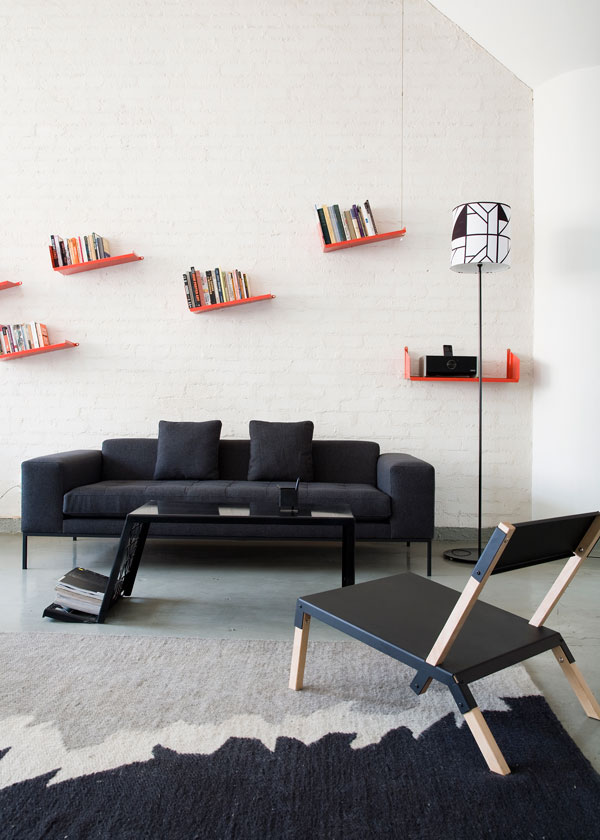
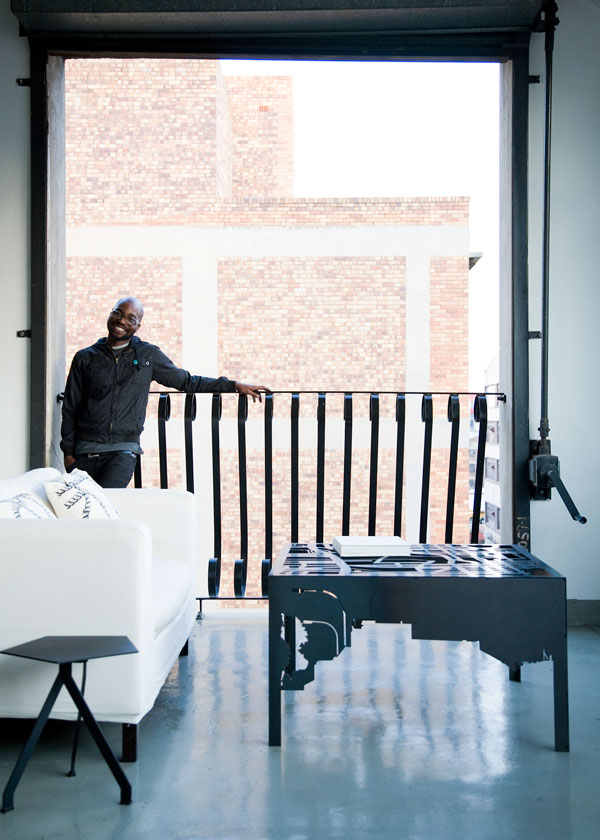
Industrial loft : The Family Lamp, Rug R, 45 and 180 shelves are by Dokter and Misses, while the Lazy Chair and Easy Coffee Table are by Adriaan Hugo. The Block Couch is from Mezzanine Interiors. -
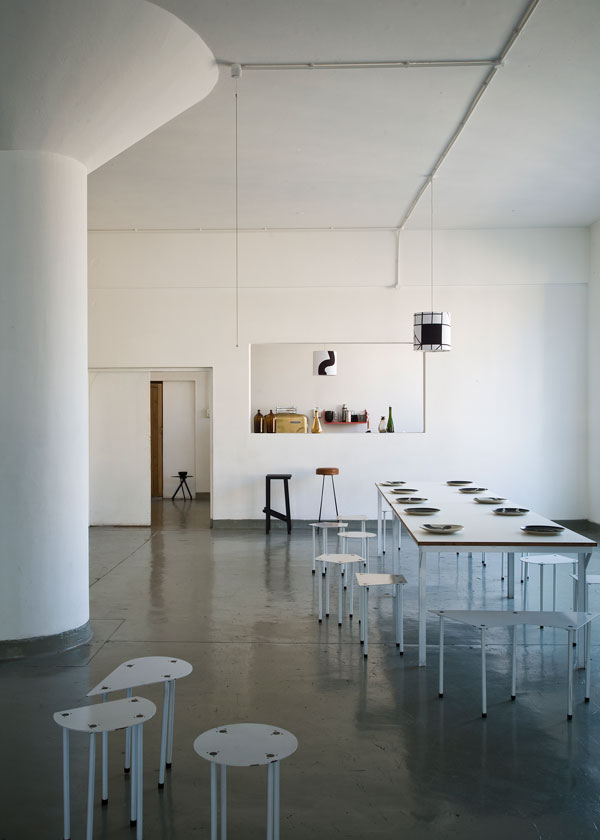
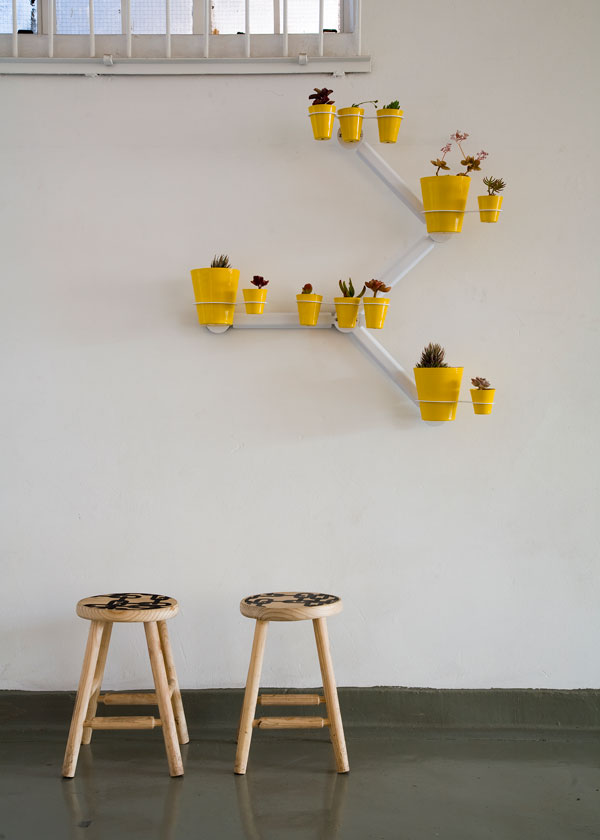
Industrial loft : The K-Dining Table was designed for Kudzi by Adriaan Hugo, Dokter and Misses designed the black-and-white lampshades and geometric stools and benches that can be moved together like puzzle pieces to create a focal point. -
Industrial loft : Kudzi combines make do-designs such as the cardboard-box bed base, with South African and international designer pieces including the Sad Lamp by Adriaan Hugo and the Sticky Lamp by Dutch designers Droog. The rug is by Dokter and Misses. -
Industrial loft : An urban garden - the Kreep Planter by Joe Paine, available at Dokter and Misses, introduces nature into the apartment. -
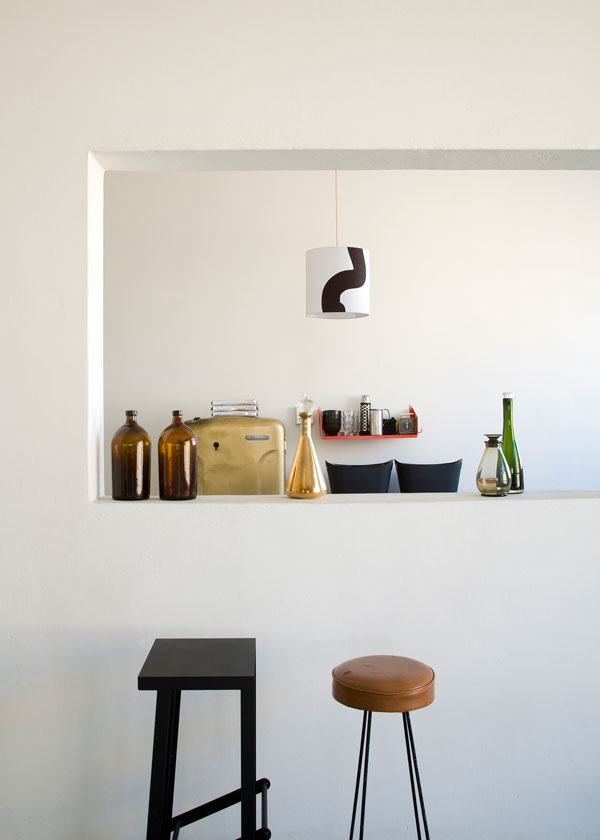
Industrial loft : The service opening helps connect the long, narrow kitchen to the rest of the apartment. -
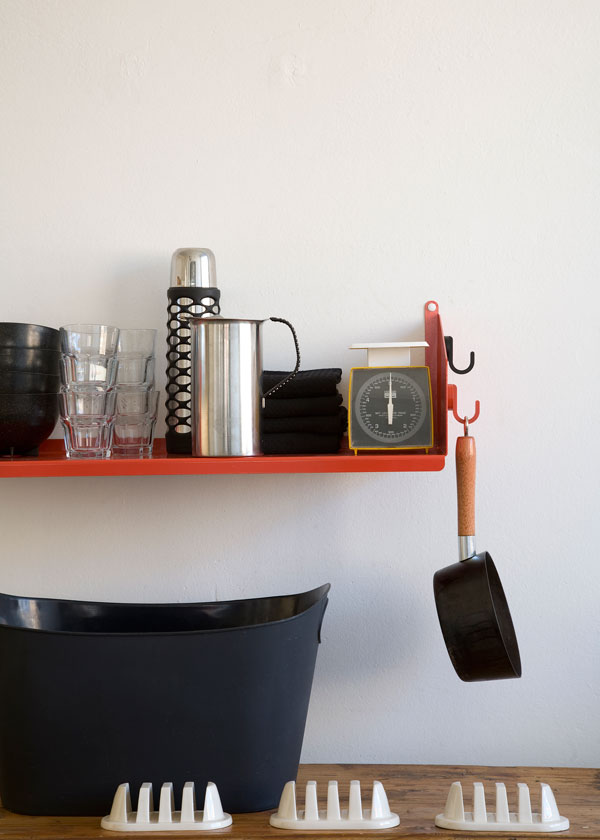
Industrial loft : Creating collections, even of everyday items, helps to make the space look tidy. -
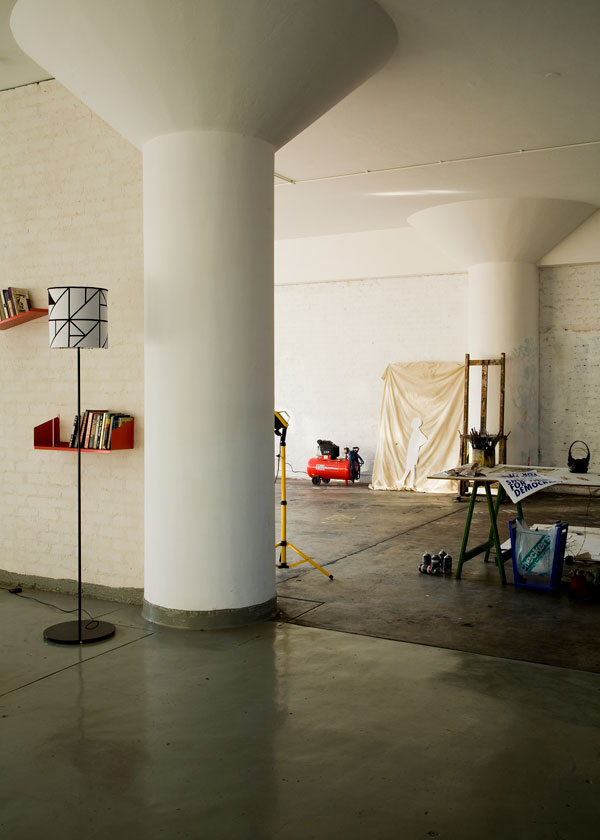
Industrial loft : The artist's lair where Kudzi works into the small hours. -
Industrial loft : The roller shutter door, a remnant of the old factory, works well for the artist who uses it to move large pieces in or out the apartment. -
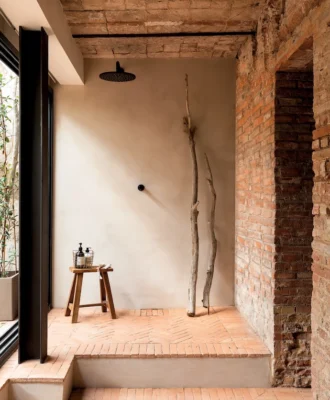
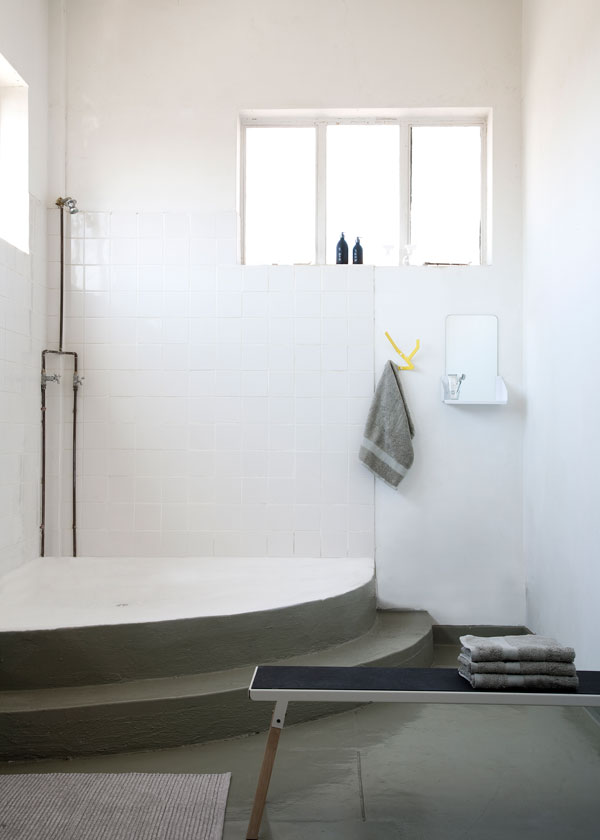
Industrial loft : The new shower had to be raised in order to connect it to the existing plumbing, resulting in a grand shower pedestal. The exposed copper piping is in keeping with the industrial feel of the apartment. the East Bench is by Adriaan Hugo.

PHOTOS: David Ross | PRODUCTION: Klara van Wyngaarden | WORDS: Alma Viviers
Art reflects life for artist Kudzi Chiurai, who draws his inspiration from Johannesburg’s vibrant inner-city where he lives and works in a renovated loft apartment.
Kudzai Chiurai is a night owl who prefers to work in the wee hours when the daily noise of hooting taxis and street vendors gives way to the nocturnal sounds of street fights and conversations, ambulance sirens and booming music that drift up from below.
Initially the noise was probably one of the biggest adjustments he had to make when moving into the CBD but, contrary to what one might think, it is this that now makes the young Zimbabwean artist feel safe.
Safe in the city
“I feel more secure in the city than in a quiet suburb like Melville where I lived previously,” he explains. “Out there, people don’t know their neighbours. I feel more connected here. I know the people in my building. I walk by vendors and shopkeepers every day and feel like part of a community.”
Kudzi moved into August House, located on the edge of the emerging fashion district near Ellis Park, about a year ago. The building was originally home to several light industries including clothing factories and a perfumery.
Bié Venter, who earns a living in exhibition logistics and public art project management, lived across from August House for several years and saw the potential of transforming it into loft apartments. “My partner and I bought shares in the building and convinced the other owners that we should convert the top two floors into nine lofts,” she recalls.
“On a shoestring budget, 26’10 South Architects designed the subdivisions and I acted as project manager – it was a real labour of love.” The numerous public toilets that serviced the factories were converted into smaller bathrooms with showers, and basic kitchen facilities such as sinks and electrical outlets for stoves were installed.
Industrial originality
In keeping with the industrial style of the building, all pipes and conduits remained exposed and the concrete floors were left untreated. Most of the apartments have access to the rooftop where Bié has created a potted garden and braai area.
Kudzi shares the building with several other artists and creatives who live or work in the airy apartments, including Mary Sibande, Laurence Lemoana, Gordon Froud and Diane Victor.
His enormous apartment is furnished with an elegant assemblage of make-do designs, as well as standard retail-store pieces interspersed with creations by South African and international designers.
The all-white interior is punctuated by focal pieces in primary colours by designers Dokter and Misses. “I met Katy Taplin at the University of Pretoria while I was studying Fine Arts and she was studying Information Design, and we became close friends,” says Kudzi. Katy and her husband Adriaan Hugo (the other half of Dokter and Misses, who also produces an eponymous furniture range), played an integral role in the interior design and furnishing of the apartment.
“Katy has a good eye and helped me choose and arrange things,” Kudzi admits. “Besides all the pieces I bought from them, I asked Adriaan to design a table, called the K-Dining Table after me.” The three have also collaborated on a T-shirt series available at the Dokter and Misses shop at Milpark’s 44 Stanley Avenue.
Kudzi recently joined The Goodman Gallery as a resident artist and his first solo exhibition took place in August at Goodman Gallery Cape. Entitled Dying To Be Men, the exhibition highlighted his interest in the aesthetics of propaganda and interrogated the visual legacy of political representation. Several newspaper and political party posters stacked in the corner attest to this fascination.
Kudzi also collects old hand-painted shop signage, an art form he believes is fast disappearing from the cityscape because of digital printing.
Inspired by the city
The artist says he is currently exploring the theme of gender and the city, or engendered space. “When living in the city, you become aware of invisible boundaries that you wouldn’t otherwise know about if you just whizzed past in a car,” Kudzi explains. “You can sense that there are certain areas where you are not welcome.”
It seems that Kudzi draws plenty of inspiration and ideas from the layered experience of living in a city that reveals itself slowly, like a seductive mistress, to the people who make it their home.
• Kudzi Chiurai: 072 825 6860
• Bié Venter: 083 728 5606, biecc@mweb.co.za
• Dokter and Misses: 082 952 7798 (Katy Taplin), www.dokterandmisses.com
• Goodman Gallery Cape: 021 462 7573, www.goodmangallerycape.co.za