-

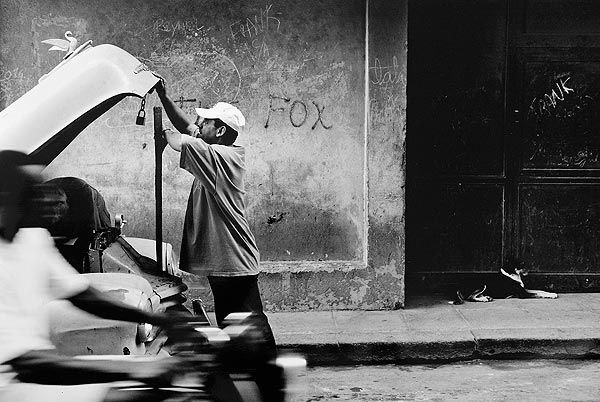
Hola, Havana : The Cubans have adapted American cars from the 1950s, such as this Chevrolet, to run on diesel. There are literally hundreds of these smoke-belching veterans on the streets, most of them taxis. -

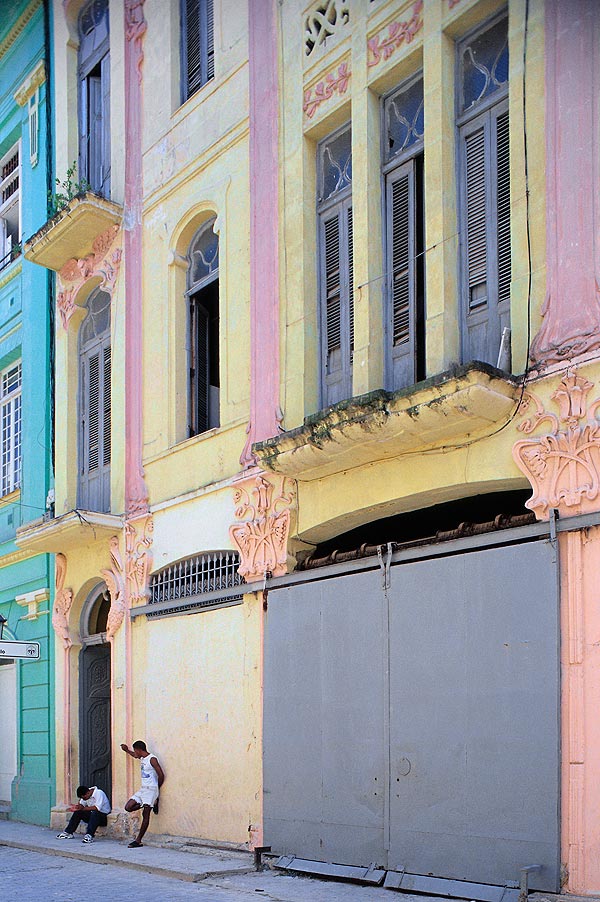
Hola, Havana : Two Cubans stand outside buildings beside the Plaza Vieja, which are decorated with Art Nouveau elements. -

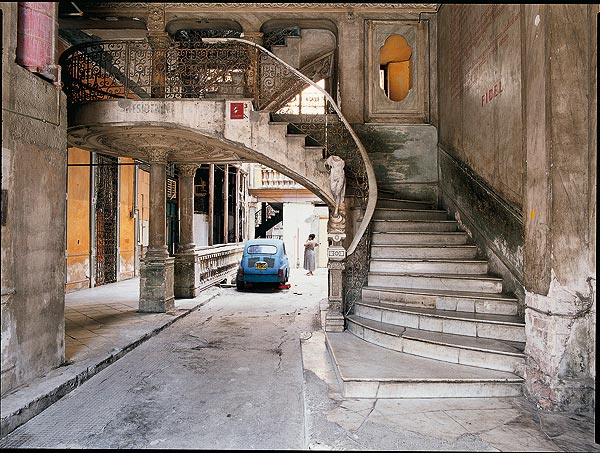
Hola, Havana : Entrance halls are treated as places to meet and visit, while majestic staircases, such as this one in Casa La Guarida, lead to the living areas on the second floor. -

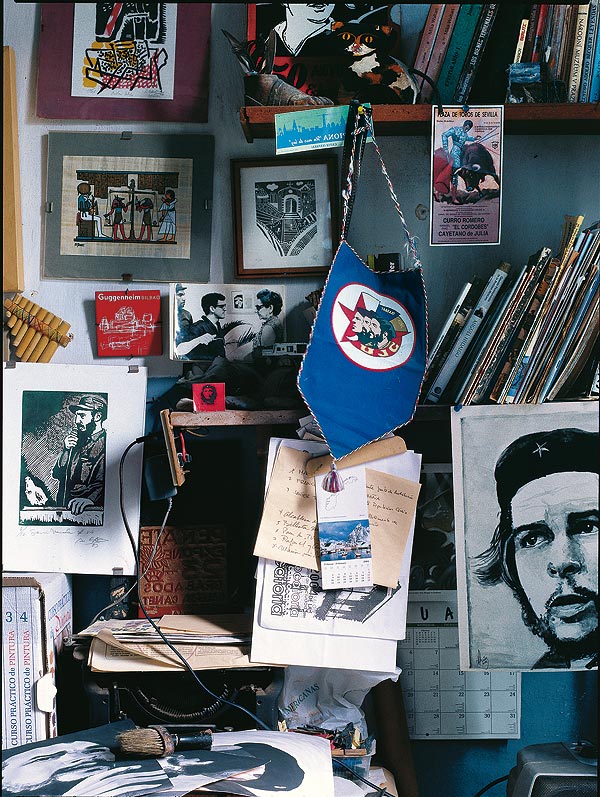
Hola, Havana : In bedrooms, classrooms, toilets, on buildings and T-shirts... the Che Guevara worshipped by Western youth as a “supercool freedom fighter” is a true hero in Cuba; perhaps respected even more than former president Fidel Castro (on the lino-cut, left). -

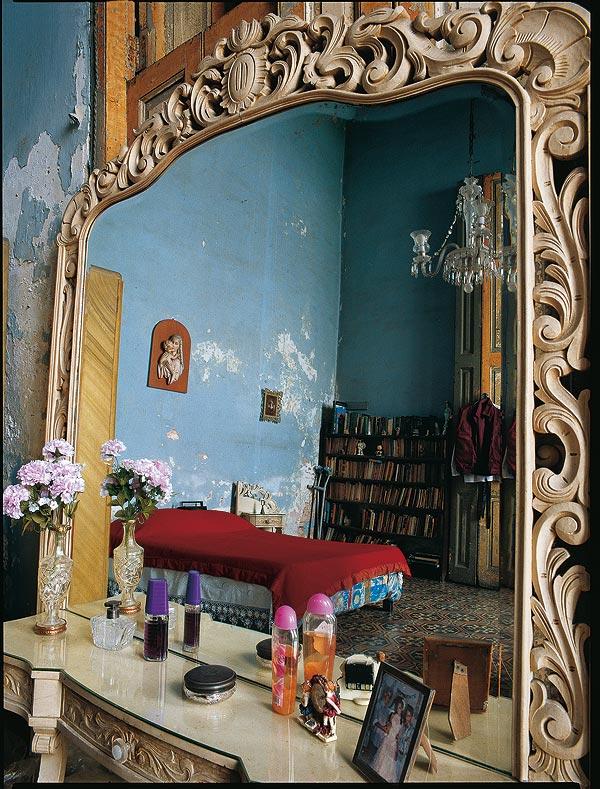
Hola, Havana : This bedroom in the Casa Angelina de Inastrilla looks like thousands of others in the capital: damp, peeling walls with aesthetic appeal, heirlooms and collectables used together (matching or not), religious pictures and a bunch of plastic flowers. -

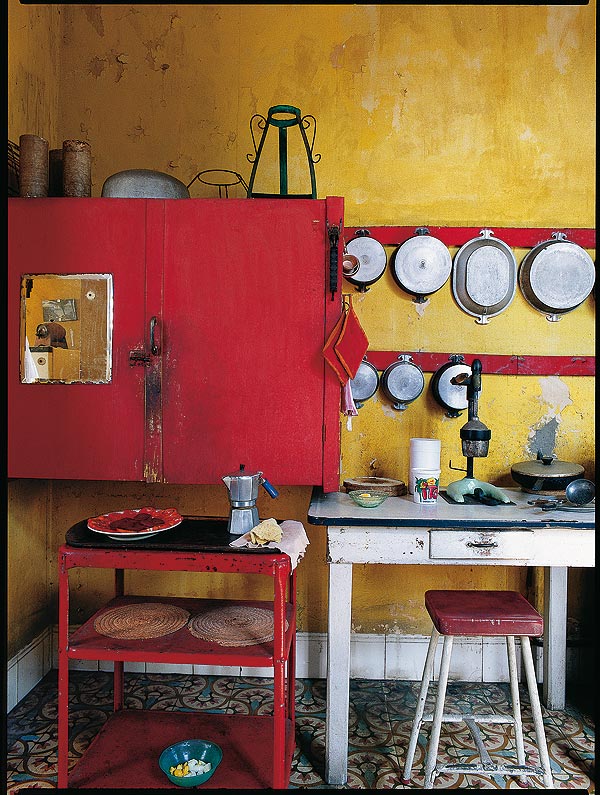
Hola, Havana : Kitchens in Havana are simple and surprisingly small in comparison to the spacious rooms in the rest of the house, but they’re not short on colour. This pink-red kitchen cupboard is in the Casa Miguel Alonso. -

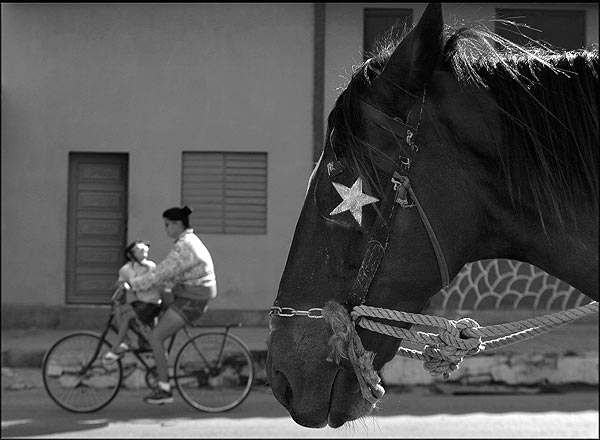
Hola, Havana : Residents of the capital walk wherever they want to go but there are plenty of options if you’re in a rush: horses, bicycles, motorbikes, old American cars, buses and trains. Public transport is inexpensive, fast and safe. -

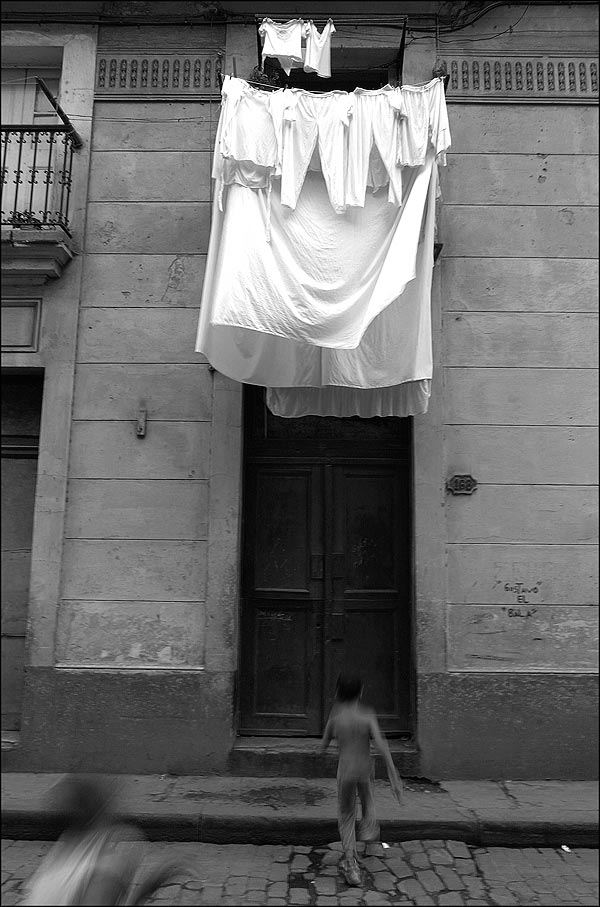
Hola, Havana : Lines of fluttering washing are a familiar sight in Habana Vieja. The densely populated Old Town, with its labyrinth of small pavements and stone alleys, was declared a World Heritage Site by UNESCO in 1982. All front doors are situated on the pavements.
PHOTOS: Havana Style (Taschen), Gianna Basso & Vega MG | WORDS: Johan van Zyl
The “Paris of the Caribbean” is a city bathed in fortitude and photogenic decay. But as America turns a newly benign gaze on one of communism’s last outposts, everything looks set to change.
Havana is like a feverish dream. You don’t really want it to end, but in the early hours of the morning the shutters start banging, the heavens rumble and suddenly weep great tears which the wind blows in to splatter you awake.
Only a few hours earlier, the humidity had driven the city’s residents outdoors, as far as the Malecón, a 7 km-long boulevard along the sea front with a broad wall above the rocks, where you can sit, lie, walk and even sleep.
Here, as the sun sinks and skirts begin to flutter in the salty breeze, Havana begins to laugh, talk, drink, play and dance in earnest. There are grannies in wheelchairs, tearaway grandchildren, lovers, prostitutes, musicians, taxi drivers, metrosexuals in indecently skimpy running shorts, cold-drink and cigar sellers, and shapely girls poured into hot pants or skin-tight minis, ready to sway the night away in the clubs, where you can hear anything from salsa, rumba, flamenco and Latin American jazz to reggae, rap and hip-hop.
“A marvellous decrepit beauty”
Ciudad de la Habana has a marvellous decrepit beauty. Of the many familiar photographic clichés, not one disappoints in reality: the dilapidated Spanish colonial, Art Nouveau and Art Deco buildings; the swaying 1950s Cadillacs, Chevrolets and Studebakers, converted to belch clouds of diesel fumes; the sounds of musicians practising for the annual salsa festival; fat Cohiba cigars; Che T-shirts, Che berets, Che murals; Havana Club bottles; endless mojitos …
The biggest surprise – for which no photograph can prepare you – is the Cubans themselves: strong, lithe people, with large, melancholy eyes. They are friendly, helpful, hospitable, talkative, curious, cheerful – and proud.
The subtropical climate and with it, the building style, has a strong influence on the way in which the two million people interact with visitors as well as with each other. In Habana Vieja, the Old Town, which lies half squeezed between Parque Central (the main square) and the harbour, the front doors open straight onto the narrow pavements that line the maze of narrow cobbled streets. These doors stand open until well after midnight and the entrance halls, often with a majestic staircase leading upwards, are used as places to meet and talk.
Windows often have no glass but are covered with iron grilles and wooden shutters which are opened from inside. Thanks to this, a number of women unknowingly succeed in exposing their bosoms to passers-by of an evening, and during the day you see round and sturdy matriarchs snoring in their cane armchairs in front of a TV blaring Spanish.
The two and three-storey houses have high ceilings, cool marble floors and courtyards where palms provide some shade. Inside, the occupants manage with what they’ve managed to collect over the years – anything from antique furniture to 1950s Formica kitchen cupboards. Faded pictures of Fidel, Che, Catholic saints, framed family photographs and plastic flower arrangements adorn every room.
“The writing is on the wall”
The city still feels like a sweaty time capsule, but the writing is on the wall. The Old Town was declared a historic and cultural world heritage site by UNESCO as long ago as 1982 and numerous buildings are in the process of being restored.
Since my visit, a fortnight after Raúl Castro Ruz took over the reins from his brother on 19 February, Cubans have been permitted to own personal computers. The uniform wage system, which has been applied since the Communist revolution of 1959, is also now being replaced with extra incentive bonuses. Previously, people had no reason to shine – everyone earned the same, no matter how capable or qualified they were.
I often think of Mirurgia and Ernesto van Calle Cuarteles, where we would knock back small cups of jet-black Café Cubano every morning. We had to use the globe in the living room and trace our route with a finger to show them how we flew to Cuba.
For a few moments Ernesto was speechless. Then he pointed to himself: “I go, I go, one day,” he managed to say. Next week, or tomorrow, Ernesto could be ringing my doorbell.
Havana 101
HOW TO GET THERE It’s more expensive to fly via South America to Cuba. There are direct flights from European cities such as London, Paris and Madrid. We travelled via New York and Mexico City. The biggest advantage of this route is that you can take 40 kg baggage for the whole journey, but don’t plan to buy any Cuban cigars.
WHEN TO GO The dry “winter season”, with an average temperature of 26°C, is from December to early April. From May to October it’s boiling hot and the humidity is high. The hurricane season lasts from June to November.
DOCUMENTS AND CURRENCY It’s easy to obtain a tourist visa/card (valid for 30 days) from the Cuban Embassy in Pretoria (or via your travel agent). Cuba uses two currencies: moneda nacional (the Cuban peso) for local residents and the “convertible peso” (CUC – equivalent to 1,2 American dollars) for visitors. Rather take euros or pounds – there is an added 10% levy when you exchange American dollars. ATMs also do not accept cards issued by American banks. My travelling companion’s (ABSA) Visa credit card was accepted everywhere, but my (Standard Bank) Mastercard was spat out by every last machine in Havana.
FOOD AND DRINK Cuba is apparently well known for its terrible food. But man cannot live by mojitos alone and in many of the restaurants there was no mention of Congri, the staple dish of black beans and rice. Instead we feasted on fantastic seafood and tapas, but steered clear of street food, tap water and unpeeled raw fruit and greens. The restaurants in private homes are also worth trying – they’re inexpensive but the food is not always tasty and the service is slow. It’s important to tip parking guards, cleaners at public toilets, tour guides, musicians, taxi drivers and waiters. Remember, most Cubans – from cleaners to university professors – earn less than R200 per month.
SHOPPING Merchandise in Havana’s shops is pitifully sparse but it’s a good chance to give your credit card a rest. You may find an attractive painting in one of the hundreds of art galleries, or a guayabera cotton shirt, or buy excellent coffee and cigars (not if you’re flying via the USA, though). Remember to obtain a receipt/certificate for artworks, as this must be produced at customs when you leave. The book market on the oldest square, the elegant Plaza des Armas, is worth a visit, as is the tiny Museo del Chocolate, where you must try the deliciously thick hot chocolate.
MUSEUMS Havana has numerous museums, theatres and art galleries, but not all are properly maintained. Don’t miss the Museo de la Revolucion, which offers a good overview of the history of Cuba, Fidel Castro and Che Guevara. The Museo Nacional de Bellas Artes contains works by Rubens, Goya and Velázquez. Try an art tour by Art-Havana (art-havana.com), or follow in Ernest Hemingway’s footsteps and visit the house where he spent the last 22 years of his life, as well as his favourite watering holes.