-

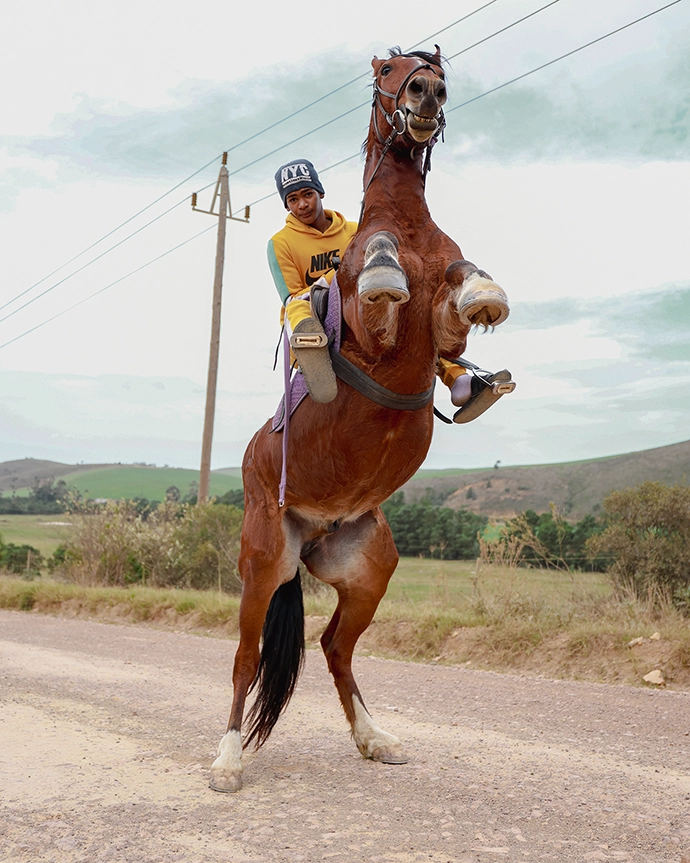
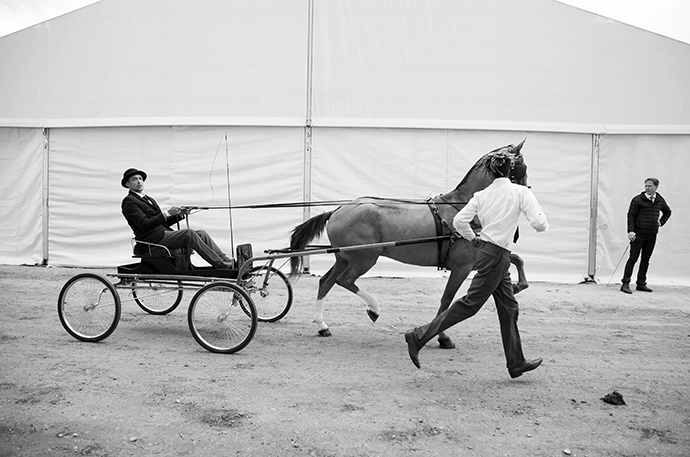
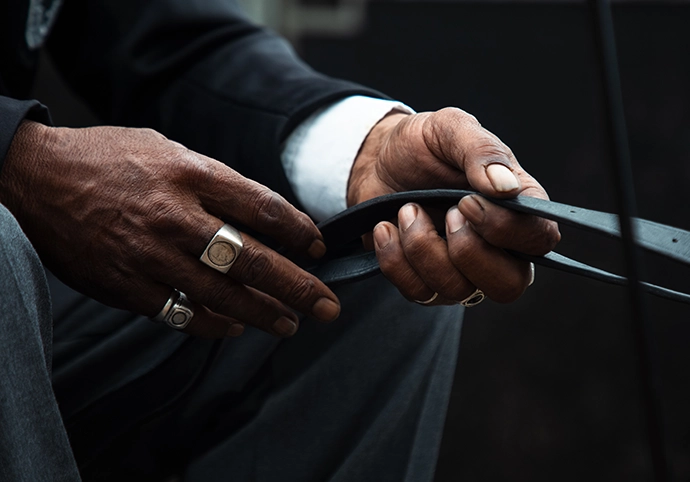
Vlaamperd. Agricultural Show, Swellendam. 2023. Archival Ink on Cotton Rag. 59.5 x 48.5 cm. -
Tosseltjies. Swartland Show, Moorreesburg. 2024. Archival Ink on Cotton Rag. 29.5 x 23.5 cm. -
Wesley Davids on Slain. Greyton. 2024. Archival Ink on Cotton Rag. 30 x 21 cm. -

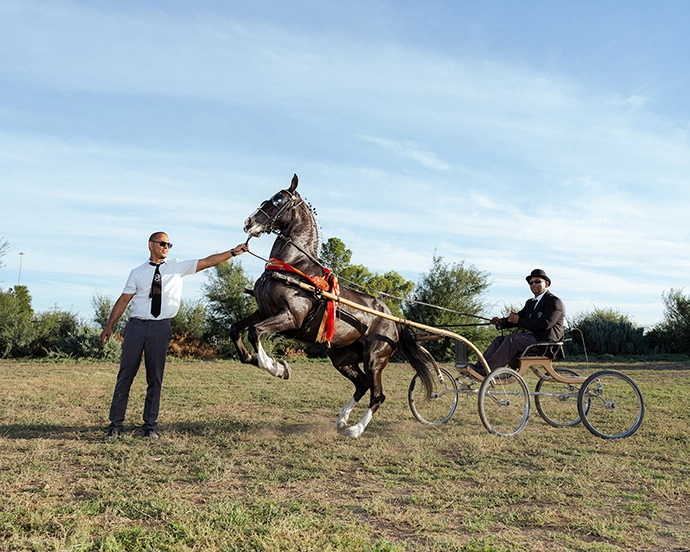
Brandon Schuller and Jermaine Sedoney with NFM The Terminator, owned by Nazeem Moerat, Moerat Stud. Swartland Show, Moorreesburg. 2024. Archival Ink on Cotton Rag. 59.5 x 86 cm. -

Farouk Brenner. Swartland Show, Moorreesburg. 2024. Archival Ink on Cotton Rag. 59.5 x 82.5 cm. -

Niyaaz Marlie and Reyaad Davids with Julietta, owned by Abdullah Davids, Morocco Stud. South African Hackney Championships, Beaufort West Archival. 2025. Ink on Cotton Rag. 29.5 x 36 cm.
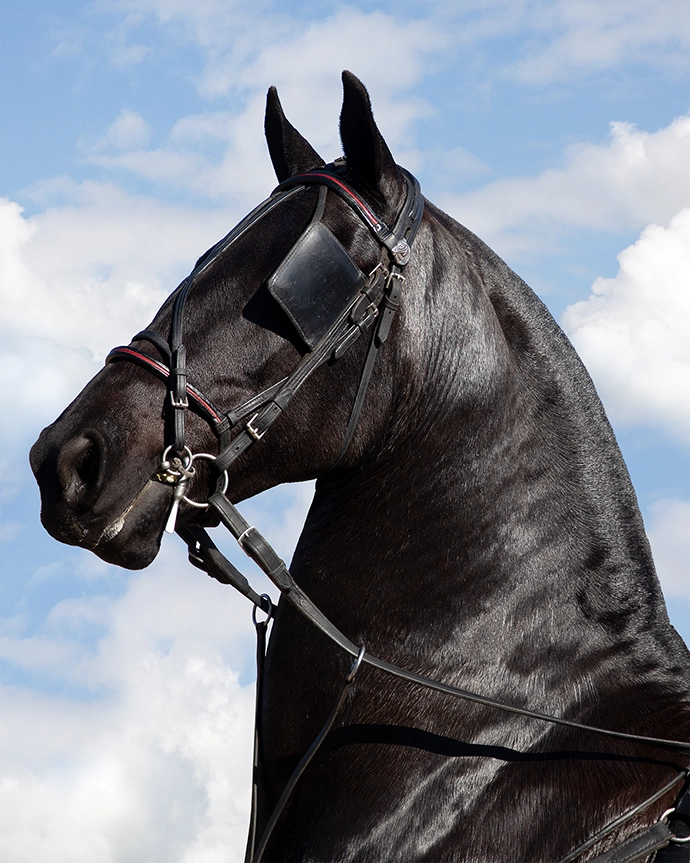
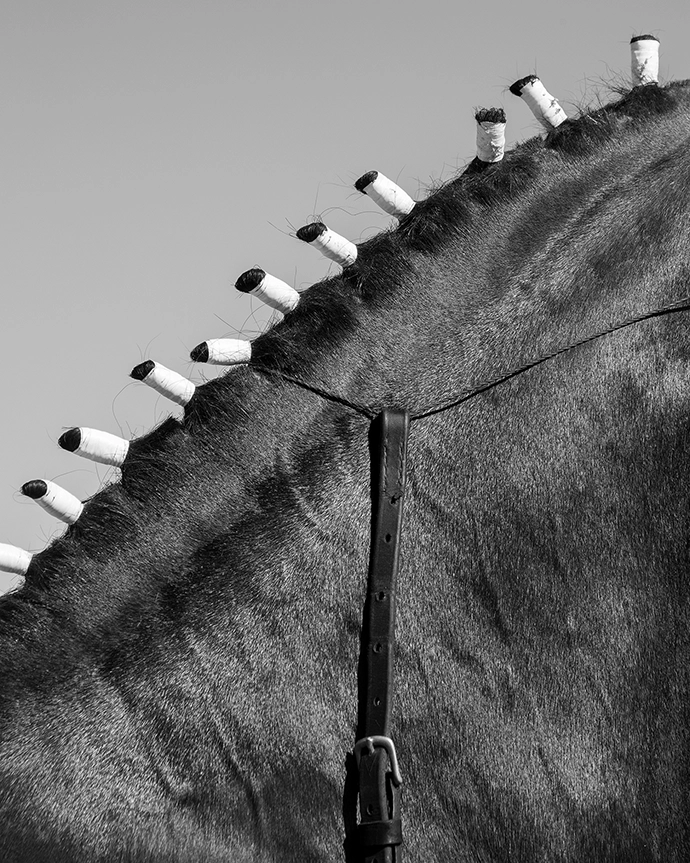
Gabrielle Kannemeyer’s striking debut solo exhibition at Ebony/Curated is an exploration of horse culture as both personal anchor and cultural reclamation.
INTERVIEWED BY Gina Dionisio PHOTOS Courtesy of Gabrielle Kannemeyer and Ebony/Curated
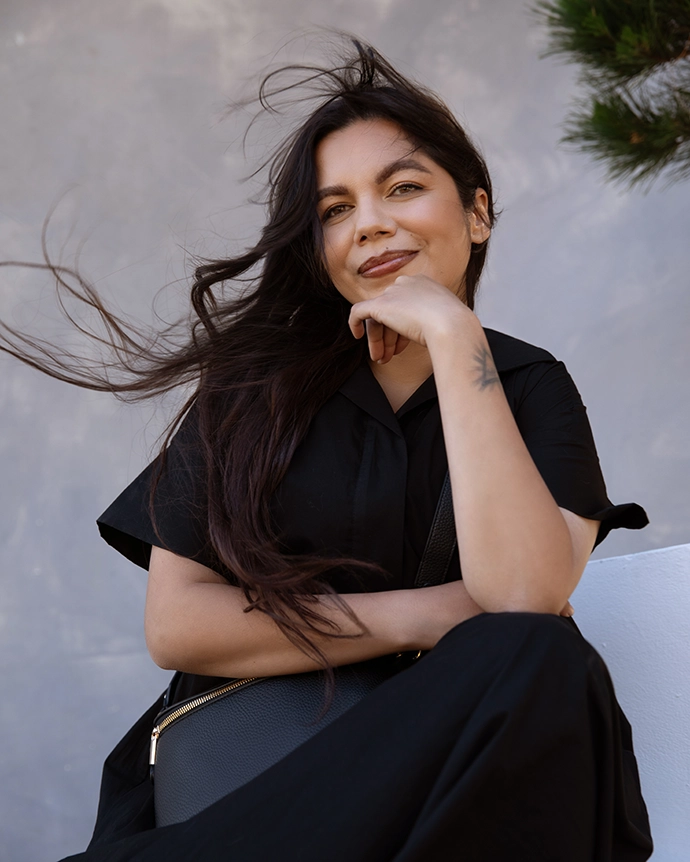
Rooted in years of immersion, photographer Gabrielle Kannemeyer’s exhibition – As Necessary as Bread – documents the horse cultures of her community in the Western Cape, specifically in Cape Town and the Overberg. Through her lens, horse, rider and photographer converge as collaborators, holding the tension between colonial history and contemporary reclamation.
Here, she shares the personal and collective histories that shaped this body of work.
How has your upbringing and family background influenced your artistic journey, in general and in terms of As Necessary as Bread?
“My father has always been a big part of my journey. He left school quite young and became a plumber, like my grandfather before him, who was a builder, just like my great-grandfather, and my uncle, who’s a carpenter. I come from a long line of independent tradesmen. People who make things with their hands. My family is full of storytellers by nature; that’s a big part of how we connect, by trading stories.
“Through family, I came to know and love horses. My father would take me along to friends and family and even clients on job sites, who owned horses. In these familiar spaces, I felt a sense of deep belonging when I was a young girl.
“Later, as I entered other equestrian spaces when I learned more about disciplines like dressage and showjumping, I became aware of how few people from my community were present there. That feeling stayed with me. As Necessary as Bread is, in many ways, a return to my own history. I think it’s also an act of reclamation. It’s maybe my way of saying: we were here, we are here.”
What drew you to focus on horse culture as a way to explore South African histories of displacement, erasure, and continuity?
“We make sense of the world through what we know, and what I know is my family, my community, and horses. There was a period in life when I felt quite dislocated and estranged from these things. I found myself longing to reconnect. Horses always felt like a gift from my father, a constant when very few other things were. They became the thread that guided me back to where I started.
“Like many people my age, I grew up hearing stories about the beautiful home and land my family once owned in Stellenbosch and how it was taken from us during the Group Areas Act. My dad has very few photographs from that time, so for me it feels more like myth than memory. A kind of inheritance made up of stories.
“Those stories were always told with a mix of pride and grief, as if to say: we are here today, and we carry on despite everything.
“The horse culture I grew up around never fully resembled the magazines and books I collected as a child. There were almost no equestrian images that reflected my reality or the people I knew. The horse was the constant, yes, but the representation was missing. Later, my dad would take me to local eventing shows, and I learned other riding styles, expanding my sense of the culture and its diversity.
“Studying fine art taught me how to research and contextualise what I was seeing. When I returned to horses as an adult, it wasn’t just out of nostalgia; it was to understand this culture deeply. To trace its histories and to explore why it matters. Photographing horse culture in my community became a way to insist on continuity, to resist erasure and to build something that could outlast memory.”
You describe this body of work as a “counter-archive.” Could you expand on what counter-archiving means to you in this context?
“For me, archiving means being both witness and collaborator. I see it as being a conduit for stories that already exist within my community but might otherwise remain invisible.
“A counter-archive resists absence. It is an archive that speaks back to the dominant, class-coded imagery that has historically excluded certain people from equestrian narratives.
My work is collaborative and participatory, rather than objective extraction. It is about making space for presence, joy and cultural memory where absence has prevailed.“
Were there specific moments or encounters while making this body of work that surprised or shifted your perspective?
“Absolutely. It’s one thing to be immersed, holding subjective views through participation, but the camera forces you to step back, even briefly, and see differently.
“Travelling to new places and hearing people’s stories constantly challenge my perspective. I think I value that the most: being surprised, being forced to question my assumptions, and seeing through someone else’s eyes. Those moments of exchange have deepened my understanding and my sense of responsibility to the work.”
How do you hope audiences will engage with and respond to the exhibition?
“I hope people take their time with these images, long enough for them to stir something inward. I want them to feel the beauty, yes, but also to be curious about expanding their perception of their immediate environments.
“If the work can complicate what someone thought they knew about horses, leisure, or who ‘belongs’ in equestrian spaces, then I think that’s also great.”
Can you talk us through your creative process?
“My process is rooted in immersion and relationship-building. I spend time simply being present – listening, talking, learning about families’ shared histories with horses.
“Sometimes I set up backdrops and collaborate on staged portraits at people’s homes or at the shows. Other times, I spend hours at shows, moving between people, observing and photographing moments as they unfold. I often am invited to join and photograph families for special occasions like matric balls, confirmations and weddings, where horses are part of the celebration.
“Sometimes an image appears fully-formed in my mind, and if it resonates with the people involved, we go and make it together. The process is fluid and intuitive, always guided by a mix of observation and collaboration.”
As Necessary as Bread is showing at Ebony/Curated until 25 October 2025. | ebonycurated.com
Don’t forget to sign up to our weekly newsletter for the latest architecture and design news.