-

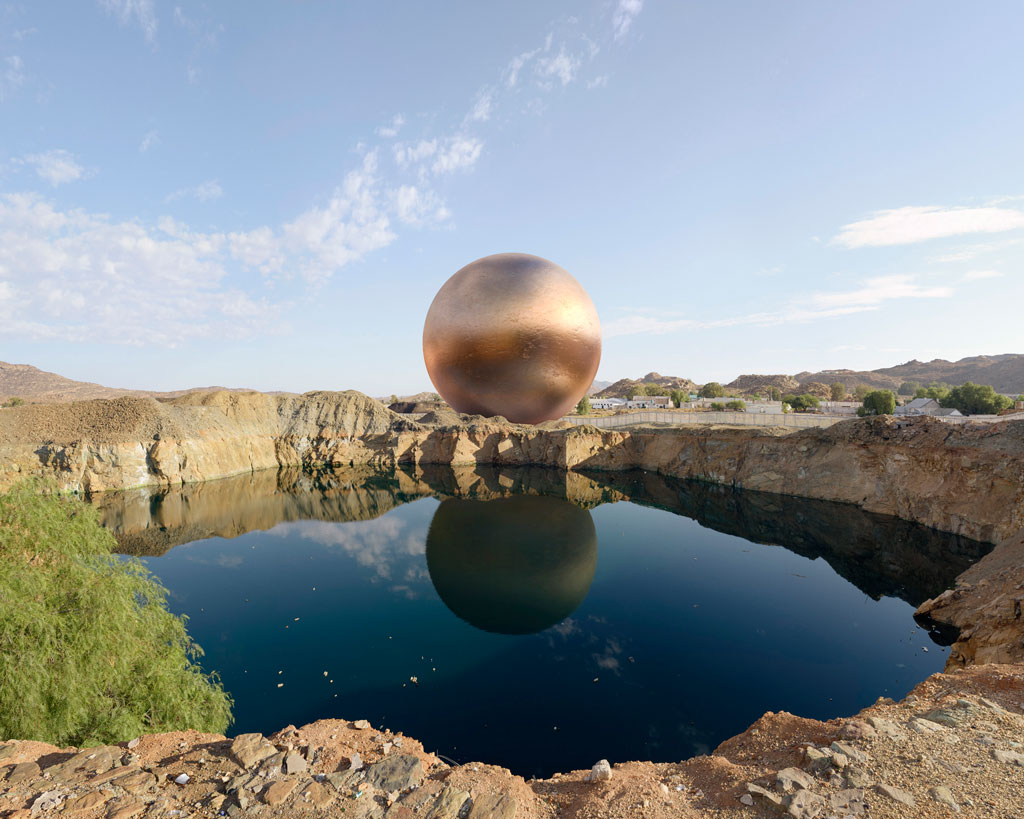
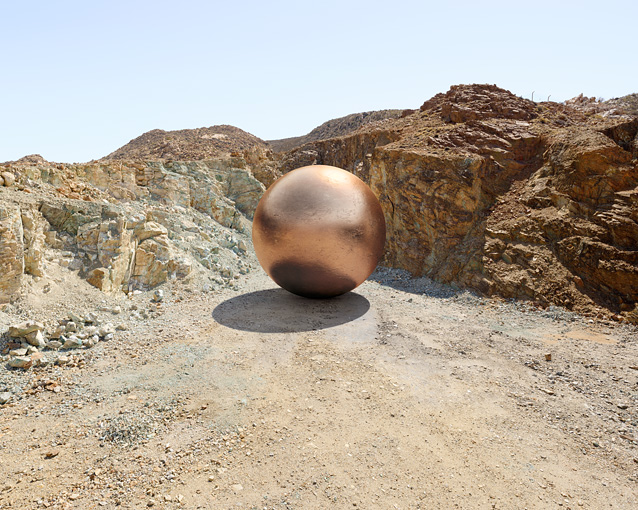
Dillon Marsh : West O'okiep Mine, Okiep (1862 to the early 1970s). -

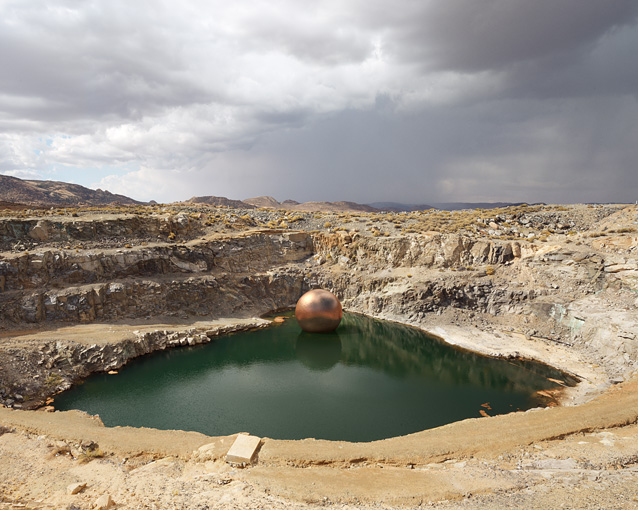
Dillon Marsh : Jubilee Mine, Concordia (1971 to 1973). -
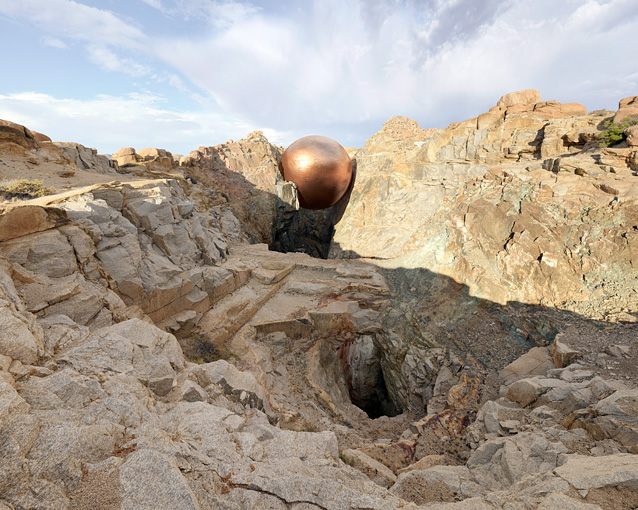
Dillon Marsh : Tweefontein Mine, Concordia (1887 to 1904). -
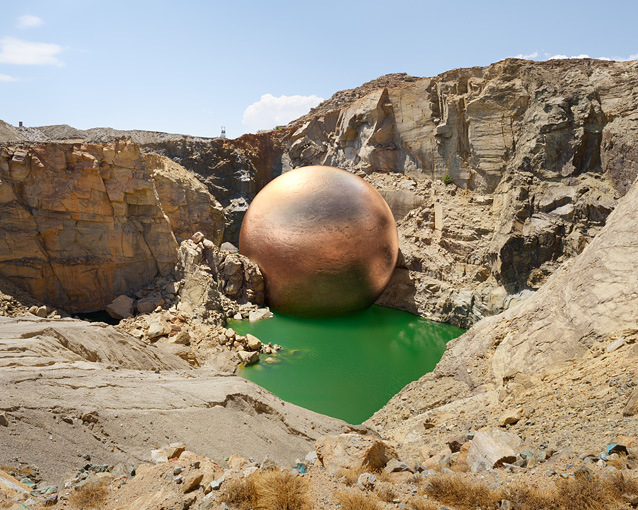
Dillon Marsh : Nababeep South Mine, Nababeep (1882 to 2000). -
Dillon Marsh : Blue Mine, Springbok (1852 to 1912).
WORDS Michelle Marais PHOTOS Dillon Marsh and Annelie Maré
Cellphone towers disguised as palm trees, massive electricity pylons and beaten paths are just some of the topics that young Capetonian photographer Dillon Marsh has zoomed in on.
He’s completely taken by how human-made elements interact with landscapes and the environment. His newest series, For What It’s Worth shows copper mines with thought-provoking computer-generated imagery (CGI) elements that represent the amount of ore extracted in proportion with the landscape. Having exhibited in London, Paris and Switzerland, to name but a few, we figured it’s about time he talked to us.
What’s your first memory of photography?
As a kid, I remember playing with my grandmother’s point-and-shoot camera while travelling in the Kruger National Park with my family. My curiosity led me to opening up the back and I accidentally exposed and spoiled the film inside. Needless to say my grandmother wasn’t very happy about that.
How would you describe your approach to photography?
I approach my photography in a meticulous way, often spending weeks or months exploring various ideas. When I am happy with an idea, I make use of Google Maps and Street View to scout for locations, after which I then plan a trip and photograph intensively for a week or so. The last step is to edit and finesse the images in Photoshop and incorporate CGI where necessary.
Tell us more about your latest project. What inspired the subject matter?
I’m currently busy with an on-going project called For What It’s Worth in which I aim to offer a new perspective on mining in South Africa. I do so by photographing certain mines and incorporating CGI to accurately represent of the amount of pure material removed from each mine. The intention is to create a kind of visualisation of the merits and shortfalls of this industry that has shaped the history and economy of the country so radically. I began this project by focusing on the extraction of copper and diamonds, but I plan to also look at the extraction of other minerals such as gold and platinum in the near future.
Is the mining series a response to our socio-economic climate?
The mining industry is a dominant and often controversial feature of our current socio-economic climate, and this helps to make my project relevant. My aim is to present a new perspective of this industry, which is not only at the forefront of current affairs, but has been a driving force in
shaping the history, economy and identity of the country.
What’s next for Dillon Marsh?
I’ll be showing some large-scale prints from this project in an exhibition which opens on 4 December 2014 at the Brundyn+ Gallery in Cape Town. I don’t really know what will happen after that, but I’m excited by this new direction and keen to see where it leads me.
To view more of Dillon’s work, visit dillonmarsh.com.