-

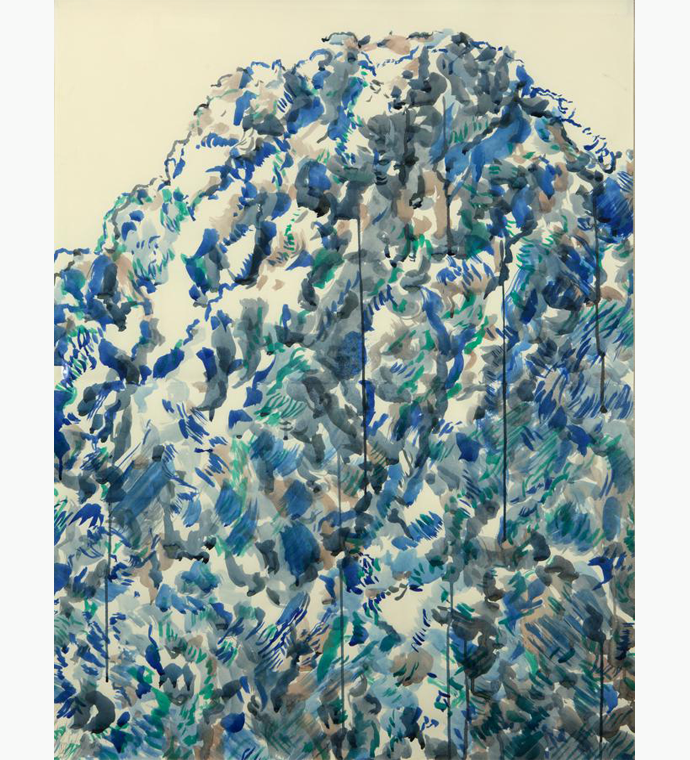
Tarred and Feathered II -
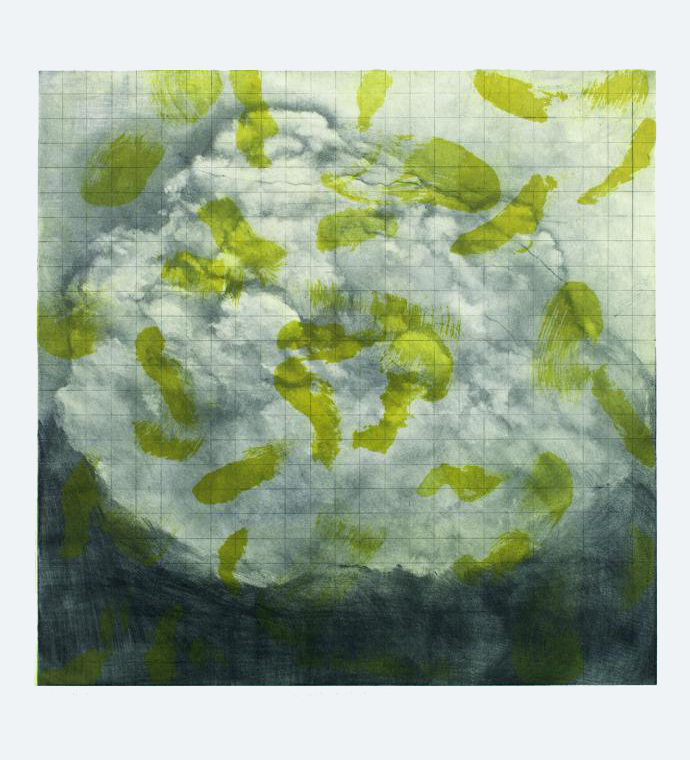
The Map Is Not The Territory II -
Tarred and Feathered III -
Ni ici, ni ailleurs! (Neither here, nor elsewhere!) VI -
Ni ici, ni ailleurs! (Neither here, nor elsewhere!) -
Robyn Penn The Middle of Nowhere Nauru
INTERVIEWED BY Lindi Brownell Meiring
We spotted the works of Johannesburg-based artist Robyn Penn at the recent Cape Town Art Fair and had to find out more.
Here, this acclaimed local artist talks to us about her meaningful work and how climate change plays a part in the pieces she creates.
Your most recent exhibition, Paradise Lost, deals with the devastating effects of climate change. In what way did this topic inspire the work you created?
With climate change there is a story that many people still don’t know about. It is a story about villains who manufactured a false truth to benefit big corporations and fit their own strange ideologies that were staunchly anti-communist and against regulating the economic market. Back in the 1970s, when scientists and governments were first aware of the realities of human-caused climate change (or the Greenhouse Gas Effect as it was known then) these villains began a campaign of ‘false news’ in order sew doubt. This doubt created substantial delay and damage to the environment, which few continue to profit from and which is at great cost to most.
We’re seeing the same forces at play in our current political landscape with Trump and Brexit and Zuma and the Nuclear deal, among others. With Paradise Lost I wanted the work to expose these truths. I chose to paint portraits of the ‘bad guys’, corrupt in their suited disguise of respectability. And the ‘good guys’, who are preeminent climate scientists, being arrested for protesting against big oil and coal’s persistent efforts to continue mining the natural environment with devastating effect. I also paint clouds, which stand as a haunting metaphor for the power and fragility of nature and global warming.
This body of work is scattered with imagery of clouds, a nod to the same topic. Why did you choose clouds as the visual representation for climate change?
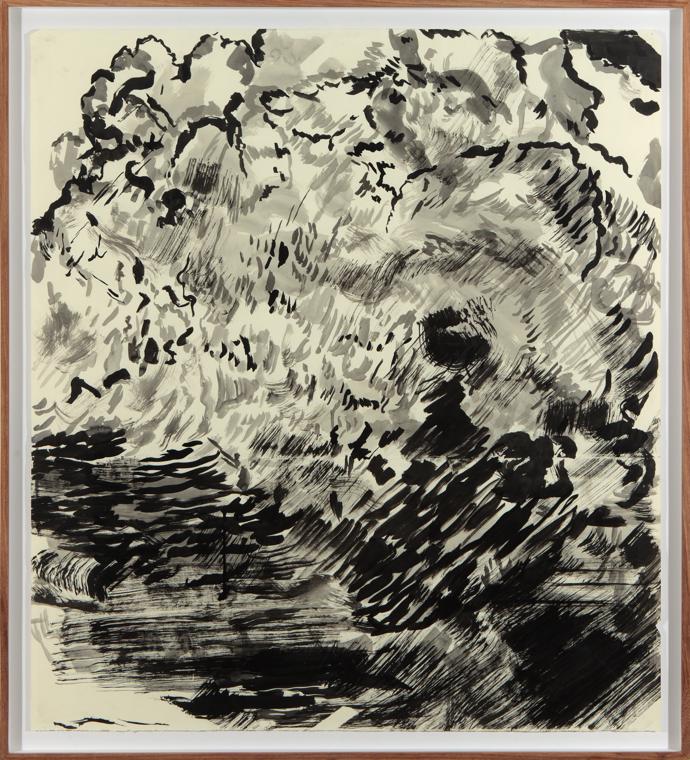
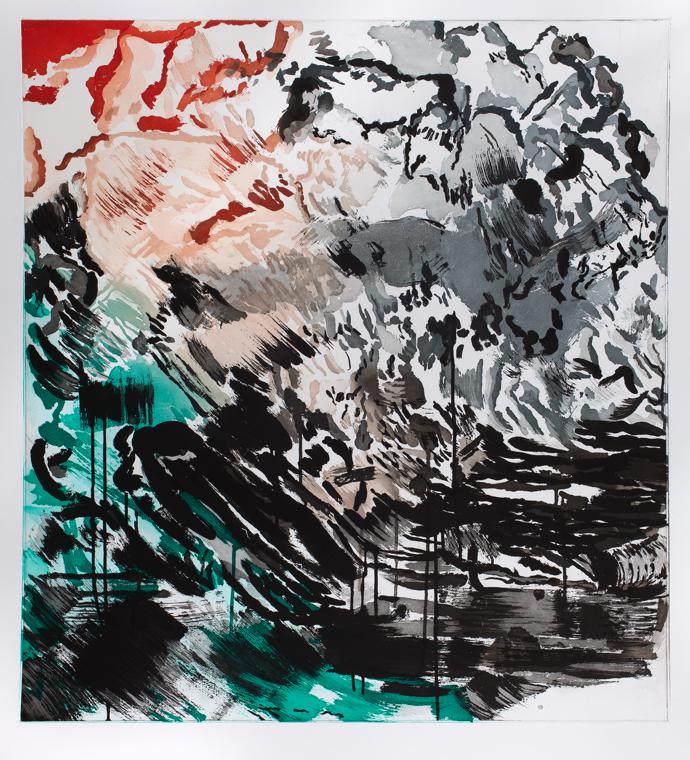
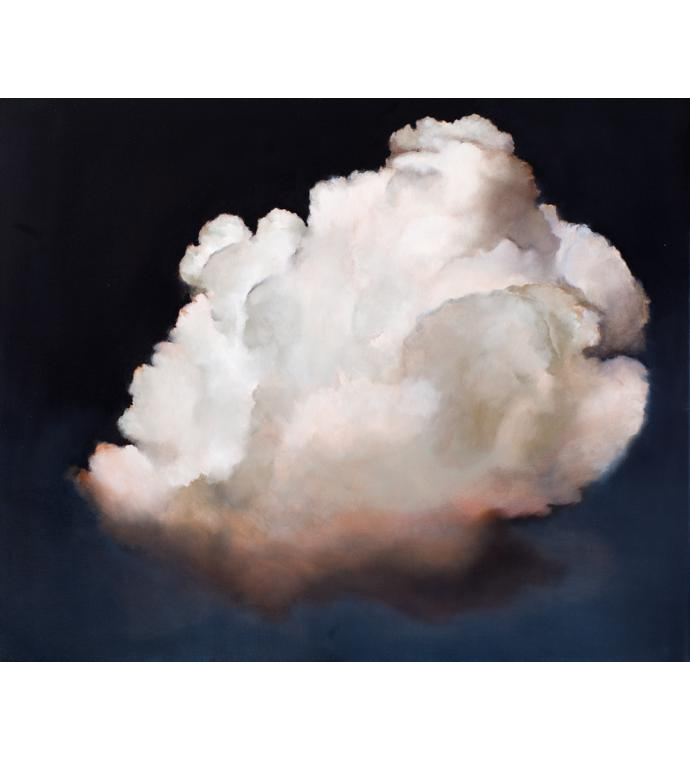
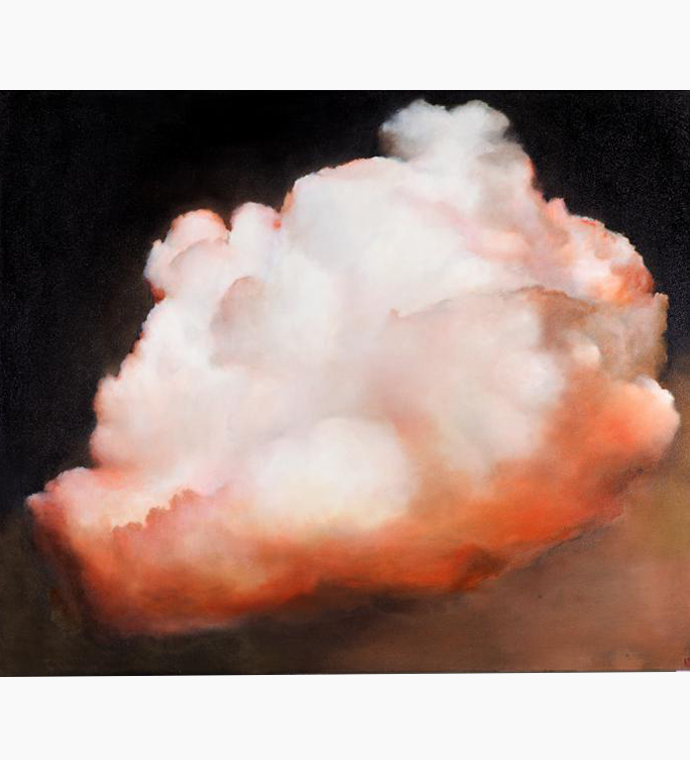
In terms of climate change there is an uncertainty about clouds. They are an elusive and chaotic entity whose influence on the changing atmosphere scientists’ climate models have struggled to accurately predict. As such, at the time I made these works, the single Highveld cloud in a dark sky seemed the best symbol of beauty and hope and also an ominous, haunting warning. They are painted in a renaissance style using thin oil glazes that cause them to glow from within. If you can experience the sublimity of nature, perhaps you’ll be inspired to do all you can to preserve and protect it. It now seems more and more clear that as Earth warms, conditions will push clouds into the stratosphere and towards the poles where they will trap more heat, rather than the hoped for cooling effect. The ideas I have about clouds are given life by abstracting the image through repetition and fragmentation. My drawing of a cloud is at once a cloud, a map, a landscape, the ocean or just a series of marks on a page.
What do you think is the artist’s role in dealing with important issues like climate change?
I don’t think artists have specific roles in dealing with any issues, but for me, it is a wonderful accomplishment if an artist’s work has an intelligent voice and is also beautiful. I believe that dealing with important issues comes down to the individual’s concerns – and as an individual who is deeply concerned about climate change, and as an artist, I am fortunate to be able to give public voice to my concerns.
If my work can be enjoyed in and for itself, while prompting people to interrogate a widespread blindness towards one of the most pressing issues of our time, and help re-dress our place on the planet as humble components, not masters, of the earth, that would be a fantastic achievement.
Which piece in this body of work stands out for you as the work that speaks most strongly about climate change, and why?
The clouds most strongly convey a sense of awe and the fragility of Earth, and of these the abstract etchings titled The Map is Not The Territory I – III and the ink drawing titled Goya’s Cloud stand out for me.
The former represents an evanescent cloud, falling apart. It exemplifies what happens when our models of reality become confused with reality itself. The latter, ink cloud is a moody and foreboding oil slick in the sky, which speaks both about the beauty and truth of the world. But the portraits speak more strongly and directly about climate change. There are two series of portraits exhibited on facing walls. One series is titled The Merchants of Doubt and the other The Protectors. Together they force us to question our societal figures of authority. How is it that we empower the wicked and corrupt climate-misinformers while we arrest and persecute the peaceful, courageous and selfless people who are willing to give up their freedom in order to protect our living planet so that it may sustain human life?
Your work makes use of a mixture of media, from oils on canvas and linocuts to etchings and inks on paper. Is there a particular medium you most enjoy working with? If so, which one and why?
Working with oils on canvas is always my ‘go-to’ medium. I love painting, and it came naturally to me from a young age. Painting is a form of meditation for me. Being alone in my studio surrounded by brushes, tubes of colour and linseed oil is an intoxicating space I am utterly addicted to and miserable without. But sometimes the idea isn’t best expressed in oils and I enjoy being versatile in my practice. It keeps things fresh and interesting.
I was fortunate in 2010 to have master printmaker Jillian Ross invite me to make some prints with her – and so my love for the printing process began. It is a wonderful thing, when one is engaged in a mostly solitary practice, to emerge out of one’s studio into a collaborative conversation about one’s work, ideas and their possibilities.
What are your plans for 2017?
I have some work currently showing in NYC and plans to show in various group exhibitions in SA this year. I am very busy in my studio working on the next stage of my ongoing printing collaboration with Jillian Ross, as well as working on a challenging new body of work, extending the ideas and processes I am already busy with, in exciting ways.
I am thrilled about my new representation with Barnard Gallery, which presents interesting opportunities and a new audience for my work. I hope to do a bit of traveling related to my art and continue to convey the urgency of climate change through my work.
Find out more about Robyn through barnardgallery.com.