-

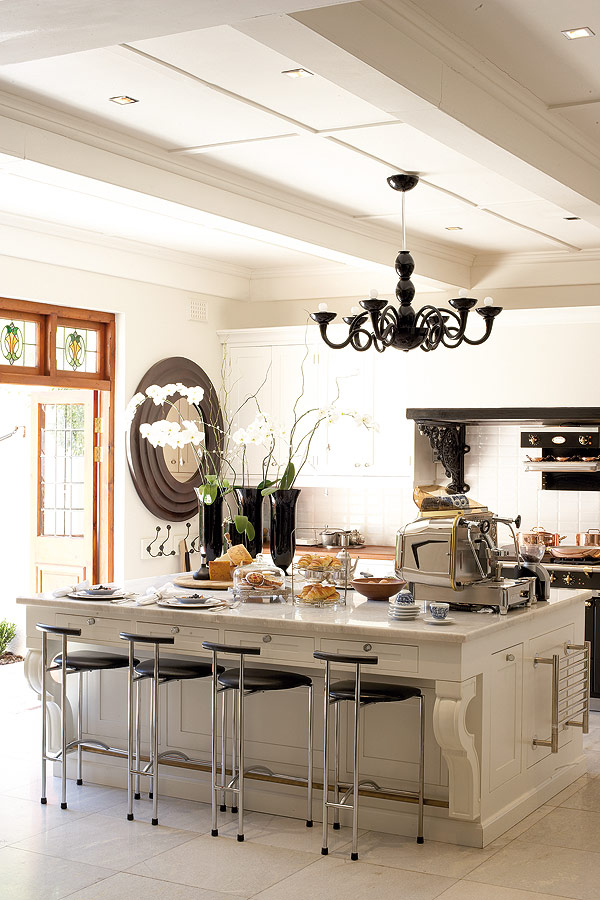
A grande dame with a generous spirit : The kitchen has an island for informal meals. Wooden double doors open onto the patio. The cupboards are Osterwald Cabinetmakers and the Faema coffee machine is from Cape Culinary Equipment. -
A grande dame with a generous spirit : The front of the house with the half-moon window Michelle bought at Strippers in Wetton. -
A grande dame with a generous spirit : The Lacanche stove is David's delight. The French solid-copper Mauviel pots are available form Cape Culinary Equipment. -
A grande dame with a generous spirit : The palatial main bedroom has a silver four-poster bed from Private Colelctions in Cape Town's Cape Quarter area. The antique dressing table in the corner is from Rajasthan. Under the perlemoen-framed mirror is a battle-campaign table with washbasin. -
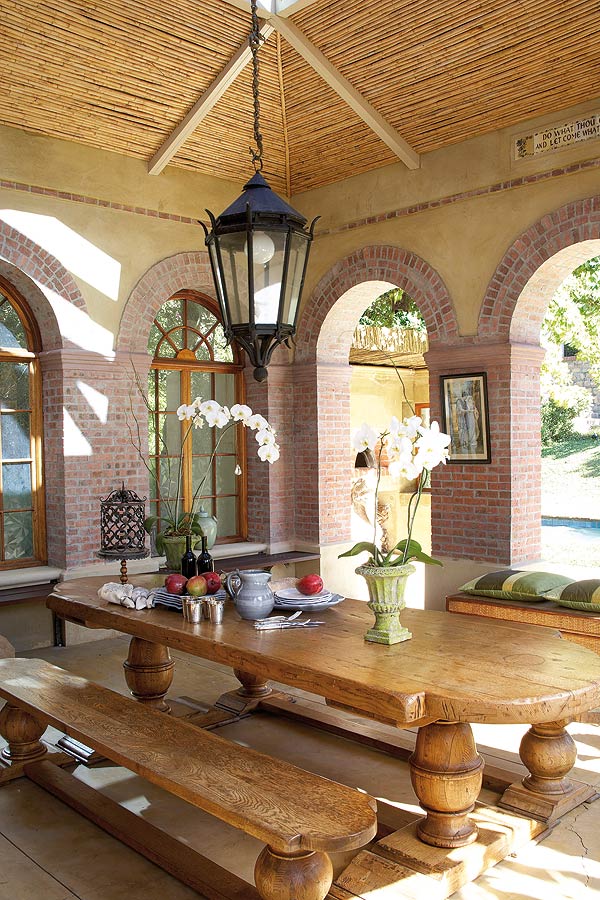
A grande dame with a generous spirit : What was once a negleted passage beside the house is now the dining room. A glass roof with Art-Nouveau-style frames provides light and air on summer evenings. The lamps are from OnSite in The Palms centre and the table is from Private Collections. -
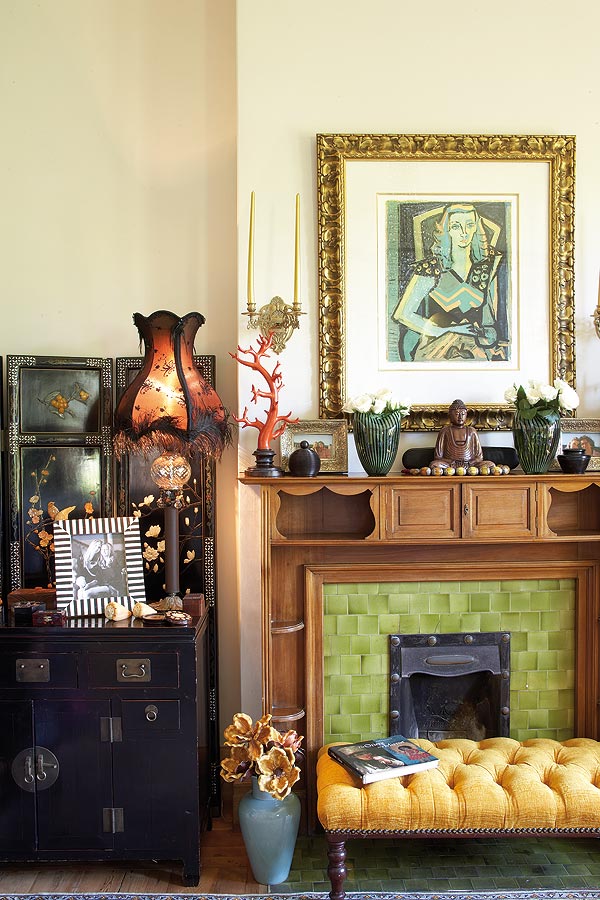
A grande dame with a generous spirit : A corner of Michelle's study. The fireplace has it's original green tiles. Michelle's love of Indo-Chinese artefacts is revealed in elements such as the silk screen that's embroidered with semiprecious stones. -
A grande dame with a generous spirit : A collection of Oriental pieces, many of which Michelle 'hauled back on the plane from China', are a focal point in the entrance hall. The original oak panelling was sanded down and treated with a water-based sealant. -
A grande dame with a generous spirit : The silk curtains, pelmets and blinds in the sitting room are from Moroccan Creeper range at The Silk & Cotton Co. They were made to measure by Nico Alberts Interiors. -
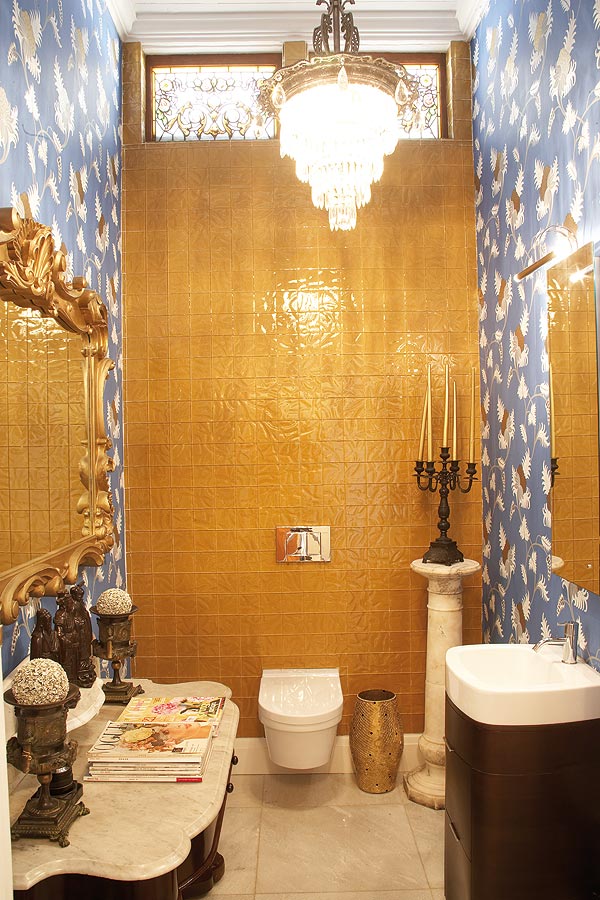
A grande dame with a generous spirit : The inspiration behind the guest bathroom was the antique French mirror Michelle's had since she was a girl. The wallpaper, by Neisha Crosland, is from the Silk & Cotton Co, and the gold-coloured glass tiles are from the Douglas Jones Collection. -
A grande dame with a generous spirit : David bought this ample oak bench-table for Michelle as a Valentine's Day gift at Le Brocanteur, now in Constantia, and the couple inaugurate it with a dinner of takeaway prawns. -
A grande dame with a generous spirit : The kitchen's old windows have found a new place in the main bedroom's en-suite bathroom. The luxurious freestanding bath and classic fittings are from Sterlings in Roeland Street. The chandelier is from OnSite.





PHOTOS: Micky Hoyle | PRODUCTION: Sumien Brink | WORDS: Elmari Rautenbach
A comfortable home for eight sounds more like chaos than stylish living, but the Hambly-Grobler family of Cape Town is evidence of how a warm, hearty home can also be covetously beautiful.
Beside a delicate Louis XIV chair with gold armrests and worn-silk upholstery stands a little dried tree with a white trunk. From each branch hangs a papier-mâché bird, colourfully but inexpertly painted. This piece of craft by a class of eight- and nine-year-olds was snapped up at a primary school auction. It looks strange, almost melancholic, in the plush main bedroom with its silver four-poster bed, crystal chandelier, embroidered-silk curtains and grey-velvet antique sofa.
A copy of Glamorama by Bret Easton Ellis (Vintage) lies on a nearby table; in the dressing room, leather hatboxes are piled to the ceiling and pigeonholes packed with stilettos are alternated with vintage collectors’ gowns displayed on hangers; in the bathroom, modern tiles and chrome and mirrors combine seamlessly with the classic bath and an old-world windowsill – the perfect spot for imported bubble baths and a tea tray with Earl Grey.
So, why the tree? ‘It was magic: I simply had to have it,’ shrugs Michelle Hambly-Grobler. Its special place is later revealed…
Michelle’s businessman husband David meets me at the garden door, barefoot, with a pair of red reading glasses perched on his nose. It was about two years ago at this very spot, when Michelle enthusiastically wished to show him ‘their next home’, that he sceptically pointed out a massive crack in the wall and asked why he should be interested in a place where you could see right through a wall…
But today he pushes the gate open to reveal a glorious old lady of a double-storey house with a breathtaking view. From the stone patio you look out over purple-fig trees into the distance where Cape Town’s city bowl unfolds and the blue sea eventually fades into the yonder. Under the balcony, a dog chases its tail. Open doors beckon you into the kitchen where at least six teenage boys are wrangling over a card game.
Michelle appears, also barefoot, in white T-shirt and linen pants. Two girls with swimming towels run by and a tumble dryer hums somewhere in the background: ‘Our children determined what sort of house we would buy,’ says Michelle.
The sun filters through leaded-glass windows onto window seats and warms the fireplace’s green tiles. The oak floors are sanded and sealed in a matte finish, and the wooden doors boast their original brass knobs. On a rosewood stand, a red Buddha squats in plump repose.
Making their vision a reality
The couple met 10 years ago: ‘We were both already married, each with three children,’ says Michelle. ‘She fell for my body,’ teases David, placing a lacquered tray of cappuccinos on the table. ‘No; his cooking,’ she counters. Four years later they got married and are now the proud parents of a family of six children aged 10 to 16. There are four boys and two girls.
It’s around them that the household revolves. ‘I saw the house for the first time when I brought my daughter to a party here. I was dumbstruck by the extent of the property and the view,’ Michelle recalls. ‘Back then the house was in the Provençal style. That was the first thing we got rid of – the yellow and the lavender,’ she says.
Once the children had given their blessing, the house was bought and Michelle and David started making their vision for it a reality; restoring the house to its former glory as a 1900 Arts and Crafts movement gem. ‘It was a movement and period in which proper value was restored to craftsmanship, characterised by simplicity of design and the use of natural materials such as wood, beaten copper and pewter, and stylised floral motifs.’
‘We prefer to say we renewed rather than renovated the house. She’s a grand old lady who needed a face-lift.’ Neither money nor effort were spared in realising their dream. British blacksmith Sweetpea Smith did all the metalwork and burglar proofing in the Art-Nouveau style (the Arts and Crafts movement included many design elements from Art Nouveau), Nico Alberts made the curtains, and Bloemfontein woodworker, Spyker Coetzee, did the woodwork.
‘Spyker later confessed he’d spent three weeks on his knees in our bedroom while laying the hand-cut French-oak floor in a herringbone design,’ says David. To ensure that the main bedroom’s new wing matched the rest of the house, the gutters were imported from Germany and orange Broseley-style roof tiles were tracked down in Mpumalanga Province.
Once their Lacanche was installed, everything else fell into place
Then there was the French colossus in the kitchen… Michelle explains: ‘David had always wanted a Lacanche stove. For him the kitchen is the heart of the house, and the stove is the heart of the kitchen.’ Lacanche stoves, with their distinctive gas burners, enamel finishes and gleaming brass knobs, are adapted and built to clients’ individual specifications in a 179-year-old factory in France.
It wasn’t easy finding a local dealer but David tracked down an agent at The Culinary Equipment Company in Johannesburg. Stove buying later took an interesting turn: Michelle, who was previously in marketing, recently started up Cape Culinary Equipment in Cape Town in collaboration with the Johannesburg agent. They now import these stoves.
Once their Lacanche was installed, everything else fell into place. To double the size of the kitchen, a window made way for double doors that open onto the patio. That original window, with its beautiful stained glass, was then built into the main bedroom’s new bathroom for an uninterrupted view of Lion’s Head.
Once an unused passage next to the house, the dining room has a high glass roof and is lit by several wrought-iron lantern lights. It has large marble floor tiles imported from India and a long table that comfortably seats 22 people. On the top floor, an attic was converted into a bathroom for the boys. The former main bedroom was divided into two to create a bedroom for each of the girls with a shared bathroom in the middle.
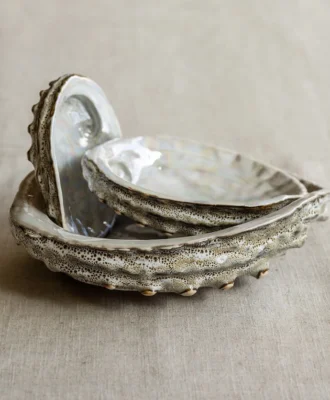
At the Rooms on View Expo in Johannesburg last year, Michelle found mirrors framed with strips of perlemoen shell. These now hang everywhere in a salute to the Arts and Crafts movement. Their subtle colour play of petrol greens, blues and silver is reflected throughout the house … in a silken thread in a curtain, and in the wing of a little blue bird, made as a Grade 3 art project.
• Lacanche is available at Cape Culinary Equipment, 021 552 9550, and at The Culinary Equipment Company, 011 701 2200, www.culinary.co.za.