-

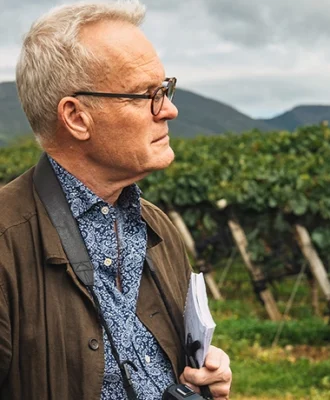
Kenilworth Landscape : Andrew and Sandy Ovenstone. -

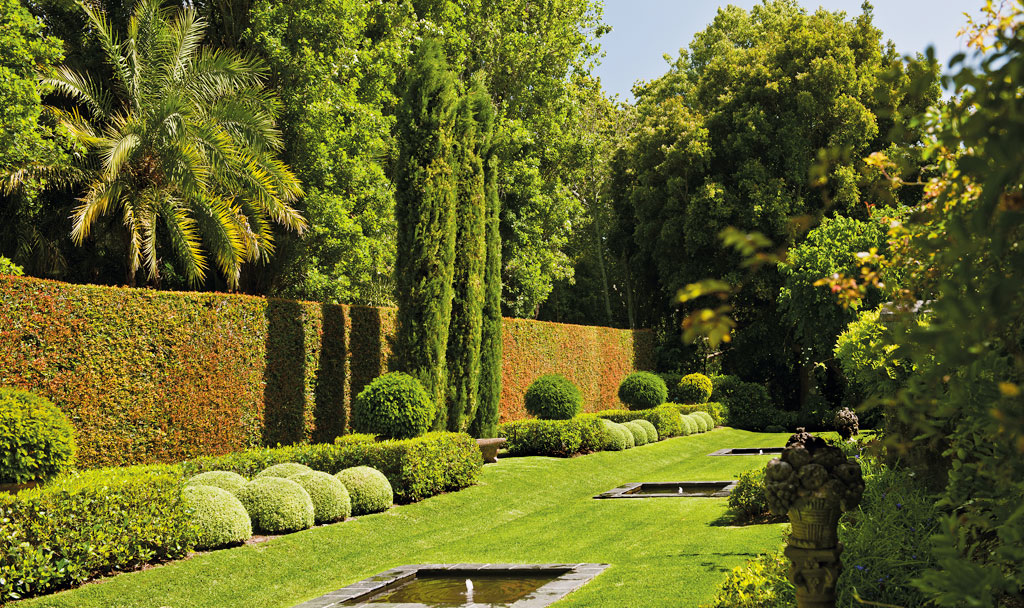
Kenilworth Landscape : Low hedges of Viburnum tinus, spheres of Westringia fruticosa and balls of box provide interest -

Kenilworth Landscape : The Vine Walk, conceived by David Hicks, is a series of green arches. -

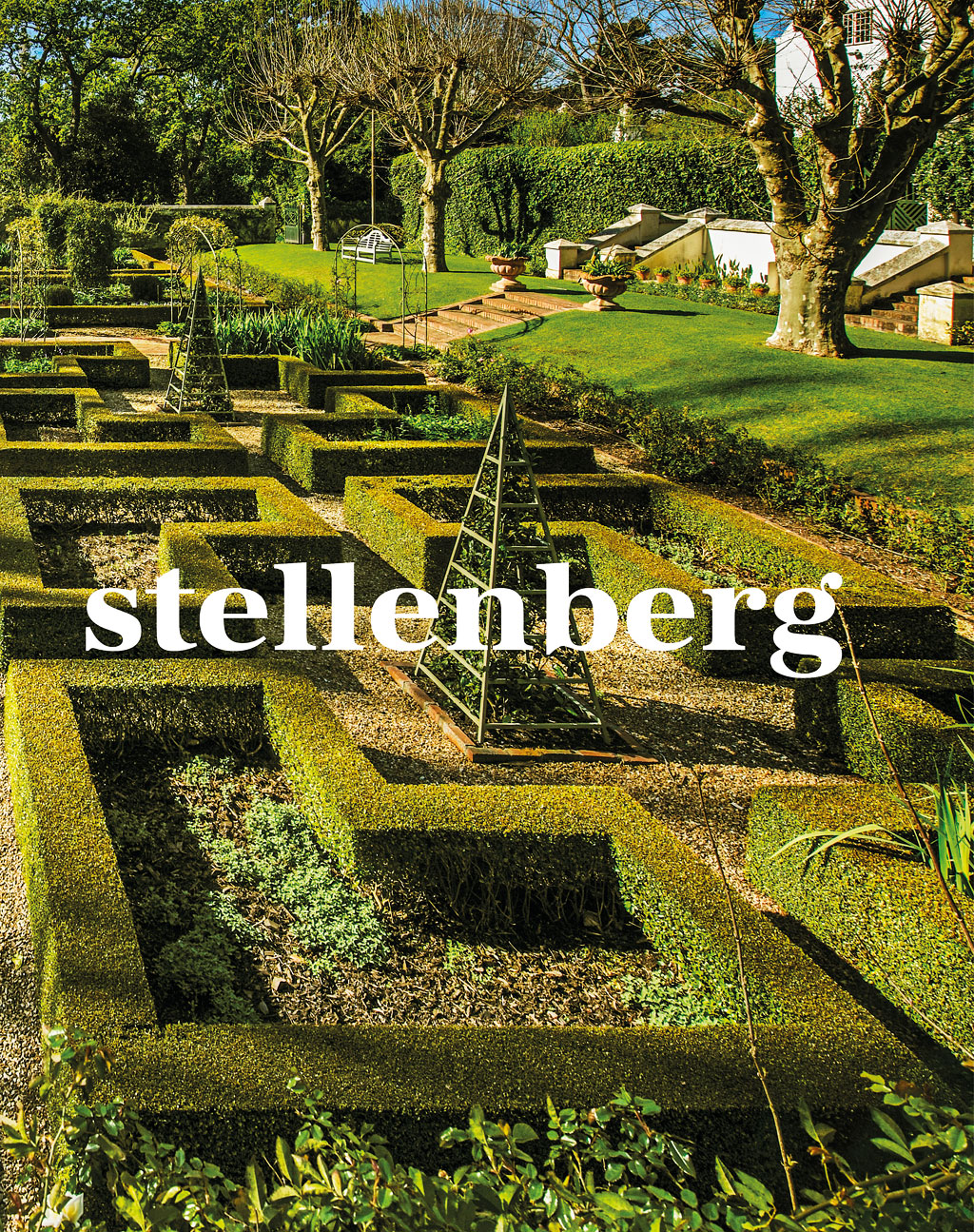
Kenilworth Landscape : Stellenberg Cover -

Kenilworth Landscape : In the herb garden, plantings in six triangular beds vary with the seasons.



PHOTOS Alain Proust WORDS Laurian Brown ILLUSTRATIONS Lyndy Ovenstone
The turnaround story of an old Cape Dutch homestead’s expansive grounds is told in Stellenberg (Quivertree Publications, R650), a book by Franchesca Watson Braisler, published by Quivertree. Owner Sandy Ovenstone shares her passion for garden design in an extract from the book.
During my early years at Stellenberg, I enjoyed the gardens as they had been for decades. Old illustrations of the estate before 1920 revealed that some landscaping had been done after that date to complement the many mature trees, extensive lawns, old walls and limewashed Cape benches. The hydrangeas were striking in summer and a wild wetland area, with abundant natural wells, gave the garden an agricultural feel, unusual in a built-up area.
In the mid-1980s, I became very interested in gardening; I also visited many wonderful gardens and met some of their designers. My imagination was fired by, among others, Russell Page, Vita Sackville-West and Lawrence Johnston. Yet I was nervous to start at Stellenberg on my own.
In 1987, Graham Viney completed his book Colonial Houses of South Africa, which included a chapter on Stellenberg. Interior designers Graham and Gary Searle suggested we create a small herb garden. It worked well and, from that, the gardens started their evolvement.
Stellenberg was classified as a national monument for its Cape Dutch architectural style, attracting many visitors. David Hicks, the renowned English interior and garden designer, was one whose genuine affection for the house and its surroundings was infectious. His friendship and advice was pivotal to my appreciation of scale and proportion.
June Commerell’s input on perennials and roses was invaluable to me, but as I became more oriented towards structure rather than colour, I turned to Franchesca Watson Braisler as a garden designer.
Our team, who works tirelessly in the gardens and nursery, is essential to our success.
The nursery
Opened daily to visitors since 1996, the nursery’s initial function was to dispose of the excess plants from seasonal replanting of perennials. Stellenberg’s species are produced from seeds or cuttings, or from division of the plants.
It is run by Doreen Dauberman and Aron Kewuti. Plants are nourished with liquid feeds and manure. The main pests are fungus and snails, with the odd rusts, scale and whitefly. As a private nursery, it is strong on English perennials and small numbers of special plants.
Sandy’s key gardening tips
- Understand the soil, its acidity or alkalinity, and the role of compost, mulching and feeding – spread liberally from spring to autumn.
- Think before felling a mature tree; replacement is a lengthy process.
- When designing a garden, consider its appearance through the seasons; accept the charm that each season brings.
- The marriage of hard and soft surfaces adjacent to buildings often influences the first impression of a garden.
- Small gardens require more attention to detail.
- The backbone of a garden is design; structure is provided by terracing, hedging and paths.
- Green is the most important colour; combine hedges in a structured way, with walkways in grass or stone and well-placed pots.
- Think before introducing water features and garden accessories.
- Plants that do not do well should be replaced.
- Choose plants for their form, foliage, colour and scent.
- Be prepared for disappointment. Accept the elements, brutal to gardens at times.
Sandy’s favourite Cape gardens
Apart from our national treasure, Kirstenbosch Botanical Gardens, the following have given me great pleasure:
- Rustenberg in Stellenbosch
- Babylonstoren in the Drakenstein Valley
- Fresh Woods in Elgin
- A magical small garden in Newlands created by Hank Lith.
For more information, visit stellenberggardens.co.za