-

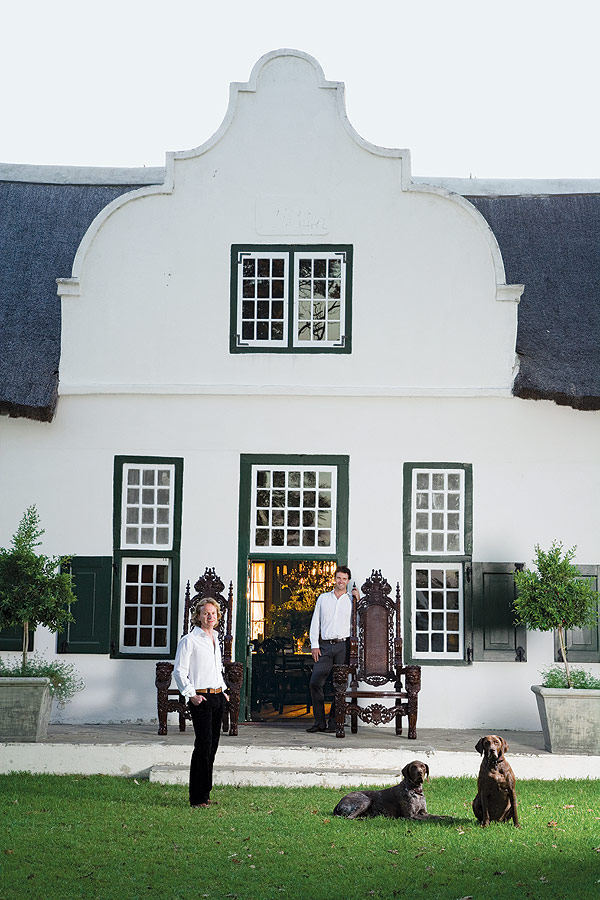
A home of great character : Here we are on the front stoep (Mark and our dogs, Max and Cosmo). the gable (apparently the fourth) is dated to 1810, although this part of the house is the oldest and dates from 1700. The tromp l'oeil upper windows are the only ones of their kind left. -
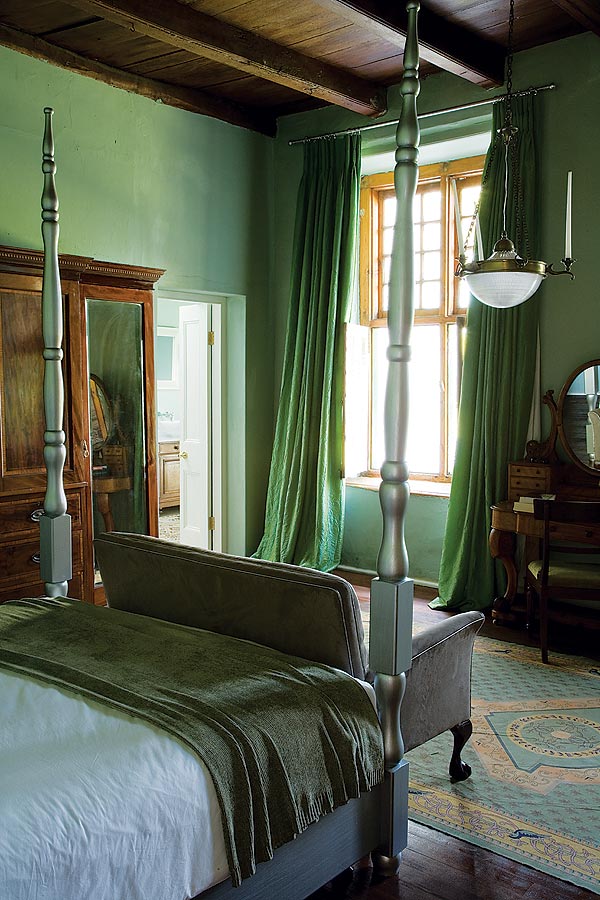
A home of great character : The house's original man bedroom overlooks the front lawn and has yellow-wood ceiling planks almost 1m wide. The sofa was bought at the roadside for R200 and re-upholstered in grey velvet with silver piping. I had the bed made locally and painted silver. -

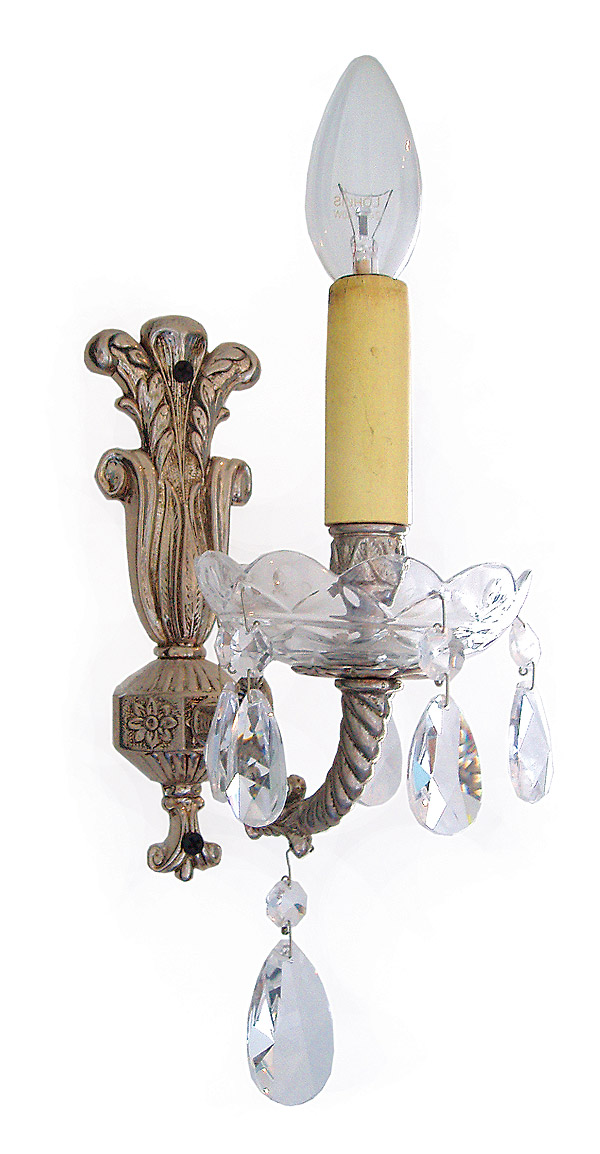
A home of great character : The silver wall light is one of a pair from Delos. -
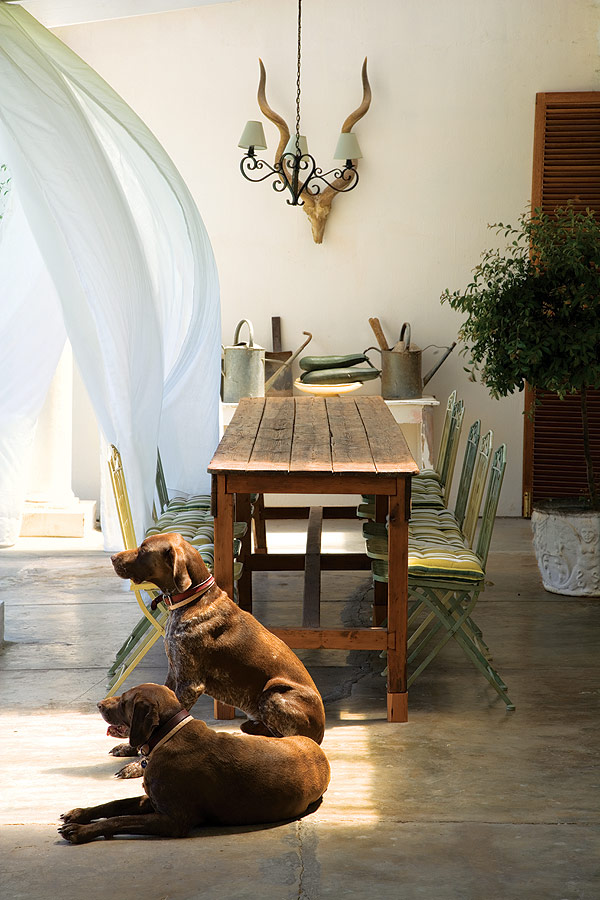
A home of great character : Max and Cosmo gazing at Table Mountain from the back stoep - we opened up a fantastic view by removing part of a hedge. The kudu horns and table were found in the paint shed. The long table remains from the time when tobacco was grown and rolled here. -
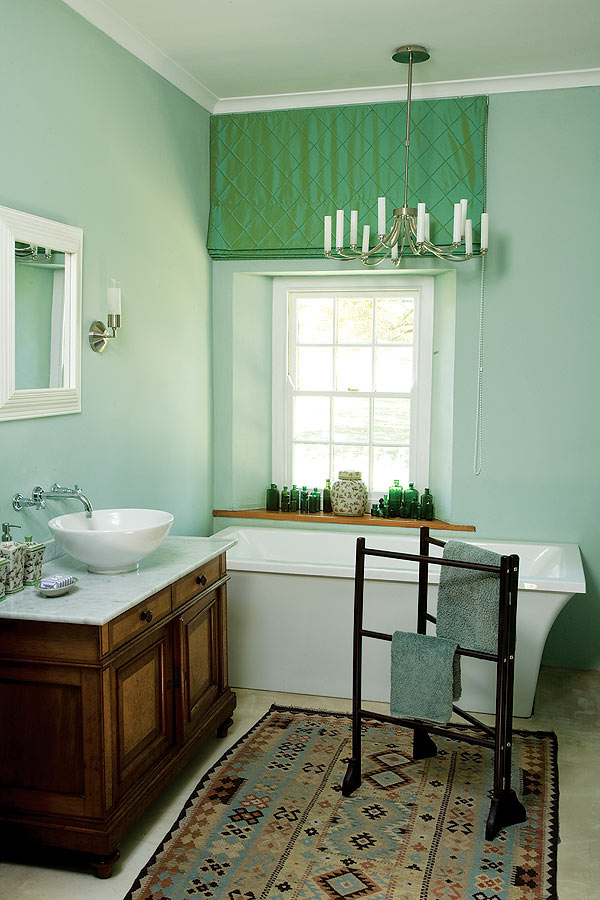
A home of great character : in the Green Bathroom I adapted an antique French birds-eye maple dresser to include a new porcelain sink and taps. As a child growing up in Hampshire, Mark collected the antique bottles on the windowsill from an old rubbish dump. -
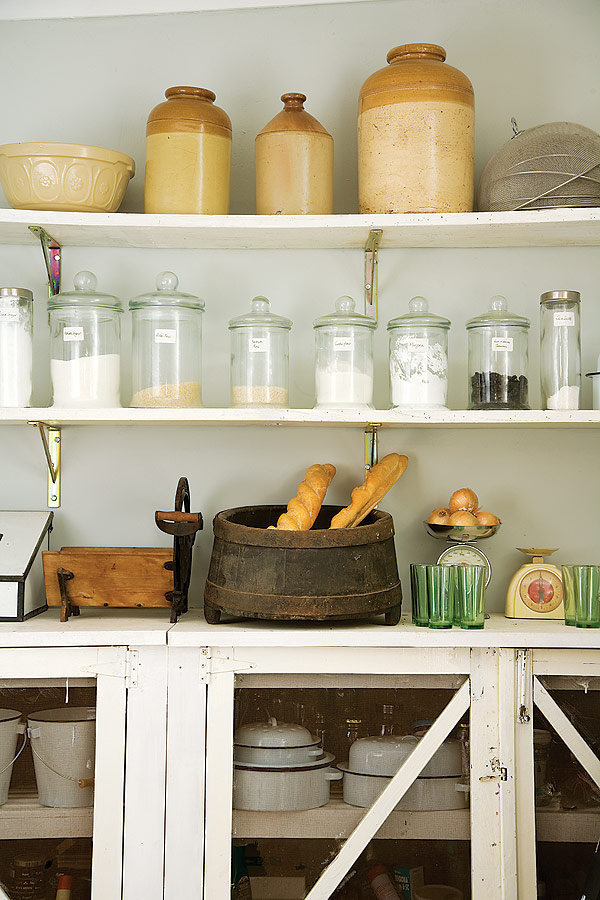
A home of great character : Everything in the pantry is recycled. The shelves and door were in the original pantry (now a passage), the old crocks on the top shelf were found under cobwebs in the celllar's attic, as were the bread slicer, the teegoedbalie and the bread tin. -
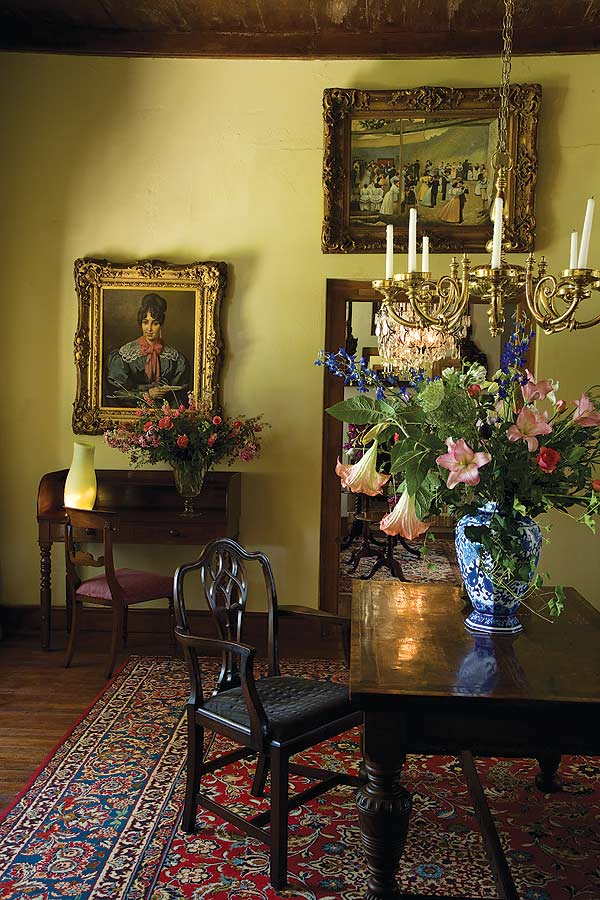
A home of great character : The wall and door of the voorkamer were removed in the 1950s. This made the area lopsided, so we decided to rebuild. By a strock of luck, I found the actual yellowood and teak door in the wine cellar. The portrait to the left was painted in Paris, 1872. -

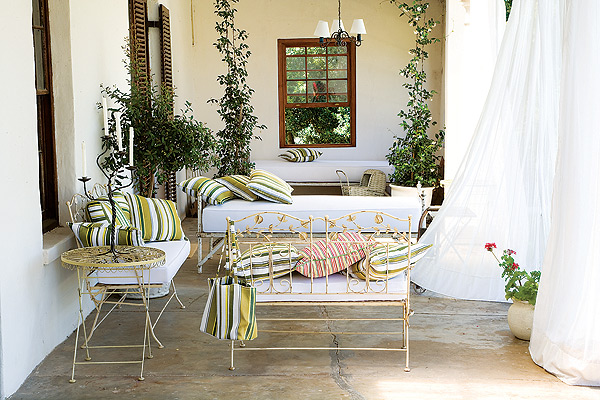
A home of great character : I found dozens of old metal bunk beds in the attic, two of which we now use on the back stoep as loungers. The toy pram is another attic treasure. -
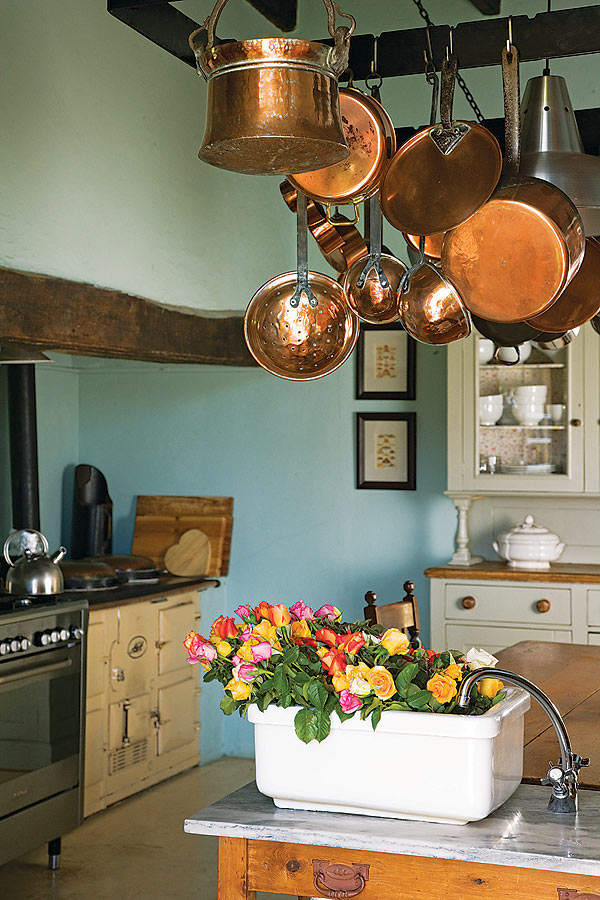
A home of great character : The Aga stove in the kitchen still works, and the table and dresser were made for the room generations ago. We often bang our heads on my collection of antique copperware hanging over the table. -
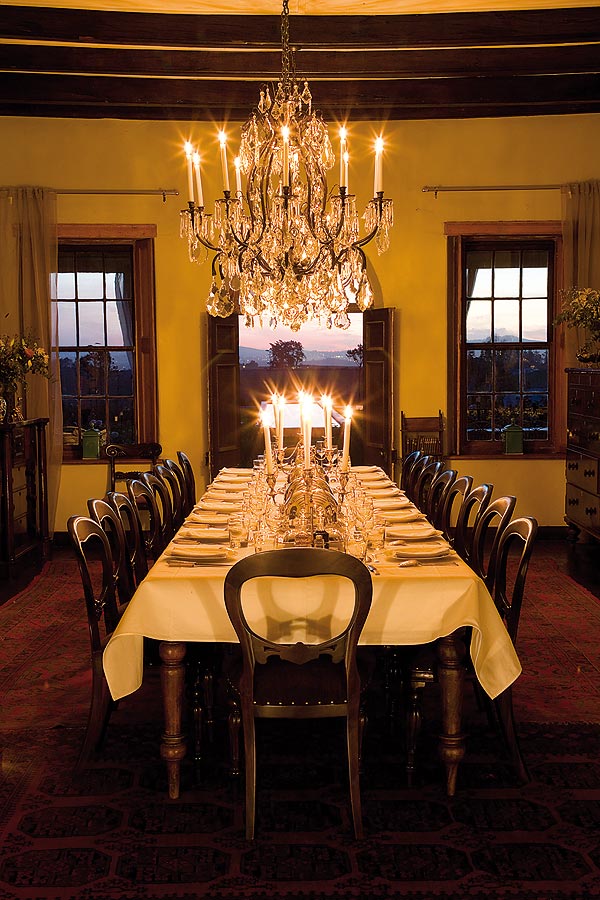
A home of great character : The dining room dressed for dinner. The french chandeliers have been wired with candles and small oven bulbs. Alan Lutge made the table out of old yellowwood floorboards and found the set of six legs, dating back to the 1800s among old woodwork.
PHOTOS: Dawie Verwey | PRODUCTION: Cornelia Badenhorst | WORDS: Simon Olding
Antiques dealer Simon Olding realised a childhood dream by renovating an 18th-century Cape-Dutch farmhouse near Stellenbosch.
Sprawling old houses have appealed to my imagination since I was a child – a love affair that developed as I learnt to read, for literature is filled with grand old piles that have themselves become characters in the novels they occupy.
Think of Satis House in Great Expectations, or Thornfield Hall from Jane Eyre: would these books have been quite as gripping if it weren’t for the constant presence of those grand structures?
As it happens, I am fortunate enough to have found my own Great House. Several years ago my partner, Mark Borrie, and I decided we’d spent enough time in cold, wet England and set about finding a farm in the Cape. I was determined to discover an unrestored Cape-Dutch farmhouse – something that turned out to be truly elusive.
After months of red herrings (estate agents take note: if a house was built in 1970, it is not Cape Dutch), we flew out from London for a weekend to view 16 farms. We had to repeat the same exercise three times before we finally found the right one: the many old trees on the werf offered the first sign that Matjieskuil was a beautiful place.
After lengthy negotiations, and then waiting for the owners’ last harvest to pass, the farm finally became ours. We moved into a completely empty house, which, after the removal of all the antique furniture, now appeared 20 times larger than we had originally thought. It also became clear how much work needed to be done to the fabric of the building.
We were left with an H-shaped Cape-Dutch house that had been extended in several directions by successive generations. The bathrooms were miles from the bedrooms, there were no utility rooms, damp was racing up the walls and the thatched roof was full of holes. Needless to say, the architect Jan Desseyn, who is an old friend of ours, was leaping up and down with excitement.
The first to go was the front stoep. Victorian photographs showed a verandah edged in cast-iron ‘broekie lace’ that ran across the façade, but at some stage it had been replaced by pre-cast concrete columns, which completely obscured the gable and left the front of the house in darkness. The only way to remove it was to attach chains to a tractor, which then roared off in the opposite direction. The whole thing crashed onto the lawn and left a crater we can still see today.
The perfect place
After this spectacular start we could finally see the original façade and work out how to make the myriad extensions to the sides of the house appear symmetrical. We extended one of the stoepkamers onto the front of the stoep, allowing us to rebuild the long-demolished stoepbankies and creating the space for two en-suite bathrooms.
Next was the kitchen, which is situated in the back leg of the H-shape and, along with one of the bedrooms and the dining room, opens onto the rear stoep. The adjacent lean-to laundries and bathrooms were converted into a scullery, laundry and pantry. We restored the old Aga stove and replaced the hideous steel-framed window with a copy of the original Regency door that occupies the stoep entrance to the opposite bedroom.
I don’t like built-in anything, so there are no standard units in the kitchen or bathrooms. I scoured junk shops for old washstands and tables without tops that could be remodelled as sinks. The baths are all different and the bathrooms contain mostly freestanding furniture.
When it came to decorating the house I soon realised that we could not afford to buy local antiques, so when next in England I set about trawling auctions until I thought I had enough, but I was nowhere near correct. More buying trips ensued and I eventually decided to start a small antiques business. Each year I fill a container, ship it here and sell the furniture from the farm – the house is the perfect place to display the pieces.
Gypsy-like lifestyle
As for the soft furnishings, I wanted to prevent the house from looking too much like a museum and decided this was the one area where I could introduce contemporary elements. I bought several lounge suites from junk shops and had them re-covered in funky fabrics. The lamps are also completely inconsistent with the rest of the house but these touches complement, rather than detract from, the original character of the place.
The house is magnificent by candlelight, and I have to boast that I have never seen a dining room quite as beautiful as ours when it is set for a formal dinner with white linen – silver and crystal glittering beneath the enormous glass candle chandeliers.
After three years we finally realised that our gypsy-like lifestyle was not really allowing the house to be used properly, so we made the decision to open a guesthouse – Hawksmoor House. This compelled me to finish work on the house and focus my energy on the rest of the farm.
The previous owner had left us a magnificent garden but, shamefully, we had allowed it to become terribly neglected. I am therefore currently restoring and extending it to include a walled vegetable garden and a reflecting pond. We also plan to restore the wine cellar for use as a functions venue and want to convert the Slave Lodge and dairy complex into extra rooms. Mark and I will move into a lovely old barn that we found completely forgotten and dilapidated right on the edge of the werf.
I really do believe that this farmstead, like the houses in the novels I mentioned earlier, has a distinctive character and personality of its own, and I invite anyone who is interested to come and experience this for themselves.
• Hawksmoor House (guesthouse, wines and antiques): 021 884 4815, www.hawksmoor.co.za