-

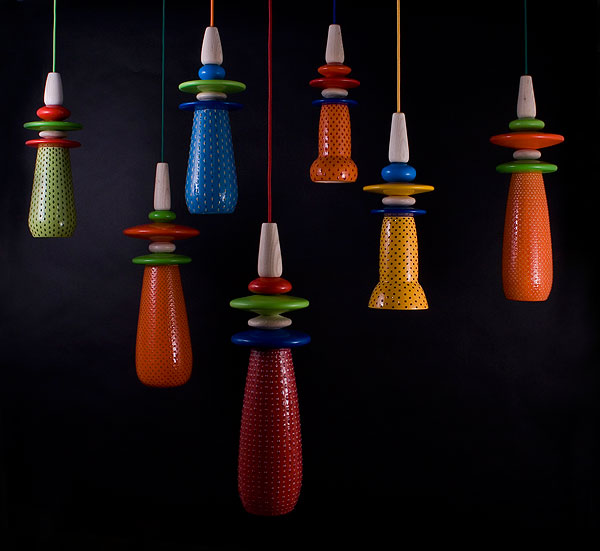
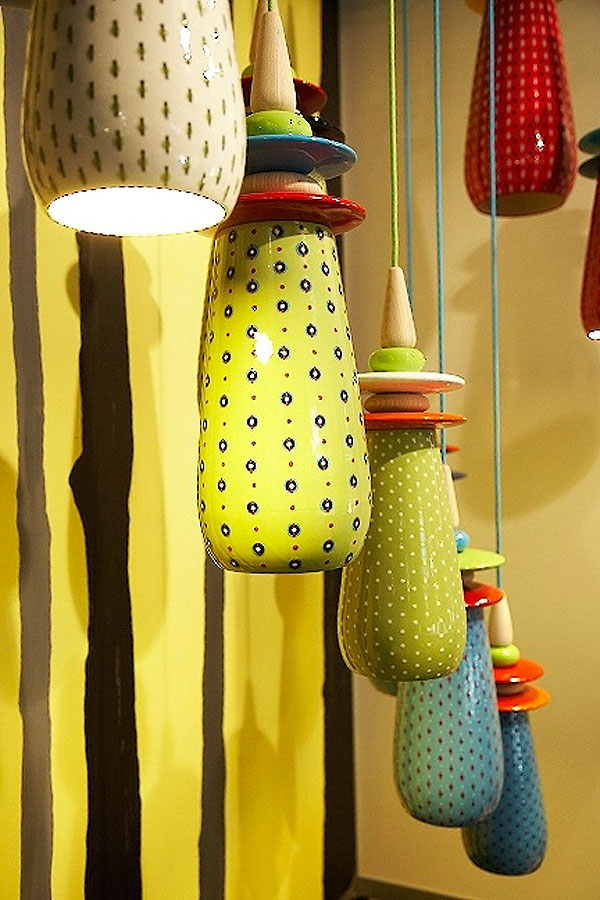
A bright idea : The Forbidden Fruit lamps caused quite a stir at the 2011 Design Indaba Expo. -

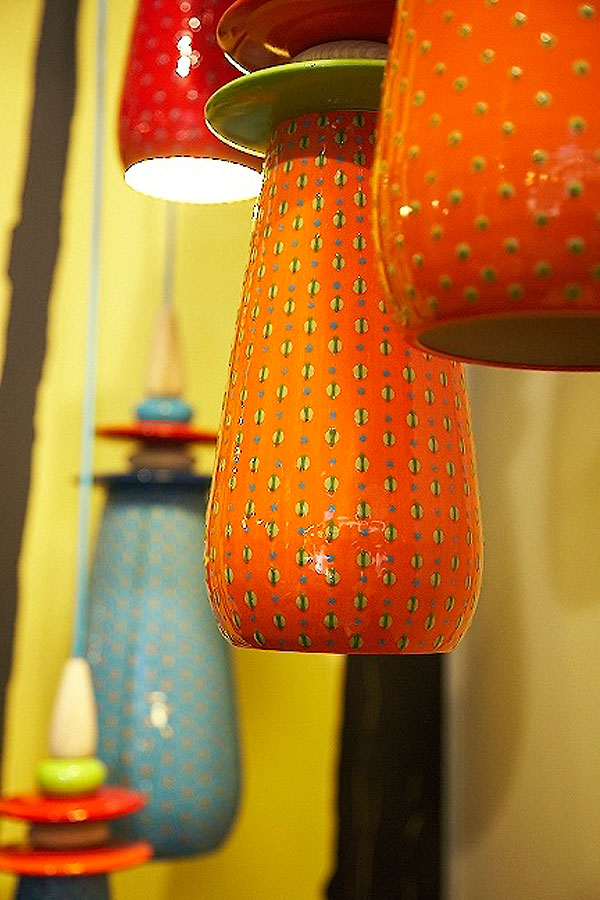
A bright idea : Rich colour and texture was inspired by the abundance of colour that surrounded the designers while they were in South Africa. -
A bright idea : The sizes of the varying lamps were dictated by the limited mould sizes at The Potter's Workshop.
PHOTOS: Diaan de Beer | WORDS: Remy Raitt
The bright colours and exotic shapes of the Forbidden Fruit pendant lights launched at Design Indaba 2011 certainly tempted more than a few shoppers to reach into their wallets.
The result of a collaborative project between The Potter’s Workshop in Muizenberg and Swedish designers Mattias Rask and Tor Palm of Glimpt, the unusual lights formed part of the commendable ceramics exhibition at this year’s show.
Like glowing globules inspired by South Africa’s cultural richness, this collaboration gave the Swedish designers a chance to tap into their inner African by scaling down and simplifying.
According to Mattias, the final products reminded the designers of poisonous fruit. Hanging from the flex, they looked out of reach – hence the use of the word “forbidden” in the name.
Inspired by colours and patterns
The Swedish design duo chose to collaborate with South African ceramic artists as part of their final-year project for the Carl Malmsten furniture school in Stockholm, and spent some time here in 2010.
The abundance of colours and patterns at their temporary studio at The Potter’s Workshop served as inspiration for the unusual lights, while the combination of materials was something they’ve explored before. “We like to combine materials and knew that we were going to work with wood and ceramics, therefore the combination arose,” Mattias notes.
The wooden disks, or “pearls”, that sit above the ceramic shades are reminiscent of children’s toys, while the ceramic elements themselves were inspired by the repetitive patterns seen in the work of some of the artists at The Potter’s Workshop.
Positive response
Despite time and financial constraints, the response at the 2011 Design Indaba Expo was overwhelmingly positive. According to Mattias, this was mainly due to the novelty of the design, which left people guessing as to what the objects were and what they were made from.
Although the two designers didn’t have much time to investigate the local ceramic scene on their previous visit to South Africa, they were able to see a variety of work at the recent Expo, which Mattias describes as a healthy mix of contemporary, classic and traditionally African designs.
The Swedish designer personally thinks some of our ceramic work could do with a reinvention, noting that South Africa is a country of beauty and contradictions – a melting pot that has the potential for great things.
See www.glipmt.se or www.potterworkshop.co.za for more information, or contact studio@glimpt.se or potworkshop@mweb.co.za.