-

Finally, a design museum for Africa : MOAD has been announced under construction with the “10 Years on Air” exhibition by Hobbs/ Neustetter that will run every evening from 7pm — 10pm until the end of May. -

Finally, a design museum for Africa : MOAD has been announced under construction with the “10 Years on Air” exhibition by Hobbs/ Neustetter that will run every evening from 7pm — 10pm until the end of May. -
Finally, a design museum for Africa : MOAD has been announced under construction with the “10 Years on Air” exhibition by Hobbs/ Neustetter that will run every evening from 7pm — 10pm until the end of May. -
Finally, a design museum for Africa : MOAD has been announced under construction with the “10 Years on Air” exhibition by Hobbs/ Neustetter that will run every evening from 7pm — 10pm until the end of May. -
Finally, a design museum for Africa : MOAD has been announced under construction with the “10 Years on Air” exhibition by Hobbs/ Neustetter that will run every evening from 7pm — 10pm until the end of May. -
Finally, a design museum for Africa : MOAD has been announced under construction with the “10 Years on Air” exhibition by Hobbs/ Neustetter that will run every evening from 7pm — 10pm until the end of May. -
Finally, a design museum for Africa : MOAD has been announced under construction with the “10 Years on Air” exhibition by Hobbs/ Neustetter that will run every evening from 7pm — 10pm until the end of May.
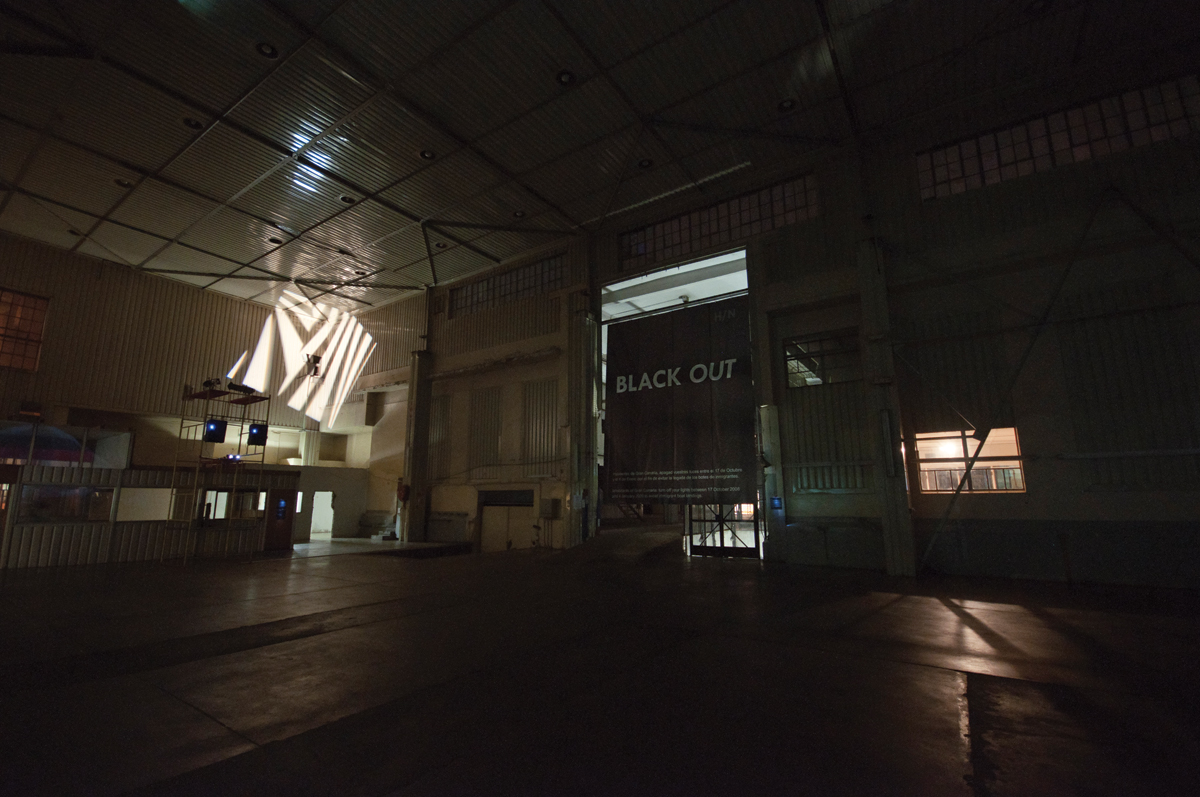
Few property developers can claim to have had as much impact on the DNA of modern Johannesburg as Jonathan Liebmann. Not yet thirty, this young dynamo has overseen the creation of an entire inner-city precinct, and in the process established a veritable creative empire in an area of Johannesburg once regarded as a no-go-zone. The latest exciting addition to the Maboneng Precinct is the Museum of African Design (MOAD), a development we’re greatly anticipating.
During the construction of Arts on Main in 2009, Jonathan began to imagine a much broader vision: the transformation of the entire area around Arts on Main into a fully integrated, mixed-use community and a comprehensive and mixed-income residential offering. Main Street Life, 12 Decades Hotel, Revolution House, The Main Change and Fox Street Studios came next – all well-designed and unique mixed-use spaces fostering entrepreneurship, culture, urbanism, creative expression and design.
Today Maboneng (which means ‘place of light’ in Sotho) pulses with activity, magnetising not only artists and designers, but fomenting a larger community enthralled with the idea of doing things differently, and reclaiming prime tracts of the inner city for work, play and creative expression. If one considers cities that have undergone massive urban regeneration – London, New York, Berlin – their revival was invariably catalyzed by the creative community trailblazing new modes of urban existence. Based on the exponential economic ripple effect that developments in Maboneng have had on Joburg’s inner city, it seems as though the lateral thinkers have already begun sowing the seeds for a New Johannesburg.
Jonathan admits that his alliances with some of the city’s most creative individuals over the last three years have definitely shaped his outlook on property development, and inspired his enterprise. One noteworthy collaborator is Marcus Neustetter who, along with partner Stephen Hobbs, operates the multifarious Trinity Sessions studio. Marcus and Jonathan redesigned one of the rooms in the themed 12 Decades Hotel, exploring the impact that the Vredefort meteor strike and the subsequent rising of gold to the surface has had on the development of Johannesburg. Fittingly, they worked on the ‘1886-1896’ room, the first decade in Johannesburg’s history.
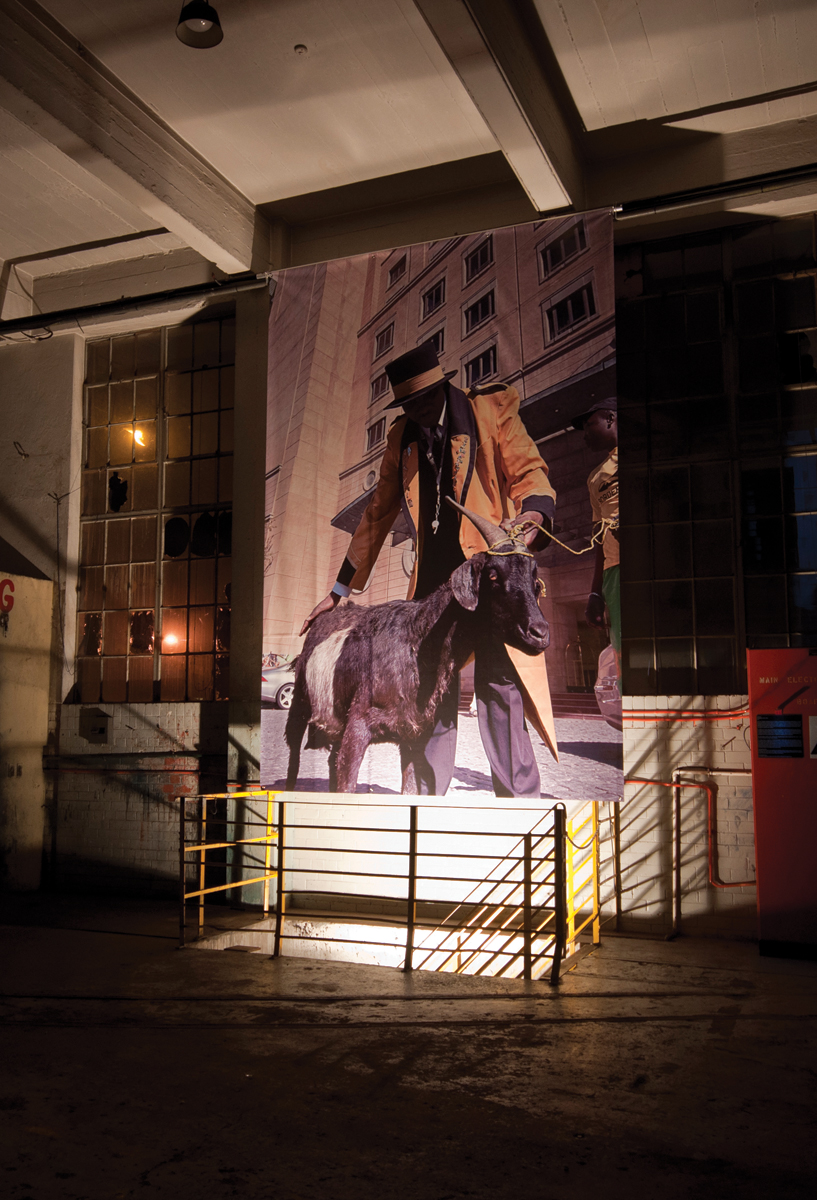
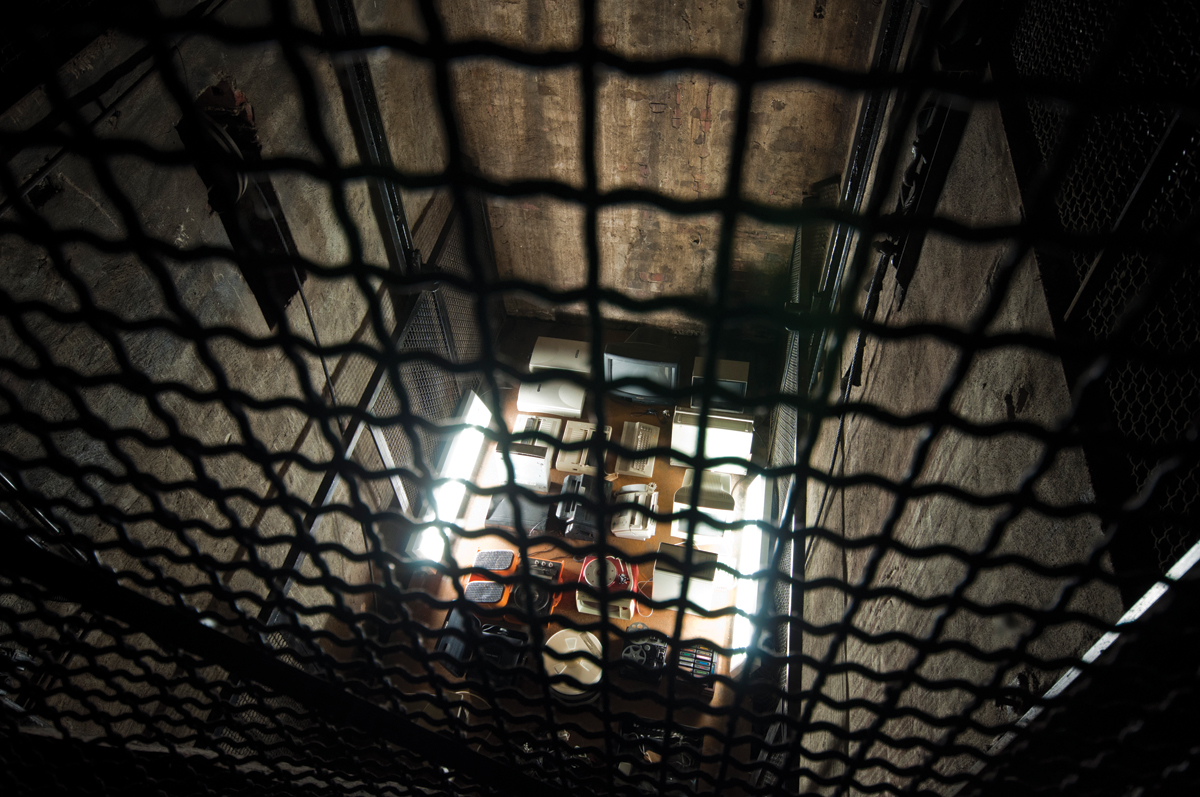
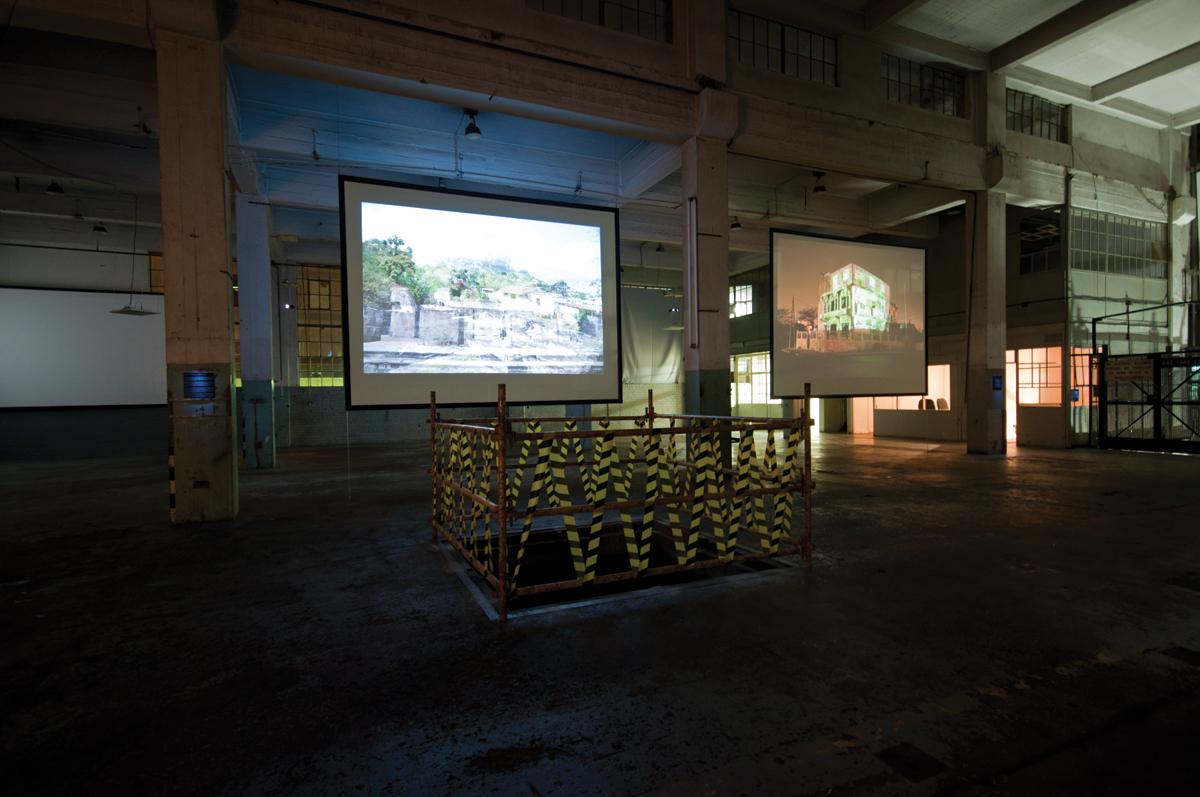
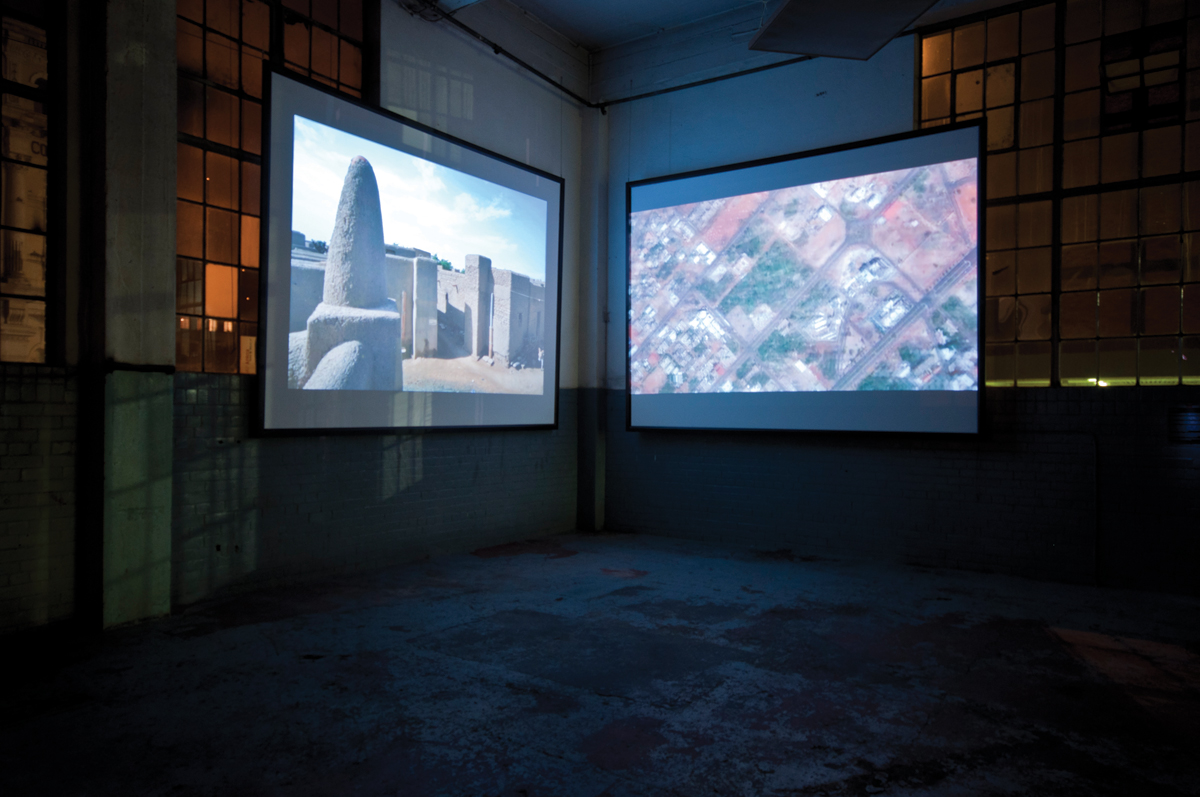
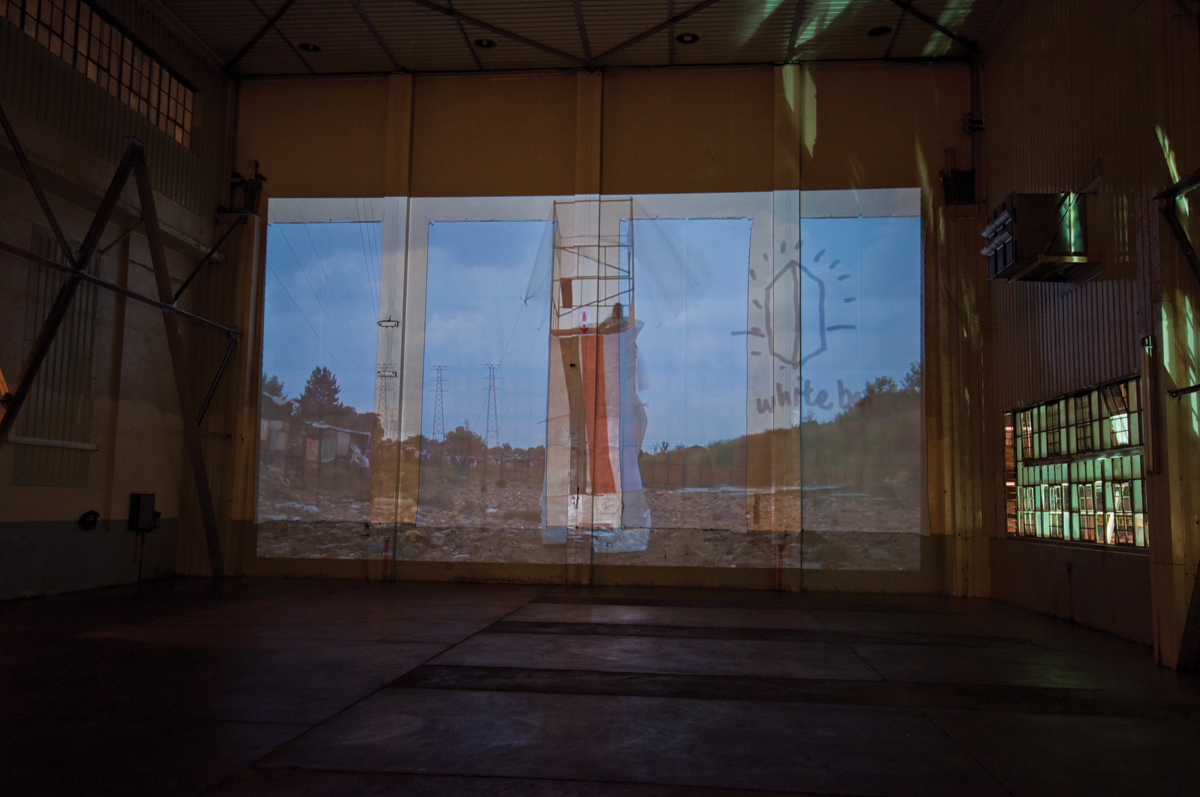
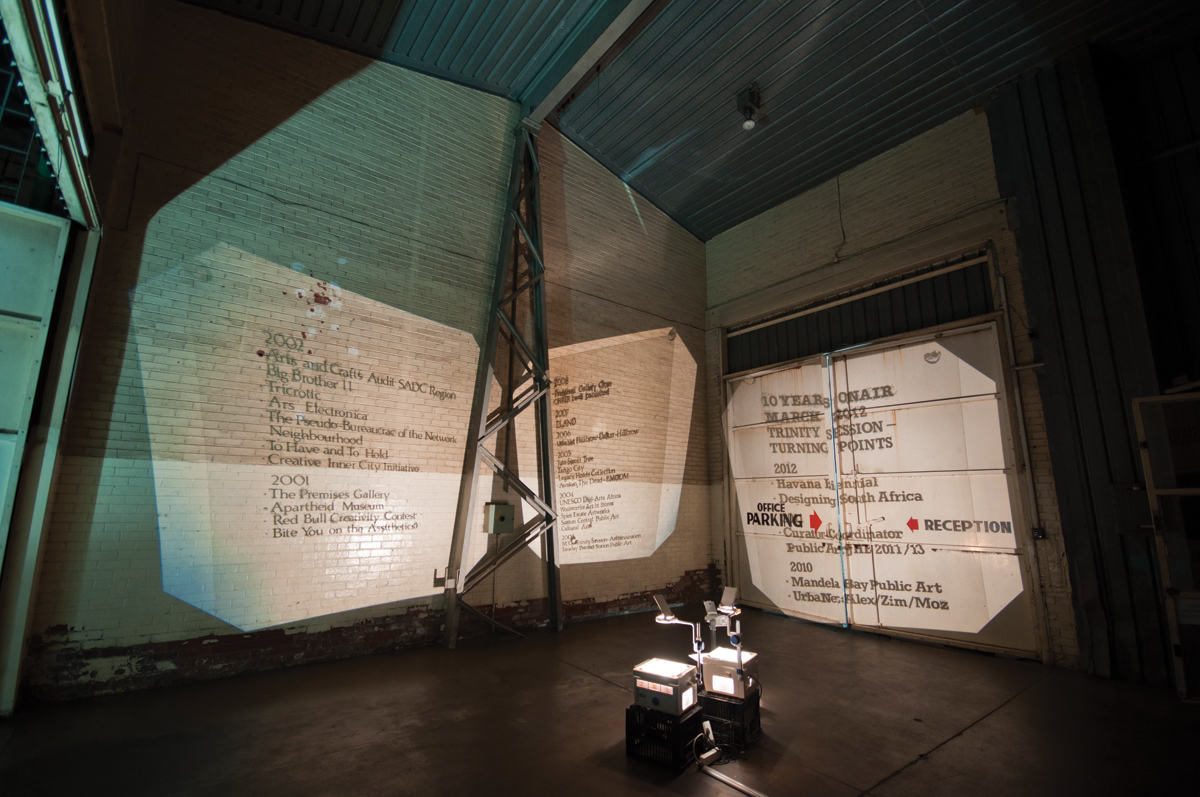
It seemed appropriate then that the Trinity Sessions have inaugurated the latest jewel in the Maboneng crown with a retrospective exhibition of unprecedented scale. Stephen Hobbs and Marcus Neustetter have extended an investigation into social and electronic networks and varied urban terrains. As much of their work is experiential and ephemeral in form, the unique venue currently plays host to an exhibition made up of light. Video, photography, mind maps and artifacts from a dense archive of research will be transformed onto large projection surfaces.
Strolling through the cavernous labyrinth on Commissioner Street (developed from a factory warehouse built in the 1920′s) is exciting to say the least. The space – 1500 SQm, with 15m high ceilings – seems to possess infinite potential, and Jonathan Lieberman knows this full well. His plan for MOAD is to keep the space largely as it is: raw, spacious, modular, imperfect. Challenging tired, conventional perceptions of a museum, the idea is to retain the essential concept (a monumental public space dedicated to preserving artistic heritage and fostering development), but re-invigorating this centuries-old construct with ideas that will make it relevant and exciting. Events and parties at MOAD will be curated to the theme of the current exhibition, and the building’s basement will be converted into a club to host these and other independent events. The museum will be functional too, with ground floor retail and on-site workshop space for artist/artisan collaboration.
The emphasis on artisan culture is what really differentiates the MOAD concept, promoting and showcasing one of Africa’s most under-utilised resources. Jonathan reminds me that this will be the first museum dedicated to African design on the continent, a staggering reminder in light of the abundance of design to have originated from the world’s artistic cradle. Better late than never, I suppose.
Adjoining MOAD will be another of Jonathan’s new developments – that’s right, the snowball just continues to roll. Artisan Lofts will be a hybrid residential concept with north facing double story penthouses on the top two floors including rooftop gardens. The two floors below will include 75 SQm open plan lofts with balconies offering unparalleled views of city. The first floor of the building will house the Artisan Res where local and international artisans will be accommodated and encouraged to collaborate with Maboneng artists in the artisan factory space that will be facilitated by the Trinity Sessions.
Despite his obvious passion for the city of Johannesburg, Jonathan isn’t one to miss an opportunity and, with 2014 approaching, he is also setting up a much-needed pipeline between Maboneng and the imminent World Design Capital. In due course, an exchange program between the Maboneng Precinct and the Woodstock Industrial Centre (Cape Town’s artistic jugular) will be established, facilitating the holistic evolution of South African design.
We’re immensely excited with these developments, and think Jonathan’s passion and vision ought to be applauded.
The Trinity Sessions’ “10 Years on Air” exhibition by Hobbs/ Neustetter is currently running every evening from 7pm – 10pm until the end of May, a perfect opportunity to take a peek at what will soon become a massively significant fixture in the design world. MOAD is scheduled to officially open with an exhibition of PanAfrican design, presented by PACE & Maboneng, in November 2012.
More information: www.mabonengprecinct.com