-

Playfulness on a pedestal -
Playfulness on a pedestal -
Playfulness on a pedestal -
Playfulness on a pedestal -
Playfulness on a pedestal -
Playfulness on a pedestal -
Playfulness on a pedestal -
Playfulness on a pedestal -
Playfulness on a pedestal
PHOTOS: Dook | PRODUCTION: Annemarie Meintjes | WORDS: Yvonne Beyers
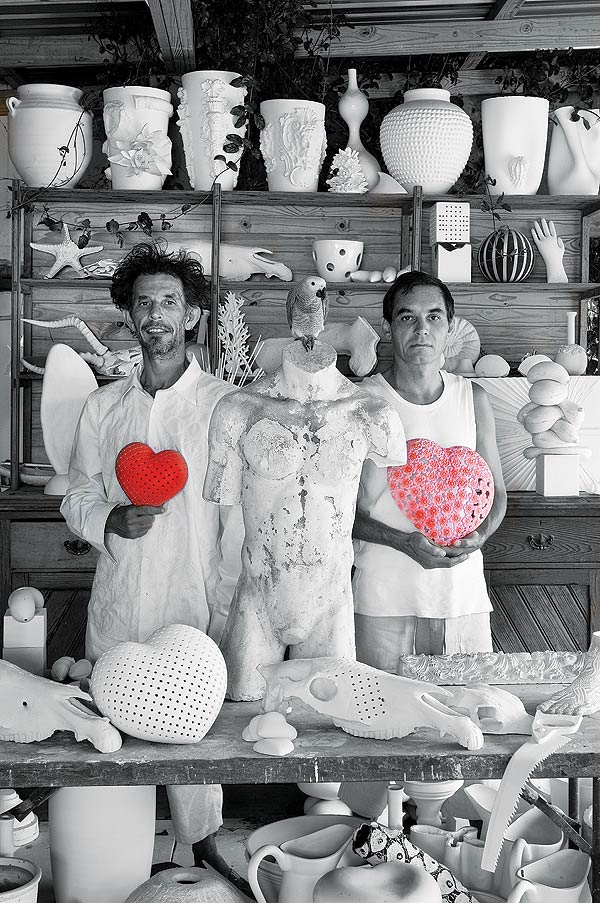
Gerhard Swart and Anthony Harris have created a ceramics wonderland at their Johannesburg home, where their creations for Ceramic Matters pay homage to the design of life.
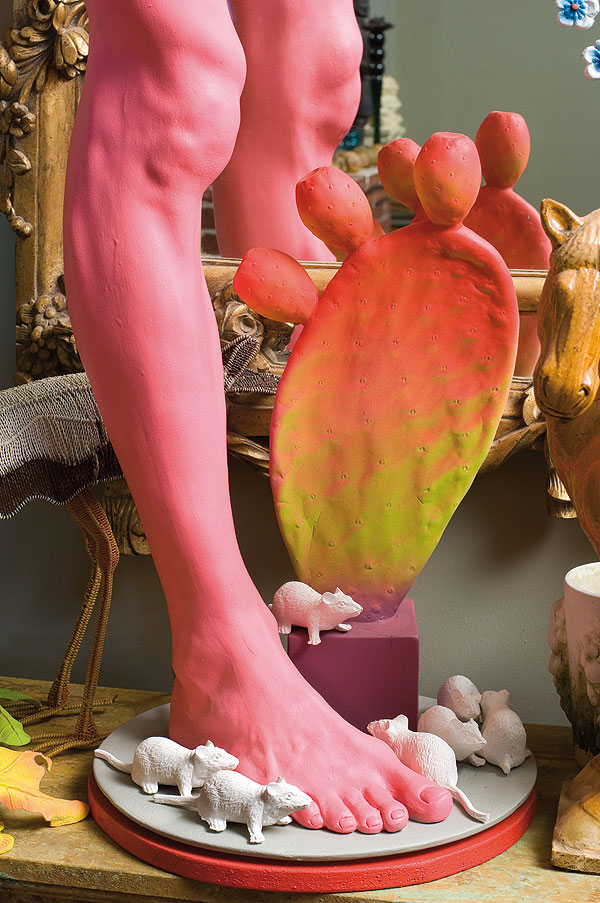
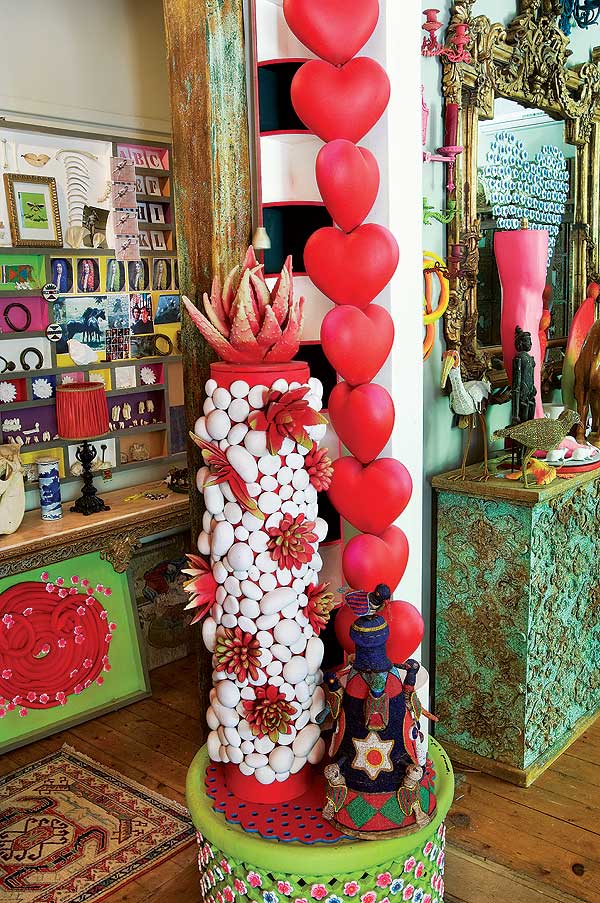
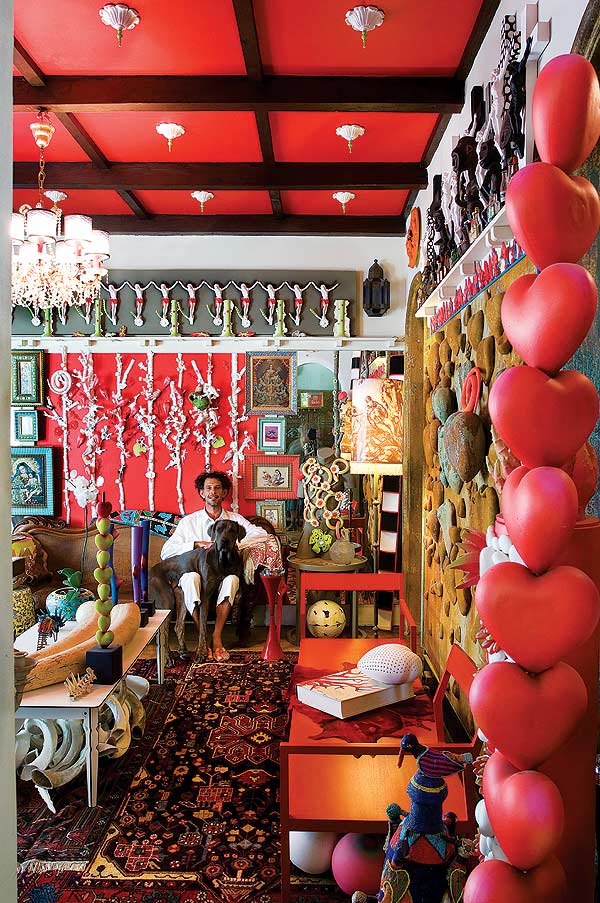
In the showroom they call home, ceramic artists Gerhard Swart and Anthony Harris have created a theatre of the imagination where symbols are staged in playful irony. A snake glazed in red curls on a white, perforated heart; a lampshade made of x-rays lights up to throw the shadow of a spine across the floor; ceramic mice huddle alongside the toes of a leg painted in pink.
Even a die-hard minimalist would struggle to deny the delight one experiences when faced with such fearless creativity. Small wonder, then, that Gerhard and Anthony recently received the first VISI Designer of the Year award for the works of art created under the label of their brainchild, Ceramic Matters.
Ceramics, they say, no longer belong to the world of cups and saucers – so much more can be done with the medium that has longed for liberation from the kitchen cupboard for so many centuries.
‘Most people are stuck on the technicalities of ceramics,’ Anthony explains. ‘We don’t worry about these restrictions. We’ve simplified the process and abstracted ideas from nature to put them on pedestals.’
‘Very often,’ Gerhard adds, ‘People don’t see the beauty of the natural elements that surround them. It is only once one presents it, that it is noticed.’
Intricate design and simple beauty
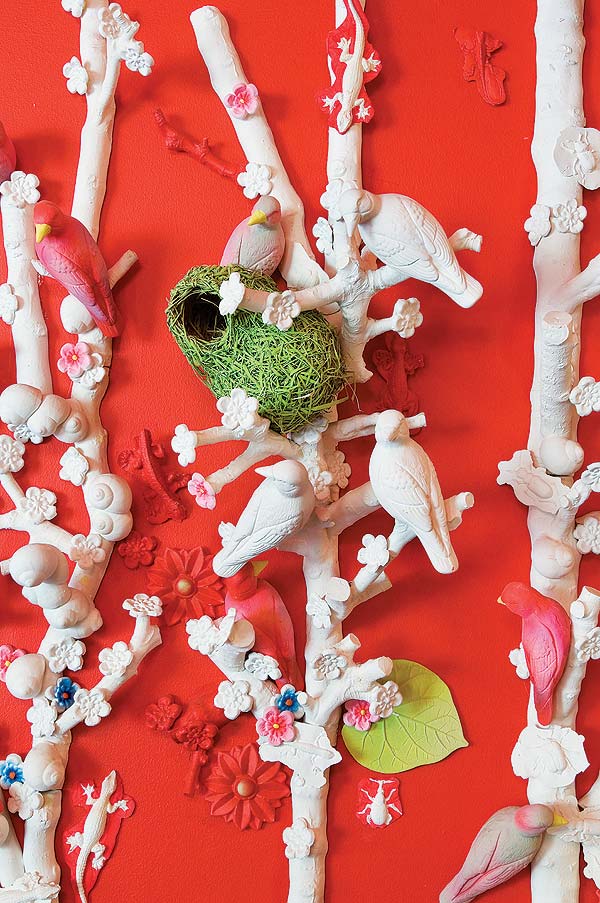
In their home, the intricate design and simple beauty of the natural world indeed comes to life, albeit moulded and captured in ceramic form. A red wall is covered in finely formed twigs where minute birds, snakes, beetles and geckos nestle among the flowers and leaves. Things that so often frighten us suddenly become harmless and playful when dabbed in bright paint: a luminous green python accessorises an otherwise drab torso and a purple scorpion scuttles across the coffee table.
‘Even though we draw on what is sometimes seen as scary or sacred, our work isn’t threatening or offensive,’ Gerhard says. This assertion is accentuated by a row of tiny sculptures of Jesus that grace a wall in the living room. One cannot help but smile at the little figures, who no longer seem to hang from the cross but now hold hands as if they are dancing dolls cut from paper.
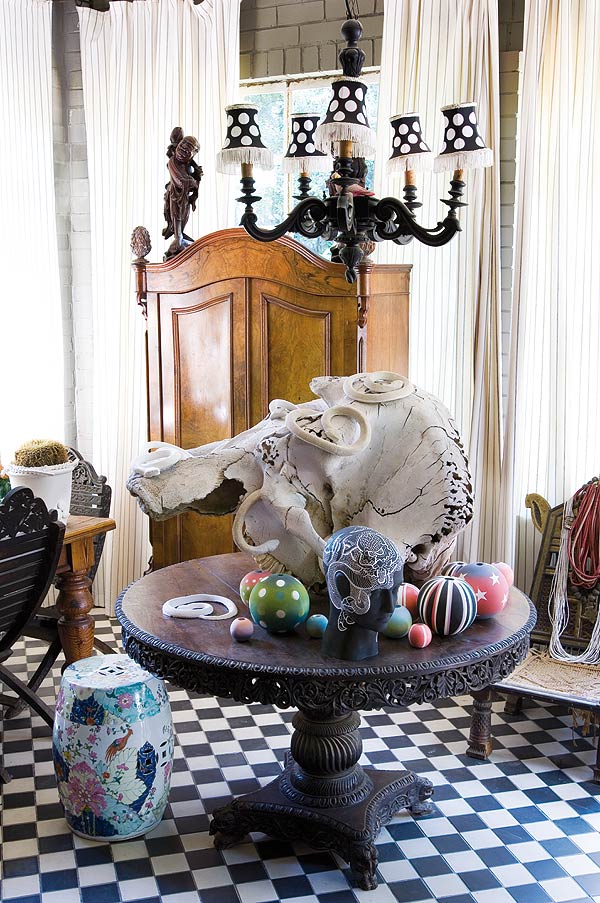
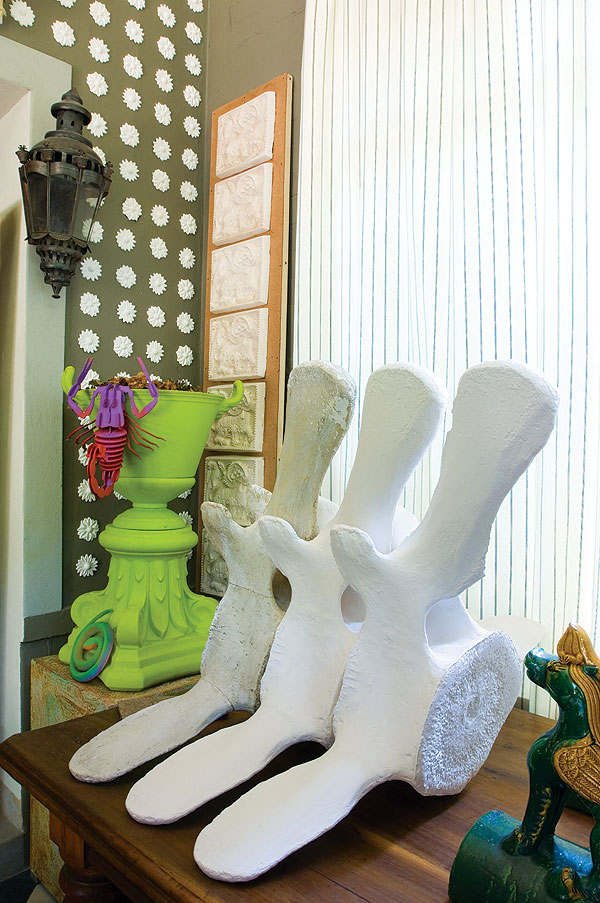
The ceramicists, who met almost 30 years ago when they studied together at art college, tend to draw on found objects when conceptualising new work. Very often, the original is replicated in ceramic form to both emphasise and enhance it: in the entrance hall, the interplay between a vertebra and its imitations recreates the reality of life. Elsewhere, a stack of ceramic kudu horns (their signature piece) pays homage to the original.
Gerhard and Anthony have recently turned their hands towards the human body and brightly painted ligaments and feet hint at their newest inspiration: ‘the reality of being human’.
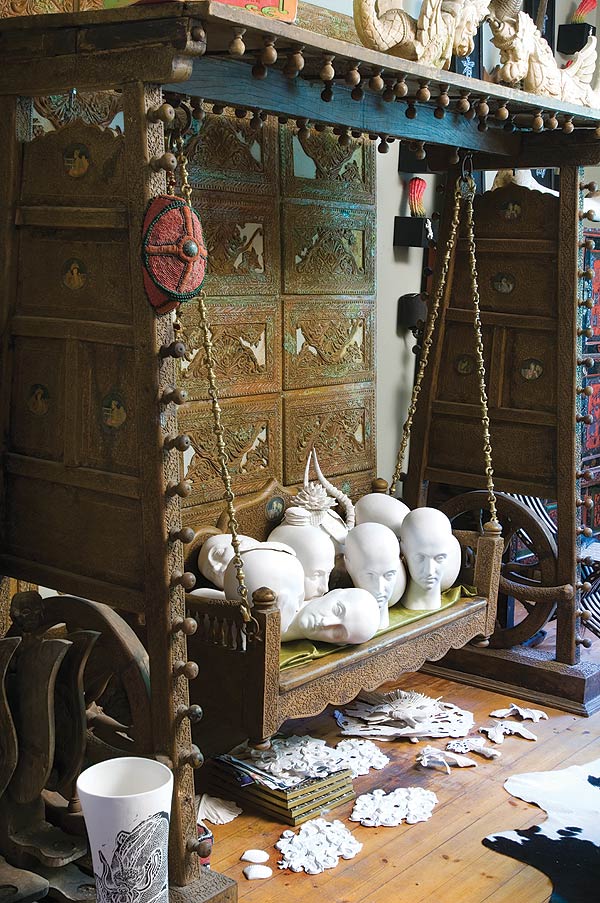
In the dining room, unglazed heads nestle on a swing chair and in the living room, squashed ceramic hearts – the birthplace of desire and aversion – cover a wall.
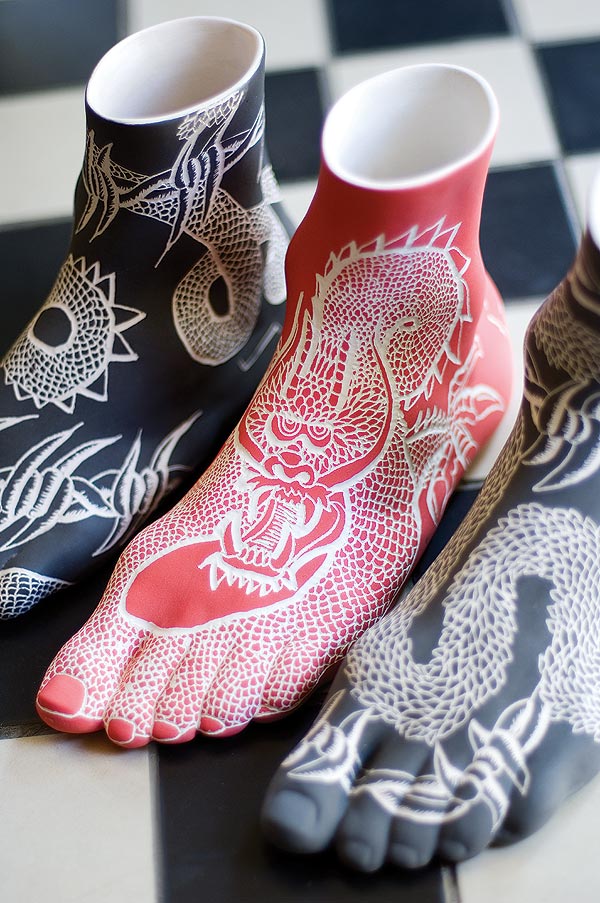
‘We’re also interested in the way people decorate themselves. For instance, take these feet and heads covered in tattoos,’ Gerhard says as he points towards three feet decorated in an intricate pattern. He holds out a heart that bears a ribbon and a skull: ‘The softness and vulnerability of the flesh is contrasted with the detail of the adornments.’ He grins as he pats the ceramic skull of an animal, which is pierced with so many glass beads that it becomes the epitome of bling.
Collaboration between classical and modern
The designers believe that interiors should show off and incorporate all things sentimental. An elaborate printer’s tray covers the wall of a passage where photographs and prints, souvenirs from their travels and trinkets from their past create a collection of memories.
‘Design is the transformation of mental thought into 3D presentation. It is a new representation of past, present and future,’ Anthony says. ‘It is the metamorphosis of form into something that has both purpose and aesthetic value.’
But, Gerhard, adds, ‘How does one define function? Function might be something that is simply beautiful. Or, it could simply refer to personal relevance.’
Both ceramicists pride themselves on being advocates of design that steers away from elitism. ‘Anyone can relate to our work,’ Gerhard explains, ‘It is playful and accessible.’
‘Our work is a collaboration between the classical and the modern,’ Anthony elaborates. ‘That is what initially drew us to this house – we loved its pressed ceilings and classical features.’
Although the artists insist that they have ‘simplified the spaces’ of their home, it has become a magical museum dedicated to their art and a shrine to everything they deem special.
• Ceramic Matters: 011 447 9688, ceramicm@mweb.co.za