-

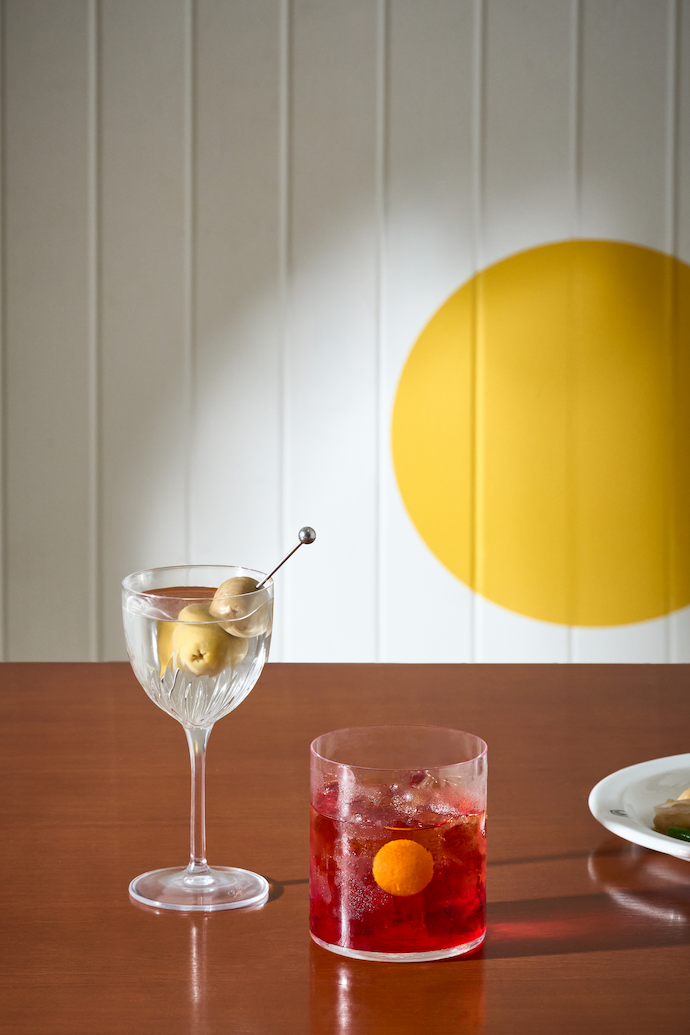
Cafe Sofi Polka Dots: Classic Martini and Classic Negroni -

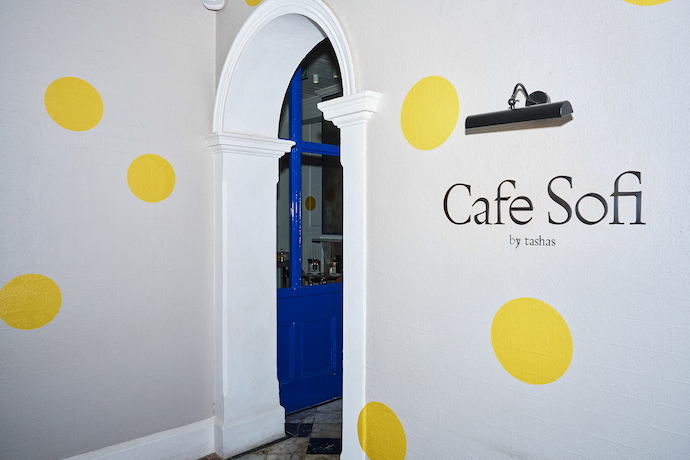
Cafe Sofi Polka Dot: Interior -
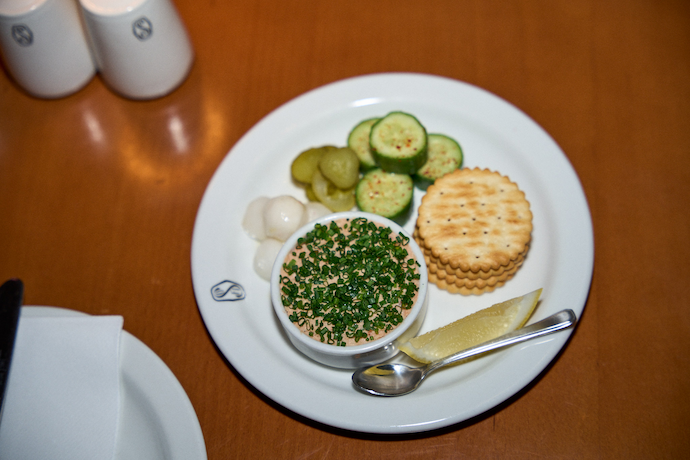
Cafe Sofi Polka Dot: Salmon Pate -
Cafe Sofi Polka Dot: Classic Martini and Classic Negroni -
Cafe Sofi Polka Dot: Gabi Mutu
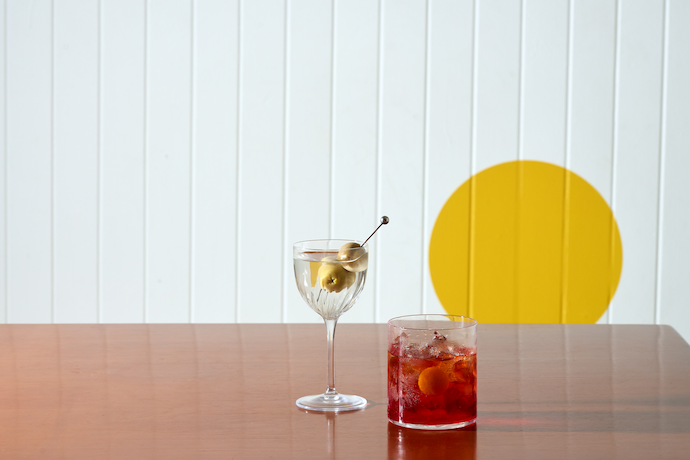
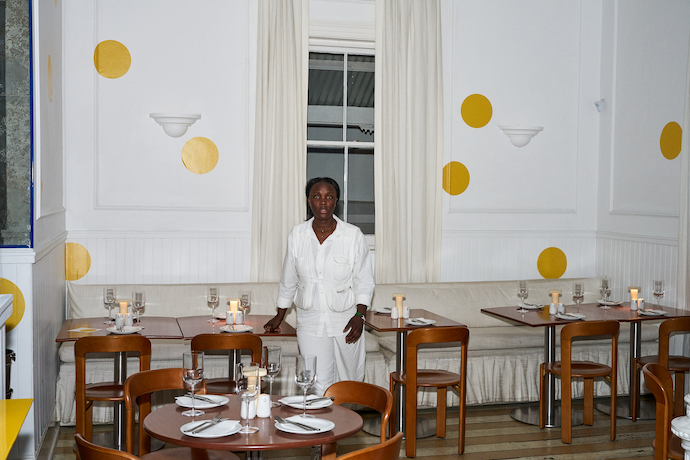
Cafe Sofi marks its first birthday with a two-month celebration inspired by one of Sophia Electra’s favourite things: polka dots.
WORDS Steve Smith PHOTOS Adel Ferreira, Gabi Mutu, Raphael Blue Bromilow
Until 30 November, the Cafe Sofi in Cape Town City Bowl’s Park Road cafe has been transformed into a polka dot world, with dots appearing across its exterior, walls, floors and even its washroom doors – a takeover inspired by the woman behind it all: Sophia Electra, the mother of Tashas Group founders, Natasha and Savva Sideris.
Cafe Sofi was created by the two as a love letter to their mom – a woman whose eclectic list of loves included cats, cakes, orchids, leopard print, the Pink Panther and, importantly for this particular celebration, polka dots.
She pressed flowers, smoked cigarettes, wore red lipstick and made birthday cakes her children can still describe in considerable detail. Her tastes were particular, though not especially consistent. Polka dots belonged alongside orchids, midnight snacks and the sounds of legendary Indian singer, Lata Mangeshkar.
“We’ve had polka dots subtly woven into Cafe Sofi’s design since it opened,” says Savva Sideris, Co-Founder and Director of Operations for Tashas Group. “For its first birthday, we’ve decided not to be so subtle.”
We chatted to interior designers Lisa Greenberg and Man Wai, creative directors of Partner & Form, who helped to transform the space…
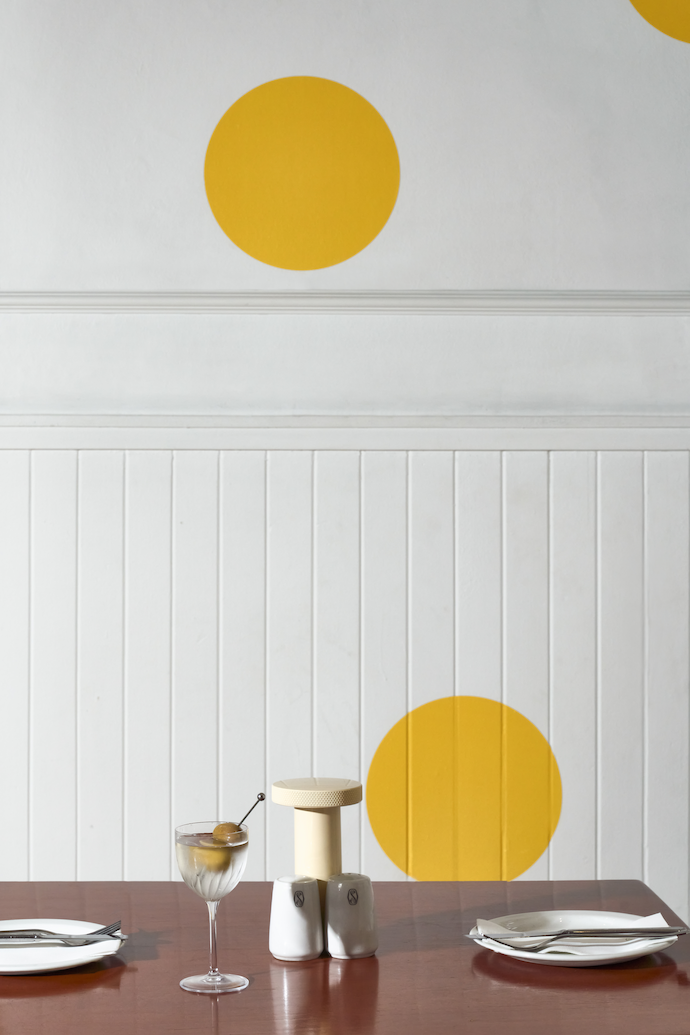
Where did you begin conceptually, and how did you turn the idea of “polka dots” into an immersive design language rather than simply a decorative theme?
“To be honest, Tash and Savva said, ‘We want the dots everywhere.’ So, we followed the brief. We’d love to claim a more tortuous intellectual process, but the instruction was rather good.
“Cafe Sofi is already built around a compendium of Sofi’s likes. She left such a vivid assortment: polka dots, orchids, pressed flowers, red lipstick, extraordinary birthday cakes. The dots had a place in that company before we arrived.
“What interested us was what happened when we took ‘everywhere’ seriously. A dot on a napkin is perfectly well behaved. Repeated across a room, it becomes rather more insistent. Then it turns up in the food: fruit cut into circles, the little rounds of bread and crackers. You start noticing roundness in things that were there all along. That was how the idea spread beyond decoration. Even lunch became implicated.”
How did Sophia’s story – and the idea of memory, personality and nostalgia – influence your approach to this birthday takeover?
“The particularity of her tastes was the starting point. ‘She loved beautiful things’ tells you very little about a person. Polka dots, cigarettes, pressed flowers and Lata Mangeshkar give you someone you’d maybe like to meet.
“We are interested in the apparently minor things people remember with extraordinary accuracy. The colour of a lipstick. A birthday cake before the knife went in. These details survive long after whole conversations have disappeared.
“For the birthday, we had this lovely, specific thing her children remembered about her, and permission to exaggerate it. There’s affection in that: taking something someone loved and allowing it to get gloriously out of hand.”
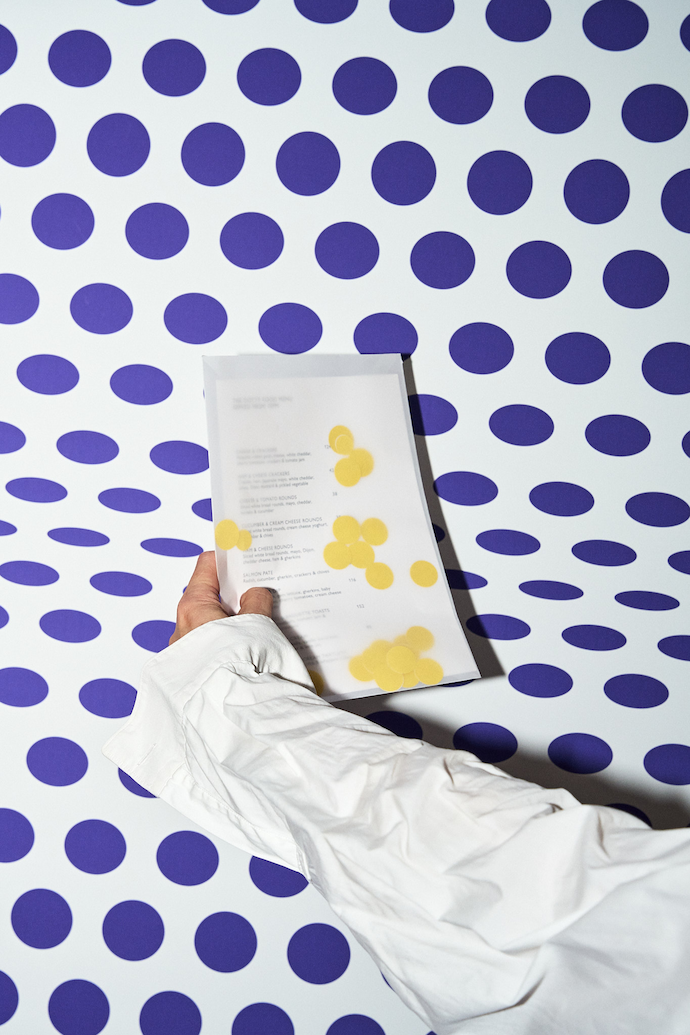
You’ve worked with Natasha on a number of projects – what is distinctive about designing for someone like Natasha, who has such a strong and recognisable point of view about hospitality, food and the experience of a restaurant?
“Tash has a very definite idea of how she wants people to feel in a restaurant. The food, the lighting, the room, the way someone is received – she sees all of it as part of the same experience. You can’t really present her with a beautiful idea and hope nobody asks what it does for the guest. We find that useful. A strong point of view gives you something to work with. ‘Dots everywhere’ has considerably more life in it than “something celebratory.”
“The freedom comes in working out how far an idea can go, and where it becomes interesting. Sometimes that means challenging the brief; sometimes it means taking a simple instruction more literally than anyone expected. With Sofi, the challenge was to make the abundance feel like it belonged to her. There had to be a person behind all that pattern.”
One of the most interesting aspects of the takeover is that the design isn’t static: guests are invited to create their own dots. What appealed to you about allowing the people who use the space to complete the design – and what do you think that says about the relationship between interiors and the people who inhabit them “On the tables, the blank dots offer another invitation. We liked the idea of beginning something without prescribing exactly how it would end. Each guest makes a small decision, and the room gradually acquires the evidence. There’s something pleasingly direct about making a dot. Nobody needs to decide whether they’re artistic before joining in. Someone will be careful; someone else will be gloriously unconcerned. Both will leave their mark.”
“We’re creating a series of dotted sets inspired by Malick Sidibé, with new backdrops appearing throughout the month. We love the occasion of a studio portrait: someone steps in front of a backdrop and decides how they’d like to be seen. The dots are exuberant enough to encourage a little performance. You can meet them with more pattern, arrive in immaculate white, bring a friend, pose or pout. Each person gives the set a different temperament. The pleasure is in seeing how the same backdrop behaves in different company. Sofi supplied the original enthusiasm for dots. Now everyone gets to dress for it.
The immersive takeover will be accompanied by an exclusive polka dot-inspired food and cocktail menu, created by Cafe Sofi’s culinary and beverage teams and served daily from 12h00 until late.
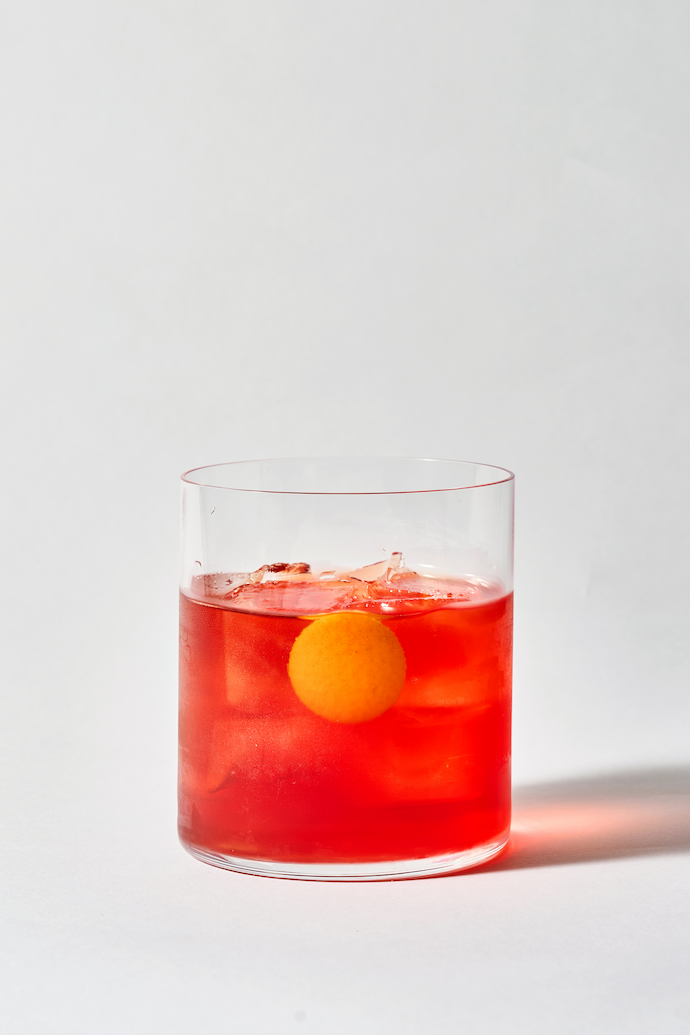
Connecting the dots
The drinks also look beyond Cafe Sofi’s own four walls. Six cocktails have been named after friends and neighbours in the precinct – including Rowdy, Ballo, Custodian, Rosey & Vittori, and Pauline’s – extending the celebration to the community that Cafe Sofi has become part of during its first year.
As Lisa and Man mentioned, guests won’t simply experience the takeover – they’ll help create it.
Every table will receive a stack of blank circles and a marker, inviting guests of all ages to create their own dot. Each one will then be added to the restaurant, allowing the installation to evolve throughout October and November and gradually fill with the creativity of the people who visit.
“A dot is a small thing to remember about someone. Then again, so is the precise colour of a lipstick, or the way a cake looked before anyone cut it,” says Natasha Sideris, CEO and Co-Founder of Tashas Group. “It feels particularly fitting for a restaurant that has always been about memory, personality and the small things that made our mom, Sophia Electra, so distinctive.”
“We always wanted to do something to pay homage to our mom,” Savva said when Cafe Sofi first opened. “This is our personal love letter, back to her.”
One year later, that love letter continues – only this time, it comes covered in polka dots.
The Cafe Sofi Polka Dot Takeover runs from 1 October to 30 November 2026 at 2 Park Road, Gardens, Cape Town. The exclusive polka dot food and cocktail menu is available daily from cafesofi.com.
Don’t forget to sign up to our weekly newsletter for the latest architecture and design news.