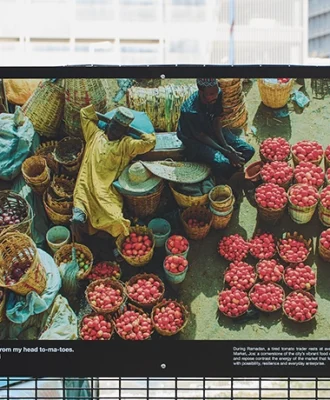
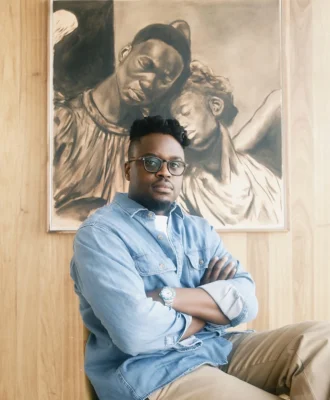
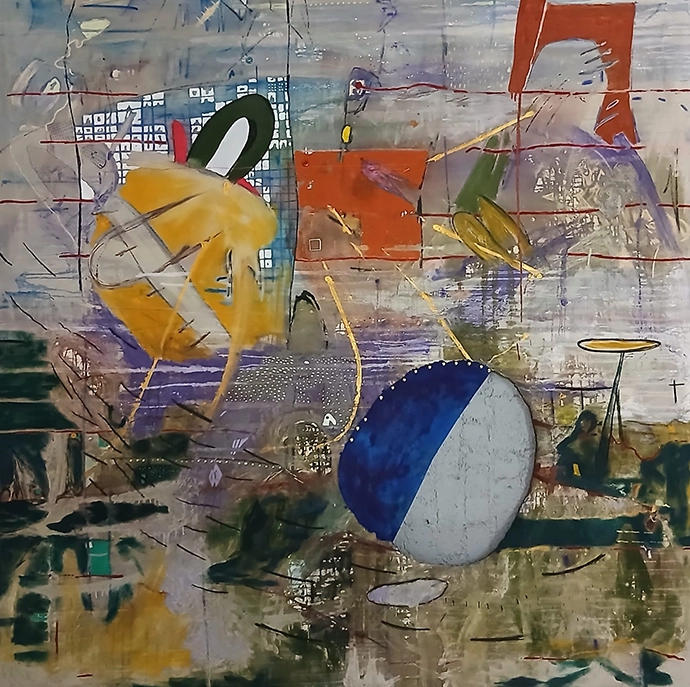
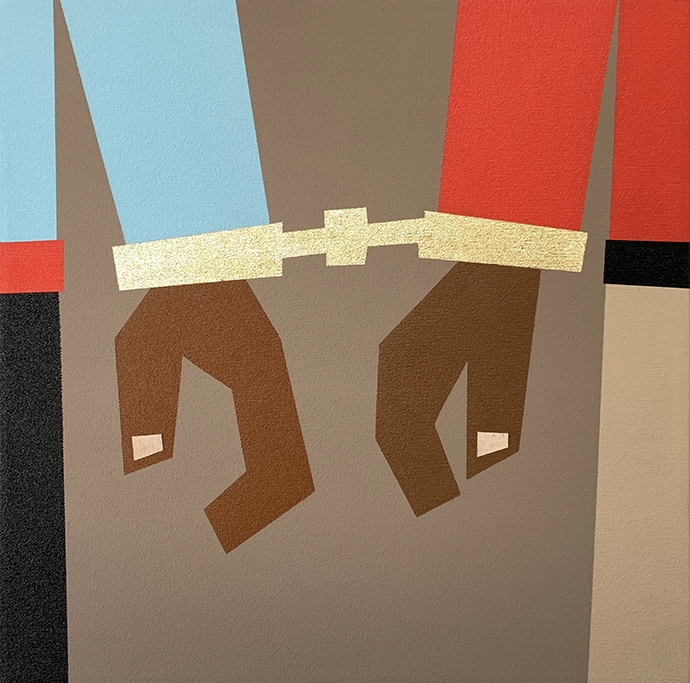
-

Bekezela Mabena, Mixed media on Canvas (2026) -

Luxolo Witvoet, Acrylic, cut-out canvas and gold leaf on Canvas -

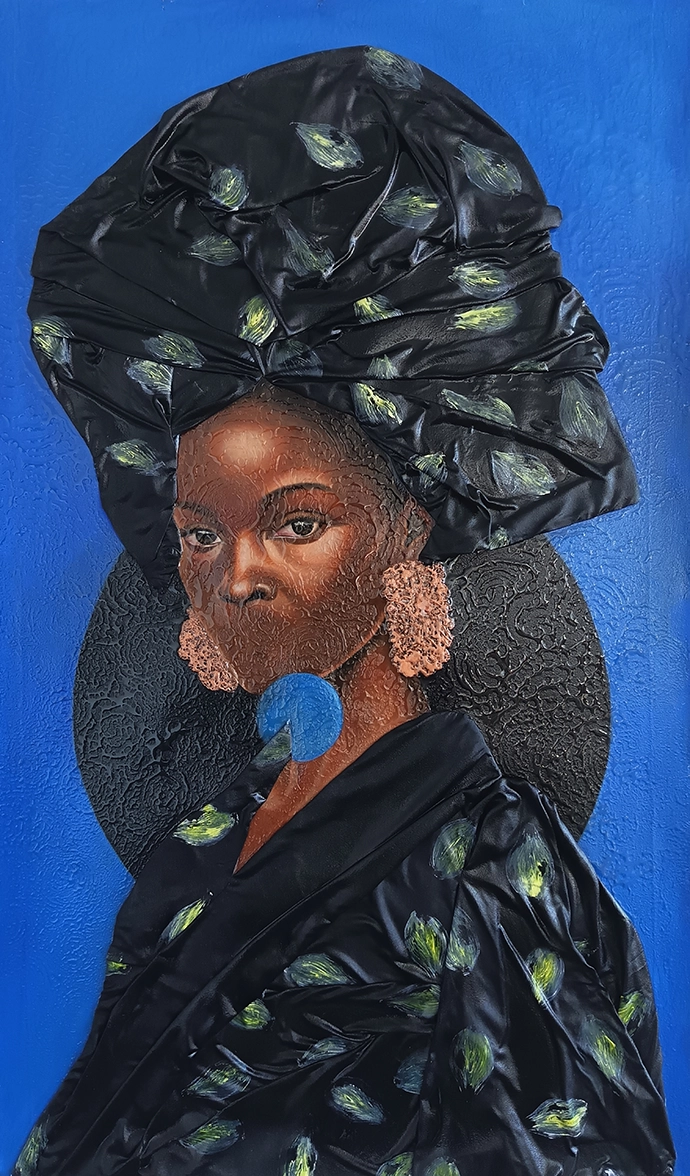
Samantha Mpumelelo Maseko, 'Into the Unfamiliar', Oil paint & Mixed media on Canvas (2026) -

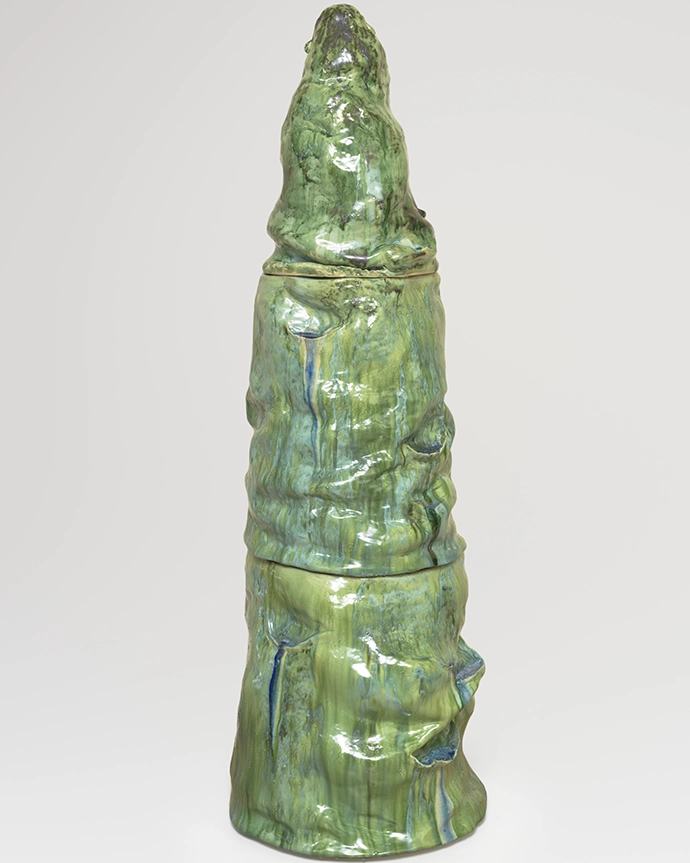
Viola Greyling, 'Life marker', Ceramic (2026)
Meet the artists of Tiriparwendo – the Nando’s Creative Exchange 2026 cohort – whose work explores migration, memory and the making of identity.
PHOTOS Supplied
Nando’s Creative Exchange (NCX) is the flagship artist development programme within the Nando’s Art Initiative, delivered in partnership with Spier Arts Trust. It recognises emerging fine artists from Southern Africa who demonstrate exceptional talent, providing the support they need to take the next steps in their careers.
Now in its 15th year, the programme continues to provide artists with mentorship, materials and exhibition platforms that help turn creative potential into sustainable careers. Bekezela Mabena, Luxolo Witvoet, Mpumelelo Samantha Maseko and Viola Greyling are the four artists selected for the 2026 Nando’s Creative Exchange. Their exhibition, titled Tiriparwendo, takes its name from a Shona word meaning “we are on a journey”.
Bekezela Mabena
Home is not always where you were born. Sometimes, home is something you spend a lifetime moving toward. For Bekezela Mabena, that search has become the defining subject of his art and, more recently, the lens through which he understands fatherhood.
Born in Tembisa in 1996, Mabena is a Johannesburg-based visual artist and printmaker whose practice has been shaped by his movement between South Africa and Zimbabwe. Questions around migration, identity and belonging feel less like themes and more like lived reality. But becoming a father shifted something fundamental. “Being a father makes you think about time differently,” he says. “It makes you realise that being a traveller and migrant isn’t just about moving across land; it’s about passing down who you are.”
When Mabena returned to the place that first made him, he found himself a stranger to his own old ways. The process of relearning – sitting still long enough to simply be somewhere – became the emotional core of this body of work. “It’s a mirror for anyone who has ever felt they belong to more than one place,” he says. “It is about faith, about starting over, and about finding out that no matter where the road takes us, we are all just trying to make it home.”
His mixed-media prints and paintings bring these ideas into bold, layered visual conversations, where colour and mark-making do the work that words cannot. Through the Nando’s Creative Exchange, Mabena joins a cohort of artists who share an understanding that the most personal work is often the most universal – and that belonging, wherever you find it, is worth expressing. | @mabenaart
Luxolo Theophilus Witvoet
Luxolo Theophilus Witvoet never had a formal art education. What he has is life experience, which can’t be taught: a personal history of displacement, a sharp eye and an instinct for finding the extraordinary in the everyday.
Born in Qonce (King William’s Town) and raised in Cape Town, Witvoet’s story of migration begins long before his own birth. “This body of work is deeply rooted in my own history of migration,” he says, “a legacy that starts with my grandparents’ journey from Lesotho and the Northern Cape to Cape Town in search of a better life.” When his parents’ marriage broke up, a six-year-old Witvoet was relocated to Cape Town with his mother. He describes the move as a feeling of exile. “While migration and exile are separate concepts, I see them as cousins,” he says.
A multidisciplinary artist who moves fluidly between digital image-making and traditional painting, Witvoet turns his gaze toward people forced to flee, migrate or live in exile, examining the circumstances that compel people to leave and what happens to the communities, stories and identities left behind. He incorporates his subjects into scenes and landscapes rather than painting them in isolation. He renders them in acrylic, then uses tobacco ash, flashband, gold leaf and cut-out canvas to translate digital figures into tactile, layered surfaces.
Witvoet brings a uniquely forged creative language to the Nando’s Creative Exchange – and a body of work that insists on asking who we are, where we come from and what we carry when we leave. | @luxolowitvoet
Mpumelelo Samantha Maseko
Mpumelelo Samantha Maseko lets the subject matter of her art determine the medium she uses. She says her work rewards those who dare to look closer. Born in Boschfontein, Mpumalanga, in 1997 and now based in Johannesburg, Maseko’s multidisciplinary practice spans oil painting, collage, assemblage, mixed media and printmaking. It deliberately refuses to be confined to a single form of expression. At the centre of it all is a singular focus: Black femininity, identity and the intimate, layered process of becoming.
Her work explores migration as a psychological and cultural experience. “I am interested in what remains within the individual after they have crossed a geographical boundary,” she says, “the memories, language, beliefs, culture and identities that continue to shape their sense of self.”
The figures in her paintings reflect this tension. “The absence of a mouth speaks to the silencing and displacement that can occur when an individual enters an unfamiliar social environment, where even the way they speak can become a marker of difference.” Fabric, meanwhile, becomes an extension of home – cultural memory made visible. Hair, too, marks identity, communicating cultural affiliation and geographical origin long after a person has physically moved away.
Her work does not position Black women as subjects to be interpreted, but as the authors of their own stories, their own myths and their own evolving power. Through the Nando’s Creative Exchange, Maseko steps into a new phase of storytelling with the mentorship, resources and collective energy to push her practice further. | @impumelelo__m
Viola Greyling
Not all journeys are measured in kilometres. Some are felt in the body, carried across generations or, in Viola Greyling’s case, traced and pressed into clay.
Born and based in Pretoria, Greyling is a ceramic artist whose sculptural work explores identity, memory and the emotional landscape of belonging – particularly as experienced through migration and displacement. For Greyling, clay is a collaborator. “In its unfired state, its plasticity allows it to shift and react when moved, holding a physical memory of change,” she says. “This material behaviour reflects the way we, as people, respond to the environments we move through, carrying traces of each place while continually adjusting to the next.”
Her forms draw on the slow, patient growth of stalagmites. Identity is interpreted as something shaped gradually through time and experience rather than fixed at a single point. Seeds collected from specific places connect the work to the environments she has moved between, translated into clay as small records of place that capture fragments of an environment and a moment in time. Found objects pressed into clay surfaces function as markers of place, traces of movement and imprints of a hybrid identity still being navigated.
“Migration does not simply mean leaving one place for another,” Greyling says, “but carrying pieces of each place with us as we evolve.” Her contribution to the Nando’s Creative Exchange is a practice as patient and deliberate as the medium itself – and work that asks us to consider what we carry with us, and what we leave behind. | @violaartgrey
Don’t forget to sign up to our weekly newsletter for the latest architecture and design news.