-

The Defender OCTA Black is the most powerful variant of Land Rover’s iconic SUV: it’s equipped with a BMW-sourced 4.4-litre twin-turbo V8, which produces 467kW and 750Nm. -
The Defender OCTA Black is the most powerful variant of Land Rover’s flagship SUV: it’s equipped with a BMW-sourced 4.4-litre twin-turbo V8, which produces 467kW and 750Nm. -
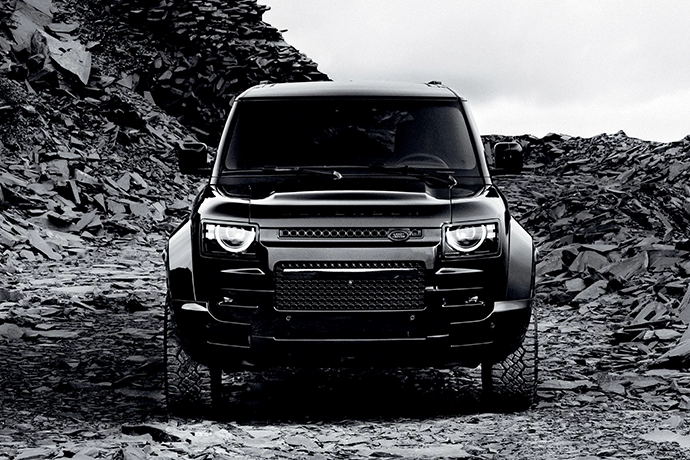
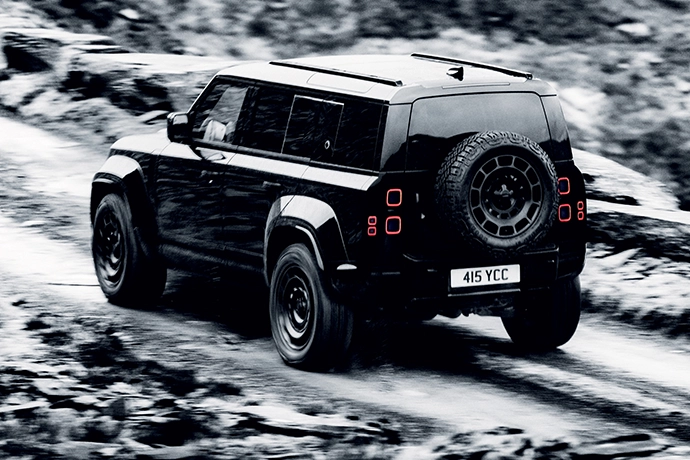
Thirty exterior elements received black finishes as part of the transformation. Defender OCTA Black is available in Narvik Black – the truest black in the Defender paint palette. -

Thirty exterior elements received black finishes as part of the transformation. Defender OCTA Black is available in Narvik Black – the truest black in the Defender paint palette. -

Thirty exterior elements received black finishes as part of the transformation. Defender OCTA Black is available in Narvik Black – the truest black in the Defender paint palette. -

Thirty exterior elements received black finishes as part of the transformation. Defender OCTA Black is available in Narvik Black – the truest black in the Defender paint palette. -

Thirty exterior elements received black finishes as part of the transformation. Defender OCTA Black is available in Narvik Black – the truest black in the Defender paint palette. -
Thirty exterior elements received black finishes as part of the transformation. Defender OCTA Black is available in Narvik Black – the truest black in the Defender paint palette. -
Thirty exterior elements received black finishes as part of the transformation. Defender OCTA Black is available in Narvik Black – the truest black in the Defender paint palette.
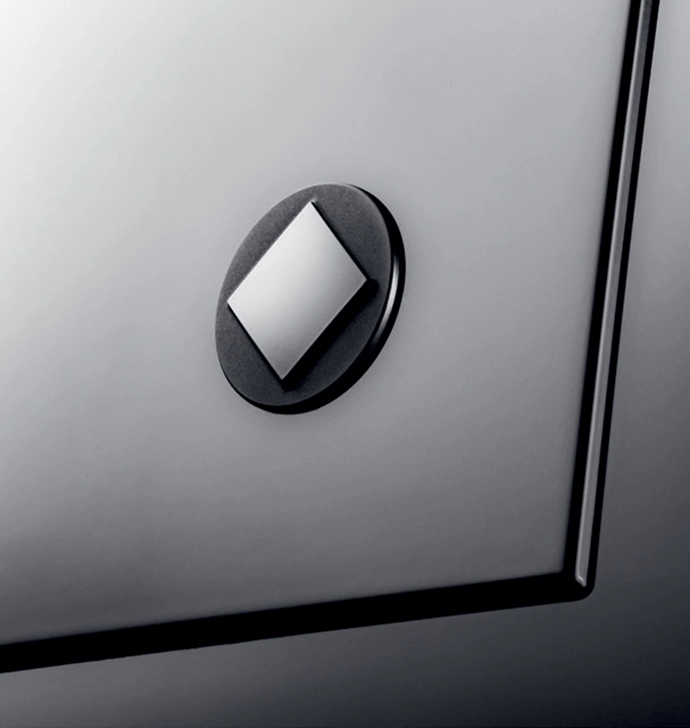
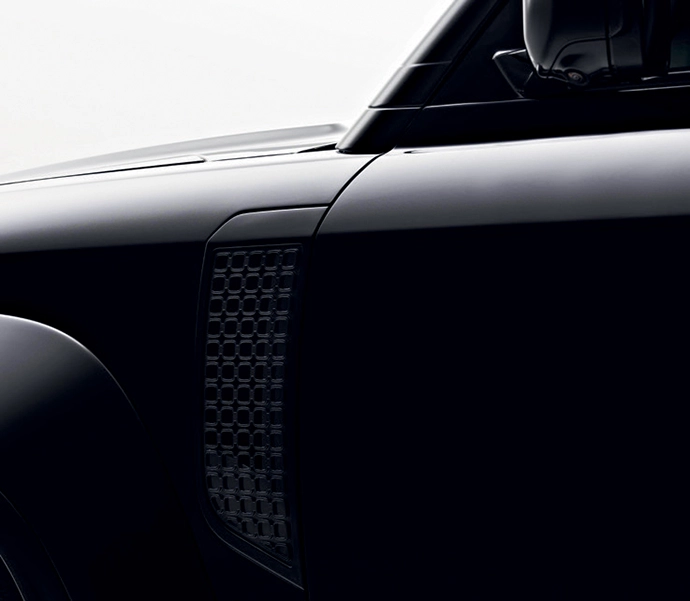
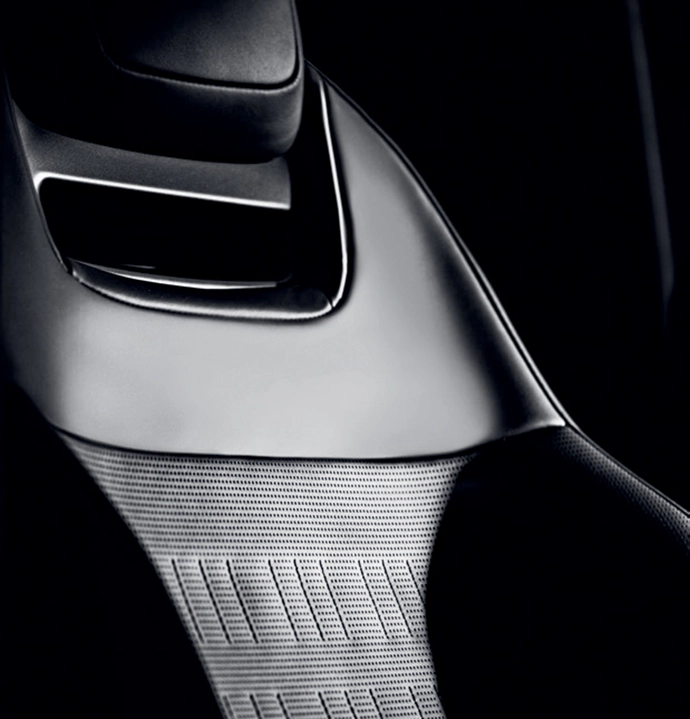
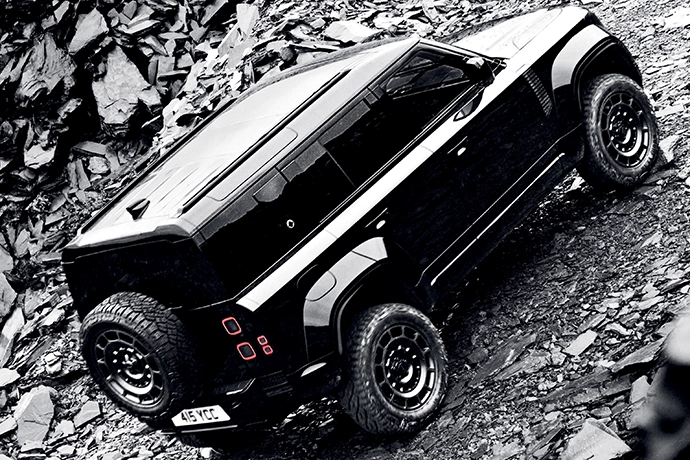
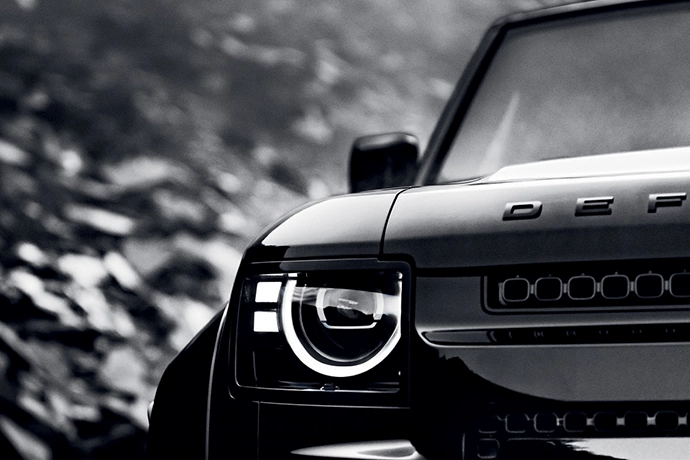
The Defender OCTA is the most extreme production Defender ever made – one that blurs the line between car design and Brutalist architecture. This is the story of its transformation.
WORDS Steve Smith PHOTOS Supplied
The Defender OCTA is a brutal car: brutal in power, brutal on off -road terrain, and brutal in looks. It basically makes its original 1948 ancestor look like it’s skipping through an English meadow, picking dandelions.
As you know, we love Brutalist design here at VISI, so to find out more about how Land Rover’s design team transformed the standard Defender 110 into the muscular OCTA, we spoke to Defender’s vehicle design director Davide Limongelli, and senior creative specialist for interior design Mark Butler.
The standard Defender already has a strong visual identity. What were the key design cues you changed to signal that the Defender OCTA is far more extreme?
Davide Limongelli: “Everything starts with proportion. With Defender OCTA, the most significant changes are immediately visible in its wider stance, increased ground clearance and larger, more extreme tyres. These elements fundamentally shift the vehicle’s presence and capability.
“For us, it’s essential that a Defender is never overstyled. Every element must have a clear reason to exist. On Defender OCTA, the increased width and stance aren’t there simply to create a more aggressive look – they’re driven by the need to enhance off-road capability and dynamic stability.
“Key features like the enlarged front apertures also play an important role. These are not purely aesthetic, but driven by function – specifically the increased cooling requirements of the V8 engine. As with every Defender, design changes are always rooted in purpose, and that are always rooted in purpose, and that authenticity is what gives Defender OCTA its more extreme character. Even the revised front graphics are driven by cooling demands rather than visual differentiation. The aesthetic outcome is a by-product of problem-solving.
“The visual strength of the vehicle is a natural result of its engineering. That’s where the balance comes from: when design follows function, you achieve a more authentic and confident aesthetic without adding unnecessary complexity.”
Which exterior element on the Defender OCTA best captures its performance-focused personality?
Davide: “Performance and off-road capability are intrinsic to Defender’s DNA, and OCTA builds on that foundation through proportion. Its stance is the through proportion. Its stance is the defi ning element. Rather than relying on added lines or visual drama, we use proportion to communicate performance.
“The increased ride height, wider track and more planted posture immediately give the OCTA a distinct personality. Even at a distance, it’s recognisably a Defender. The core DNA is unchanged, but the character is unmistakably more extreme.
“It’s all driven by proportion: the higher seating position, greater ground clearance and noticeably wider stance come together to create a vehicle with an even stronger, more commanding presence.”
Were there any influences outside the automotive world – architecture, industrial design, motorsport, military equipment – that informed the Defender OCTA’s exterior design language?
Davide: “With Defender, our primary source of inspiration is always the brand itself. It has such a strong, enduring DNA and heritage that we don’t need to look to external trends. Historically, Defender has been designed with a very industrial, logical approach – every line has a purpose; every graphic connects back to function. The design language is elemental, and the style comes from that logic. In many ways, Defender is the purest expression of form following function, and Defender OCTA continues that philosophy.”
Do you think the Defender OCTA design process involved redefining what “luxury performance” means for the brand?
Davide: “I would say that Defender OCTA extends what luxury performance means for the brand, rather than redefines it. Every Defender has its own character, and Defender OCTA is simply another expression of that.
“What it does do is showcase what we call ‘tough luxury’ at its most extreme, combining enhanced performance and capability with the refinement expected of a modern Defender, without losing that core sense of restraint.”
Aerodynamics and off-road capability don’t naturally pull in the same direction. What were the biggest challenges in designing a vehicle that needed to look planted and fast, while still remaining authentically capable off-road?
Davide: “The priority for Defender OCTA was always capability. To achieve extreme off-road performance, we needed increased width, higher ground clearance and enhanced cooling, all of which work against aerodynamic efficiency. This creates natural tension, but it’s a conscious decision. Thermal performance and off-road capability were significantly more important than aerodynamic targets in this case.
“There were also practical challenges, such as meeting global legislation. For example, in the US, the vehicle’s width required additional marker lighting, which introduced unique design solutions that add further character. Sometimes it’s the constraints that create the greatest opportunity for creative expression!”
There are some cool design details and surface treatments on the Defender OCTA that people might miss at first glance…
Davide: “One of the most satisfying aspects is the consistency of the graphic language. Defender has a strong visual identity built around simple geometric forms – particularly the square, which is a key part of the brand’s graphic identity.
“On Defender OCTA, this evolves into more refined details, such as the subtle ‘squircle’ motifs used on the front grille. From a distance, the vehicle reads as tough and purposeful, but up close there’s a clear sense of precision and sophistication, and that it absolutely belongs to a luxury brand. That contrast between robustness and refinement is what defines Defender OCTA’s character.”
How did the interior design team create a stronger sense of performance without losing the utilitarian DNA?
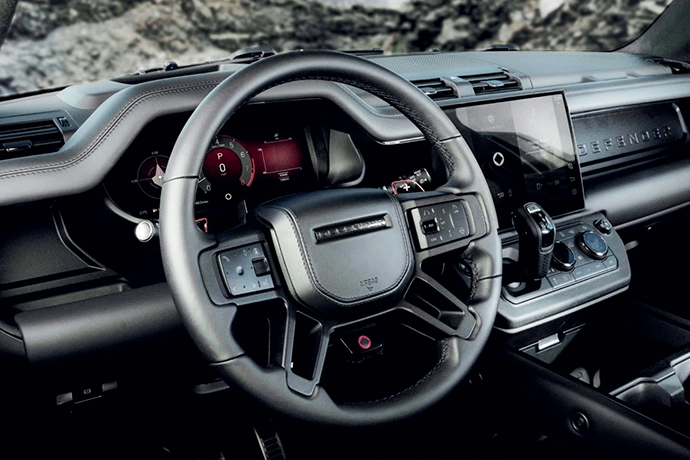
Mark Butler: “The interior of the Defender OCTA builds on Defender’s core philosophy of ‘tough luxury’, elevating it to reflect the vehicle’s heightened performance capability. New performance seats with re-profiled bolsters and integrated headrests provide the additional support required for more dynamic driving, while maintaining long-distance comfort. This distinctive seat design is carried through to the second row, creating a cohesive and immersive cabin environment. The sense of occasion is further enhanced by elevated material choices, including semi-aniline leather and Moonlight Chrome detailing on key touchpoints, combining durability with refinement.
“At the same time, the integration of performance-focused features ensures the cabin remains purposeful. Gear paddle shifters and the OCTA Mode button are seamlessly incorporated into the steering wheel, putting control directly at the driver’s fingertips. The translucent edge-lit paddles subtly shift from white to red when OCTA Mode is activated – an intuitive signal that the vehicle is ready to deliver its most extreme off-road performance.”
When someone sees the Defender OCTA in their rear-view mirror, what emotion or reaction are you hoping the design will provoke?
Davide: “It’s about presence. Defender has always been expressive, particularly through the vehicle’s ‘eyes’. It’s always had distinctive round headlamps, which we have evolved over time to feel more assertive. On the Defender OCTA, that expression becomes more pronounced, because it’s combined with a taller, more commanding front stance. The result is a vehicle that feels sturdy, unmistakable and purposeful.
“When you see it in your rear-view mirror, it should feel like something truly special – something with real character, presence and authority.” | landrover.co.za
Core Defender vs Defender OCTA Dimensions
Overall width: Core 2 008 mm (mirrors folded), increased to 2 064 mm on the OCTA – a 56 mm widening of the body and track. (With mirrors extended, both measure 2 105 mm).
Overall length: Core 4 758 mm (without spare wheel), increased by 55 mm to 4 813 mm on the OCTA.
Ground clearance: Core 218 mm (standard air-suspension ride height), increased by 32 mm to 250 mm on the OCTA (246 mm at the rear axle) – a combination of increased tyre diameter and a reworked suspension. At maximum off-road ride height, the Core’s 290 mm rises to 323 mm on the OCTA, a 33 mm gain.
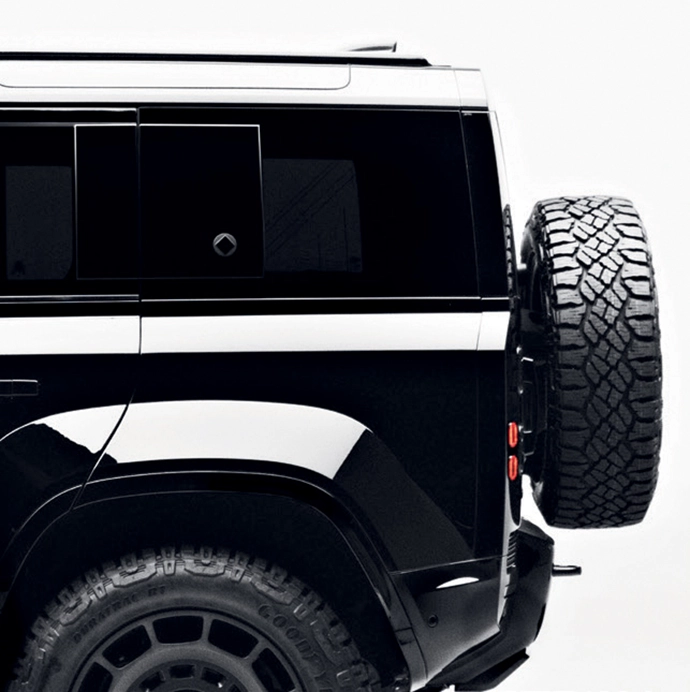
Wheels and tyres: Core’s 275/45 R22 tyre is stepped up to 275/50 R22 on the OCTA – specially developed 838 mm-diameter tyres, the largest ever fitted to a Defender.