-

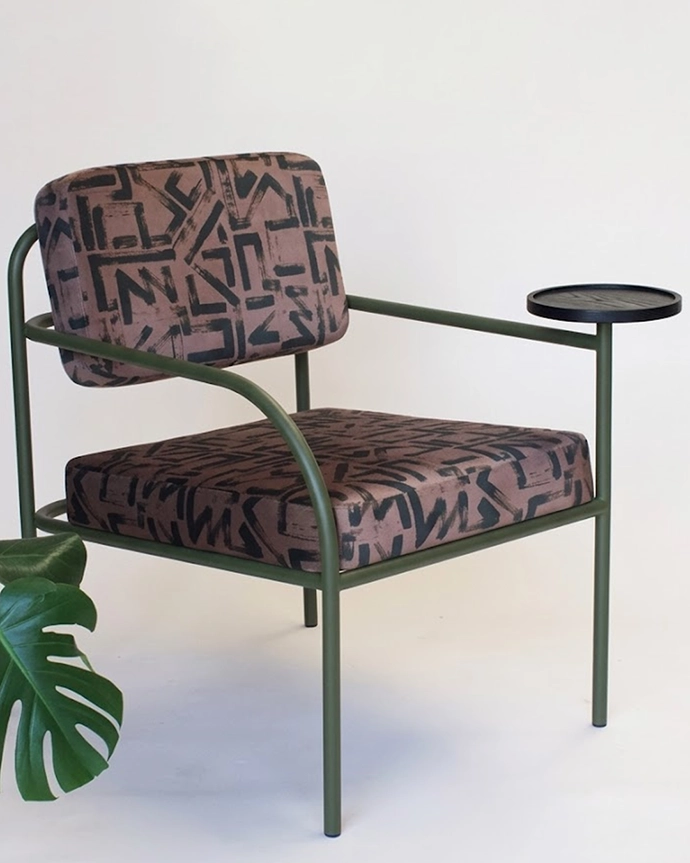
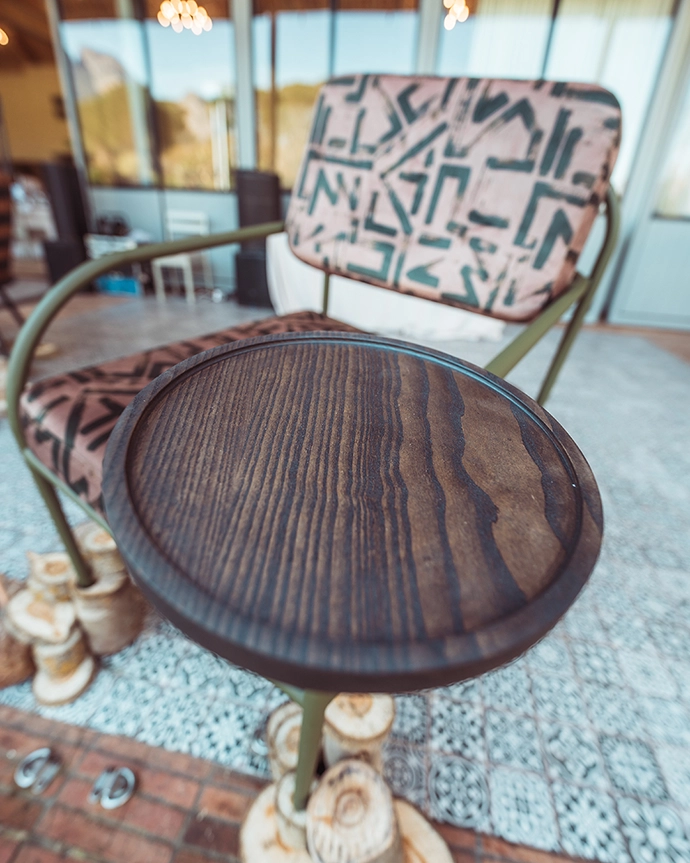
The Akaya Chair by TheUrbanative -

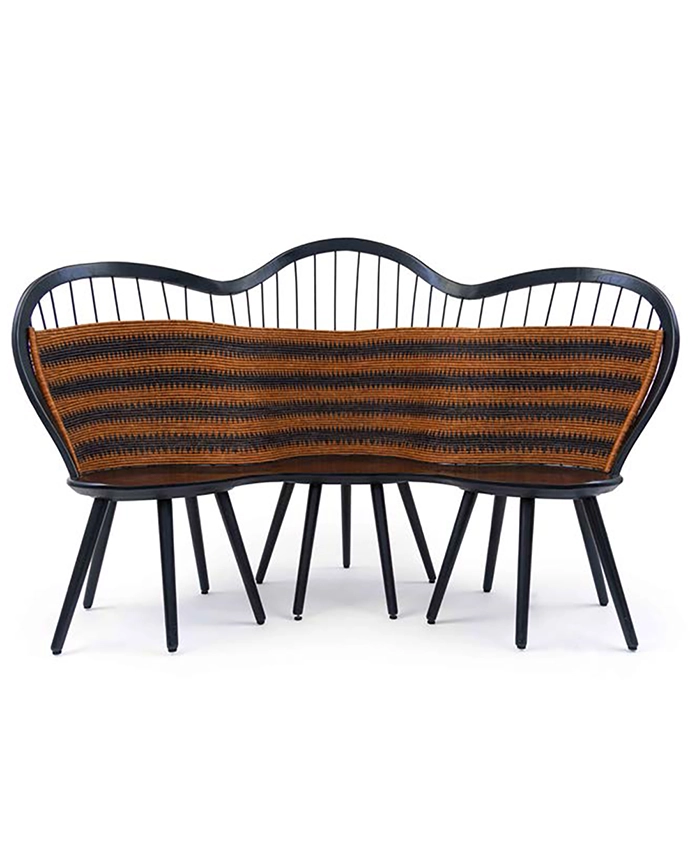
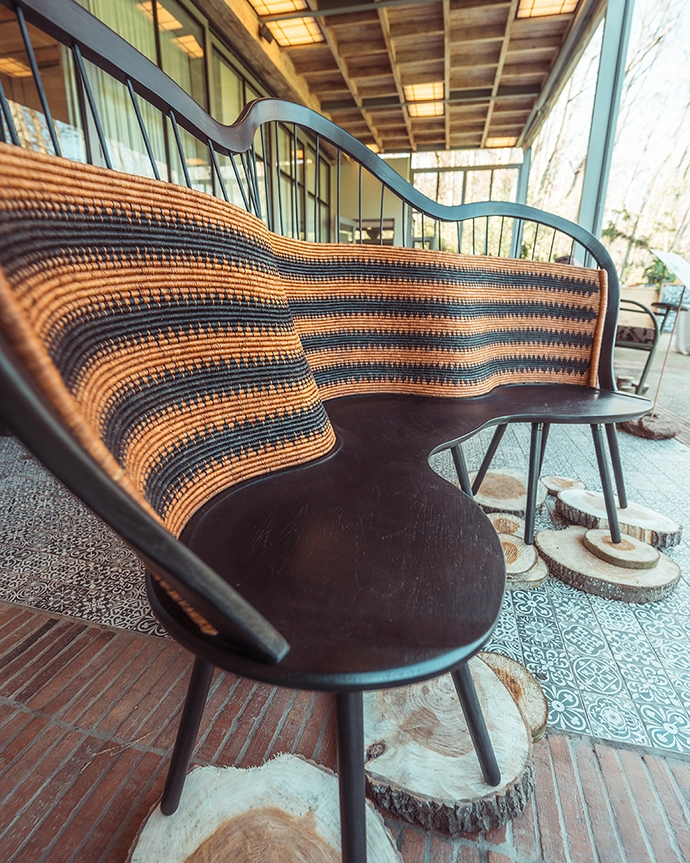
The Hlabisa Bench by Houtlander and Mash.T Design Studio -
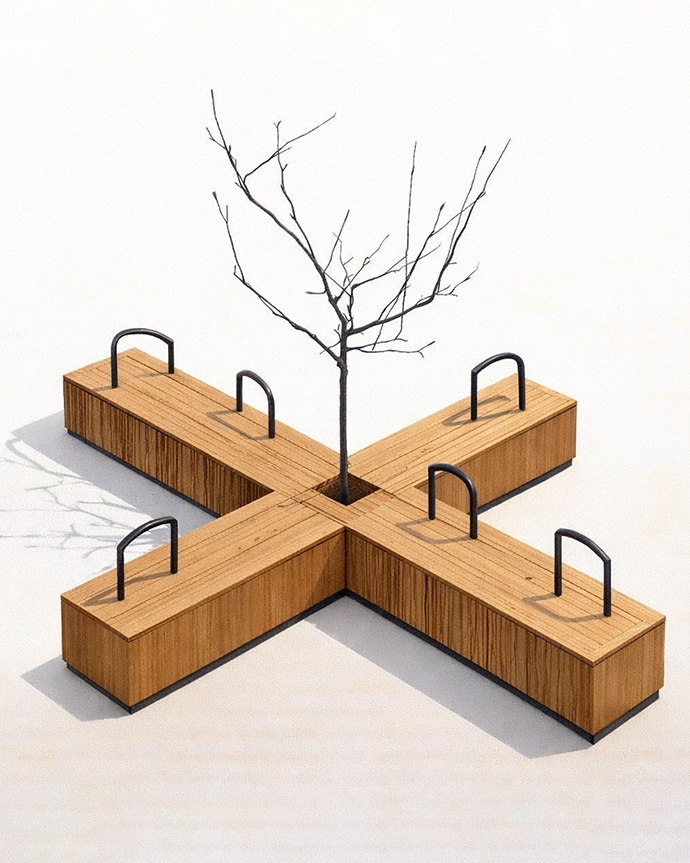
A render of the Intersection Bench by Derrick Baard of PureSpace Design in collaboration with John Bauer
Greenpop Foundation’s inaugural gala reframed philanthropy through the lens of functional art, bringing furniture design into conversation with landscape restoration.
WORDS Gina Dionisio PHOTOS Courtesy of Jandré Grobler/Greenpop
Set on the historic Boschendal estate, with its 340-year legacy of land stewardship and regenerative farming, The Olive Press was the perfect setting for Greenpop Foundation‘s inaugural gala.
Founded in 2010 with a mission to plant 1 000 trees in a month, Greenpop has become one of sub-Saharan Africa’s leading landscape-restoration organisations. The inaugural gala was a chance to connect with change-makers, raise funds for future preservation projects and address the scale of the environmental challenges that lie ahead.
Among the highlights were the live auctions, which merged the worlds of fine art, functional design and environmental philanthropy. The carefully curated lots featured contemporary artworks, presented in partnership with Everard Read Franschhoek; exclusive nature-focused travel experiences highlighting ecological preservation; and a bespoke collection of functional art.
For this bespoke collection, Greenpop invited a handful of leading local furniture designers – Houtlander, Mash.T Design Studio, TheUrbanative, Derrick Baard of PureSpace Design in collaboration with John Bauer – to create one-of-a-kind chairs inspired by the Cape Floral Kingdom and the idea of ancestral legacy.
Aptly titled Seats of Stewardship, this special collection presented each chair as a conversation between the designer’s hand and the natural heritage that inspired it.
The Hlabisa Bench
Houtlander and Mash.T Design Studio
“From the start, this wasn’t really a furniture brief in the traditional sense,” says Houtlander’s director Phillip Hollander. “It was more of an invitation to ask a bigger question: what does a truly South African design object look like when you stop trying to fit it into a Western framework?”
When the two studios began talking, it became clear quickly that the most honest answer to that question wasn’t going to come from either one alone. ”Houtlander lives in precision, in clean lines, in the technology that lets us push timber to its limits. Mash.T lives in story, in culture, in the kind of warmth that makes a space feel inhabited. Those are genuinely different worlds. So the brief became a challenge to hold both of those worlds at the same time, without flattening either one.”
The piece had to be modern and rigorous in its construction, but it also had to carry real cultural weight. ”That’s something the Seats of Stewardship collection as a whole gets right. Each piece is asking that same question in its own way, and the Hlabisa Bench is no different,” notes Phillip.
In terms of its design, the bench’s undulating silhouette draws from two deeply personal references: the rolling hills of KwaZulu-Natal and the shape of the traditional three-legged cast-iron pot Thabisa’s grandmother used. “That pot is something most South Africans know instinctively. It sits at the centre of a home. It means people are being fed, people are gathering. Building a bench around that shape is a quietly radical act, because it says: this is what hospitality looks like, and it belongs in the same conversation as any great design object in the world,” explains Phillip.
From there, the work was to engineer something that could honour that vision, structurally. Advanced 3D modelling was used to develop the curves, running through iterations until the form felt both fluid and resolved. “The oak frame had to be precise enough to serve as a proper canvas for what came next, because the backrest was always going to be the heart of it,” says Phillip.
That’s where the weavers of Hlabisa came in, and that’s where the process became something much larger than the two studios. “Zulu basket weaving is a centuries-old tradition, and the master weavers in Hlabisa are genuinely its custodians,” says Phillip. The ask wasn’t to replicate a pattern. It was to bring their craft to a new surface and let it speak for itself. “Each weaver has their own tension, their own signature in the weave. You can feel that in the finished piece. Those subtle variations aren’t imperfections. They are the human footprint of the people who made it, and that’s exactly as it should be,” he adds.
The result is a bench where technology and tradition don’t compete. They meet at a juncture, shake hands, and produce something neither could have made alone. Multiple versions of this bench exist – the second installment lives permanently at Pompidou and the third is apart of Greenpop’s collection.
Akaya Chair
TheUrbanative
For Mpho Vackier, owner and creative director at TheUrbanative, the brief was an opportunity to create more than a functional chair – rather, a piece that could act as a vessel for storytelling, cultural dialogue and responsible making. “For us, the project became about exploring how a single object could hold layered meaning while still being contemporary and accessible in everyday life,” she says.
The team was particularly drawn to the idea of creating a chair that reflected South African identity through subtle abstraction rather than literal representation. “This led us to revisit the Akaya Lounge Chair from our Homecoming Collection, a collection focused on an exploration of belonging, comfort, refuge and the emotional meaning of home,” says Mpho.
The name Akaya, meaning ‘home’ in Xitsonga, became an important starting point for the team conceptually. “We wanted the chair to embody a sense of pause, warmth and emotional familiarity while also celebrating the diversity of South African culture. Working with local designer Kristin Hulda and her Ndebele-inspired Labyrinth textile allowed the piece to create a dialogue between different cultural references within a single contemporary form,” notes Mpho.
The team wanted to explore how material, finish and collaboration could shift the reading of the piece without changing its core identity. “The upholstery became an important entry point. Alongside this, the material palette was carefully considered. Olive powder-coated steel, stained ash timber and upholstery were selected to create a balance between warmth, durability and restraint,” explains Mpho.
The chair was intentionally designed around longevity, durability and local collaboration, from the recycled steel structure to the use of locally crafted upholstery and timber detailing. “Rather than treating sustainability as an add-on, we approached it as something embedded within the making process itself by creating a piece intended to last both physically and emotionally.”
Rather than redesigning the Akaya, the process of creating this piece for Seats of Stewardship was ultimately about recontextualising it, allowing an existing piece to respond to a new brief and demonstrate how meaning can continue to evolve through thoughtful adaptation.
Intersection Bench
Derrick Baard of PureSpace Design in collaboration with John Bauer
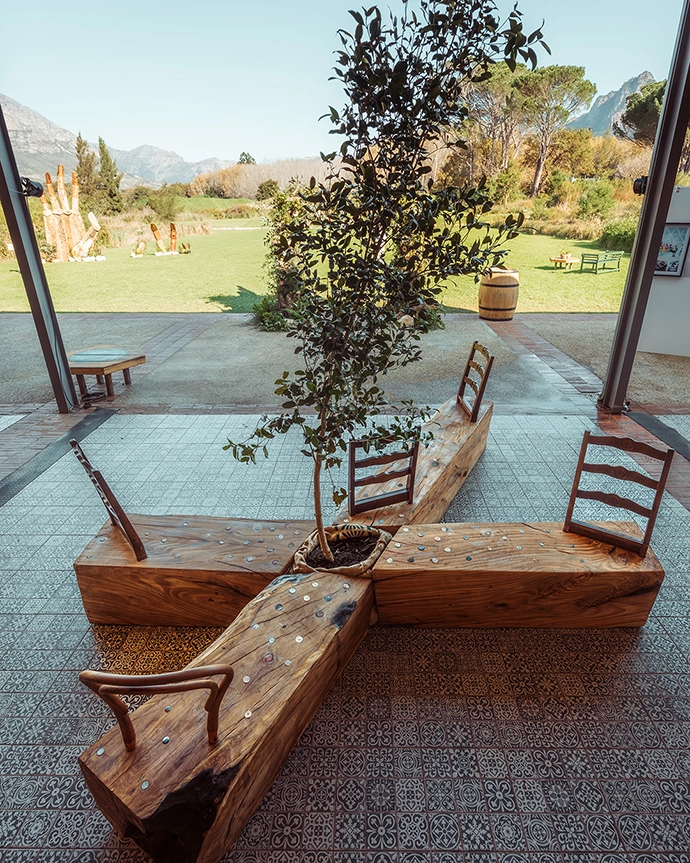
Inspired by Frank Lloyd Wright’s words, “The best friend on earth of man is the tree. When we use the tree respectfully and economically, we have one of the greatest resources on earth,” the bench reflects a philosophy of respect for nature, craftsmanship and enduring human connection.
“The design pays homage to the tree as one of Earth’s greatest renewable resources, acknowledging both its physical strength and its quiet ability to sustain and connect us,” says Derrick.
Crafted from the trunks of felled trees, its monumental bases represent the foundations on which meaningful relationships are built: integrity, trust, strength and permanence. In contrast, the backrests introduce a sense of softness, familiarity and human connection, bringing visual lightness to the solidity of the bench. At the heart of the piece stands a living tree, positioned centrally as a symbolic gesture of life, renewal and generosity. The ceramic pieces embedded in the wood, made by ceramicist John Bauer, symbolise the random synchronicity of the people we connect with.
“The bench is ultimately a celebration of the spaces where people, nature, memory, and time meet.”
Don’t forget to sign up to our weekly newsletter for the latest architecture and design news.