-

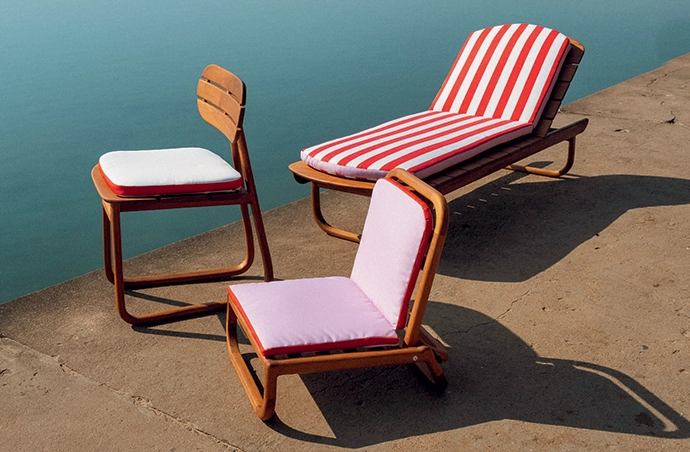
Dining chair and table from Kipekee Studio’s Holiday Often range. -
Beach chair from the Holiday Often range. -

Dining chair, sun lounger and beach chair from the Holiday Often range. -

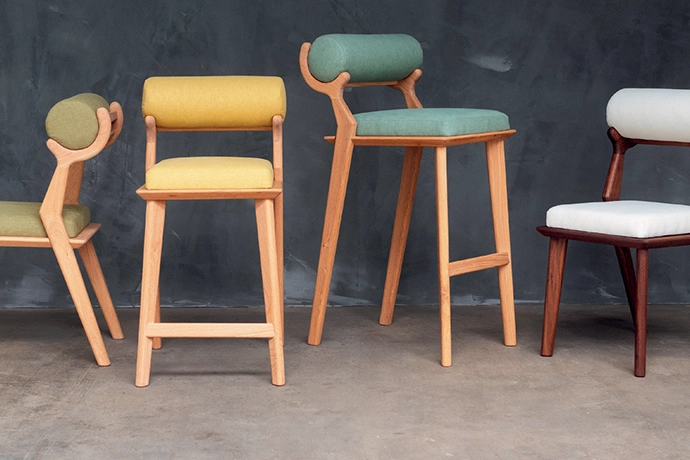
Chairs from the Chameleon range: occasional, diner, kitchen and barstools.
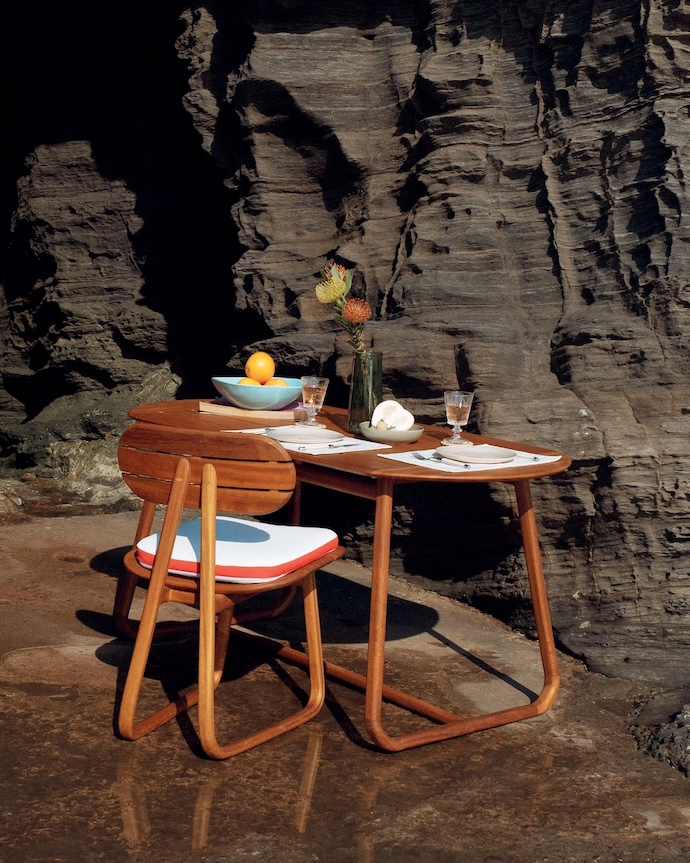
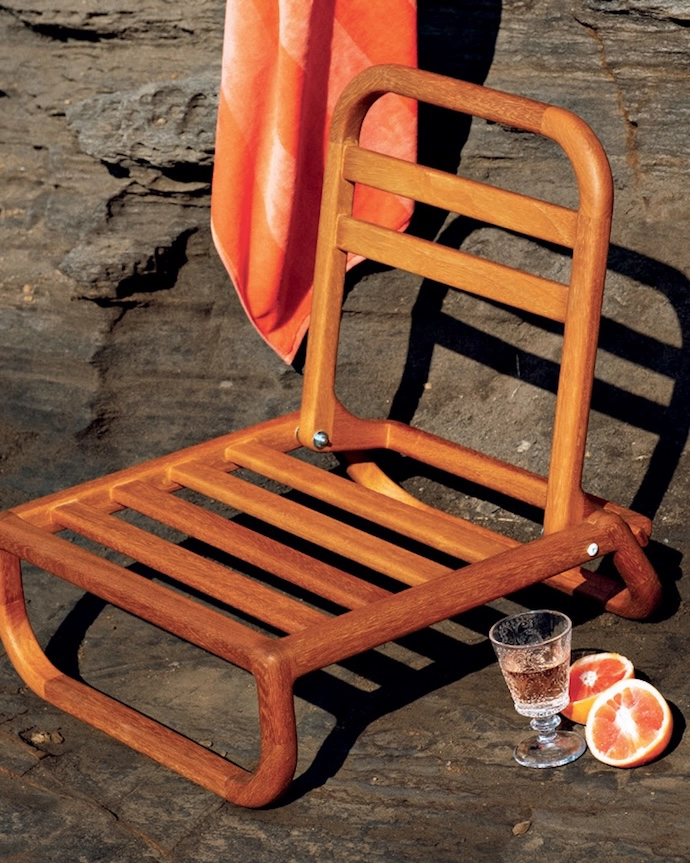
KZN design duo Kylie and Michael Bornman take us through the origins and design approach of their furniture brand, Kipekee Studio.
WORDS Steve Smith PHOTOS Supplied
It must’ve been about three editions of Decorex Joburg ago that we first noticed Kipekee Studio. They had a small stand tucked away among the heavy hitters of the 100% Design showcase, and on it were a couple of outdoor pieces – a lounger, maybe a small table. There was a simple, relaxed and slightly playful element to the clearly very-well-made furniture that made me stop to find out more. And that name was intriguing too.
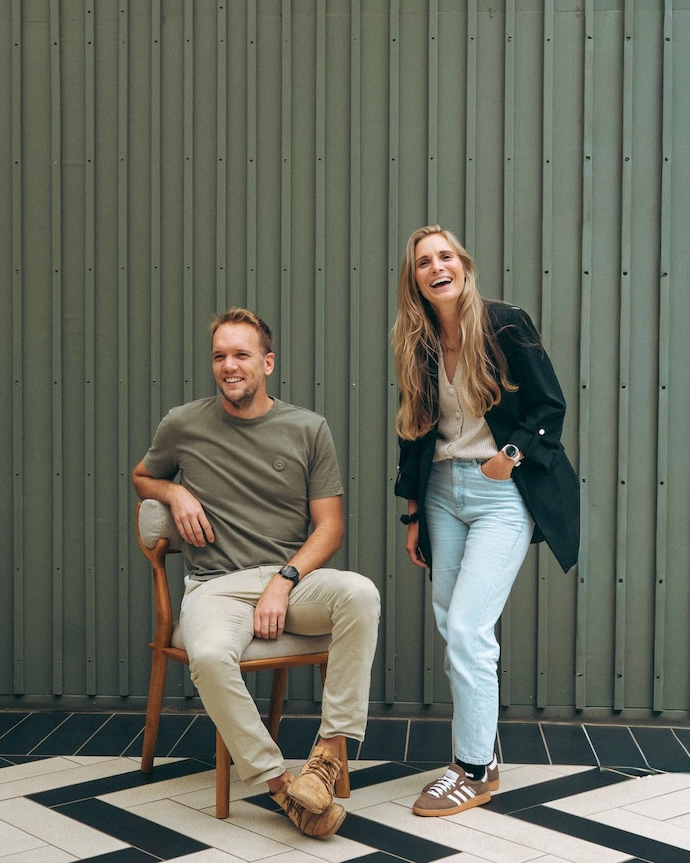
Cut to 2025, and the profile and reputation of this Ballito-based studio, founded by husband and wife Kylie and Michael Bornman, has moved way beyond the confines of that little stand. We’re seeing their pieces pop up in more and more properties featured in VISI – high time, then, for an in-depth profile on the talented couple behind the brand. She – a teacher-turned-designer – and he – a quantity surveyor-turned-furniture maker – have both transformed their lifelong hobbies into the distinctive, desirable brand you see here.
Let’s start with the name…
“Kipekee means ‘unique’ in Swahili, and that meaning was central when we chose the name. From the start, we wanted our designs to feel distinctive – pieces that reflected what we both love and that could, over time, become recognisable as part of our brand.”
How does it reflect your philosophy as a studio?
“For us, uniqueness isn’t only about design. It’s also about how we operate as a business. In the early years, Kipekee was very much a family aff air – Kylie often helped in the workshop with toddlers on her hip. We took our time before bringing in staff because we understood what it meant to offer stable, meaningful work in South Africa. That awareness has shaped the way we’ve grown. We’ve always aimed to build not only beautiful furniture, but also a small team whose lives are positively impacted by the work we do together.”
Describe the Kipekee aesthetic.
“It’s natural, simple and clean, guided by Scandinavian and Japanese influences. We focus on honest materials, soft forms and a sense of calm in every piece. There’s a quietness to our furniture that feels intentional yet lived-in – something that reflects both our design approach and the way we hope people experience our work.
“Our vision has always been simple – to design and build furniture we’d love to have in our own home. Scandinavian minimalism, with its focus on simplicity and honest use of materials, has always resonated with us. At the same time, we’ve been inspired by Japanese joinery, and the way every connection is considered and purposeful.
“Over time, these two influences formed the foundation of how we design and build. They’ve guided our approach, but our work has naturally evolved into something that feels uniquely ours, shaped by our hands, our environment and the way we live.”
Has living and working on the KZN North Coast played a role in shaping the brand’s character, values and material sourcing?
“We chose to make Salt Rock home because of the community we found here and the lifestyle it offered. From the beginning, we wanted our studio to feel playful and intimate – a place that could grow organically, like the environment around us. Those values are still at the heart of Kipekee today.
“The North Coast has changed a lot since we started – there’s been incredible growth and truly beautiful development in the area. But the biggest influence has been the climate. It’s both harsh and unique, and it’s shaped how we think about materials and manufacturing. Every timber, fabric and component we use is chosen with our coastal conditions in mind. It’s a constant reminder that good design isn’t only about how something looks – it’s also about how it lives in its environment.”
How do proportion, joinery and detail reflect your design philosophy?
“As we’ve grown over the past eight years, we’ve placed more and more emphasis on this. Every piece we make is constantly evolving, and function and comfort always come first. The proportions need to offer enough strength and stability while still feeling light and balanced.
“Our approach to joinery has also developed over time. We embrace technology where it makes sense, but we stay true to the traditional carpentry techniques that have guided furniture making for centuries. We don’t take shortcuts, and we build with the intention that our pieces last for generations.
“Details are another area that’s always shifting and improving. As a general rule, if a detail doesn’t serve a purpose, it doesn’t stay. That constant refinement – evolving while remaining true to our design intent – sits at the heart of our philosophy.”
Do you see Kipekee contributing to a uniquely South African/African design language on the global stage?
“We would love for our work to play a small part in showcasing African design on the global stage. South African designers have so much to offer – there’s a depth of creativity, craftsmanship and perspective here that feels both distinctive and world-class. It’s been inspiring to see so many of our local studios gaining international recognition.
“For us, the goal has always been to stay true to who we are – to design and build furniture that feels honest and grounded in our own story. If that authenticity resonates beyond our borders and contributes to a uniquely South African or broader African design language, we’d be incredibly proud.”
What role do chosen timbers like oak and walnut play in your design identity, and how do you decide which material suits which piece?
“From the beginning, our timber choices have been guided by both sustainability and performance. We’ve always been mindful of our environmental impact, and we look for materials that are responsibly harvested, stable, and structurally reliable. American White Oak and American Walnut both meet those standards beautifully — they’re consistent, durable, and a pleasure to work with.
“In terms of design identity, timber plays a huge role. We’ve always loved the rich, deep tones of walnut — it has a warmth and presence that gives a piece a quiet confidence. White Oak, on the other hand, offers a more neutral and versatile base. It brings a calm, minimal sensibility that works beautifully in different spaces.
“Those contrasts have guided us from early on: Oak grounds our minimal aesthetic, while Walnut adds depth and character. Choosing between them always comes down to the mood and intent of the piece.”
Where do you usually find inspiration – in architecture, nature, textures, or everyday objects?
“For both of us, inspiration often comes from slowing down – spending time in nature or immersing ourselves in thoughtful architecture. Those moments of quiet observation seem to spark the best ideas.
”Our Chameleon Dining Chair has become somewhat of an icon for us, and it’s a good example of how inspiration finds form. The design was originally inspired by the way a chameleon’s hand grasps a branch – a small, natural gesture that we wanted to capture in shape and structure.
”Since then, that idea has continued to influence our work. We often build on one design to explore the next, drawing from a mix of sources – nature, architecture, and everyday details. For us, inspiration is just the beginning. The real process is working through many iterations until the design feels resolved, balanced, and unmistakably ours”
How do you balance functionality with beauty – ensuring a piece is practical without losing its sculptural quality?
“There’s always a natural tension between beauty and function. A piece can be beautiful, but if it isn’t functional, it’s no longer furniture – it becomes something else entirely.
“For us, it’s a process of trial and error. We keep refining and improving, working each design until it feels balanced – sitting somewhere between pure function and pure form. That space in-between is often where our work feels most resolved.
“We also live with many of our prototypes and current pieces in our own home. It’s the best way to understand how they behave in everyday life – how they last, how they feel, and how they add value to our home experience. The most meaningful improvements in function often come from that lived-in experience.”
How do trends influence (or not influence) your design process – do you follow them, resist them, or reinterpret them?
“We’ve always tried to stay true to our original design intent. Coming back to that helps keep us grounded – it reminds us why we started and what feels authentic to us.
“That said, trends do play a small role. They often reflect shifts in how people live and what they value, and that can guide how we refine certain details or finishes. But we don’t allow trends to drive our process. Our focus has to remain on creating pieces that we genuinely love and that feel timeless.
“If anything, technology and a deeper understanding of joinery have influenced our work far more than trends. Those advances allow us to keep improving the way we design and build, without losing the essence of what makes a Kipekee piece what it is.”
What’s in the pipeline?
“This year, we’ve focused heavily on refining our existing range – adding new iterations where needed, but really making sure that every piece we off er is the best version it can be. It’s been about improvement rather than expansion, and that’s felt like the right approach.
“We recently launched our Selah range, Dreamer bed range and Chameleon range, each with a few new additions that build on our earlier designs. We’ll continue developing these collections into the new year, evolving them as we learn and grow.
“Looking ahead, we’re also working on an upholstered range – something more sculptural, generous in proportion, and deeply comfortable. It’s an exciting step for us, and one that feels like a natural extension of what we already do. We’re also focusing on outdoor products – expanding our Holiday Often range and, hopefully, designing and building some bespoke outdoor structures.
“As a team, we’re genuinely excited about what’s ahead. We love that we get to do this – we get to design, to make, and to keep growing. The future feels full of possibility.” | kipekeestudio.co.za
Don’t forget to sign up to our weekly newsletter for the latest architecture and design news.